Kirjojen hintavertailu. Mukana 12 595 353 kirjaa ja 12 kauppaa.

Kirjailija

Paul R. Hinlicky

Kirjat ja teokset yhdessä paikassa: 16 kirjaa, julkaisuja vuosilta 2008-2021, suosituimpien joukossa Joshua. Vertaile teosten hintoja ja tarkista saatavuus suomalaisista kirjakaupoista.

Mukana myös kirjoitusasut: Paul R Hinlicky

16 kirjaa

Kirjojen julkaisuhaarukka 2008-2021.

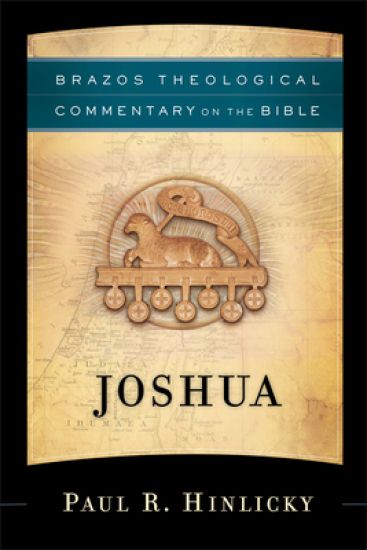
Joshua

Joshua

Paul R. Hinlicky; R. Reno; Robert Jenson; Robert Wilken; Ephraim Radner

Brazos Press, Div of Baker Publishing Group
2021
sidottu
Explore how the roots of the ancient Christian tradition inform and shape faithfulness todayThe Brazos Theological Commentary on the Bible enlists leading theologians to read and interpret scripture creedally for the twenty-first century, just as the church fathers, the Reformers, and other orthodox Christians did for their times and places. A rich resource for preachers, teachers, students, and study groups, the BTC provides guidance for reading the Bible under the rule of faith. Each volume in the series includes? a Christological focus and framework grounded in the Nicene Creed? connections between biblical interpretation and today's social issues? applications for contemporary faith and life? devotional depth for meditation and reflection? insights from literature, philosophy, culture, and morePaul Hinlicky, a leading systematic theologian widely respected for his contributions in contemporary dogmatics, offers a theological reading of Joshua in this addition to the Brazos Theological Commentary on the Bible series. Hinlicky compares and contrasts the politics of purity and the politics of redemption in an innovative and illuminating way and locates the book of Joshua in the postexilic genesis of apocalyptic theology.Ultimately the Brazos Theological Commentary on the Bible demonstrates the continuing intellectual and practical viability of theological interpretation of the Bible.
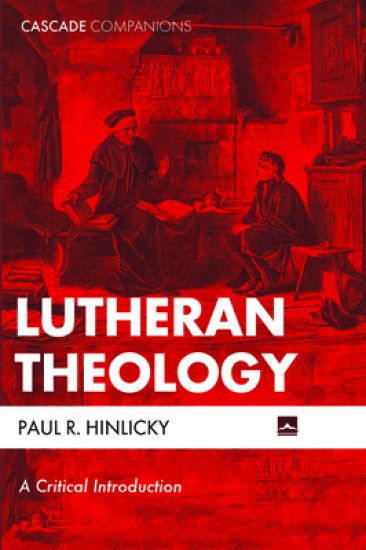
Lutheran Theology

Lutheran Theology

Paul R Hinlicky

Cascade Books
2020
pokkari
In this book Lutheran theologian Paul Hinlicky makes the deeply conflicted origins of Lutheran theology fruitful for the future. Exploring this intellectual and spiritual tradition of thought through its major historical chapters, Hinlicky rejects essentialist projects, exposing the debilitating binaries such programs engender and perpetuate, to establish an authentic Luther-theology or Lutheran theology. Hinlicky excavates the ways that throughout a five-hundred-year tradition the legacy of Luther texts has been appropriated, retooled, subverted, or developed. Readers of this introduction will thus be critically equipped to make intellectually honest appropriations of the Luther legacy in the plurality of contemporary contexts in which this iteration of Christian theology will continue.
Lutheran Theology

Lutheran Theology

Paul R Hinlicky

Cascade Books
2020
sidottu
In this book Lutheran theologian Paul Hinlicky makes the deeply conflicted origins of Lutheran theology fruitful for the future. Exploring this intellectual and spiritual tradition of thought through its major historical chapters, Hinlicky rejects essentialist projects, exposing the debilitating binaries such programs engender and perpetuate, to establish an authentic Luther-theology or Lutheran theology. Hinlicky excavates the ways that throughout a five-hundred-year tradition the legacy of Luther texts has been appropriated, retooled, subverted, or developed. Readers of this introduction will thus be critically equipped to make intellectually honest appropriations of the Luther legacy in the plurality of contemporary contexts in which this iteration of Christian theology will continue.
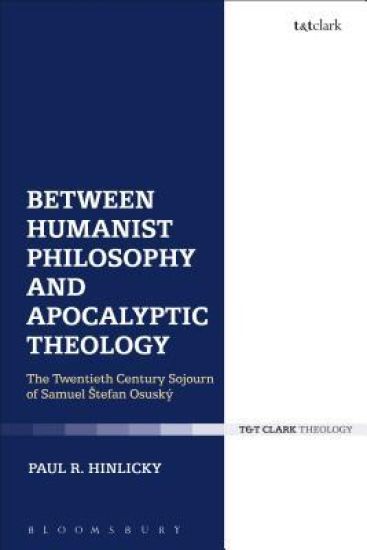
Between Humanist Philosophy and Apocalyptic Theology
Samuel Stefan Osusky was a leading intellectual in Slovak Lutheranism and a bishop in his church. In 1937 he delivered a prescient lecture to the assembled clergy, "The Philosophy of Fascism, Bolshevism and Hitlerism", that clearly foretold the dark days ahead. As wartime bishop, he co-authored a "Pastoral Letter on the Jewish Question", which publicly decried the deportation of Jews to Poland in 1942; in 1944 he was imprisoned by the Gestapo for giving moral support to the Slovak National Uprising against the fascist puppet regime.Paul R. Hinlicky traces the intellectual journey with ethical idealism's faith in the progressive theology of history that ended in dismay and disillusionment at the revolutionary pretensions of Marxism-Leninism. Hinlicky shows Osusky's dramatic rediscovery of the apocalyptic "the mother of Christian theology", and his input into the discussion of the dialectic of faith and reason after rationalism and fundamentalism.
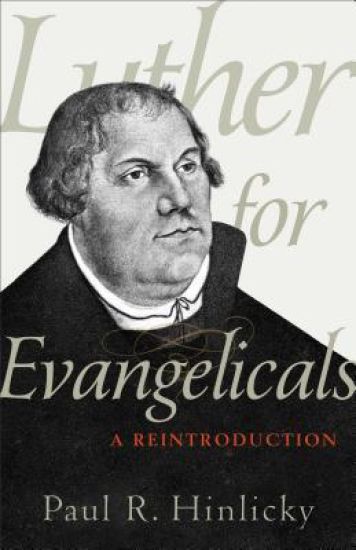
Luther for Evangelicals – A Reintroduction

Luther for Evangelicals – A Reintroduction

Paul R. Hinlicky

Baker Academic, Div of Baker Publishing Group
2018
nidottu
This brief introduction to Luther's theology connects Luther with the evangelical tradition. Paul Hinlicky, one of today's leading Lutheran theologians, explores six key areas of doctrine for which Luther is regarded as an authority, correcting common misconceptions of his thought in light of the whole of his theology. This work regrounds evangelical mission in a new evangelism and catechesis on the basis of Luther's doctrine of the atonement as "joyful exchange." In addition to its classroom utility, it will be of interest to evangelical pastors and church leaders.
Between Humanist Philosophy and Apocalyptic Theology
Samuel Stefan Osusky was a leading intellectual in Slovak Lutheranism and a bishop in his church. In 1937 he delivered a prescient lecture to the assembled clergy, "The Philosophy of Fascism, Bolshevism and Hitlerism", that clearly foretold the dark days ahead. As wartime bishop, he co-authored a "Pastoral Letter on the Jewish Question", which publicly decried the deportation of Jews to Poland in 1942; in 1944 he was imprisoned by the Gestapo for giving moral support to the Slovak National Uprising against the fascist puppet regime.Paul R. Hinlicky traces the intellectual journey with ethical idealism's faith in the progressive theology of history that ended in dismay and disillusionment at the revolutionary pretensions of Marxism-Leninism. Hinlicky shows Osusky's dramatic rediscovery of the apocalyptic "the mother of Christian theology", and his input into the discussion of the dialectic of faith and reason after rationalism and fundamentalism.
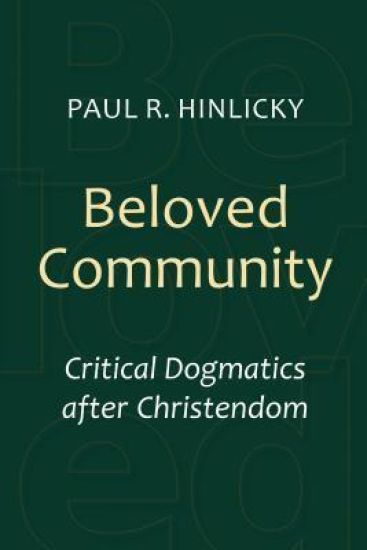
Beloved Community

Beloved Community

Paul R. Hinlicky

William B Eerdmans Publishing Co
2015
nidottu
An original, comprehensive system of theology especially apropos to the post-Christendom North American contextIn this scholarly work Paul Hinlicky transcends the impasse between dogmatic and systematic theology by articulating and arguing a single cognitive claim: God is the One who has determined to redeem the creation by the missions of his Son and Spirit.Deploying an unusual Spirit-Son-Father trinitarian scheme, Hinlicky treats the problem of the knowledge of God and the nature of the theological discipline, and he proceeds to carefully develop his system of theology through expansive, wideranging argumentation. Each main part of his work includes discussion of the ecumenical convergences in doctrine gained over the last generation and exploration of interreligious dialogues, especially with Judaism and Islam. Throughout the book, Hinlicky engages with other theologians -- particularly with Robert Jenson's Systematic Theology -- and concludes each major section with a discussion of an alternate perspective on the subject.
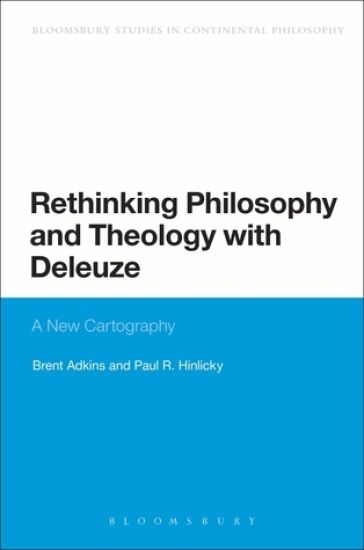
Rethinking Philosophy and Theology with Deleuze

Rethinking Philosophy and Theology with Deleuze

Brent Adkins; Paul R. Hinlicky

Bloomsbury Academic
2014
nidottu
The debate between faith and reason has been a dominant feature of Western thought for more than two millennia. This book takes up the problem of the relation between philosophy and theology and proposes that this relation can be reconceived if both philosophy and theology are seen as different ways of organising affects.Brent Adkins and Paul R. Hinlicky break new ground in this timely debate in two ways. Firstly, they lay bare the contemporary dependence on Kant and propose that our Kantian inheritance leaves us with an insuperable dualism. Secondly, the authors argue that the philosophy of Gilles Deleuze provides a way of resolving the debate between faith and reason that does justice to philosophy and theology by reconceiving of both as assemblages. Deleuze's philosophy differentiates domains of thought in terms of what they create. This seems like a particularly fruitful way to pursue the problem of the relations among philosophy and theology because it allows their distinction without at the same time placing them in opposition to one another.
Rethinking Philosophy and Theology with Deleuze

Rethinking Philosophy and Theology with Deleuze

Brent Adkins; Paul R. Hinlicky

Bloomsbury Academic USA
2013
sidottu
The debate between faith and reason has been a dominant feature of Western thought for more than two millennia. This book takes up the problem of the relation between philosophy and theology and proposes that this relation can be reconceived if both philosophy and theology are seen as different ways of organising affects.Brent Adkins and Paul R. Hinlicky break new ground in this timely debate in two ways. Firstly, they lay bare the contemporary dependence on Kant and propose that our Kantian inheritance leaves us with an insuperable dualism. Secondly, the authors argue that the philosophy of Gilles Deleuze provides a way of resolving the debate between faith and reason that does justice to philosophy and theology by reconceiving of both as assemblages. Deleuze's philosophy differentiates domains of thought in terms of what they create. This seems like a particularly fruitful way to pursue the problem of the relations among philosophy and theology because it allows their distinction without at the same time placing them in opposition to one another.
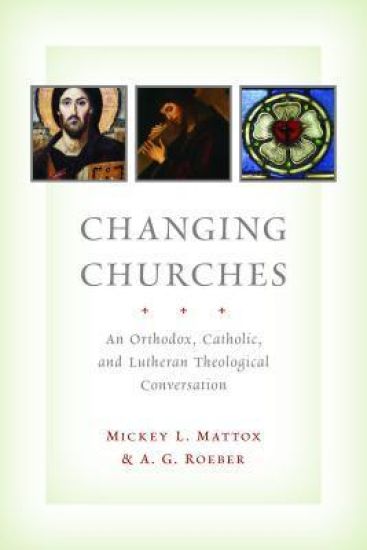
Changing Churches

Changing Churches

Mickey Leland Mattox; A. G. Roeber; Paul R. Hinlicky

William B Eerdmans Publishing Co
2012
nidottu
Sharp controversies -- about biblical authority, the ordination of women, evangelical -worship styles, - and the struggle for homosexual -inclusion- -- have rocked the Lutheran church in recent decades. In Changing Churches two men who once communed at the same Lutheran Eucharistic table explain their similar but different decisions to leave the Lutheran faith tradition -- one for Orthodoxy, the other for Roman Catholicism. Here Mickey L. Mattox and A. G. Roeber address the most difficult questions Protestants face when considering such a conversion, including views on justification, grace, divinization, the church and its authority, women and ministry, papal infallibility, the role of Mary, and homosexuality. They also discuss the long-standing ecumenical division between Rome and the Orthodox patriarchates, acknowledging the difficult issues that still confront those traditions from within and divide them from one another.
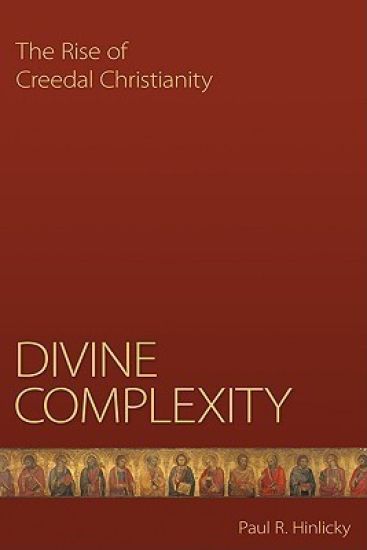
Divine Complexity

Divine Complexity

Paul R. Hinlicky

Fortress Press,U.S.
2010
pokkari
Divine Complexity intentionally combines Reformation theology, patristic studies, and modern biblical criticism in order to argue for a social view of the Trinitythe view of the Father, Son and Holy Spirit as three distinct persons united in loveas the grounds of the Christian hope in the coming of the "Beloved Community." This book is written with the student of early Christianity and the development of doctrine in mind.
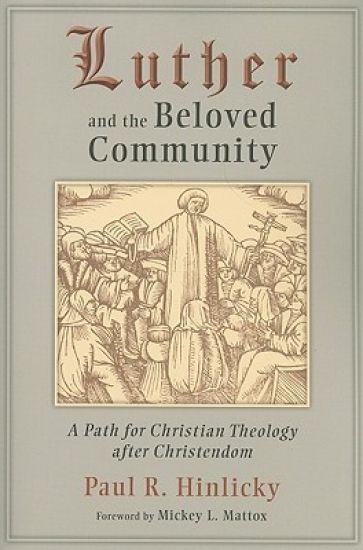
Luther and the Beloved Community

Luther and the Beloved Community

Paul R. Hinlicky; Mickey L. Mattox

William B Eerdmans Publishing Co
2010
nidottu
Is Christian belief tenable today? Is it possible to be a creedal Christian? With the help of Martin Luther, Paul Hinlicky here explores classical Christian beliefs regarding the person and work of Christ and human nature and destiny. He also counters contemporary objections to creedal faith, from the so-called -new perspective on Paul- to Pope Benedict's rejection of the Augsburg Confession to the continuing challenge of Marx. Luther and the Beloved Community does not present Luther's medieval thought as a possibility for today, but does make him available for the future as a teacher of the faith and a help for tackling contemporary questions of Christian belief. According to Hinlicky, Luther is misused and misunderstood by those of his own tradition and needs to be understood not as -hero of the faith- but rather as the proponent of a beloved community that does not yet fully exist. In performing this makeover, Hinlicky reveals genuine new insights concealed within Luther's rhetoric.
The Substance of the Faith

The Substance of the Faith

Paul R. Hinlicky; Mickey L. Mattox

Augsburg Fortress
2008
pokkari
This useful and insightful volume aims to illustrate, espouse, and renew the discipline of doctrinal theology, particularly as exemplified historically by Martin Luther and his theological reflection on the Trinity. The authors, steeped both in Luther's works and in the doctrinal tradition, show how dogmatics in the Lutheran tradition entails a delicate juxtaposition of credal commitment, scriptural interpretation, and doctrinal elaboration. Their respective chapters retrieve surprising historical insights about Luther's own practice of doctrinal theology, the interaction of the credal and doctrinal dimensions with a nuanced hermeneutic of scripture, and the future shape of a doctrinal theology genuinely responsive to the gospel and the present age.