Kirjojen hintavertailu. Mukana 12 390 323 kirjaa ja 12 kauppaa.

Kirjailija

Paul R. McHugh

Kirjat ja teokset yhdessä paikassa: 11 kirjaa, julkaisuja vuosilta 1999-2016, suosituimpien joukossa Psychiatrische Perspektiven. Vertaile teosten hintoja ja tarkista saatavuus suomalaisista kirjakaupoista.

11 kirjaa

Kirjojen julkaisuhaarukka 1999-2016.

Psychiatric Polarities

Psychiatric Polarities

Phillip R. Slavney; Paul R. McHugh

Johns Hopkins University Press
2016
pokkari
In this companion volume to their widely acclaimed Perspectives of Psychiatry, Phillip R. Slavney, M.D., and Paul R. McHugh, M.D., argue that the discontinuity of brain and mind is the source of much of psychiatry's discord, for it leads psychiatrists to think about their discipline in terms of polar opposites: conscious or unconscious; explanation or understanding; paternalism or autonomy. Psychiatric Polarities brings together the history of ideas and such clinical issues as suicide and bipolar disorder to identify, describe, and debate these and other polar oppositions that arise from psychiatry's inherent ambiguity. There is no single conceptual perspective that is sufficient for all of psychiatry's concerns, Slavney and McHugh observe, yet it is both possible and necessary to transcend the denominational conflicts that plague the field. In Psychiatric Polarities, their examination of these conflicts demonstrates how a methodological approach can help to resolve disagreements rooted in partisan commitments.
Systematic Psychiatric Evaluation

Systematic Psychiatric Evaluation

Margaret S. Chisolm; Constantine G. Lyketsos; Paul R. McHugh; Phillip R. Slavney

Johns Hopkins University Press
2012
sidottu
The Perspectives approach to psychiatry focuses on four aspects of psychiatric practice and research: disease, dimensional, behavior, and lifestory. In Systematic Psychiatric Evaluation, Drs. Margaret S. Chisolm and Constantine G. Lyketsos underscore the benefits of this approach, showing how it improves clinicians' abilities to evaluate, diagnose, and treat patients. Drs. Chisolm and Lyketsos use increasingly complex case histories to help the mental health provider evaluate patients demonstrating symptoms of bipolar disorder, psychosis, suicidal ideation, depression, eating disorders, and cutting, among other conditions. The book also includes an exercise that simulates the Perspectives approach side by side with traditional methods, revealing the advantages of a method that engages not one but four points of view. Featuring a foreword by Drs. Paul R. McHugh and Phillip R. Slavney, the originators of the Perspectives approach, this innovative book will be used in psychiatric training programs as well as by practicing mental health clinicians.
Systematic Psychiatric Evaluation

Systematic Psychiatric Evaluation

Margaret S. Chisolm; Constantine G. Lyketsos; Paul R. McHugh; Phillip R. Slavney

Johns Hopkins University Press
2012
pokkari
"The Perspectives" approach to psychiatry focuses on four aspects of psychiatric practice and research: disease, dimensional, behavior, and lifestory. In "Systematic Psychiatric Evaluation", Drs. Margaret S. Chisolm and Constantine G. Lyketsos underscore the benefits of this approach-showing how it improves clinicians' abilities to evaluate, diagnose, and treat patients. Drs. Chisolm and Lyketsos use increasingly complex case histories to help the mental health provider evaluate patients demonstrating symptoms of bipolar disorder, psychosis, suicidal ideation, depression, eating disorders, and cutting, among other conditions. The book also includes an exercise that simulates the "Perspectives" approach side by side with traditional methods, revealing the advantages of a method that engages not one but four points of view. Featuring a foreword by Drs. Paul R. McHugh and Phillip R. Slavney, the originators of the "Perspectives" approach, this innovative book will be used in psychiatric training programs as well as by practicing mental health clinicians.
Psychiatrische Perspektiven

Psychiatrische Perspektiven

Paul R. McHugh; Philip R. Slavney

Springer-Verlag Berlin and Heidelberg GmbH Co. K
2011
nidottu
stematiker apostrophiert, deren Leistungen bestenfalls als uberholt angese- hen werden, nicht selten jedoch auch als Hemmschuh fur die neuen Seh- weisen einer psychodynamischen Psychiatrie mit tiefen psychologischen Theorien, Lehranalysen, Selbsterfahrungsgruppen u. a. m. Unberucksichtigt bleibt dabei meist, dass viele der neuen Lehren trotz der Betonung von Be- griffen wie "Seele" oder "psychisch" im Grunde nur maskierte Formen einer modischen identitatstheoretischen Philosophie materialistischer Couleur darstellen (Koehler 1984). Gewiss ist gegen eine psychodynamische Ausbildung des psychiatri- schen Nachwuchses wenig einzuwenden, sofern eine Verabsolutierung des gewahlten Standpunktes vermieden wird. Leider stellen die zweifellos erfor- derlichen tiefen psychologischen Aspekte noch keinen selbstverstandlichen Teil einer integralen psychiatrischen Ausbildung an den deutschen Klini- ken dar, in denen der junge Assistenzarzt sein diagnostisches und therapeu- tisches Wissen erwirbt (Mombour 1984). Deshalb sieht er sich fast uberall gezwungen, unter zum Teil erheblichen Schwierigkeiten seinen Zusatztitel fur Psychotherapie "ausser Haus" zu erwerben. Dessen schwere Zugang- lichkeit, die vor allem institutionell bedingt ist, mag zur Tendenz beitragen, dass die psychodynamische Sehweise eine herausgehobene Position erhalt und in der Vorstellung gerade der psychiatrischen Anfanger leicht zum do- minierenden Denkansatz gerat.
Last Call

Last Call

Jack H. Hedblom; Paul R. McHugh

Johns Hopkins University Press
2008
sidottu
"I knew about drunk, but did not know anything about living sober. I hadn't really been sober for fifteen years. It wasn't enough that I stopped drinking. I had to learn how to live." The journey from alcoholic insanity to sobriety-and the pivotal role of Alcoholics Anonymous (AA) in navigating that transition-is the focus of Last Call. Using powerful first-person narratives like the one above (composites of many anonymous speakers), psychotherapist Jack H. Hedblom provides compelling insights into the minds and hearts of addicted drinkers, from bizarre behavior and denial to the moment of "hitting bottom" and seeking change. Hedblom covers the process of getting sober, from diagnosis to detox to sobriety. He focuses on the challenge of learning to live without drinking-a long-term goal, Hedblom asserts, that is best achieved by regular participation in AA. Hedblom's vivid descriptions reveal AA meetings as gatherings of fellowship, compassion, tears, and laughter. In relating the history of the organization, he describes the role of sponsors, elaborates on the Twelve Steps and the Promises, emphasizes the importance of spiritual development in recovery, and refutes the common misconceptions that equate spirituality with organized religion. Through the stories of people who have escaped the tyranny of alcoholism with the help of AA, Hedblom shows that the road to recovery is a journey of self-discovery, change, and hope.
Last Call

Last Call

Jack H. Hedblom; Paul R. McHugh

Johns Hopkins University Press
2008
pokkari
"I knew about drunk, but did not know anything about living sober. I hadn't really been sober for fifteen years. It wasn't enough that I stopped drinking. I had to learn how to live." The journey from alcoholic insanity to sobriety-and the pivotal role of Alcoholics Anonymous (AA) in navigating that transition-is the focus of Last Call. Using powerful first-person narratives like the one above (composites of many anonymous speakers), psychotherapist Jack H. Hedblom provides compelling insights into the minds and hearts of addicted drinkers, from bizarre behavior and denial to the moment of "hitting bottom" and seeking change. Hedblom covers the process of getting sober, from diagnosis to detox to sobriety. He focuses on the challenge of learning to live without drinking-a long-term goal, Hedblom asserts, that is best achieved by regular participation in AA. Hedblom's vivid descriptions reveal AA meetings as gatherings of fellowship, compassion, tears, and laughter. In relating the history of the organization, he describes the role of sponsors, elaborates on the Twelve Steps and the Promises, emphasizes the importance of spiritual development in recovery, and refutes the common misconceptions that equate spirituality with organized religion. Through the stories of people who have escaped the tyranny of alcoholism with the help of AA, Hedblom shows that the road to recovery is a journey of self-discovery, change, and hope.
The Concepts of Psychiatry

The Concepts of Psychiatry

S. Nassir Ghaemi; Paul R. McHugh

Johns Hopkins University Press
2007
pokkari
Because most psychiatric illnesses are complex phenomena, no single method or approach is sufficient to explain them or the experiences of persons who suffer from them. In The Concepts of Psychiatry S. Nassir Ghaemi, M.D. argues that the discipline of psychiatry can therefore be understood best from a pluralistic perspective. Grounding his approach in the works of Paul McHugh, Phillip Slavney, Leston Havens, and others, Ghaemi incorporates a more explicitly philosophical discussion of the strengths of a pluralistic model and the weaknesses of other approaches, such as biological or psychoanalytic theories, the biopsychosocial model, or eclecticism. Ghaemi's methodology is twofold: on the one hand, he applies philosophical ideas, such as utilitarian versus duty-based ethical models, to psychiatric practice. On the other hand, he subjects clinical psychiatric phenomena, such as psychosis or the Kraepelin nosology, to a conceptual analysis that is philosophically informed. This book will be of interest to professionals and students in psychiatry, as well as psychologists, social workers, philosophers, and general readers who are interested in understanding the field of psychiatry and its practices at a conceptual level.
The Mind Has Mountains

The Mind Has Mountains

Paul R. McHugh

Johns Hopkins University Press
2006
sidottu
From strenuous opposition to physician-assisted suicide to a conviction that sex-correction surgery for newborns is cruel and misguided, Dr. Paul R. McHugh's opinions are strong and often controversial. In this collection of essays, McHugh demonstrates why he is one of the most thought-provoking figures in the academic world. These pieces argue for a realistic appraisal of just what psychiatrists know and how they know it, with the aim of indicating how such knowledge can best be used not only for better patient care but also to reflect on and influence public issues and social movements. His essays will stimulate professional and popular discussion about the goals and effectiveness of current psychiatric practice. McHugh sorts through the layers of what he terms the "culturally driven misdirection of psychiatry and psychotherapy" to explain concepts often misunderstood by nonscholars and the intellectual community alike. America's leading psychiatrist may inspire you or offend you, but he will certainly make you think.
Sexual Disorders

Sexual Disorders

Peter J. Fagan; Paul R. McHugh

Johns Hopkins University Press
2004
pokkari
Sexual disorders may arise from multiple causes. Their clinical assessment, diagnosis, and treatment must take into account the patient's underlying biology, history, and behaviors. Using an approach pioneered at the Johns Hopkins Medical Institutions, Peter Fagan applies the four "perspectives of psychiatry" (disease, dimension, behavior, and life story) to the diagnosis and treatment of sexual disorders. This book offers therapists an efficient and clinically proven way to organize the range of theoretical methodologies currently available, presenting a framework that is both conceptually cohesive and readily applicable in clinical settings. After an introduction, each chapter offers a case study followed by an analysis based on one perspective methodology as well as a discussion of the clinical implications of that perspective. The book closes with a chapter integrating the approaches. This book will be of interest to mental health care professionals, including psychiatrists, psychologists, and social workers, who treat patients with sexual disorders.
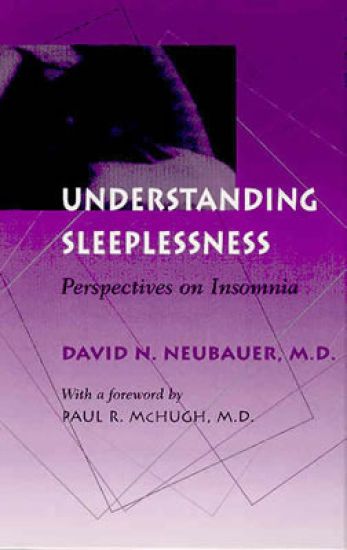
Understanding Sleeplessness

Understanding Sleeplessness

David N. Neubauer; Paul R. McHugh

Johns Hopkins University Press
2003
sidottu
Seemingly the most natural and necessary of pursuits, a good night's sleep eludes a remarkable number of people-up to 50 percent of the general population, according to studies, while 10 to 15 percent suffer from severe or chronic sleep disorders. Because the causes and nature of sleeplessness are so many and varied-and often as elusive as sleep itself-the diagnosis and treatment require a flexible, multifaceted approach-and this is precisely what David N. Neubauer lays out in Understanding Sleeplessness. Building on the "four perspectives" conceptualized by McHugh and Slavney in The Perspectives of Psychiatry, Neubauer offers a much-needed explanation of the diverse ways of understanding what insomnia is and what should be done about it. He begins by surveying what is currently known about the mechanisms of "normal sleep" and, in this light, describing the problems of defining, assessing, and measuring insomnia. Drawing examples from patients studied at the Johns Hopkins Sleep Disorders Center, Neubauer then applies each of the four perspectives-diseases, dimensions, behaviors, life stories-to the varied kinds and degrees of sleeplessness. Finally, calling on the full range of perspectives on insomnia, he outlines an integrated approach to evaluation and treatment. His work will be of great interest and value to those who study and treat sleeplessness and to those who wish to understand this widespread and vexing problem.
The Perspectives of Psychiatry

The Perspectives of Psychiatry

Paul R. McHugh; Phillip R. Slavney

Johns Hopkins University Press
1999
pokkari
Substantially revised to include a wealth of new material, the second edition of this highly acclaimed work provides a concise, coherent introduction that brings structure to an increasingly fragmented and amorphous discipline. Paul R. McHugh and Phillip R. Slavney offer an approach that emphasizes psychiatry's unifying concepts while accommodating its diversity. Recognizing that there may never be a single, all-encompassing theory, the book distills psychiatric practice into four explanatory methods: diseases, dimensions of personality, goal-directed behaviors, and life stories. These perspectives, argue the authors, underlie the principles and practice of all psychiatry. With an understanding of these fundamental methods, readers will be equipped to organize and evaluate psychiatric information and to develop a confident approach to practice and research.