Kirjojen hintavertailu. Mukana 12 318 355 kirjaa ja 12 kauppaa.

Kirjailija

Paul R. Viotti

Kirjat ja teokset yhdessä paikassa: 10 kirjaa, julkaisuja vuosilta 1998-2025, suosituimpien joukossa Kenneth Waltz. Vertaile teosten hintoja ja tarkista saatavuus suomalaisista kirjakaupoista.

Mukana myös kirjoitusasut: Paul R Viotti

10 kirjaa

Kirjojen julkaisuhaarukka 1998-2025.

Kenneth Waltz

Kenneth Waltz

Paul R. Viotti

Columbia University Press
2025
pokkari
Kenneth Waltz (1924–2013) is perhaps the most enduringly influential figure in international relations theory of the second half of the twentieth century. He is considered the father of the structural-realist or neorealist school, and his views on core questions, such as the causes of war and the structure of the international system, are foundational to the field today and likely will remain so for decades to come. Waltz’s writings on both theoretical and policy-related topics, from the balance of power to the spread of nuclear weapons, continue to fuel debate.This book is a groundbreaking intellectual biography of Kenneth Waltz, shedding new light on the development and significance of his key contributions. Paul R. Viotti draws on extensive, candid interviews with Waltz as well as Waltz’s personal files and archival research to provide a nuanced account of the great scholar’s life and thought. He traces the intellectual sources and personal experiences that shaped Waltz’s work, including an intense Lutheran upbringing; service in World War II and the Korean War; and the academic environments of Oberlin College, Columbia University, and the University of California, Berkeley. Viotti examines the key influences on Waltz’s major works, Man, the State, and War and Theory of International Politics, and analyzes their distinctive insights. Engaging with the views of Waltz’s critics and featuring reminiscences from his colleagues, this book is a compelling portrait of an intellectual titan.
Kenneth Waltz

Kenneth Waltz

Paul R. Viotti

Columbia University Press
2024
sidottu
Kenneth Waltz (1924–2013) is perhaps the most enduringly influential figure in international relations theory of the second half of the twentieth century. He is considered the father of the structural-realist or neorealist school, and his views on core questions, such as the causes of war and the structure of the international system, are foundational to the field today and likely will remain so for decades to come. Waltz’s writings on both theoretical and policy-related topics, from the balance of power to the spread of nuclear weapons, continue to fuel debate.This book is a groundbreaking intellectual biography of Kenneth Waltz, shedding new light on the development and significance of his key contributions. Paul R. Viotti draws on extensive, candid interviews with Waltz as well as Waltz’s personal files and archival research to provide a nuanced account of the great scholar’s life and thought. He traces the intellectual sources and personal experiences that shaped Waltz’s work, including an intense Lutheran upbringing; service in World War II and the Korean War; and the academic environments of Oberlin College, Columbia University, and the University of California, Berkeley. Viotti examines the key influences on Waltz’s major works, Man, the State, and War and Theory of International Politics, and analyzes their distinctive insights. Engaging with the views of Waltz’s critics and featuring reminiscences from his colleagues, this book is a compelling portrait of an intellectual titan.

The Global Philosophers

The Global Philosophers

Mark V. Kauppi; Paul R. Viotti

Lexington Books
1998
nidottu
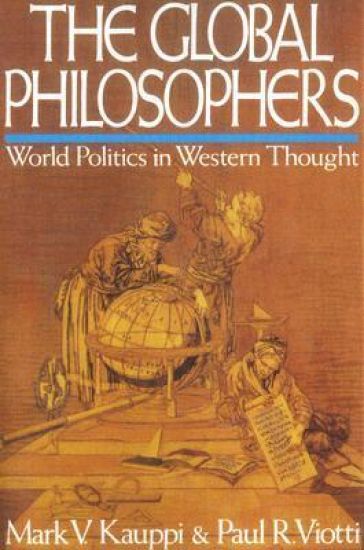
The Global Philosophers examines the intellectual roots of much of the contemporary literature on international relations and discusses the historical context in which famous historical political theorists wrote. Authors Mark V. Kauppi and Paul R. Viotti focus on the classic Western political philosophers, surveying the work of theorists such as Thucydides, Machiavelli, Hobbes, Rousseau, Kant, and their intellectual influences. Because it features both a broad overview of the basic questions addressed by international relations and more detailed accounts of how various philosophers addressed these questions, this work is an ideal introduction to the field. An admirable analysis of how writers are influenced by their contemporaneous historical circumstances, The Global Philosophers is essential reading for anyone who wishes to truly understand and appreciate the intellectual predecessors to the modern theories of international relations.
International Relations Theory

International Relations Theory

Mark V. Kauppi; Paul R. Viotti

ROWMAN LITTLEFIELD
2023
sidottu
International Relations Theory offers a unique approach to help students think conceptually and critically about how our contemporary world of diverse state and non-state actors works, but also the implications of domestic and global changes. The seventh edition covers current IR theory images (realism, liberalism, economic-structuralism, and the English School), interpretive understandings (constructivist, feminist, postmodern, critical theory, and green theory), normative considerations, and intellectual foundations from the ancient world to the modern era.
International Relations Theory

International Relations Theory

Mark V. Kauppi; Paul R. Viotti

BLOOMSBURY PUBLISHING PLC
2023
nidottu
International Relations Theory offers a unique approach to help students think conceptually and critically about how our contemporary world of diverse state and non-state actors works, but also the implications of domestic and global changes. The seventh edition covers current IR theory images (realism, liberalism, economic-structuralism, and the English School), interpretive understandings (constructivist, feminist, postmodern, critical theory, and green theory), normative considerations, and intellectual foundations from the ancient world to the modern era.
American Foreign Policy and National Security
*This book is in the Rapid Communications in Conflict and Security (RCCS) Series (General Editor: Geoffrey R.H. Burn).This book seeks explanation for the making and implementation of American foreign policy--the decisions and actions the United States takes vis- -vis state and non-state actors abroad. The latter includes international (IOs) and non-governmental organizations (NGOs), other groups and, in some cases, powerful individuals.In this effort we are drawn to the decisionmakers themselves. Although precise or point predictions are elusive, deeper understandings of how policymakers tend to operate in the processes of making and implementing foreign policy can lead to greater accuracy in the practical expectations we develop for what may happen. Rather than presenting a theory of foreign policy, this study identifies factors or essential elements that likely would be part of such a theory. These structural and ideational factors (both domestic and international) influence the choices policymakers make--the ways and means by which they make and implement American foreign policy. The book focuses on the nationalist or internationalist orientations of decisionmakers that affect the way they see the US role in making and implementing foreign policy. In this regard, nationalists are domestically focused and tend to deemphasize international involvement, minimizing to the extent possible government actions abroad. By contrast, I also identify three kinds of internationalist orientation--liberal, conservative, and militant. Broadly speaking, the range or spectrum of foreign policy options includes (1) diplomacy and other forms of peaceful or constructive engagement not just with allies, coalition partners and other friendly countries, but also vis- -vis adversaries; (2) containment of adversaries--deterrence, coercive diplomacy, and other negative measures short of war; and (3) armed intervention or warfare with adversaries.Divided into three parts, Part 1 examines peaceful engagement, containment, and armed intervention. Part Two takes a look back on the American experience since the 18th century. Part Three explores how domestic politics affect the making and implementation of American foreign policy--dubbed politics on the Potomac River where the executive, legislative, and judicial branches and private-sector actors operate.The last two chapters address in greater detail the domestic political milieu and elite understandings of power that drive the making and implementation of American foreign policy.
American Foreign Policy and National Security
*This book is in the Rapid Communications in Conflict and Security (RCCS) Series (General Editor: Geoffrey R.H. Burn).This book seeks explanation for the making and implementation of American foreign policy--the decisions and actions the United States takes vis- -vis state and non-state actors abroad. The latter includes international (IOs) and non-governmental organizations (NGOs), other groups and, in some cases, powerful individuals.In this effort we are drawn to the decisionmakers themselves. Although precise or point predictions are elusive, deeper understandings of how policymakers tend to operate in the processes of making and implementing foreign policy can lead to greater accuracy in the practical expectations we develop for what may happen. Rather than presenting a theory of foreign policy, this study identifies factors or essential elements that likely would be part of such a theory. These structural and ideational factors (both domestic and international) influence the choices policymakers make--the ways and means by which they make and implement American foreign policy. The book focuses on the nationalist or internationalist orientations of decisionmakers that affect the way they see the US role in making and implementing foreign policy. In this regard, nationalists are domestically focused and tend to deemphasize international involvement, minimizing to the extent possible government actions abroad. By contrast, I also identify three kinds of internationalist orientation--liberal, conservative, and militant. Broadly speaking, the range or spectrum of foreign policy options includes (1) diplomacy and other forms of peaceful or constructive engagement not just with allies, coalition partners and other friendly countries, but also vis- -vis adversaries; (2) containment of adversaries--deterrence, coercive diplomacy, and other negative measures short of war; and (3) armed intervention or warfare with adversaries.Divided into three parts, Part 1 examines peaceful engagement, containment, and armed intervention. Part Two takes a look back on the American experience since the 18th century. Part Three explores how domestic politics affect the making and implementation of American foreign policy--dubbed politics on the Potomac River where the executive, legislative, and judicial branches and private-sector actors operate.The last two chapters address in greater detail the domestic political milieu and elite understandings of power that drive the making and implementation of American foreign policy.
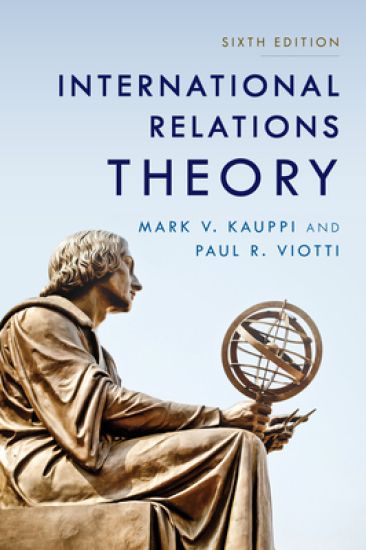
International Relations Theory

International Relations Theory

Mark V. Kauppi; Paul R. Viotti

Rowman Littlefield
2019
nidottu
We propose a sixth edition of our textbook that, since it was first published in 1987, has influenced two generations of IR scholars and practitioners. After four decades of teaching, we have learned to communicate difficult or complex ideas, concepts, and theories succinctly, and without watering down their content. Addressing the complexities of IR theory in particular, our book is written in plain language readily understood by both graduate and undergraduate audiences, as well as English-speaking and English-as-second-language (ESL) international students. Over the years, IR doctoral students—many of whom are now professors or serve in policy-related positions, have approached us at conferences to confide that they found our book helpful in preparing for their doctoral exams. We do not present “laundry lists” of IR theories one finds in other books. By contrast, we employ a framework or taxonomy of alternative images—or world views—that underlie present-day IR theory (i.e., realism, liberalism, economic structuralism, and the English School). Driven by one or another of these images, theorists also wear different interpretive lenses that profoundly influence their theorizing (positivism, feminism and those related to phenomenological understandings—post-modernism, critical theory, and constructivism). Both images and interpretive lenses have their place in our IR theory framework. This taxonomy weaves or integrates diverse and cross-cutting theoretical threads or strands into a meaningful “whole cloth” approach not found in other volumes
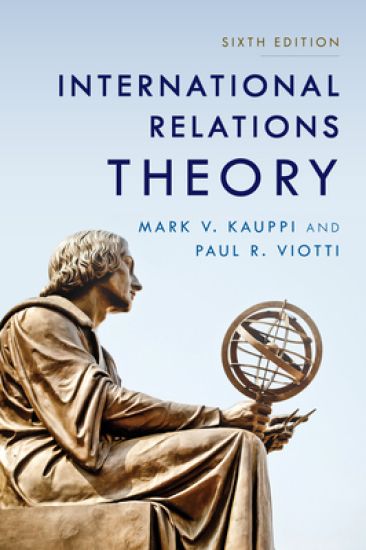
International Relations Theory

International Relations Theory

Mark V. Kauppi; Paul R. Viotti

Rowman Littlefield
2019
sidottu
We propose a sixth edition of our textbook that, since it was first published in 1987, has influenced two generations of IR scholars and practitioners. After four decades of teaching, we have learned to communicate difficult or complex ideas, concepts, and theories succinctly, and without watering down their content. Addressing the complexities of IR theory in particular, our book is written in plain language readily understood by both graduate and undergraduate audiences, as well as English-speaking and English-as-second-language (ESL) international students. Over the years, IR doctoral students—many of whom are now professors or serve in policy-related positions, have approached us at conferences to confide that they found our book helpful in preparing for their doctoral exams. We do not present “laundry lists” of IR theories one finds in other books. By contrast, we employ a framework or taxonomy of alternative images—or world views—that underlie present-day IR theory (i.e., realism, liberalism, economic structuralism, and the English School). Driven by one or another of these images, theorists also wear different interpretive lenses that profoundly influence their theorizing (positivism, feminism and those related to phenomenological understandings—post-modernism, critical theory, and constructivism). Both images and interpretive lenses have their place in our IR theory framework. This taxonomy weaves or integrates diverse and cross-cutting theoretical threads or strands into a meaningful “whole cloth” approach not found in other volumes