Kirjailija
Paul Rabbitts
Kirjat ja teokset yhdessä paikassa: 32 kirjaa, julkaisuja vuosilta 2014-2026, suosituimpien joukossa Cotherstone: A Village in Teesdale. Vertaile teosten hintoja ja tarkista saatavuus suomalaisista kirjakaupoista.
32 kirjaa
Kirjojen julkaisuhaarukka 2014-2026.
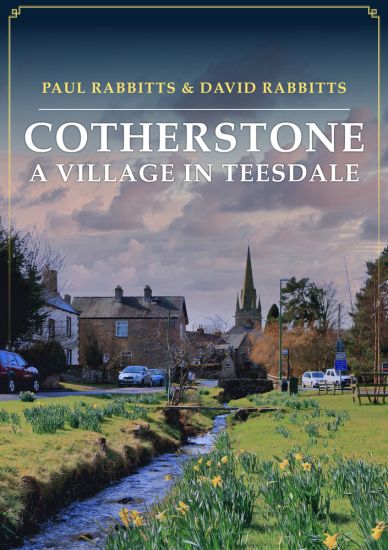
Cotherstone village in County Durham is set on the River Tees, 4 miles from Barnard Castle. Today a large and pretty village, its history goes back to the Domesday Book and it has remains of a motte-and-bailey castle dating from the 1200s. In more recent times it became a well-known destination for holidaymakers from the growing urban centres nearby, and at one time was known as ‘Little Sunderland’ because of its popularity in that city. Cotherstone has connections with Hannah Hauxwell, who became famous through the television documentary series about her harsh life as a farmer on the Pennines above the village, and through the locally produced Cotherstone cheese. This fascinating history of the village of Cotherstone in Teesdale will be of interest to all those who have lived in the village or know it well.
A fascinating exploration of Christchurchâ??s architectural treasures and notable landmarks from across the centuries.
Berkhamsted is a lively town in the Chiltern Hills with a history stretching back to before the Anglo Saxons. Substantial ruins of the Norman Castle remain, later associated with the Black Prince and Geoffrey Chaucer. Berkhamsted School was founded in 1541 and the High Street and the mediaeval core of Berkhamsted contain numerous ancient and listed buildings, many timber framed. In later years Berkhamsted’s prosperity was aided by connections with London and the Midlands through turnpike roads, the Grand Junction Canal and the railways. The Victorian Town Hall still stands, saved from demolition in the 1980s, as does writer Graham Greene’s birthplace, and more modern buildings include the popular Art Deco Rex cinema. Berkhamsted in 50 Buildings explores the history of this town in Hertfordshire through a selection of its most interesting buildings and structures, showing the changes that have taken place over the years. The book will appeal to all those who live in Berkhamsted or who have an interest in the area.
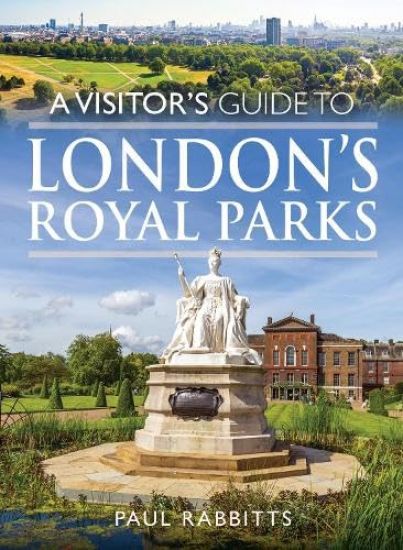
There are nearly 80 million visits to the Royal Parks every year, making them the most popular destinations in the capital. In 1956, author, poet and critic, Richard Thomas Church (1893-1972) wrote The Royal Parks of London, which was published by The Ministry of Public Building and Works as a guidebook at a cost of 3s 6d net. Many years has passed, and these parks continue to thrive, with new additions, events and celebrations. However, any visitor today will be overwhelmed by the beauty of these historic spaces that boast royal palaces, boathouses, bandstands, lodges, gatehouses, ornamental gardens, sculpture, public art, memorials, places for repose and refreshments. Today the Royal Parks as a charitable organisation is responsible for the care and maintenance of a large collection of historical built assets, comprising primarily of monuments, structures and buildings within the parks, and associated boundaries. This book will take you on a journey from Greenwich Park, the oldest of the Royal Parks, via Hyde Park, St James’s Park, Green Park, Regent’s Park, Bushy Park, Kensington Gardens to the largest of the royal parks – Richmond Park. It is hoped that the reader will gain a greater understanding of how these parks came about, but also to widen the visitor’s knowledge of some of the more unusual aspects of London’s Royal Parks, and to simply encourage the visitor to meander at will among them – the best way to discover the many pleasures within London’s Royal Parks.
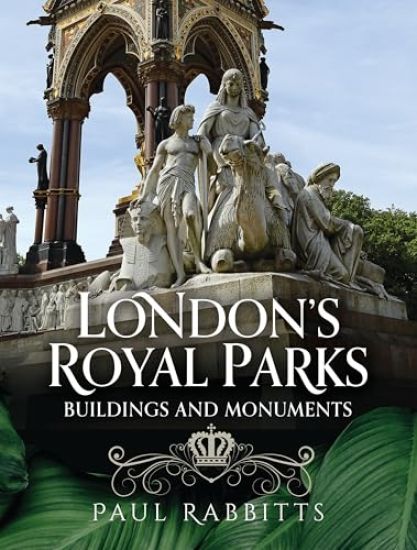
London’s Royal Parks are among its most beautiful and beloved spaces: just as much as the Houses of Parliament, Buckingham Palace or St Pancras Station, the mere mention of Hyde Park or Greenwich Park is enough to evoke the capital in all its glory for residents and tourists alike. They have a magnificent history – some were royally owned as far back as the Norman conquest, others were acquired by Henry VIII during the Reformation and were great hunting grounds for successive monarchs – and since being opened to the public, they have hosted some of London’s great events, including the Great Exhibition in Hyde Park and innumerable jubilees, international games and competitions and celebrations. Today, the Royal Parks are visited by over 77 million visitors. But what are the ingredients of these magnificent green spaces? We often think of wider landscapes of trees, grass, lakes, meandering footways, bedding displays and herbaceous borders. But the Royal Parks are much more than this. Defined as ‘parkitecture’, we find royal palaces, stately homes, villas, monuments, memorials, statues of national figures and war heroes, public art, often controversial yet inspiring, sculpture, bandstands, gates and railings of exquisite designs, fountains, refreshments rooms, lodges and pavilions, bridges and boathouses. Each of the Royal Parks is defined by its ‘parkitecture’, from the formality of Regent’s and St James’s Parks to the rurality of Bushy and Richmond Parks. This new book is a long overdue complete celebration of the many buildings and monuments of London’s Royal Parks with over 250 beautiful illustrations.
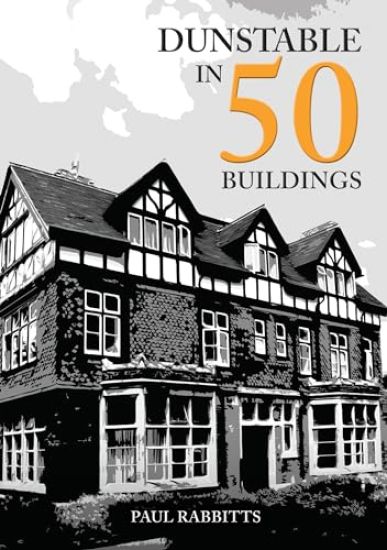
The Bedfordshire town of Dunstable can trace its origins back to Roman times and the building of Watling Street, which crossed the ancient Icknield Way at the point where Dunstable stands today. The Romans also constructed a posting station where travellers could change their horses, and a market town called Durocobrivis developed at the crossroads. When the Romans left Britain, Durocobrivis was abandoned and it wasn’t until 1109 that Henry I created a new town here and subsequently added a royal residence and a priory. Although wool cloth was once Dunstable’s main industry, it was later replaced by strawhat manufacturing, brewing and lace-making. Despite its small size it was also an important stage-coaching town. At the end of the nineteenth century, new industries arrived including printing and engineering, and when the railway reached the town in 1848 the population and building development increased. The twentieth century brought further expansion and growth with industries such as Vauxhall Motors. In Dunstable in 50 Buildings, author Paul Rabbitts focuses on the architectural heritage of the town from across the centuries. From almshouse to windmill and ancient road to shopping centre, a fascinating variety of structures and landmarks are featured, each one revealing the history and development of the town and the changing way of life for local people. Illustrated throughout, this engaging and accessible portrait of Dunstable’s architectural history will be of interest to residents, visitors and local historians alike.
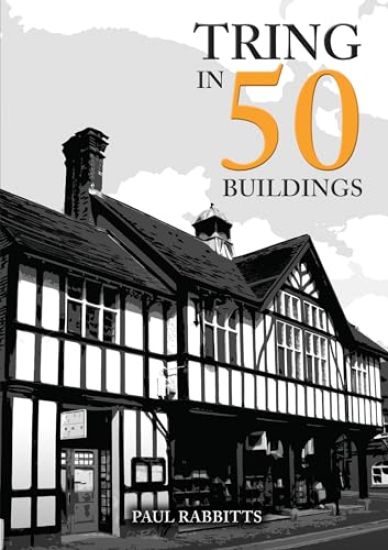
People have lived, farmed and traded in the Hertfordshire town of Tring for thousands of years. The Icknield Way, which hugs the Chiltern scarp, is reckoned to be the oldest road in Europe, while the Bulbourne Valley provided an obvious route for the Romans heading out west from St Albans. It was inevitable that a settlement would develop here on the well-drained soil, with springs and good sites for wind and water mills. In 1799, the Grand Junction Canal brought profound changes to this peaceful agricultural place. Coal, bricks and slates came in, while flour and farm produce were loaded for distant markets. Industry arrived in 1823 with the construction of a silk mill and the building of the London & Birmingham Railway in 1835 meant that Tring was within an hour’s journey of London. When the Rothschild family added Tring Park to their local estates in 1872, the banker and statesman Nathaniel, later the first Baron Rothschild, set about rebuilding the farms and constructing new cottages to replace decaying properties in the town. In this book, Paul Rabbitts highlights fifty of Tring’s buildings and landmarks – old and new – to explore its fascinating history. The structures included range from churches to cottages, court to clock house, museums to mills, and mansion to market house. Each has its story to tell and reveals the town's development through the centuries. Illustrated throughout, this accessible and engaging perspective will be of interest to residents, local historians and visitors alike.
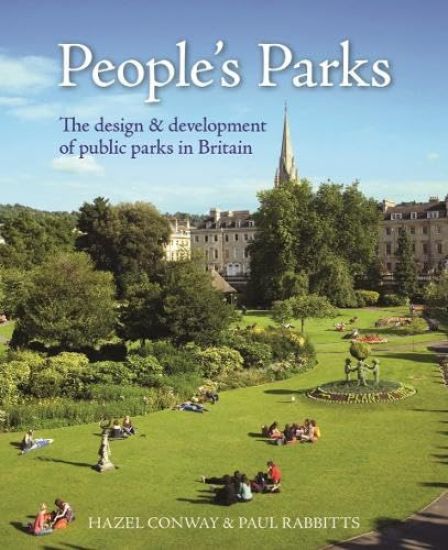
People's Parks - The Design and Development of Public Parks in Britain' identifies the principal national and international influences on park development from the nineteenth century until the present, including their historical and cultural significance. Municipal parks made an important contribution to our urban environment, and they developed within a social, economic and political context which affected people's attitudes to recreation - what became known as 'rational recreation'. The promoters of parks wanted to encourage education and particular forms of recreation, and parks reflected this in their design, buildings, statues, bandstands and planting. This book is a thorough update and re-evaluation on Hazel Conway's influential book, published in 1991, adding and evaluating an extra 100 years of history, through the Victorian era, to the war years, the impact of the Garden Cities movement, and the great decline of parks from the 1970s onwards. The impact of the Heritage Lottery Fund's urban parks programme from the 1990s is covered, along with that of austerity and the Covid pandemic. The book concludes by evaluating the role of parks today and potential for the future.
The River Lea and its crossing at Hertford lie at the heart of the town's history. Before the Norman Conquest the river formed a natural boundary between the Danelaw to the north and Saxon Wessex to the south. Saxon villages already existed at Bengeo and Hertingfordbury and, in 911 and 912, Edward the Elder, son of Alfred the Great, founded two fortified burhs, north and south of the Lea crossing. Following the Norman Conquest a castle was established at Hertford, together with a priory and a new mill. For the next 300 years the castle was a royal residence. With the patronage of kings and queens, together with the town's agricultural base, Hertford prospered. This continued throughout the centuries, most notably in the Victorian era, which saw increased building as transport links to London improved and industry grew. Today Hertford is a thriving and rapidly expanding town, with a wealth of history that is demonstrated through its rich architectural heritage. In this book, Paul Rabbitts and Peter Jeffree present a well-illustrated and accessible perspective highlighting fifty of Hertford’s significant buildings and landmarks. Each one has its place in the history of the county town and the lives of its people. From pubs to churches and the Corn Exchange, the buildings featured were used for a variety of purposes and designed in many contrasting styles. This engaging architectural tour is a fascinating exploration of a significant aspect of the town’s history and reveals its changing face across the centuries. This book will appeal to residents, visitors, local historians and all those with links to the town.
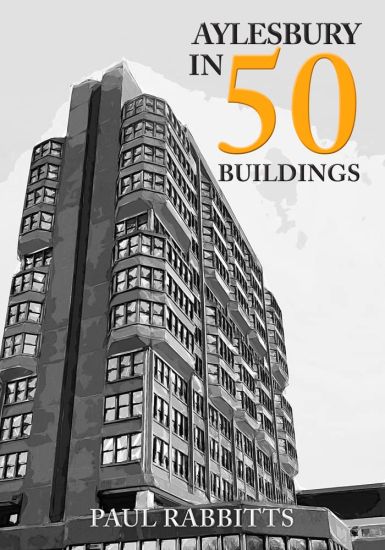
Aylesbury, the county town of Buckinghamshire, started as a Saxon settlement called Aegel’s burgh. By medieval times it had developed into an administrative centre, with its weekly market serving as a focal point for surrounding villages. Over the centuries the main industries were lace and silk making, printing and brewing. Its location on various important routes also led to it becoming a coaching town and, during the nineteenth century, it grew most notably with the arrival of the railway. However, it was in the 1950s that Aylesbury experienced its greatest period of growth when it became an overspill town for London. In this book, author Paul Rabbitts features fifty of the buildings and landmarks in the town to reveal the structures that are a testament to the history and development of Aylesbury. The chosen buildings are drawn from across the centuries and reflect diverse architectural styles and purposes, from educational and entertainment to residential and religious. By exploring Aylesbury’s architectural heritage in an engaging and accessible way, the author charts the changing face of the town and the places that have played a significant or surprising role in its history. Illustrated throughout, Aylesbury in 50 Buildings will be of great interest to residents, visitors and local historians.
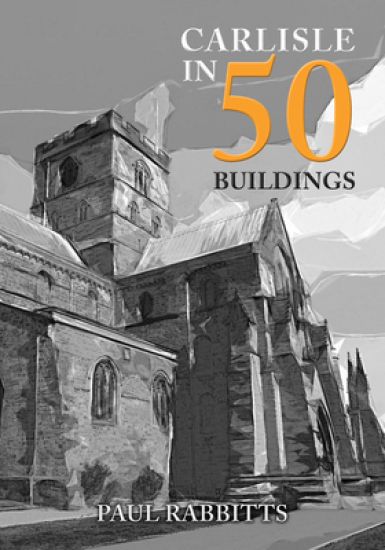
Originally established as a Roman settlement to serve the forts along Hadrian’s Wall, the Cumbrian city of Carlisle has a wealth of fascinating history. Its proximity to Scotland meant that it was a crucial military stronghold and its imposing eleventh-century castle and city walls have witnessed many conflicts through the centuries. During the Industrial Revolution it became an important hub on the railway network and a centre of textile manufacturing. Nicknamed the ‘Great Border City’, Carlisle is still the principal commercial and cultural centre of the county. In Carlisle in 50 Buildings author Paul Rabbitts explores fifty of the city’s architectural landmarks to discover its history, development and the changing way of life for its people. Both ancient and modern structures are featured, which have been used for many different purposes and reflect a wide range of architectural styles. The city’s success is based on its industry, which has shaped its built environment together with the many historic buildings and new structures. All these are celebrated within this well-illustrated book. This engaging and accessible portrait of the city’s rich history and its architectural heritage will appeal to residents and visitors alike.
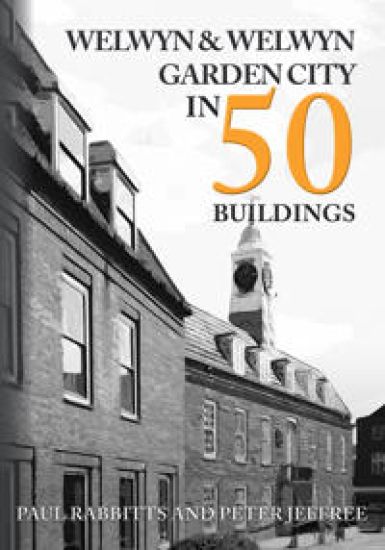
Welwyn & Welwyn Garden City in 50 Buildings
Paul Rabbitts; Peter Jeffree
Amberley Publishing
2021
nidottu
Situated a mile from the Hertfordshire village of Welwyn, the Garden City was founded in 1920. It was the vision of Ebenezer Howard, founder of the garden city movement that aimed to combine the benefits of living in a town with those of living in the country. The French-Canadian Louis de Soissons was appointed as architect and planner and ensured the project's success. Welwyn Garden City's historic significance in town and social planning is global, attracting study and visits from tourists and representatives of civic organisations from abroad. It became one of the UK’s first new towns in 1948 and its success led to the creation of towns including Harlow, Stevenage and Milton Keynes. Over the decades, it has grown in size and many residents now commute to London and elsewhere. Increasing car usage and other social changes mean that Ebenezer Howard’s vision has had to adapt to the demands of modern living. In this book Paul Rabbitts and Peter Jeffree highlight a wide range of buildings and structures that reveal the history and development of Welwyn and its Garden City neighbour. The latter features one of the finest collections of English domestic architecture of the early twentieth century. Illustrated throughout, Welwyn & Welwyn Garden City in 50 Buildings will appeal to residents, visitors and those interested in the garden city movement.
With its magnificent Early English cathedral, timbered buildings and historic houses, Salisbury has a wealth of history and architectural treasures. Its story began 2,500 years ago when an Iron Age fort was built on Salisbury Hill, 2 miles north of the modern town centre, and developed into the town of Old Sarum. The origins of modern Salisbury (New Sarum) date from 1217 when the bishop relocated his seat to Church-owned land to the south of the hill. Work on the cathedral started in 1220 and a thriving town developed in the years that followed. Its woollen cloth industry, together with its location on the road from London to Exeter, brought trade and prosperity here. In this book, authors Paul Rabbitts and Liz Gordon take the reader on an engaging tour of Salisbury’s landmarks and significant buildings from across the centuries. Here are the structures that reveal the history of the town, showing how it developed and telling the story of its people and their way of life. The wide range of structures included range from the cathedral to bridges, almshouses to inns, and cinemas to townhouses. Illustrated throughout, this broad and accessible perspective of Salisbury’s architectural heritage will interest residents and visitors alike.
Today, Bournemouth is one of the favourite resorts on the south coast, but until the early nineteenth century, the area was just heathland where cattle grazed. In 1810, Lewis Tregonwell – regarded as the first inhabitant and founder of Bournemouth – visited the beach with his wife. She loved the area and persuaded him to build a house there. Tregonwell later bought more land and landowners planted pines on the heath, but there was no settlement at Bournemouth until 1837.The railway reached the town in 1870, which made it far easier for people to travel there and increased the number of visitors. Victorian Bournemouth, which was marketed as a health resort, grew at a phenomenal rate and many new buildings that appeared as the town developed remain today. In Bournemouth in 50 Buildings, authors Paul Rabbitts and Liz Gordon highlight the town’s significant architectural landmarks from across the centuries. Through a fascinating and diverse selection of buildings they tell the story of the town’s development, its people and their way of life. Among the places they focus on are churches, hotels, inns, houses, cinemas and educational establishments. The scope of buildings the authors have selected is incredibly wide – ranging from the grand to the modest – and many different architectural styles are featured. Readers will discover everything from beach huts and Boscombe Pier, to the Russell-Cotes Art Gallery and Museum together with modern office blocks and workplaces. Bournemouth in 50 Buildings offers an engaging and valuable historical perspective on the town.
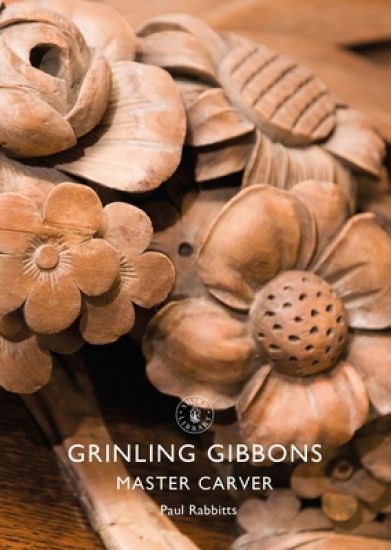
Master Carver Grinling Gibbons (1648–1721) is famous for his breathtakingly delicate, intricate and realistic carvings, both in wood and stone. Tantalising cascades of fruit and flowers, puffy-cheeked cherubs, crowds of figures and flourishes of architecture are all trademark features of his energetic, animated carvings that grace stately homes, palaces, churches and colleges across the country. His work can be found in some of Britain’s most beloved buildings, including St Paul’s Cathedral and Hampton Court Palace. From his early work in the Low Countries to his ‘discovery’ by the diarist John Evelyn in London, and his appointment as the king’s Master Carver, this book celebrates Grinling Gibbons’ unequalled talent, his visionary genius, and his ability to transform humble pieces of wood into some of the most exquisite artworks of his day.
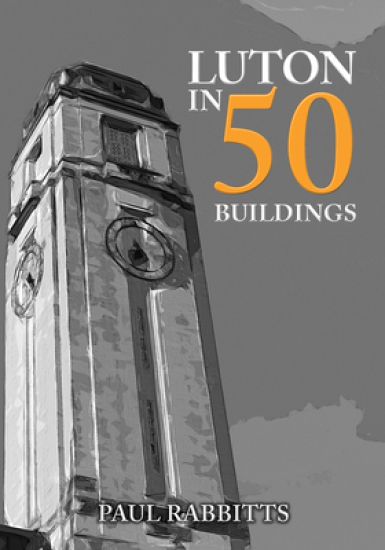
The Bedfordshire town of Luton originated in the sixth century when the Saxons established a farm or settlement (called a ‘tun’) by the River Lea. Farming and agriculture became the major industries, while the local market brought in people from the surrounding villages. The hat-making industry dominated the town from the seventeenth until the twentieth century, while in 1905 Vauxhall Motors opened there, followed by the airport in 1938. Although car manufacturing ceased in 2002, the town continues to prosper with a growing population and much redevelopment taking place. In Luton in 50 Buildings author Paul Rabbitts looks at how the town’s buildings and landmarks, both old and new, reflect its long and fascinating history. Among the places featured are some of the town’s historic churches, inns and residences, the town hall and the Kenilworth Road football ground. Also featured are Luton Central Mosque, the expanding airport and the stately home of Luton Hoo, originally designed by Robert Adam in the eighteenth century for the 3rd Earl of Bute. Each of these structures and landmarks has its own stories to tell, as well as documenting a significant aspect of Luton’s social, cultural and industrial heritage.
Discover the history and architectural treasures of the Berkshire towns of Windsor and Eton in this fascinating exploration of 50 buildings and landmarks.
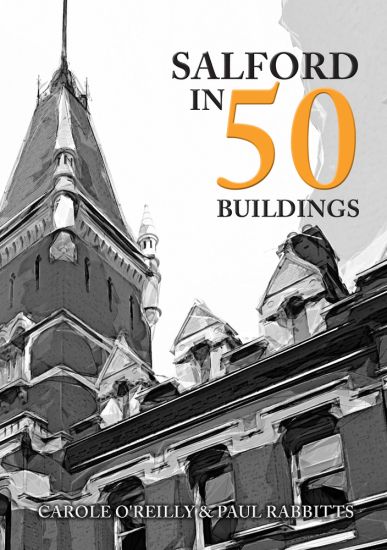
Although little is recorded of its earlier history, Salford is a city of great antiquity. In 1228, Henry III granted the Lancashire town the right to hold a market and an annual fair. Centuries later, it was the Industrial Revolution that had a phenomenal impact, with Salford becoming one of the greatest cotton towns. With the opening of the Manchester Ship Canal in 1894, the newly built docks in Salford became another major factor shaping the local economy. Today the city is made up of five districts: Salford, Eccles, Worsley, Irlam and Cadishead, and Swinton and Pendlebury. Home to 220,000 people, Salford is constantly changing and moving into an exciting future as a thriving cultural, economic and residential location. In Salford in 50 Buildings, authors Carole O’Reilly and Paul Rabbitts uncover fifty of the city’s architectural treasures and landmarks from across the centuries. These are the places that reflect the city’s history and tell the stories of its people and their way of life. Among those featured are university buildings, the cathedral, Irlam railway station, Worsley Old Hall, Ordsall Hall, together with schools, shops, pubs and churches. Each one chronicles a fascinating aspect of the city’s cultural, social and industrial heritage. From urban buzz to greenbelt tranquillity, Salford is building on the mixture of its waterfront, urban and countryside environments to create places where people want to live, work, invest and visit. Its modern structures reflect this change including iconic buildings such as the Lowry Theatre and Salford Quays. The city celebrates its Victorian heritage as well as embracing the future with stunning new architecture.
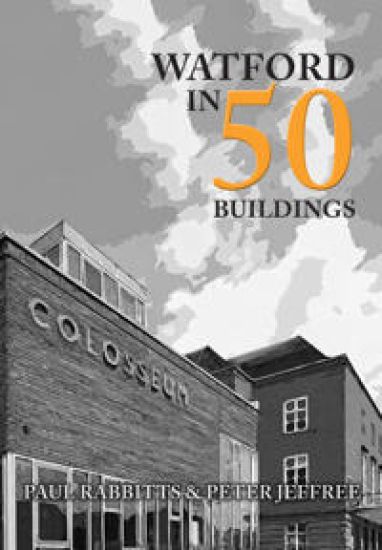
The town of Watford, in Hertfordshire, began as a settlement in the twelfth century when the Abbot of St Albans, who owned the land here, was given permission to hold a weekly market. He chose a site on a slight rise above the ford over the River Colne, along a route already used by travellers. The abbot also arranged for the first parish church - St Mary’s - to be built adjacent to the market. In the Domesday Book there is no mention of Watford. The area of the current town and the land around it belonged to the abbot's manor of Cashio (later Cassio) and it continued to be controlled by the abbot until the sixteenth century. A few buildings remain from this period. Other gems are Monmouth House from the seventeeth century; the Free School, Frogmore House, Benskin House (now Watford Museum), Little Cassiobury and Russells from the eighteenth century; and some of the High Street shops. In this book Paul Rabbitts and Peter Jeffree highlight fifty buildings spanning the centuries that reveal Watford’s rich architectural history and tell the story of the changing face of this Hertfordshire town.
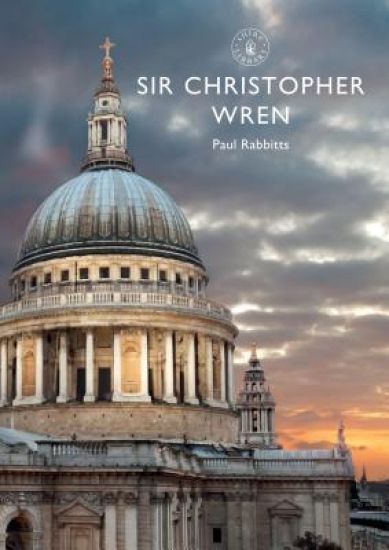
Sir Christopher Wren (1632–1723) is now mostly remembered as a genius of architecture – but he was also an accomplished polymath, who only came to architecture quite late in life. Most famous as the mastermind behind the rebuilding of St Paul’s Cathedral and more than fifty parish churches after the Great Fire of London, among his countless other projects Wren also designed the Royal Hospital at Chelsea, the Royal Naval Hospital at Greenwich, and much of Hampton Court Palace. Replete with colourful images of his buildings, this concise biography tells the story of a man whose creations are still popular tourist attractions to this day, but also casts light on Wren’s credentials as an intellectual and a founding member of the Royal Society.