Kirjojen hintavertailu. Mukana 12 147 521 kirjaa ja 12 kauppaa.

Kirjailija

Paul Rabinow

Kirjat ja teokset yhdessä paikassa: 27 kirjaa, julkaisuja vuosilta 1983-2019, suosituimpien joukossa Michel Foucault. Vertaile teosten hintoja ja tarkista saatavuus suomalaisista kirjakaupoista.

27 kirjaa

Kirjojen julkaisuhaarukka 1983-2019.

A Machine to Make a Future

A Machine to Make a Future

Paul Rabinow; Talia Dan-Cohen

Princeton University Press
2006
pokkari
A Machine to Make a Future represents a remarkably original look at the present and possible future of biotechnology research in the wake of the mapping of the human genome. The central tenet of Celera Diagnostics--the California biotech company whose formative work during 2003 is the focus of the book--is that the emergent knowledge about the genome, with its profound implications for human health, can now be turned into a powerful diagnostic apparatus--one that will yield breakthrough diagnostic and therapeutic products (and, potentially, profit). Celera's efforts--assuming they succeed--may fundamentally reshape the fabric of how health and health care are understood, practiced, and managed. Presenting a series of interviews with all of the key players in Celera Diagnostics, Paul Rabinow and Talia Dan-Cohen open a fascinating window on the complexity of corporate scientific innovation. This marks a radical departure from other books on the biotech industry by chronicling the vicissitudes of a project during a finite time period, in the words of the actors themselves. Ultimately, the authors conclude, Celera Diagnostics is engaged in a future characterized not by geniuses and their celebrated discoveries but by a largely anonymous and widely distributed profusion of data and results--a "machine to make a future." In their new afterword, Rabinow and Dan-Cohen revisit Celera Diagnostics as its mighty machine grinds along, wondering, along with the scientists, "what constitutes success and what constitutes failure?" The pathos of the situation turns on how one poses the question as much as how one answers it.
Michel Foucault

Michel Foucault

Hubert L. Dreyfus; Paul Rabinow; Michel Foucault

University of Chicago Press
1983
pokkari
Summarizes the themes and arguments of the French philosopher on madness, medicine, sex, truth, and power, and explains Foucault's moral and historical outlook
Rethinking The Subject

Rethinking The Subject

James Faubion; Paul Rabinow

Routledge
2019
sidottu
Since the early 1970s, European thinkers have departed notably from their predecessors in order to pursue analytical programs more thoroughly their own. Rethinking the Subject brings together in one volume some of the most influential writings of Foucault, Habermas, Bourdieu, Pizzorno, Macfarlane, and other authors whose ideas have had a worldwide
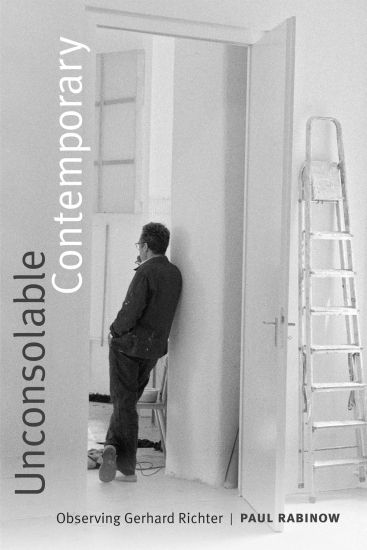
Unconsolable Contemporary

Unconsolable Contemporary

Paul Rabinow

Duke University Press
2017
sidottu
In Unconsolable Contemporary Paul Rabinow continues his explorations of "a philosophic anthropology of the contemporary." Defining the contemporary as a moving ratio in which the modern becomes historical, Rabinow shows how an anthropological ethos of the contemporary can be realized by drawing on the work of art historians, cultural critics, social theorists, and others, thereby inventing a methodology he calls anthropological assemblage. He focuses on the work and persona of German painter Gerhard Richter, demonstrating how reflecting on Richter's work provides rich insights into the practices and stylization of what, following Aby Warburg, one might call "the afterlife of the modern." Rabinow opens with analyses of Richter's recent Birkenau exhibit: both the artwork and its critical framing. He then chronicles Richter's experiments in image-making as well as his subtle inclusion of art historical and critical discourses about the modern. This, Rabinow contends, enables Richter to signal his awareness of the stakes of such theorizing while refusing the positioning of his work by modernist critical theorists. In this innovative work, Rabinow elucidates the ways meaning is created within the contemporary.
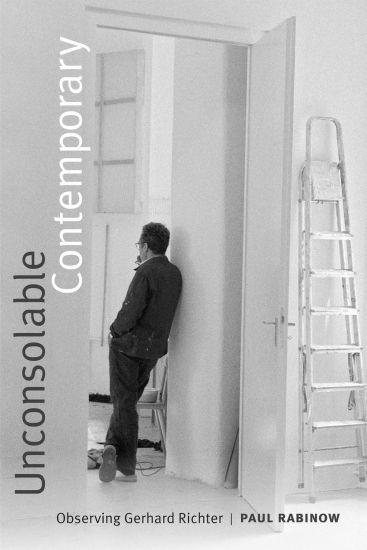
Unconsolable Contemporary

Unconsolable Contemporary

Paul Rabinow

Duke University Press
2017
pokkari
In Unconsolable Contemporary Paul Rabinow continues his explorations of "a philosophic anthropology of the contemporary." Defining the contemporary as a moving ratio in which the modern becomes historical, Rabinow shows how an anthropological ethos of the contemporary can be realized by drawing on the work of art historians, cultural critics, social theorists, and others, thereby inventing a methodology he calls anthropological assemblage. He focuses on the work and persona of German painter Gerhard Richter, demonstrating how reflecting on Richter's work provides rich insights into the practices and stylization of what, following Aby Warburg, one might call "the afterlife of the modern." Rabinow opens with analyses of Richter's recent Birkenau exhibit: both the artwork and its critical framing. He then chronicles Richter's experiments in image-making as well as his subtle inclusion of art historical and critical discourses about the modern. This, Rabinow contends, enables Richter to signal his awareness of the stakes of such theorizing while refusing the positioning of his work by modernist critical theorists. In this innovative work, Rabinow elucidates the ways meaning is created within the contemporary.
Michel Foucault

Michel Foucault

Hubert L. Dreyfus; Paul Rabinow

Routledge
2016
sidottu
First Published in 1984. This book was born out of a disagreement among friends. Paul Rabinow, attending a seminar given in 1979 by Hubert Dreyfus and John Searle which concerned, among other things, Michel Foucault, objected to the characterization of Foucault as a typical " structuralist." This challenge stirred a discussion that led to the proposal of a joint article which soon became a medium-length book.
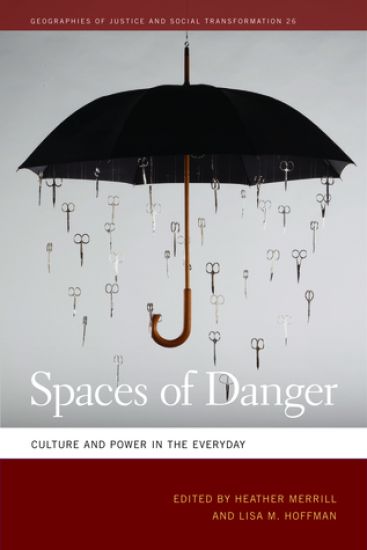
Spaces of Danger

Spaces of Danger

Paul Rabinow

University of Georgia Press
2015
sidottu
These twelve original essays by geographers and anthropologists offer a deep critical understanding of Allan Pred’s pathbreaking and eclectic cultural Marxist approach, with a focus on his concept of “situated ignorance”: the production and reproduction of power and inequality by regimes of truth through strategically deployed misinformation, diversions, and silences. As the essays expose the cultural and material circumstances in which situated ignorance persists, they also add a previously underexplored spatial dimension to Walter Benjamin’s idea of “moments of danger.”The volume invokes the aftermath of the July 2011 attacks by far-right activist Anders Breivik in Norway, who ambushed a Labor Party youth gathering and bombed a government building, killing and injuring many. Breivik had publicly and forthrightly declared war against an array of liberal attitudes he saw threatening Western civilization. However, as politicians and journalists interpreted these events for mass consumption, a narrative quickly emerged that painted Breivik as a lone madman and steered the discourse away from analysis of the resurgent right-wing racisms and nationalisms in which he was immersed.The Breivik case is merely one of the most visible recent examples, say editors Heather Merrill and Lisa Hoffman, of the unchallenged production of knowledge in the public sphere. In essays that range widely in topic and setting—for example, brownfield development in China, a Holocaust memorial in Germany, an art gallery exhibit in South Africa—this volume peels back layers of “situated practices and their associated meaning and power relations.” Spaces of Danger offers analytical and conceptual tools of a Predian approach to interrogate the taken-for-granted and make visible and legible that which is silenced.
Designs on the Contemporary

Designs on the Contemporary

Paul Rabinow; Anthony Stavrianakis

University of Chicago Press
2014
sidottu
Designs on the Contemporary pursues the challenge of how to design and put into practice strategies for inquiring into the intersections of philosophy and anthropology. Drawing on the conceptual repertoires of Weber, Foucault, and Dewey, among others, Paul Rabinow and Anthony Stavrianakis reflect on and experiment with how to give form to anthropological inquiry and its aftermath, with special attention to the ethical formation and ramifications of this mode of engagement. The authors continue their explorations of the contemporary from past works: how to conceptualize, test, and give form to breakdowns of truth and conduct, as well as how to open up possibilities for the remediation of such breakdowns. They offer a surprising and contrasting pair of case studies of two figures who engaged with contemporary breakdowns: Salman Rushdie and Gerhard Richter, showing how both men formulated different new approaches to anthropology for the twenty-first century.
Designs on the Contemporary

Designs on the Contemporary

Paul Rabinow; Anthony Stavrianakis

University of Chicago Press
2014
nidottu
Designs on the Contemporary pursues the challenge of how to design and put into practice strategies for inquiring into the intersections of philosophy and anthropology. Drawing on the conceptual repertoires of Weber, Foucault, and Dewey, among others, Paul Rabinow and Anthony Stavrianakis reflect on and experiment with how to give form to anthropological inquiry and its aftermath, with special attention to the ethical formation and ramifications of this mode of engagement. The authors continue their explorations of the contemporary from past works: how to conceptualize, test, and give form to breakdowns of truth and conduct, as well as how to open up possibilities for the remediation of such breakdowns. They offer a surprising and contrasting pair of case studies of two figures who engaged with contemporary breakdowns: Salman Rushdie and Gerhard Richter, showing how both men formulated different new approaches to anthropology for the twenty-first century.
Demands of the Day

Demands of the Day

Paul Rabinow; Anthony Stavrianakis

University of Chicago Press
2013
sidottu
"Demands of the Day" asks about the logical standards and forms that should guide ethical and experimental anthropology in the twenty-first century. Anthropologists Paul Rabinow and Anthony Stavrianakis do so by taking up Max Weber's notion of the "demands of the day." Just as the demand of the day for anthropology decades ago consisted of thinking about fieldwork, today, they argue, the demand is to examine what happens after, how the experiences of fieldwork are gathered, curated, narrated, and ultimately made available for an anthropological practice that moves beyond mere ethnographic description. Rabinow and Stavrianakis draw on experiences from an innovative set of anthropological experiments that investigated how and whether the human and biological sciences could be brought into a mutually enriching relationship. Conceptualizing the anthropological and philosophic ramifications of these inquiries, they offer a bold challenge to contemporary anthropology to undertake a more rigorous examination of its own practices, blind spots, and capacities, in order to meet the demands of our day.
Demands of the Day

Demands of the Day

Paul Rabinow; Anthony Stavrianakis

University of Chicago Press
2013
nidottu
"Demands of the Day" asks about the logical standards and forms that should guide ethical and experimental anthropology in the twenty-first century. Anthropologists Paul Rabinow and Anthony Stavrianakis do so by taking up Max Weber's notion of the "demands of the day." Just as the demand of the day for anthropology decades ago consisted of thinking about fieldwork, today, they argue, the demand is to examine what happens after, how the experiences of fieldwork are gathered, curated, narrated, and ultimately made available for an anthropological practice that moves beyond mere ethnographic description. Rabinow and Stavrianakis draw on experiences from an innovative set of anthropological experiments that investigated how and whether the human and biological sciences could be brought into a mutually enriching relationship. Conceptualizing the anthropological and philosophic ramifications of these inquiries, they offer a bold challenge to contemporary anthropology to undertake a more rigorous examination of its own practices, blind spots, and capacities, in order to meet the demands of our day.
Designing Human Practices

Designing Human Practices

Paul Rabinow; Gaymon Bennett

University of Chicago Press
2012
nidottu
In 2006, anthropologists Paul Rabinow and Gaymon Bennett set out to rethink the role that human sciences play in biological research, creating the Human Practices division of the Synthetic Biology Engineering Research Center - a facility established to create design standards for the engineering of new enzymes, genetic circuits, cells, and other biological entities - to formulate a new approach to the ethical, security, and philosophical considerations of controversial biological work. They sought not simply to act as watchdogs but to integrate the biosciences with their own discipline in a more fundamentally interdependent way, inventing a new, dynamic, and experimental anthropology that they could bring to bear on the center's biological research. "Designing Human Practices" is a detailed account of this anthropological experiment and, ultimately, its rejection. It provides new insights into the possibilities and limitations of collaboration, and diagnoses the micropolitics which effectively constrained the potential for mutual scientific flourishing. Synthesizing multiple disciplines, including biology, genetics, anthropology, and philosophy, alongside a thorough examination of funding entities such as the National Science Foundation, "Designing Human Practices" pushes the social study of science into new and provocative territory, utilizing a real-world experience as a springboard for timely reflections on how the human and life sciences can and should transform each other.
Designing Human Practices

Designing Human Practices

Paul Rabinow; Gaymon Bennett

University of Chicago Press
2012
sidottu
In 2006, anthropologists Paul Rabinow and Gaymon Bennett set out to rethink the role that human sciences play in biological research, creating the Human Practices division of the Synthetic Biology Engineering Research Center - a facility established to create design standards for the engineering of new enzymes, genetic circuits, cells, and other biological entities - to formulate a new approach to the ethical, security, and philosophical considerations of controversial biological work. They sought not simply to act as watchdogs but to integrate the biosciences with their own discipline in a more fundamentally interdependent way, inventing a new, dynamic, and experimental anthropology that they could bring to bear on the center's biological research. "Designing Human Practices" is a detailed account of this anthropological experiment and, ultimately, its rejection. It provides new insights into the possibilities and limitations of collaboration, and diagnoses the micropolitics which effectively constrained the potential for mutual scientific flourishing. Synthesizing multiple disciplines, including biology, genetics, anthropology, and philosophy, alongside a thorough examination of funding entities such as the National Science Foundation, "Designing Human Practices" pushes the social study of science into new and provocative territory, utilizing a real-world experience as a springboard for timely reflections on how the human and life sciences can and should transform each other.
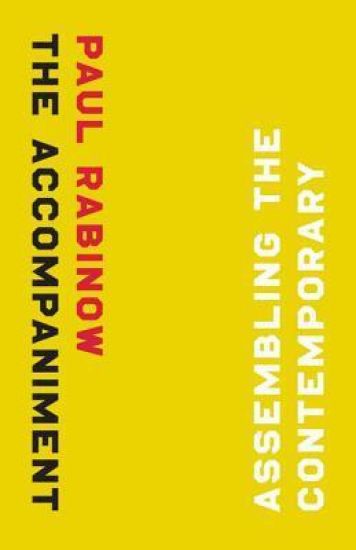
The Accompaniment

The Accompaniment

Paul Rabinow

University of Chicago Press
2011
nidottu
In this culmination of his search for anthropological concepts and practices appropriate to the twenty-first century, Paul Rabinow contends that to make sense of the contemporary anthropologists must invent new forms of inquiry. He begins with an extended rumination on what he gained from two of his formative mentors: Michel Foucault and Clifford Geertz. Reflecting on their lives as teachers and thinkers, as well as human beings, he poses questions about their critical limitations, their unfulfilled hopes, and the lessons he learned from and with them. This spirit of collaboration animates "The Accompaniment", as Rabinow assesses the last ten years of his career, largely spent engaging in a series of intensive experiments in collaborative research and often focused on cutting-edge work in synthetic biology. He candidly details the successes and failures of shifting his teaching practice away from individual projects, placing greater emphasis on participation over observation in research, and designing and using websites as a venue for collaboration. Analyzing these endeavors alongside his efforts to apply an anthropological lens to the natural sciences, Rabinow lays the foundation for an ethically grounded anthropology ready and able to face the challenges of our contemporary world.
The Accompaniment

The Accompaniment

Paul Rabinow

University of Chicago Press
2011
sidottu
In this culmination of his search for anthropological concepts and practices appropriate to the twenty-first century, Paul Rabinow contends that to make sense of the contemporary anthropologists must invent new forms of inquiry. He begins with an extended rumination on what he gained from two of his formative mentors: Michel Foucault and Clifford Geertz. Reflecting on their lives as teachers and thinkers, as well as human beings, he poses questions about their critical limitations, their unfulfilled hopes, and the lessons he learned from and with them. This spirit of collaboration animates "The Accompaniment", as Rabinow assesses the last ten years of his career, largely spent engaging in a series of intensive experiments in collaborative research and often focused on cutting-edge work in synthetic biology. He candidly details the successes and failures of shifting his teaching practice away from individual projects, placing greater emphasis on participation over observation in research, and designing and using websites as a venue for collaboration. Analyzing these endeavors alongside his efforts to apply an anthropological lens to the natural sciences, Rabinow lays the foundation for an ethically grounded anthropology ready and able to face the challenges of our contemporary world.
Designs for an Anthropology of the Contemporary

Designs for an Anthropology of the Contemporary

Paul Rabinow; George E. Marcus; James D. Faubion; Tobias Rees

Duke University Press
2008
pokkari
In this compact volume two of anthropology’s most influential theorists, Paul Rabinow and George E. Marcus, engage in a series of conversations about the past, present, and future of anthropological knowledge, pedagogy, and practice. James D. Faubion joins in several exchanges to facilitate and elaborate the dialogue, and Tobias Rees moderates the discussions and contributes an introduction and an afterword to the volume. Most of the conversations are focused on contemporary challenges to how anthropology understands its subject and how ethnographic research projects are designed and carried out. Rabinow and Marcus reflect on what remains distinctly anthropological about the study of contemporary events and processes, and they contemplate productive new directions for the field. The two converge in Marcus’s emphasis on the need to redesign pedagogical practices for training anthropological researchers and in Rabinow’s proposal of collaborative initiatives in which ethnographic research designs could be analyzed, experimented with, and transformed.Both Rabinow and Marcus participated in the milestone collection Writing Culture: The Poetics and Politics of Ethnography. Published in 1986, Writing Culture catalyzed a reassessment of how ethnographers encountered, studied, and wrote about their subjects. In the opening conversations of Designs for an Anthropology of the Contemporary, Rabinow and Marcus take stock of anthropology’s recent past by discussing the intellectual scene in which Writing Culture intervened, the book’s contributions, and its conceptual limitations. Considering how the field has developed since the publication of that volume, they address topics including ethnography’s self-reflexive turn, scholars’ increased focus on questions of identity, the Public Culture project, science and technology studies, and the changing interests and goals of students. Designs for an Anthropology of the Contemporary allows readers to eavesdrop on lively conversations between anthropologists who have helped to shape their field’s recent past and are deeply invested in its future.
Designs for an Anthropology of the Contemporary

Designs for an Anthropology of the Contemporary

Paul Rabinow; George E. Marcus; James D. Faubion; Tobias Rees

Duke University Press
2008
sidottu
In this compact volume two of anthropology’s most influential theorists, Paul Rabinow and George E. Marcus, engage in a series of conversations about the past, present, and future of anthropological knowledge, pedagogy, and practice. James D. Faubion joins in several exchanges to facilitate and elaborate the dialogue, and Tobias Rees moderates the discussions and contributes an introduction and an afterword to the volume. Most of the conversations are focused on contemporary challenges to how anthropology understands its subject and how ethnographic research projects are designed and carried out. Rabinow and Marcus reflect on what remains distinctly anthropological about the study of contemporary events and processes, and they contemplate productive new directions for the field. The two converge in Marcus’s emphasis on the need to redesign pedagogical practices for training anthropological researchers and in Rabinow’s proposal of collaborative initiatives in which ethnographic research designs could be analyzed, experimented with, and transformed.Both Rabinow and Marcus participated in the milestone collection Writing Culture: The Poetics and Politics of Ethnography. Published in 1986, Writing Culture catalyzed a reassessment of how ethnographers encountered, studied, and wrote about their subjects. In the opening conversations of Designs for an Anthropology of the Contemporary, Rabinow and Marcus take stock of anthropology’s recent past by discussing the intellectual scene in which Writing Culture intervened, the book’s contributions, and its conceptual limitations. Considering how the field has developed since the publication of that volume, they address topics including ethnography’s self-reflexive turn, scholars’ increased focus on questions of identity, the Public Culture project, science and technology studies, and the changing interests and goals of students. Designs for an Anthropology of the Contemporary allows readers to eavesdrop on lively conversations between anthropologists who have helped to shape their field’s recent past and are deeply invested in its future.
Marking Time

Marking Time

Paul Rabinow

Princeton University Press
2007
pokkari
In Marking Time, Paul Rabinow presents his most recent reflections on the anthropology of the contemporary. Drawing richly on the work of Michel Foucault, John Dewey, Niklas Luhmann, and, most interestingly, German painter Gerhard Richter, Rabinow offers a set of conceptual tools for scholars examining cutting-edge practices in the life sciences, security, new media and art practices, and other emergent phenomena. Taking up topics that include bioethics, anger and competition among molecular biologists, the lessons of the Drosophila genome, the nature of ethnographic observation in radically new settings, and the moral landscape shared by scientists and anthropologists, Rabinow shows how anthropology remains relevant to contemporary debates. By turning abstract philosophical problems into real-world explorations and offering original insights, Marking Time is a landmark contribution to the continuing re-invention of anthropology and the human sciences.
Reflections on Fieldwork in Morocco

Reflections on Fieldwork in Morocco

Paul Rabinow; Robert N. Bellah; Pierre Bourdieu

University of California Press
2007
pokkari
In this landmark study, now celebrating thirty years in print, Paul Rabinow takes as his focus the fieldwork that anthropologists do. How valid is the process? To what extent do the cultural data become artifacts of the interaction between anthropologist and informants? Having first published a more standard ethnographic study about Morocco, Rabinow here describes a series of encounters with his informants in that study, from a French innkeeper clinging to the vestiges of a colonial past, to the rural descendants of a seventeenth-century saint. In a new preface, Rabinow considers the thirty-year life of this remarkable book and his own distinguished career.
Anthropos Today

Anthropos Today

Paul Rabinow

Princeton University Press
2003
pokkari
The discipline of anthropology is, at its best, characterized by turbulence, self-examination, and inventiveness. In recent decades, new thinking and practice within the field has certainly reflected this pattern, as shown for example by numerous fruitful ventures into the "politics and poetics" of anthropology. Surprisingly little attention, however, has been given to the simple insight that anthropology is composed of claims, whether tacit or explicit, about anthropos and about logos--and the myriad ways in which these two Greek nouns have been, might be, and should be, connected. Anthropos Today represents a pathbreaking effort to fill this gap. Paul Rabinow brings together years of distinguished work in this magisterial volume that seeks to reinvigorate the human sciences. Specifically, he assembles a set of conceptual tools--"modern equipment"--to assess how intellectual work is currently conducted and how it might change. Anthropos Today crystallizes Rabinow's previous ethnographic inquiries into the production of truth about life in the world of biotechnology and genome mapping (and his invention of new ways of practicing this pursuit), and his findings on how new practices of life, labor, and language have emerged and been institutionalized. Here, Rabinow steps back from empirical research in order to reflect on the conceptual and ethical resources available today to conduct such inquiries. Drawing richly on Foucault and many other thinkers including Weber and Dewey, Rabinow concludes that a "contingent practice" must be developed that focuses on "events of problematization." Brilliantly synthesizing insights from American, French, and German traditions, he offers a lucid, deeply learned, original discussion of how one might best think about anthropos today.