Kirjojen hintavertailu. Mukana 12 390 323 kirjaa ja 12 kauppaa.

Kirjailija

Paul S. Fiddes

Kirjat ja teokset yhdessä paikassa: 22 kirjaa, julkaisuja vuosilta 1989-2025, suosituimpien joukossa Baptists and the Communion of Saints. Vertaile teosten hintoja ja tarkista saatavuus suomalaisista kirjakaupoista.

Mukana myös kirjoitusasut: Paul S Fiddes

22 kirjaa

Kirjojen julkaisuhaarukka 1989-2025.

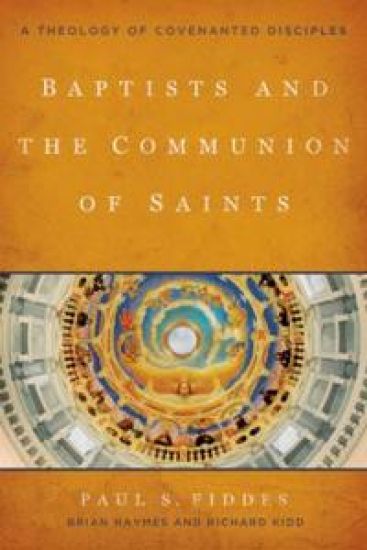
Baptists and the Communion of Saints

Baptists and the Communion of Saints

Paul S. Fiddes; Brian Haymes; Richard Kidd

Baylor University Press
2014
nidottu
This book fuses the Church's traditional doctrine of the Communion of Saints and Baptists' theology of salvation and discipleship--charting how Baptists can speak of a communion of saints here and now. Paul Fiddes and his coauthors emphasize that this communion is only possible within the fellowship of the triune God who covenants with and for believers. Reframing communion within a theology of covenant enables the affirmation of the practice of prayer and mutual support with all faithful disciples, both alive and dead. Such a covenantal understanding of communion avoids an unhealthy obsession with communication with those who have died. Baptists and the Communion of Saints thus makes a significant and practical difference in the way Baptists understand the nature of the church, prepare their worship, care for the dying and the bereaved, go on spiritual journeys, and celebrate baptism and the Lord's Supper.
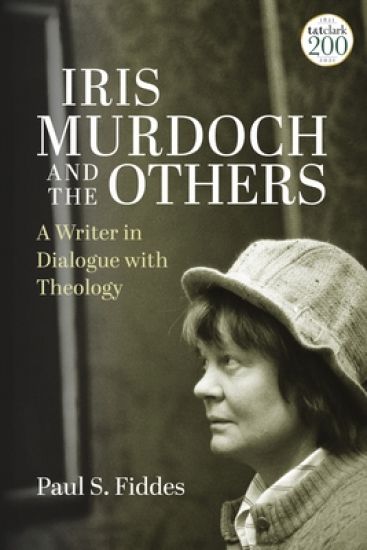
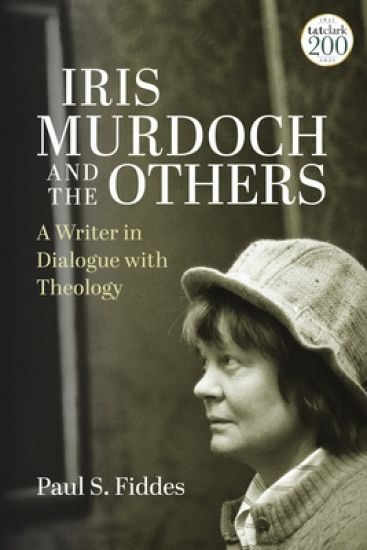
Iris Murdoch and the Others

Iris Murdoch and the Others

Paul S. Fiddes

BLOOMSBURY PUBLISHING PLC
2023
nidottu
The 'others' examined by Fiddes are mainly those with whom Murdoch entered into explicit dialogue in her novels and philosophical writing - including Immanuel Kant, Simone Weil, Dietrich Bonhoeffer, Rudolph Bultmann, Paul Tillich, Don Cupitt, Donald Mackinnon and Jacques Derrida. This 'historic' dialogue is, however, placed within a wider dialogue between literature and theology being conducted by the author, and 'others' are brought into relation with Murdoch in order to illuminate this more extensive conversation - notably the poet Gerard Manley Hopkins and the feminist philosopher Julia Kristeva. The book demonstrates that characteristic themes in Murdoch’s novels and philosophy - the love of the Good, the death of the ego, illusory consolations, the death of God, the modifying of the will by 'waiting', the sublime and the beautiful, and attention to other things and persons - all take on a greater meaning when placed in the context of her life-long conversation with theology. The exploration of this context is deepened in this volume by reference to annotations and notes that Murdoch made in a number of theological books in her personal library.
Emmaus

Emmaus

John Weaver; Paul S Fiddes

Wipf Stock Publishers
2022
pokkari
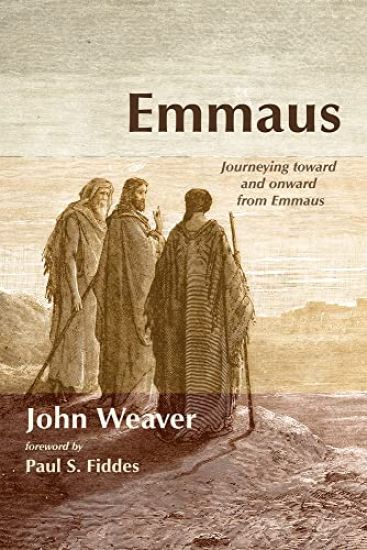
This book is about discipleship and is a witness to God's grace; seeing God in others and in creation; learning about God through church, scientific discovery, and theological education; preaching and pastoring; journeying with others; and teaching and exploring life and the world through theological reflection. The post-resurrection account of Jesus meeting two disciples on the road to Emmaus (Luke 24:13-35) is the motif which is the central theme of the book and which shapes our reflection on the ways in which God calls and equips Christians in their life journey. It is a faith story that asks questions about how God acts in the world and in human lives; reflects on the nature of God and on God's desire for every human life; and on sharing the good news of new possibilities for a life in Christ, a life in all the fullness that God has purposed, where the Christ who accompanies us on the road is able to make sense of our experiences. My hope is that readers will benefit from, and be challenged by, the testimony, theological reflection, and biblical exploration in this account of how we experience God's grace and calling on our lives.
Emmaus

Emmaus

John Weaver; Paul S Fiddes

Wipf Stock Publishers
2022
sidottu
This book is about discipleship and is a witness to God's grace; seeing God in others and in creation; learning about God through church, scientific discovery, and theological education; preaching and pastoring; journeying with others; and teaching and exploring life and the world through theological reflection. The post-resurrection account of Jesus meeting two disciples on the road to Emmaus (Luke 24:13-35) is the motif which is the central theme of the book and which shapes our reflection on the ways in which God calls and equips Christians in their life journey. It is a faith story that asks questions about how God acts in the world and in human lives; reflects on the nature of God and on God's desire for every human life; and on sharing the good news of new possibilities for a life in Christ, a life in all the fullness that God has purposed, where the Christ who accompanies us on the road is able to make sense of our experiences. My hope is that readers will benefit from, and be challenged by, the testimony, theological reflection, and biblical exploration in this account of how we experience God's grace and calling on our lives.
More Things in Heaven and Earth

More Things in Heaven and Earth

Paul S. Fiddes

University of Virginia Press
2022
sidottu
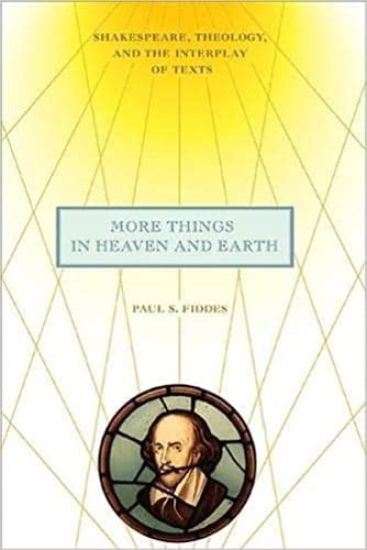
Shakespeare’s plays are filled with religious references and spiritual concerns. His characters—like Hamlet in this book’s title—speak the language of belief. Theology can enable the modern reader to see more clearly the ways in which Shakespeare draws on the Bible, doctrine, and the religious controversies of the long English Reformation. But as Oxford don Paul Fiddes shows in his intertextual approach, the theological thought of our own time can in turn be shaped by the reading of Shakespeare’s texts and the viewing of his plays.In More Things in Heaven and Earth, Fiddes argues that Hamlet’s famous phrase not only underscores the blurred boundaries between the warring Protestantism and Catholicism of Shakespeare’s time; it is also an appeal for basic spirituality, free from any particular doctrinal scheme. This spirituality is characterized by the belief in prioritizing loving relations over institutions and social organization. And while it also implies a constant awareness of mortality, it seeks a transcendence in which love outlasts even death. In such a spiritual vision, forgiveness is essential, human justice is always imperfect, communal values overcome political supremacy, and one is on a quest to find the story of one’s own life. It is in this context that Fiddes considers not only the texts behind Shakespeare’s plays but also what can be the impact of his plays on the writing of doctrinal texts by theologians today. Fiddes ultimately shows how this more expansive conception of Shakespeare is grounded in the trinitarian relations of God in which all the texts of the world are held and shaped.
Iris Murdoch and the Others

Iris Murdoch and the Others

Paul S. Fiddes

T. T.Clark Ltd
2021
sidottu
The 'others' examined by Fiddes are mainly those with whom Murdoch entered into explicit dialogue in her novels and philosophical writing - including Immanuel Kant, Simone Weil, Dietrich Bonhoeffer, Rudolph Bultmann, Paul Tillich, Don Cupitt, Donald Mackinnon and Jacques Derrida. This 'historic' dialogue is, however, placed within a wider dialogue between literature and theology being conducted by the author, and 'others' are brought into relation with Murdoch in order to illuminate this more extensive conversation - notably the poet Gerard Manley Hopkins and the feminist philosopher Julia Kristeva. The book demonstrates that characteristic themes in Murdoch’s novels and philosophy - the love of the Good, the death of the ego, illusory consolations, the death of God, the modifying of the will by 'waiting', the sublime and the beautiful, and attention to other things and persons - all take on a greater meaning when placed in the context of her life-long conversation with theology. The exploration of this context is deepened in this volume by reference to annotations and notes that Murdoch made in a number of theological books in her personal library.
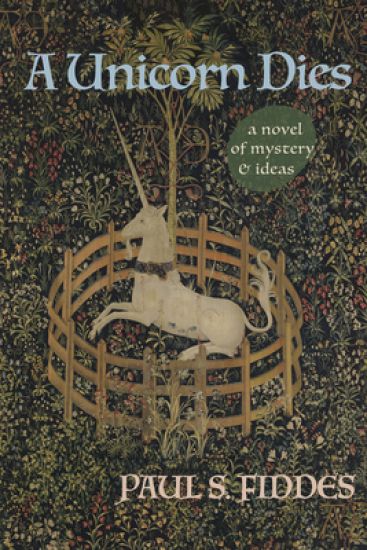
A Unicorn Dies

A Unicorn Dies

Paul S Fiddes

Cascade Books
2019
pokkari
Giles Questing, an undergraduate student at the University of Oxford, finds his life taking an unexpected turn after the suspicious death of a PhD student, a death the police believe to be suicide. He determines to solve the mystery by following a trail of artworks that depict a unicorn. Travelling to museums and galleries, he gradually discovers the truth about whether the student has taken his own life or been murdered, and who - if anyone - is guilty. His quest immerses him in the world of the unicorn in medieval and Renaissance art, and introduces him to the present-day obsession with the unicorn in the media, advertising, and social networks. All this enables him to crack the code of the unicorn that has been buried in the tradition of the Christian church for many years, and to answer the questions he has about a death that deeply affects him personally and that finally threatens his own life.
A Unicorn Dies

A Unicorn Dies

Paul S Fiddes

Cascade Books
2019
sidottu
Giles Questing, an undergraduate student at the University of Oxford, finds his life taking an unexpected turn after the suspicious death of a PhD student, a death the police believe to be suicide. He determines to solve the mystery by following a trail of artworks that depict a unicorn. Travelling to museums and galleries, he gradually discovers the truth about whether the student has taken his own life or been murdered, and who - if anyone - is guilty. His quest immerses him in the world of the unicorn in medieval and Renaissance art, and introduces him to the present-day obsession with the unicorn in the media, advertising, and social networks. All this enables him to crack the code of the unicorn that has been buried in the tradition of the Christian church for many years, and to answer the questions he has about a death that deeply affects him personally and that finally threatens his own life.
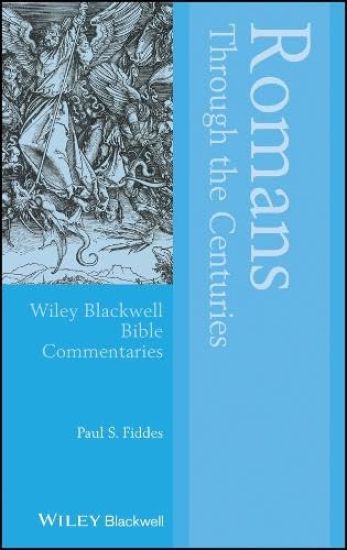
Romans Through the Centuries

Romans Through the Centuries

Paul S. Fiddes

Wiley-Blackwell (an imprint of John Wiley Sons Ltd)
2014
nidottu
"Romans" is one of the key epistles and the first Pauline letter in the New Testament. It is primarily a theological document and is therefore fundamental to the formation of Christian belief. Written by Paul as he prepared to visit Rome for the first time, it is a thoughtful letter to a well-established community whose faith and religious habits have become widely known and whom he regards with some reverence. "Romans" is a rich book from a biblical studies and theological point of view. In it, Paul makes his declaration that a person is justified by faith rather than works, a view which became of critical importance in the Reformation. His discussion of the role of the Law versus faith marked an important turning point in the disjuncture between Christianity and Judaism. Despite this, Paul argues that salvation is available for everyone, and identifies Abraham as the father of both Judaism and Christianity, linking the religions in one trajectory. The cultural impact of "Romans" has been immense. During the Reformation, "Romans" was drawn on extensively by Luther in his attack on the Catholic Church. In later centuries, it was tremendously influential on major theologians such as Karl Barth. In art and literature, the theology of "Romans" has influenced many fine works of art including many depicting the Christ child sitting in Abraham's lap; and the division between love and the law is the bedrock of plays such as "The Merchant of Venice", "Measure for Measure", and Kafka's "The Trial". Many expressions from "Romans" have entered the English language ('hoping against hope') and been incorporated into popular hymns, especially those penned by the Wesleys. This volume will explore all the major influences of "Romans" in social, political, theological and cultural life.
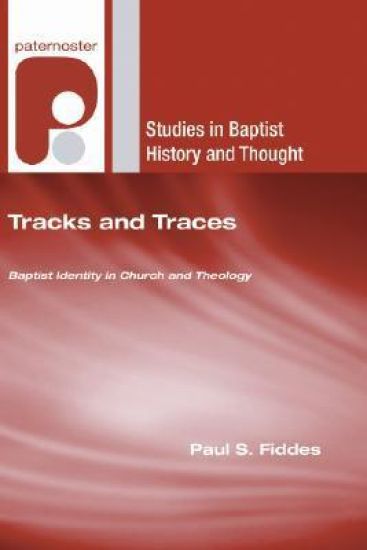
Tracks and Traces

Tracks and Traces

Paul S. Fiddes

Wipf Stock Publishers
2007
nidottu
This is a comprehensive, yet unusual, book on the faith and life of Baptist Christians. It explores a Baptist understanding of the church, ministry, sacraments, and mission from a thoroughly theological perspective. In a series of interlinked essays, the author relates Baptist identity to a theology of covenant, and to participation in the communion of the triune God. The book thus surveys the "tracks" of heritage, giving a solid historical background to each of the major themes, while at the same time offering "traces" of possible paths for the future, based on a tracing out of a vision of God.
Participating in God

Participating in God

Paul S. Fiddes

Westminster/John Knox Press,U.S.
2000
nidottu
In Participating in God, Paul Fiddes seeks to develop an image of God that is both appropriate to the demands of pastoral care and firmly grounded in the revelation of God. He explores the way in which pastoral care shapes our doctrine of God and how faith in the triune God in turn shapes the practice of pastoral care. Fiddes elaborates on the Trinitarian context for the pastoral acts of intercessory prayer, suffering, granting forgiveness, the facing of death, the exercising of spiritual gifts, and the sacraments.
The Creative Suffering of God

The Creative Suffering of God

Paul S. Fiddes

Clarendon Press
1992
nidottu
The theme that God suffers with his world has become a familiar one in recent years, but a careful examination is needed of what it means to talk about the suffering of God, avoiding the danger of a merely sentimental belief. This book offers a consistent way of thinking about a God who suffers supremely and yet is still the kind of God to whom the Christian tradition has witnessed, and also about a God who suffers universally and yet is still present uniquely in the cross of Christ. It is at once both a survey of recent thought about the suffering of God and a proposal for a way forward in this important area of Christian theology. The author surveys four main trends of recent thought: the 'theology of the cross' in modern German theology (as represented particularly in the work of Karl Barth, Jürgen Moltmann, and Eberhard Jüngel); American process theology; 'the death of God' theology; and finally, the rejection of the whole idea of divine passibility by modern followers of classical theism. He draws upon these schools of thought in the course of reflecting upon various aspects of the main theme of the study. This thematic structure enables an idea of divine suffering to be developed throughout the book, affirming that God freely chooses to limit himself, to suffer change, to journey through time and even to experience death while remaining the living God.
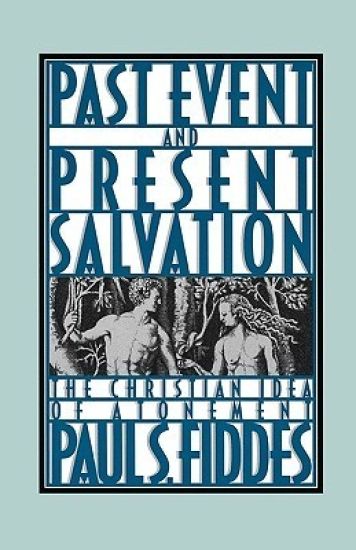
Past Event and Present Salvation

Past Event and Present Salvation

Paul S. Fiddes

Westminster/John Knox Press,U.S.
1989
nidottu
How can an event that has taken place in the past have an effect upon the human experience of salvation in the present? In examining one of the essential questions of the Christian faith, Paul S. Fiddes explores the limits as well as the gains to be made in speaking about crucifixion as a historical event, and considers the relationship of the crucifixion to the continuing process of God's saving activity. He considers the relevance of a past act of atonement to such areas of practical experience as forgiveness, liberation, and suffering.
God, Struggle, and Suffering in the Evolution of Life

God, Struggle, and Suffering in the Evolution of Life

Christopher Southgate; Paul S. Fiddes; Michael Lloyd; Neil Messer; Bethany Sollereder; Mark R. Wynn

BLOOMSBURY PUBLISHING PLC
2025
nidottu
This open access book stems from a unique set of conversations between six scholars concerned with the theological problem of suffering in the non-human world over millions of years. How is the confession of the Christian God compatible with all the struggle, violence and suffering to which the Darwinian world testifies? This work identifies key fault lines in this rapidly growing debate - over the questions of resistance to the divine will in the non-human creation in particular. Is the picture of the biological world we derive from the sciences indicative of a profound resistance, distorting the character of creation? If so, what is the origin and character of this resistance? Or is it unnecessary to postulate such resistance before the evolution of human beings and their sin? Or is an intermediate position, in which some specific characteristics hint at resistance, the most coherent approach?Six leading academic press on this question in a way that illustrates the quality of the conversation we have been able to achieve in our colloquia. As such it also provides a model for how theology can be done collaboratively, respecting diversity of positions and using that diversity to advance the frontiers of debate.The eBook editions of this book are available open access under a CC BY-NC-ND 4.0 license on bloomsburycollections.com. Open Access was funded by the University of Exeter, Baylor University, and Wycliffe Hall, Oxford.
God, Struggle, and Suffering in the Evolution of Life

God, Struggle, and Suffering in the Evolution of Life

Christopher Southgate; Paul S. Fiddes; Michael Lloyd; Neil Messer; Bethany Sollereder; Mark R. Wynn

BLOOMSBURY PUBLISHING PLC
2025
sidottu
This open access book stems from a unique set of conversations between six scholars concerned with the theological problem of suffering in the non-human world over millions of years. How is the confession of the Christian God compatible with all the struggle, violence and suffering to which the Darwinian world testifies? This work identifies key fault lines in this rapidly growing debate - over the questions of resistance to the divine will in the non-human creation in particular. Is the picture of the biological world we derive from the sciences indicative of a profound resistance, distorting the character of creation? If so, what is the origin and character of this resistance? Or is it unnecessary to postulate such resistance before the evolution of human beings and their sin? Or is an intermediate position, in which some specific characteristics hint at resistance, the most coherent approach?Six leading academic press on this question in a way that illustrates the quality of the conversation we have been able to achieve in our colloquia. As such it also provides a model for how theology can be done collaboratively, respecting diversity of positions and using that diversity to advance the frontiers of debate.The eBook editions of this book are available open access under a CC BY-NC-ND 4.0 license on bloomsburycollections.com. Open Access was funded by the University of Exeter, Baylor University, and Wycliffe Hall, Oxford.
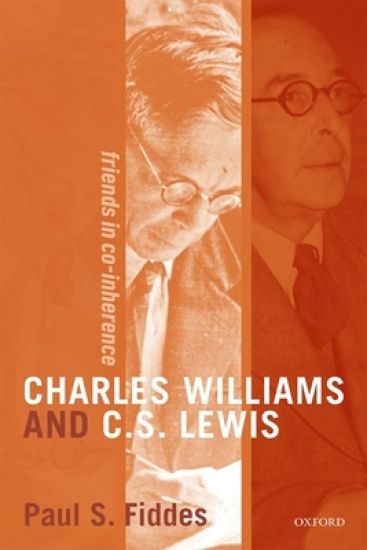
Charles Williams and C. S. Lewis

Charles Williams and C. S. Lewis

Paul S. Fiddes

Oxford University Press
2021
sidottu
This study of the literary relationship between Charles Williams and C. S. Lewis during the years 1936-1945 focuses on the theme of 'co-inherence' at the centre of their friendship. The idea of 'co-inherence' has long been recognized as an important contribution of Williams to theology, and had significant influence on the thought of Lewis. This account of the two writers' conviction that human persons 'inhere' or 'dwell' both in each other and in the triune God reveals many inter-relationships between their writings that would otherwise be missed. It also shows up profound differences between their world-views, and a gradual, though incomplete, convergence onto common ground. Exploring the idea of co-inherence throws light on the fictional worlds they created, as well as on their treatment (whether together or separately) of a wide range of theological and literary subjects: the Arthurian tradition, the poetry of William Blake and Thomas Traherne, the theology of Karl Barth, the nature of human and divine love, and the doctrine of the Trinity. This study draws for the first time on transcriptions of Williams' lectures from 1932 to 1939, tracing more clearly the development and use of the idea of co-inherence in his thought than has been possible before. Finally, an account of the use of the word 'co-inherence' in English-speaking theology suggests that the differences that existed between Lewis and Williams, especially on the place of analogy and participation in human experience of God, might be resolved by a theology of co-inherence in the Trinity.