Kirjojen hintavertailu. Mukana 12 657 676 kirjaa ja 12 kauppaa.

Kirjailija

Paul S. Sutter

Kirjat ja teokset yhdessä paikassa: 58 kirjaa, julkaisuja vuosilta 2005-2026, suosituimpien joukossa The Takeover. Vertaile teosten hintoja ja tarkista saatavuus suomalaisista kirjakaupoista.

58 kirjaa

Kirjojen julkaisuhaarukka 2005-2026.

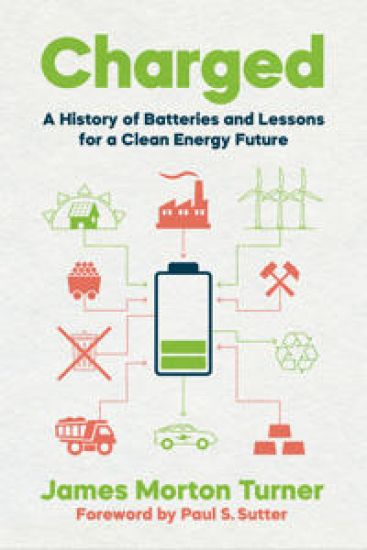
Charged

Charged

James Morton Turner; Paul S. Sutter

UNIVERSITY OF WASHINGTON PRESS
2023
pokkari
Winner of the 24th Annual Susanne M. Glasscock Humanities Book PrizeFinalist for the 2023 Cundill History PrizeGold Medal Recipient, Nautilus Book Awards, SustainabilityThe dirty work essential to a clean energy transitionTo achieve fossil fuel independence, few technologies are more important than batteries. Used for powering zero-emission vehicles, storing electricity from solar panels and wind turbines, and revitalizing the electric grid, batteries are essential to scaling up the renewable energy resources that help address global warming. But given the unique environmental impact of batteries—including mining, disposal, and more—does a clean energy transition risk trading one set of problems for another?In Charged, James Morton Turner unpacks the history of batteries to explore why solving "the battery problem" is critical to a clean energy transition. As climate activists focus on what a clean energy future will create—sustainability, resiliency, and climate justice—the history of batteries offers a sharp reminder of what building that future will consume: lithium, graphite, nickel, and other specialized materials. With new insight on the consequences for people and communities on the front lines, Turner draws on the past for crucial lessons that will help us build a just and clean energy future, from the ground up.
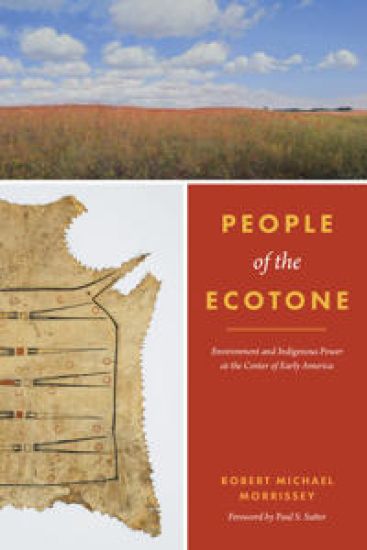
People of the Ecotone

People of the Ecotone

Robert Michael Morrissey; Paul S. Sutter

UNIVERSITY OF WASHINGTON PRESS
2022
sidottu
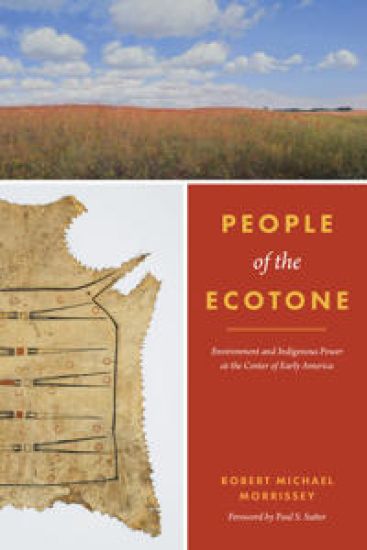
Winner of the 2023 Hal K. Rothman Book Prize for best book in western environmental history from the Western History AssociationIndigenous power in a significant cultural and ecological borderlandIn People of the Ecotone, Robert Morrissey weaves together a history of Native peoples with a history of an ecotone to tell a new story about the roots of the Fox Wars, among the most transformative and misunderstood events of early American history. To do this, he also offers the first comprehensive environmental history of some of North America's most radically transformed landscapes—the former tallgrass prairies—in the period before they became the monocultural "corn belt" we know today.Morrissey situates the complex rise and fall of the Illinois, Meskwaki, and Myaamia peoples from roughly the collapse of Cahokia (thirteenth to fourteenth century CE) to the mid-eighteenth century in the context of millennia-long environmental shifts, as changes to the climate shifted bison geographies and tribes adapted their cultures to become pedestrian bison hunters. Tracing dynamic chains of causation from microscopic viruses to massive forces of climate, from the deep time of evolution to the specific events of human lifetimes, from local Illinois village economies to market forces an ocean away, People of the Ecotone offers new insight on Indigenous power and Indigenous logics.
People of the Ecotone

People of the Ecotone

Robert Michael Morrissey; Paul S. Sutter

UNIVERSITY OF WASHINGTON PRESS
2022
pokkari
Winner of the 2023 Hal K. Rothman Book Prize for best book in western environmental history from the Western History AssociationIndigenous power in a significant cultural and ecological borderlandIn People of the Ecotone, Robert Morrissey weaves together a history of Native peoples with a history of an ecotone to tell a new story about the roots of the Fox Wars, among the most transformative and misunderstood events of early American history. To do this, he also offers the first comprehensive environmental history of some of North America's most radically transformed landscapes—the former tallgrass prairies—in the period before they became the monocultural "corn belt" we know today.Morrissey situates the complex rise and fall of the Illinois, Meskwaki, and Myaamia peoples from roughly the collapse of Cahokia (thirteenth to fourteenth century CE) to the mid-eighteenth century in the context of millennia-long environmental shifts, as changes to the climate shifted bison geographies and tribes adapted their cultures to become pedestrian bison hunters. Tracing dynamic chains of causation from microscopic viruses to massive forces of climate, from the deep time of evolution to the specific events of human lifetimes, from local Illinois village economies to market forces an ocean away, People of the Ecotone offers new insight on Indigenous power and Indigenous logics.
Communist Pigs

Communist Pigs

Thomas Fleischman; Paul S. Sutter

UNIVERSITY OF WASHINGTON PRESS
2022
pokkari
The pig played a key role in the German Democratic Republic's attempts to create a modern, industrial food system built on communist principles. By the mid-1980s, East Germany produced more pork per capita than West Germany and the UK, while also suffering the unintended consequences of manure pollution, animal disease, and rolling food shortages.The pig is a highly adaptive animal, and Thomas Fleischman uncovers three types of pig that played roles in this history: the industrial pig, remade to suit the conditions of factory farming; the wild boar, whose overpopulation was a side effect of agricultural development; and the garden pig, reflective of the regime's growing acceptance of private farming within the planned economy.Fleischman chronicles East Germany's journey from family farms to factory farms, explaining how communist principles shaped the adoption of industrial agriculture practices. More broadly, Fleischman argues that agriculture under communism came to reflect the practices of capitalist agriculture, and that the pork industry provides a clear illustration of this convergence. His analysis sheds light on the causes of the country's environmental and political collapse in 1989 and offers a warning about the high cost of cheap food in the present and future. Communist Pigs was a finalist for the Turku Book Award, European Society for Environmental History.
Debating Malthus

Debating Malthus

Paul S. Sutter

UNIVERSITY OF WASHINGTON PRESS
2022
sidottu
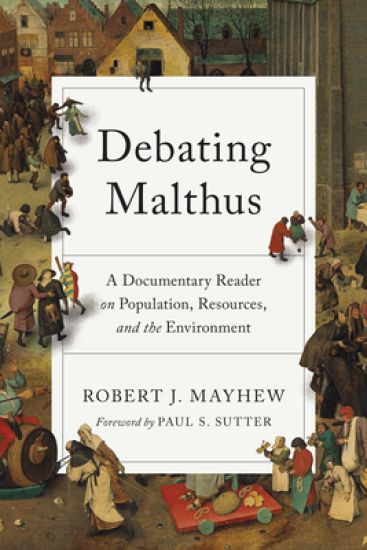
Introducing students to the place of population in environmental thinkingFor centuries, thinking about the earth's increasing human population has been tied to environmental ideas and political action. This highly teachable collection of contextualized primary sources allows students to follow European and North American discussions about intertwined and evolving concepts of population, resources, and the natural environment from early contexts in the sixteenth century through to the present day.Edited and introduced by Robert J. Mayhew, a noted biographer of Thomas Robert Malthus—whose Essay on the Principle of Population (1798), excerpted here, is an influential and controversial take on the topic—this volume explores themes including evolution, eugenics, war, social justice, birth control, environmental Armageddon, and climate change. Other responses to the idea of new "population bombs" are represented here by radical feminist work, by Indigenous views of the population-environment nexus, and by intersectional race-gender approaches. By learning the patterns of this discourse, students will be better able to critically evaluate historical conversations and contemporary debates.
Debating Malthus

Debating Malthus

Paul S. Sutter

UNIVERSITY OF WASHINGTON PRESS
2022
pokkari
Introducing students to the place of population in environmental thinkingFor centuries, thinking about the earth's increasing human population has been tied to environmental ideas and political action. This highly teachable collection of contextualized primary sources allows students to follow European and North American discussions about intertwined and evolving concepts of population, resources, and the natural environment from early contexts in the sixteenth century through to the present day.Edited and introduced by Robert J. Mayhew, a noted biographer of Thomas Robert Malthus—whose Essay on the Principle of Population (1798), excerpted here, is an influential and controversial take on the topic—this volume explores themes including evolution, eugenics, war, social justice, birth control, environmental Armageddon, and climate change. Other responses to the idea of new "population bombs" are represented here by radical feminist work, by Indigenous views of the population-environment nexus, and by intersectional race-gender approaches. By learning the patterns of this discourse, students will be better able to critically evaluate historical conversations and contemporary debates.
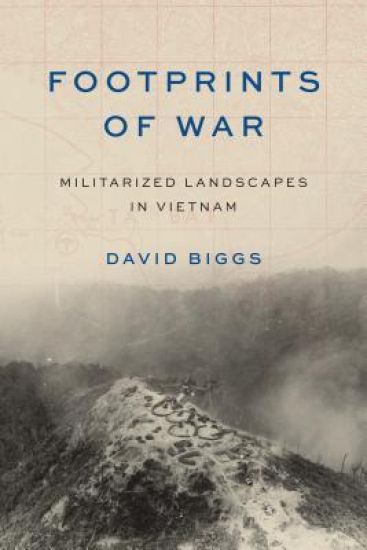
Footprints of War

Footprints of War

David Andrew Biggs; Paul S. Sutter

University of Washington Press
2021
pokkari
Traces the multilayered political, social, and ecological consequences of military conflictWhen American forces arrived in Vietnam, they found themselves embedded in historical village and frontier spaces already shaped by past conflicts. American bases and bombing targets followed spatial and political logics influenced by the footprints of previous wars in central Vietnam, and these militarized landscapes continue to shape postwar land-use politics.Footprints of War traces the long history of conflict-produced spaces in Vietnam, beginning with early modern wars and the French colonial invasion in 1885 and continuing through the collapse of the Saigon government in 1975. Drawing on extensive archival research and years of interviews and fieldwork in the hills and villages around the city of Hu?, David Biggs integrates historical geographic information system (GIS) data and uses aerial, high-altitude, and satellite imagery to render otherwise inscrutable sites as living, multidimensional spaces. This personal and multilayered approach yields an innovative history of the lasting traces of war in Vietnam and a model for understanding other militarized landscapes.
Wetlands in a Dry Land

Wetlands in a Dry Land

Emily O'Gorman; Paul S. Sutter

University of Washington Press
2021
sidottu
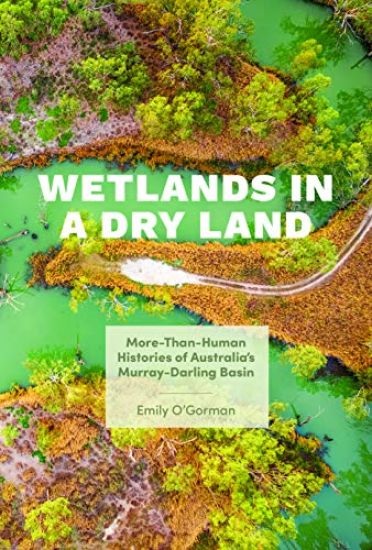
Winner of the Inaugural Book Prize from the Australia & Aotearoa New Zealand Environmental History NetworkA compelling environmental history of a critical ecosystem under threatIn the name of agriculture, urban growth, and disease control, humans have drained, filled, or otherwise destroyed nearly 87 percent of the world's wetlands over the past three centuries. Unintended consequences include biodiversity loss, poor water quality, and the erosion of cultural sites, and only in the past few decades have wetlands been widely recognized as worth preserving. Emily O'Gorman asks, What has counted as a wetland, for whom, and with what consequences?Using the Murray-Darling Basin—a massive river system in eastern Australia that includes over 30,000 wetland areas—as a case study and drawing on archival research and original interviews, O'Gorman examines how people and animals have shaped wetlands from the late nineteenth century to today. She illuminates deeper dynamics by relating how Aboriginal peoples acted then and now as custodians of the landscape, despite the policies of the Australian government; how the movements of water birds affected farmers; and how mosquitoes have defied efforts to fully understand, let alone control, them. Situating the region's history within global environmental humanities conversations, O'Gorman argues that we need to understand wetlands as socioecological landscapes in order to create new kinds of relationships with and futures for these places.
Wetlands in a Dry Land

Wetlands in a Dry Land

Emily O'Gorman; Paul S. Sutter

University of Washington Press
2021
pokkari
Winner of the Inaugural Book Prize from the Australia & Aotearoa New Zealand Environmental History NetworkA compelling environmental history of a critical ecosystem under threatIn the name of agriculture, urban growth, and disease control, humans have drained, filled, or otherwise destroyed nearly 87 percent of the world's wetlands over the past three centuries. Unintended consequences include biodiversity loss, poor water quality, and the erosion of cultural sites, and only in the past few decades have wetlands been widely recognized as worth preserving. Emily O'Gorman asks, What has counted as a wetland, for whom, and with what consequences?Using the Murray-Darling Basin—a massive river system in eastern Australia that includes over 30,000 wetland areas—as a case study and drawing on archival research and original interviews, O'Gorman examines how people and animals have shaped wetlands from the late nineteenth century to today. She illuminates deeper dynamics by relating how Aboriginal peoples acted then and now as custodians of the landscape, despite the policies of the Australian government; how the movements of water birds affected farmers; and how mosquitoes have defied efforts to fully understand, let alone control, them. Situating the region's history within global environmental humanities conversations, O'Gorman argues that we need to understand wetlands as socioecological landscapes in order to create new kinds of relationships with and futures for these places.
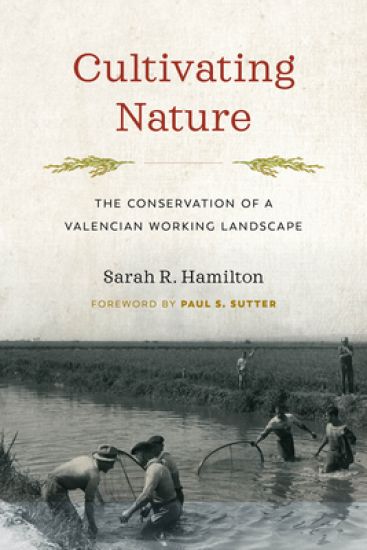
Cultivating Nature

Cultivating Nature

Sarah R. Hamilton; Paul S. Sutter

University of Washington Press
2020
pokkari
Winner of the 2019 Turku Book Award from the European Society for Environmental HistoryThe Albufera Natural Park, an area ten kilometers south of Valencia that is widely regarded as the birthplace of paella, has long been prized by residents and visitors alike. Since the twentieth century, the disparate visions of city dwellers, farmers, fishermen, scientists, politicians, and tourists have made this working landscape a site of ongoing conflict over environmental conservation in Europe, the future of Spain, and Valencian identity.In Cultivating Nature, Sarah Hamilton explores the Albufera's contested lands and waters, which have supported and been transformed by human activity for a millennium, in order to understand regional, national, and global social histories. She argues that efforts to preserve biological and cultural diversity must incorporate the interests of those who live within heavily modified and long-exploited ecosystems such as the Albufera de Valencia. Shifting between local struggles and global debates, this fascinating environmental history reveals how Franco's dictatorship, Spain's integration with Europe, and the crisis in European agriculture have shaped the Albufera, its users, and its inhabitants.
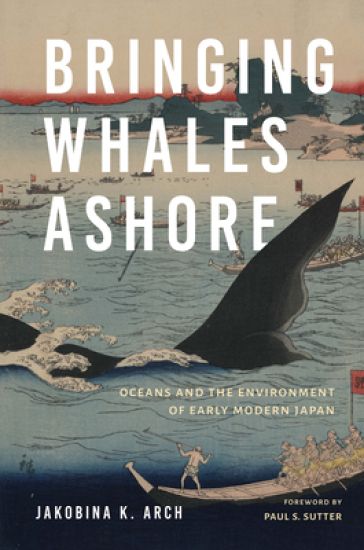
Bringing Whales Ashore

Bringing Whales Ashore

Jakobina K. Arch; Paul S. Sutter

University of Washington Press
2020
pokkari
Japan today defends its controversial whaling expeditions by invoking tradition—but what was the historical reality? In examining the techniques and impacts of whaling during the Tokugawa period (1603–1868), Jakobina Arch shows that the organized, shore-based whaling that first developed during these years bore little resemblance to modern Japanese whaling. Drawing on a wide range of sources, from whaling ledgers to recipe books and gravestones for fetal whales, she traces how the images of whales and by-products of commercial whaling were woven into the lives of people throughout Japan. Economically, Pacific Ocean resources were central in supporting the expanding Tokugawa state.In this vivid and nuanced study of how the Japanese people brought whales ashore during the Tokugawa period, Arch makes important contributions to both environmental and Japanese history by connecting Japanese whaling to marine environmental history in the Pacific, including the devastating impact of American whaling in the nineteenth century.
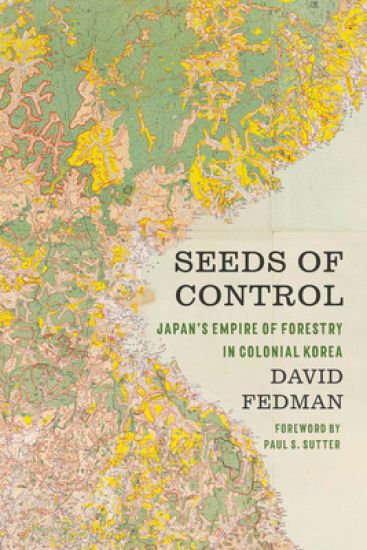
Seeds of Control

Seeds of Control

David Fedman; Paul S. Sutter

University of Washington Press
2020
sidottu
Conservation as a tool of colonialism in early twentieth-century KoreaJapanese colonial rule in Korea (1905–1945) ushered in natural resource management programs that profoundly altered access to and ownership of the peninsula's extensive mountains and forests. Under the banner of "forest love," the colonial government set out to restructure the rhythms and routines of agrarian life, targeting everything from home heating to food preparation. Timber industrialists, meanwhile, channeled Korea's forest resources into supply chains that grew in tandem with Japan's imperial sphere. These mechanisms of resource control were only fortified after 1937, when the peninsula and its forests were mobilized for total war.In this wide-ranging study David Fedman explores Japanese imperialism through the lens of forest conservation in colonial Korea—a project of environmental rule that outlived the empire itself. Holding up for scrutiny the notion of conservation, Seeds of Control examines the roots of Japanese ideas about the Korean landscape, as well as the consequences and aftermath of Japanese approaches to Korea's "greenification." Drawing from sources in Japanese and Korean, Fedman writes colonized lands into Japanese environmental history, revealing a largely untold story of green imperialism in Asia.
Communist Pigs

Communist Pigs

Thomas Fleischman; Paul S. Sutter

University of Washington Press
2020
sidottu
The pig played a key role in the German Democratic Republic's attempts to create a modern, industrial food system built on communist principles. By the mid-1980s, East Germany produced more pork per capita than West Germany and the UK, while also suffering the unintended consequences of manure pollution, animal disease, and rolling food shortages.The pig is a highly adaptive animal, and Thomas Fleischman uncovers three types of pig that played roles in this history: the industrial pig, remade to suit the conditions of factory farming; the wild boar, whose overpopulation was a side effect of agricultural development; and the garden pig, reflective of the regime's growing acceptance of private farming within the planned economy.Fleischman chronicles East Germany's journey from family farms to factory farms, explaining how communist principles shaped the adoption of industrial agriculture practices. More broadly, Fleischman argues that agriculture under communism came to reflect the practices of capitalist agriculture, and that the pork industry provides a clear illustration of this convergence. His analysis sheds light on the causes of the country's environmental and political collapse in 1989 and offers a warning about the high cost of cheap food in the present and future. Communist Pigs was a finalist for the Turku Book Award, European Society for Environmental History.
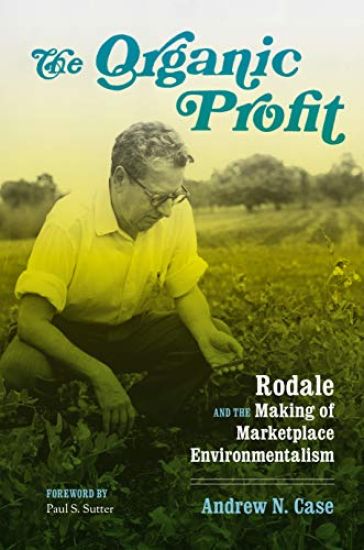
The Organic Profit

The Organic Profit

Andrew N. Case; Paul S. Sutter

University of Washington Press
2020
pokkari
Where did the curious idea of buying one's way to sustainability come from? In no small part, the answer lies in the story of entrepreneurial health reformer J. I. Rodale, his son Robert Rodale, and their company, the Rodale Press. These early advocates of organic gardening cultivated a niche for natural health products in the 1950s, organized the emerging marketplace for organic foods in the 1960s, and in the process published an endless supply of advice books on diet and health.Rodale's marketplace environmentalism brought environmentally minded consumers together and taught Americans how to grow food, eat, and live in arguably more earth-friendly ways. Yet the market has proved more effective at addressing individual health concerns than improving public health at large, as liable to champion untested, ineffectual health supplements as to challenge the indiscriminate use of dangerous pesticides. For anyone trying to make sense of the complex tensions between business profits and the desire for environmental reform, The Organic Profit is essential reading.
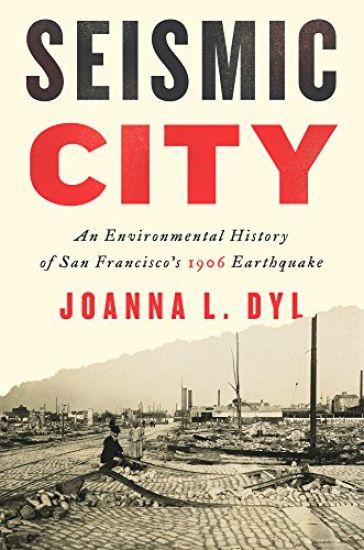
Seismic City

Seismic City

Joanna L. Dyl; Paul S. Sutter

University of Washington Press
2019
pokkari
On April 18, 1906, a 7.8-magnitude earthquake shook the San Francisco region, igniting fires that burned half the city. The disaster in all its elements — earthquake, fires, and recovery — profoundly disrupted the urban order and challenged San Francisco's perceived permanence.The crisis temporarily broke down spatial divisions of class and race and highlighted the contested terrain of urban nature in an era of widespread class conflict, simmering ethnic tensions, and controversial reform efforts. From a proposal to expel Chinatown from the city center to a vision of San Francisco paved with concrete in the name of sanitation, the process of reconstruction involved reenvisioning the places of both people and nature. In their zeal to restore their city, San Franciscans downplayed the role of the earthquake and persisted in choosing patterns of development that exacerbated risk.In this close study of the 1906 San Francisco earthquake, Joanna L. Dyl examines the decades leading up to the catastrophic event and the city's recovery from it. Combining urban environmental history and disaster studies, Seismic City demonstrates how the crisis and subsequent rebuilding reflect the dynamic interplay of natural and human influences that have shaped San Francisco.
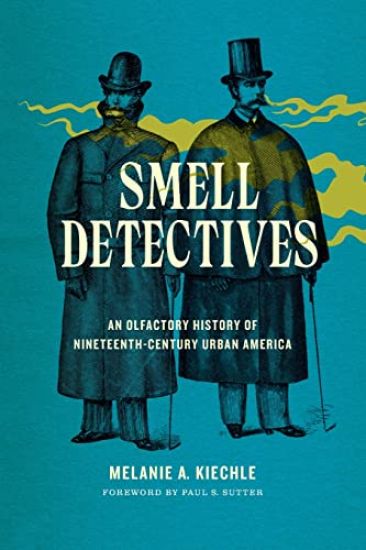
Smell Detectives

Smell Detectives

Melanie A. Kiechle; Paul S. Sutter

University of Washington Press
2019
pokkari
What did nineteenth-century cities smell like? And how did odors matter in the formation of a modern environmental consciousness? Smell Detectives follows the nineteenth-century Americans who used their noses to make sense of the sanitary challenges caused by rapid urban and industrial growth. Melanie Kiechle examines nuisance complaints, medical writings, domestic advice, and myriad discussions of what constituted fresh air, and argues that nineteenth-century city dwellers, anxious about the air they breathed, attempted to create healthier cities by detecting and then mitigating the most menacing odors.Medical theories in the nineteenth century assumed that foul odors caused disease and that overcrowded cities—filled with new and stronger stinks—were synonymous with disease and danger. But the sources of offending odors proved difficult to pinpoint. The creation of city health boards introduced new conflicts between complaining citizens and the officials in charge of the air. Smell Detectives looks at the relationship between the construction of scientific expertise, on the one hand, and "common sense"—the olfactory experiences of common people—on the other. Although the rise of germ theory revolutionized medical knowledge and ultimately undid this form of sensory knowing, Smell Detectives recovers how city residents used their sense of smell and their health concerns about foul odors to understand, adjust to, and fight against urban environmental changes.
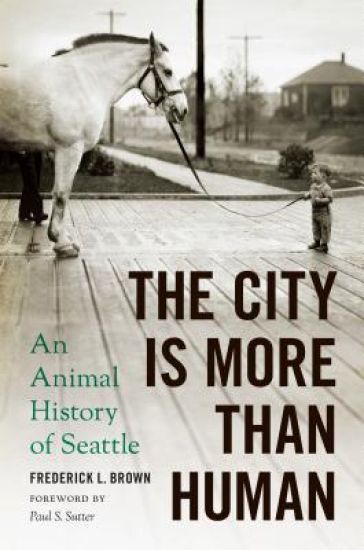
The City Is More Than Human

The City Is More Than Human

Frederick L. Brown; Paul S. Sutter

University of Washington Press
2019
pokkari
Winner of the 2017 Virginia Marie Folkins Award, Association of King County Historical Organizations (AKCHO)Winner of the 2017 Hal K. Rothman Book Prize, Western History AssociationSeattle would not exist without animals. Animals have played a vital role in shaping the city from its founding amid existing indigenous towns in the mid-nineteenth century to the livestock-friendly town of the late nineteenth century to the pet-friendly, livestock-averse modern city. When newcomers first arrived in the 1850s, they hastened to assemble the familiar cohort of cattle, horses, pigs, chickens, and other animals that defined European agriculture. This, in turn, contributed to the dispossession of the Native residents of the area. However, just as various animals were used to create a Euro-American city, the elimination of these same animals from Seattle was key to the creation of the new middle-class neighborhoods of the twentieth century. As dogs and cats came to symbolize home and family, Seattleites' relationship with livestock became distant and exploitative, demonstrating the deep social contradictions that characterize the modern American metropolis. Throughout Seattle's history, people have sorted animals into categories and into places as a way of asserting power over animals, other people, and property. In The City Is More Than Human, Frederick Brown explores the dynamic, troubled relationship humans have with animals. In so doing he challenges us to acknowledge the role of animals of all sorts in the making and remaking of cities.
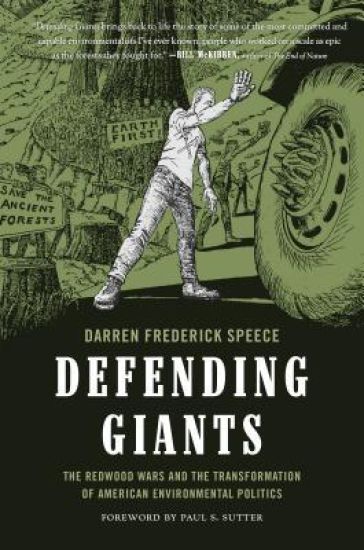
Defending Giants

Defending Giants

Darren Frederick Speece; Paul S. Sutter

University of Washington Press
2019
pokkari
Giant redwoods are American icons, paragons of grandeur, exceptionalism, and endurance. They are also symbols of conflict and negotiation, remnants of environmental battles over the limits of industrialization, profiteering, and globalization. Since the middle of the nineteenth century, logging operations have eaten away at the redwood forest, particularly areas covered by ancient giant redwoods. Today, such trees occupy a mere 120,000 acres. Their existence is testimony to the efforts of activists to rescue some of these giants from destruction. Very few conservation battles have endured longer or with more violence than on the North Coast of California, behind what locals call the Redwood Curtain.Defending Giants explores the long history of the Redwood Wars, focusing on the ways rural Americans fought for control over both North Coast society and its forests. Activists defended these trees not only because the redwood forest had dwindled in size, but also because, by the late twentieth century, the local economy was increasingly dominated by multinational corporations. The resulting conflict—the Redwood Wars—pitted workers and environmental activists against the rising tide of globalization and industrial logging in a complex war over endangered species, sustainable forestry, and, of course, the fate of the last ancient redwoods. Activists perched in trees and filed lawsuits, while the timber industry, led by Pacific Lumber, fought the lawsuits and used their power to halt reform efforts. Ultimately, the Clinton administration sidestepped Congress and the courts to negotiate an innovative compromise. In the process, the Redwood Wars transformed American environmental politics by shifting the balance of power away from Congress and into the hands of the executive branch.
Footprints of War

Footprints of War

David Andrew Biggs; Paul S. Sutter

University of Washington Press
2018
sidottu
Traces the multilayered political, social, and ecological consequences of military conflictWhen American forces arrived in Vietnam, they found themselves embedded in historical village and frontier spaces already shaped by past conflicts. American bases and bombing targets followed spatial and political logics influenced by the footprints of previous wars in central Vietnam, and these militarized landscapes continue to shape postwar land-use politics.Footprints of War traces the long history of conflict-produced spaces in Vietnam, beginning with early modern wars and the French colonial invasion in 1885 and continuing through the collapse of the Saigon government in 1975. Drawing on extensive archival research and years of interviews and fieldwork in the hills and villages around the city of Hu?, David Biggs integrates historical geographic information system (GIS) data and uses aerial, high-altitude, and satellite imagery to render otherwise inscrutable sites as living, multidimensional spaces. This personal and multilayered approach yields an innovative history of the lasting traces of war in Vietnam and a model for understanding other militarized landscapes.
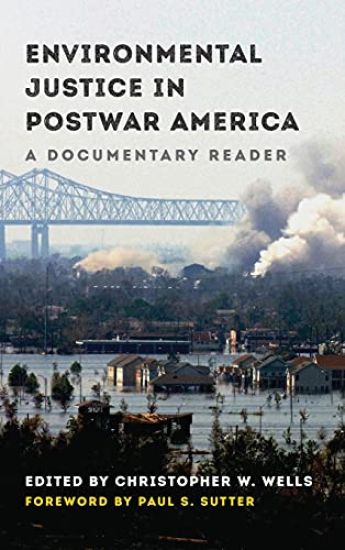
Environmental Justice in Postwar America

Environmental Justice in Postwar America

Paul S. Sutter

University of Washington Press
2018
sidottu
In the decades after World War II, the American economy entered a period of prolonged growth that created unprecedented affluence—but these developments came at the cost of a host of new environmental problems. Unsurprisingly, a disproportionate number of them, such as pollution-emitting factories, waste-handling facilities, and big infrastructure projects, ended up in communities dominated by people of color. Constrained by long-standing practices of segregation that limited their housing and employment options, people of color bore an unequal share of postwar America's environmental burdens.This reader collects a wide range of primary source documents on the rise and evolution of the environmental justice movement. The documents show how environmentalists in the 1970s recognized the unequal environmental burdens that people of color and low-income Americans had to bear, yet failed to take meaningful action to resolve them. Instead, activism by the affected communities themselves spurred the environmental justice movement of the 1980s and early 1990s. By the turn of the twenty-first century, environmental justice had become increasingly mainstream, and issues like climate justice, food justice, and green-collar jobs had taken their places alongside the protection of wilderness as "environmental" issues.Environmental Justice in Postwar America is a powerful tool for introducing students to the US environmental justice movement and the sometimes tense relationship between environmentalism and social justice.For more information, visit the editor's website: http://cwwells.net/PostwarEJ