Kirjojen hintavertailu. Mukana 12 657 676 kirjaa ja 12 kauppaa.

Kirjailija

Paul Simpson

Kirjat ja teokset yhdessä paikassa: 30 kirjaa, julkaisuja vuosilta 1993-2026, suosituimpien joukossa Who Invented the Bicycle Kick?. Vertaile teosten hintoja ja tarkista saatavuus suomalaisista kirjakaupoista.

30 kirjaa

Kirjojen julkaisuhaarukka 1993-2026.

A Brief Guide to Stephen King

A Brief Guide to Stephen King

Paul Simpson

Robinson
2014
nidottu
2014 marks the 40th anniversary of the publication of Stephen King’s first novel Carrie in April 1974. Rescued from the rubbish by his wife Tabitha, the novel launched the Maine schoolteacher on a prolific and extraordinarily successful career. His name has become synonymous with horror and suspense through over fifty works, including The Dark Tower, a retelling of Byron’s Childe Harold to the Dark Tower Came.Simpson traces the writer’s life from his difficult childhood – his father went out to the shops and never came back – through his initial books under the pseudonym Richard Bachman to the success of Carrie, Salem’s Lot and The Shining in the 1970s, and beyond. He examines how King’s writing was affected by the accident that nearly killed him in 1999 and how his battles with alcohol and addiction to medication have been reflected in his stories. The guide will also take a look at the very many adaptation’s of King’s work in movies, on television and radio, and in comic books.
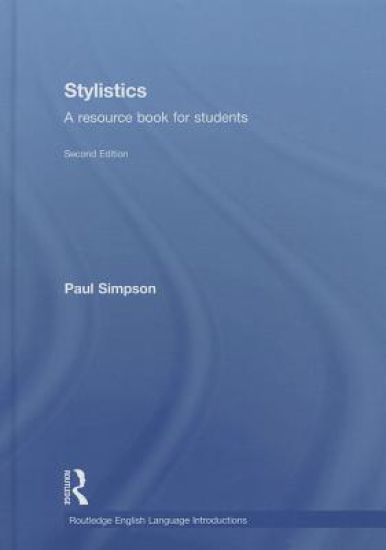
Stylistics

Stylistics

Paul Simpson

Routledge
2014
nidottu
Assuming no prior knowledge, books in the series offer an accessible overview of the subject, with activities, study questions, sample analyses, commentaries and key readings – all in the same volume. The innovative and flexible ‘two-dimensional’ structure is built around four sections – introduction, development, exploration and extension – which offer self-contained stages for study. Each topic can be read across these sections, enabling the reader to build gradually on the knowledge gained.Written in a clear and accessible style, Stylistics, Second Edition is a comprehensive resource which covers all the major theories, concepts and methods required for the investigation of language in literature. From metre to metaphor, dialogue to discourse, the main topics are introduced and fully elaborated, as are the key research paradigms of this important and exciting field of study. Stylistics is richly illustrated with many examples from literary texts, including writing from the established literary canon alongside more contemporary work in poetry, prose and drama. Each of the book’s twelve chapters contains clearly framed suggestions for practical work and is accompanied by an original reading on the relevant topic by a world-renowned scholar. This exciting new second edition builds on the strengths of the first by adding many fresh exercises and worked examples. It captures the latest major developments in stylistics, such as corpus, cognitive and multimodal approaches to the study of style, and its accompanying website has also been substantially revised to feature, amongst other things, useful links, worked examples and a new web strand on style and humour. In addition to the classic readings in stylistics contained in the first edition, the new edition includes a number of recent, stimulating readings by key figures in the contemporary field. Written by an experienced teacher and researcher, this accessible textbook is an essential resource for all students of English language, linguistics and literature.
Stylistics

Stylistics

Paul Simpson

Routledge
2014
sidottu
Assuming no prior knowledge, books in the series offer an accessible overview of the subject, with activities, study questions, sample analyses, commentaries and key readings – all in the same volume. The innovative and flexible ‘two-dimensional’ structure is built around four sections – introduction, development, exploration and extension – which offer self-contained stages for study. Each topic can be read across these sections, enabling the reader to build gradually on the knowledge gained.Written in a clear and accessible style, Stylistics, Second Edition is a comprehensive resource which covers all the major theories, concepts and methods required for the investigation of language in literature. From metre to metaphor, dialogue to discourse, the main topics are introduced and fully elaborated, as are the key research paradigms of this important and exciting field of study. Stylistics is richly illustrated with many examples from literary texts, including writing from the established literary canon alongside more contemporary work in poetry, prose and drama. Each of the book’s twelve chapters contains clearly framed suggestions for practical work and is accompanied by an original reading on the relevant topic by a world-renowned scholar. This exciting new second edition builds on the strengths of the first by adding many fresh exercises and worked examples. It captures the latest major developments in stylistics, such as corpus, cognitive and multimodal approaches to the study of style, and its accompanying website has also been substantially revised to feature, amongst other things, useful links, worked examples and a new web strand on style and humour. In addition to the classic readings in stylistics contained in the first edition, the new edition includes a number of recent, stimulating readings by key figures in the contemporary field. Written by an experienced teacher and researcher, this accessible textbook is an essential resource for all students of English language, linguistics and literature.
Elvis Films FAQ

Elvis Films FAQ

Paul Simpson

Applause Theatre Book Publishers
2013
pokkari
If Elvis Presley had not wanted to be a movie star he would never have single-handedly revolutionized popular culture. Yet this aspect of his phenomenal career has been much maligned and misunderstood ä partly because the King himself once referred to his 33 movies as a rut he had got stuck in just off Hollywood Boulevard. ÊElvis Films FAQÊ explores his best and worst moments as an actor analyzes the bizarre autobiographical detail that runs through so many of his films and reflects on what it must be like to be idolized by millions around the world yet have to make a living singing about dogs chambers of commerce and fatally naive shrimps.ÞElvis's Hollywood years are full of mystery and ÊElvis Films FAQÊ covers them all! Which of his own movies did he actually like? What films did he wish he could have made? Why didn't he have an acting coach? When will Quentin Tarantino stop alluding to him in his movies? And was ÊClambakeÊ really the catalyst for his marriage to Priscilla? ÊElvis Films FAQÊ explains everything you want to know about the whys and wherefores of the singer-actor's bizarre celluloid odyssey; or as Elvis said I saw the movie and I was the hero of the movie.
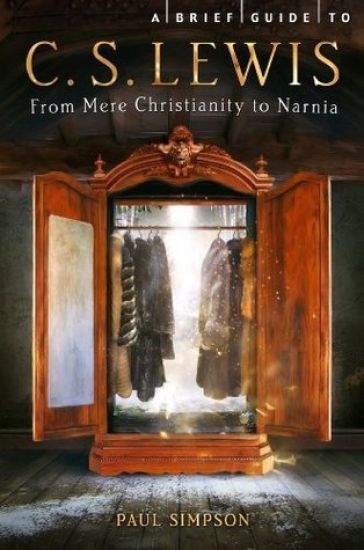
A Brief Guide to C. S. Lewis

A Brief Guide to C. S. Lewis

Paul Simpson

Robinson
2013
nidottu
November 2013 marks the 50th anniversary of the death of Clive Staples 'Jack' Lewis, when a memorial to him will be placed in Poet's Corner in Westminster Abbey. Although perhaps best known as the author of the seven Chronicles of Narnia, published between 1949 and 1954, Lewis also wrote The Pilgrim's Regress, a trilogy of science-fiction novels incorporating Christian themes, and a large number of non-fiction books about his faith, accessible to Christians and non-believers alike. In a survey of the greatest British writers since 1945, the Times newspaper ranked Lewis eleventh, ahead of Salman Rushdie, Anthony Burgess and Ian Fleming.A Brief Guide to C. S. Lewis explores Lewis's life, from his reconversion to Christianity under the influence of his friend J. R. R. Tolkien, which had such a profound influence on his writing - both fiction and non-fiction - to his marriage to American writer Joy Davidman Gresham and his battle with cancer. He died on 22 November 1963, a day before the first-ever episode of Dr Who, a TV series with many links to his Narnia stories was shown. Although this Brief Guide ranges well beyond the world of Narnia to explore other aspects of Lewis's life and his other writings, it does not do so - unusually among books on Lewis - from the point of view of Christian scholarship, thereby assuming much knowledge of theology on the part of readers. That Lewis wrote about the problems of praying is significant; the specific texts he discusses and dissects are likely to be of less significance to most readers.The guide provides synopses of Lewis's fiction, an overview of his other writings, a biography and a look at all the many different versions of his stories that have appeared. In doing so it draws on recent interviews by the author with some of the many talented people who have worked on these adaptations.
Language Through Literature

Language Through Literature

Paul Simpson

Routledge
1996
sidottu
Paul Simpson provides a definitive introduction to the English language through the medium of English Literature. Through the use of illustrations from poetry, prose and drama, this book offers a lively and accessible guide to important concepts and techniques in English language study. Each chapter: * develops a particular topic in language through a series of practical tasks * provides points for further discussion * includes project work for use individually, or as part of a group. Students will find the author's selection and presentation of topics helpful, as he progressively widens the scope of topics through from single words to the structure of whole conversations. By developing practical activities designed for the study of English Language, this book goes way beyond pure linguistic description, and will be an invaluable aid for the beginner student of the English language.
Language Through Literature

Language Through Literature

Paul Simpson

Routledge
1996
nidottu
Paul Simpson provides a definitive introduction to the English language through the medium of English Literature. Through the use of illustrations from poetry, prose and drama, this book offers a lively and accessible guide to important concepts and techniques in English language study. Each chapter: * develops a particular topic in language through a series of practical tasks * provides points for further discussion * includes project work for use individually, or as part of a group. Students will find the author's selection and presentation of topics helpful, as he progressively widens the scope of topics through from single words to the structure of whole conversations. By developing practical activities designed for the study of English Language, this book goes way beyond pure linguistic description, and will be an invaluable aid for the beginner student of the English language.
Language, Ideology and Point of View
This systematic introduction to the concept of point of view in language explores the ways in which point of view intersects with and is shaped by ideology. It specifically focuses on the way in which speakers and writers linguistically encode their beliefs, interests and biases in a wide range of media. The book draws on an extensive array of linguistic theories and frameworks and each chapter includes a self-contained introduction to a particular topic in linguistics, allowing easy reference. The author uses examples from a variety of literary and non-literary text types such as, narrative fiction, advertisements and newspaper reports.
Language, Ideology and Point of View
This systematic introduction to the concept of point of view in language explores the ways in which point of view intersects with and is shaped by ideology. It specifically focuses on the way in which speakers and writers linguistically encode their beliefs, interests and biases in a wide range of media. The book draws on an extensive array of linguistic theories and frameworks and each chapter includes a self-contained introduction to a particular topic in linguistics, allowing easy reference. The author uses examples from a variety of literary and non-literary text types such as, narrative fiction, advertisements and newspaper reports.