Kirjojen hintavertailu. Mukana 12 390 323 kirjaa ja 12 kauppaa.

Kirjailija

Paul Stenner

Kirjat ja teokset yhdessä paikassa: 9 kirjaa, julkaisuja vuosilta 1995-2022, suosituimpien joukossa Putting Psychology in its Place. Vertaile teosten hintoja ja tarkista saatavuus suomalaisista kirjakaupoista.

9 kirjaa

Kirjojen julkaisuhaarukka 1995-2022.

Putting Psychology in its Place

Putting Psychology in its Place

Graham Richards; Paul Stenner

TAYLOR FRANCIS LTD
2022
nidottu
This fourth edition of Putting Psychology in Its Place builds on the previous three in introducing the history of Psychology and placing the discipline within its historical and social contexts. Written by esteemed Psychologists Graham Richards and Paul Stenner, this crucial text aims both to answer and raise questions about the role of Psychology in modern society by critically examining issues such as how Psychology developed and why psychoanalysis had such an impact. It discusses enduring underlying conceptual problems and examines how the discipline has changed to deal with contemporary social issues such as religion, race and gender. The fourth edition features revised and updated chapters, though the core structure remains unchanged. The final chapter has been restructured and jointly re-written. This text was written to remain compatible with the British Psychological Society requirements for undergraduate courses and is imaginatively written and accessible to all.Putting Psychology in Its Place is an invaluable introductory text for undergraduate students of the history of Psychology and will also appeal to postgraduates, academics and anyone interested in Psychology or the history of science.

Putting Psychology in its Place

Putting Psychology in its Place

Graham Richards; Paul Stenner

TAYLOR FRANCIS LTD
2022
sidottu
This fourth edition of Putting Psychology in Its Place builds on the previous three in introducing the history of Psychology and placing the discipline within its historical and social contexts. Written by esteemed Psychologists Graham Richards and Paul Stenner, this crucial text aims both to answer and raise questions about the role of Psychology in modern society by critically examining issues such as how Psychology developed and why psychoanalysis had such an impact. It discusses enduring underlying conceptual problems and examines how the discipline has changed to deal with contemporary social issues such as religion, race and gender. The fourth edition features revised and updated chapters, though the core structure remains unchanged. The final chapter has been restructured and jointly re-written. This text was written to remain compatible with the British Psychological Society requirements for undergraduate courses and is imaginatively written and accessible to all.Putting Psychology in Its Place is an invaluable introductory text for undergraduate students of the history of Psychology and will also appeal to postgraduates, academics and anyone interested in Psychology or the history of science.
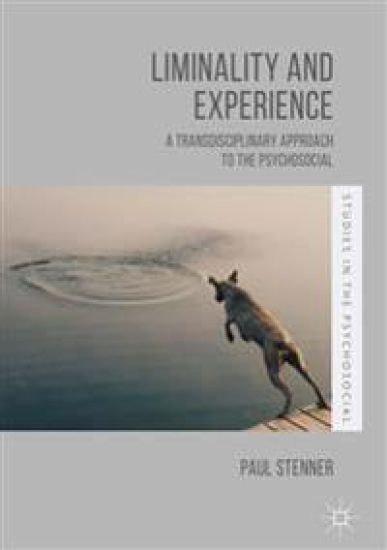
Liminality and Experience

Liminality and Experience

Paul Stenner

Palgrave Macmillan
2020
nidottu
This book breathes new life into the study of liminal experiences of transition and transformation, or ‘becoming’. It brings fresh insight into affect and emotion, dream and imagination, and fabulation and symbolism by tracing their relation to experiences of liminality. The author proposes a distinctive theory of the relationship between psychology and the social sciences with much to share with the arts. Its premise is that psychosocial existence is not made of ‘stuff’ like building blocks, but of happenings and events in which the many elements that compose our lives are temporarily drawn together. The social is not a thing but a flow of processes, and our personal subjectivity is part of that flow, ‘selves’ being tightly interwoven with ‘others’. But there are breaks and ruptures in the flow, and during these liminal occasions our experience unravels and is rewoven. This book puts such moments at the core of the psychosocial research agenda. Of transdisciplinary scope, itwill appeal beyond psychosocial studies and social psychology to all scholars interested in the interface between experience and social (dis)order.
Liminality and Experience

Liminality and Experience

Paul Stenner

Palgrave Macmillan
2018
sidottu
This book breathes new life into the study of liminal experiences of transition and transformation, or ‘becoming’. It brings fresh insight into affect and emotion, dream and imagination, and fabulation and symbolism by tracing their relation to experiences of liminality. The author proposes a distinctive theory of the relationship between psychology and the social sciences with much to share with the arts. Its premise is that psychosocial existence is not made of ‘stuff’ like building blocks, but of happenings and events in which the many elements that compose our lives are temporarily drawn together. The social is not a thing but a flow of processes, and our personal subjectivity is part of that flow, ‘selves’ being tightly interwoven with ‘others’. But there are breaks and ruptures in the flow, and during these liminal occasions our experience unravels and is rewoven. This book puts such moments at the core of the psychosocial research agenda. Of transdisciplinary scope, itwill appeal beyond psychosocial studies and social psychology to all scholars interested in the interface between experience and social (dis)order.
Doing Q Methodological Research

Doing Q Methodological Research

Simon Watts; Paul Stenner

SAGE Publications Ltd
2012
nidottu
This book is a simple yet thorough introduction to Q methodology, a research technique designed to capture the subjective or first-person viewpoints of its participants. Watts and Stenner outline the key theoretical concepts developed by William Stephenson, the founder of Q methodology, including subjectivity, concourse theory and abduction. They then turn to the practicalities of delivering high quality Q methodological research. Using worked examples throughout, the reader is guided through: • important design issues • the conduct of fieldwork • all the analytic processes of Q methodology, including factor extraction, factor rotation and factor interpretation. Drawing on helpful conceptual introductions to potentially difficult statistical concepts and a step-by-step guide to running Q methodological analyses using dedicated software, this book enables interested readers to design, manage, analyse, interpret and publish their own Q methodological research.
Doing Q Methodological Research

Doing Q Methodological Research

Simon Watts; Paul Stenner

SAGE Publications Ltd
2012
sidottu
This book is a simple yet thorough introduction to Q methodology, a research technique designed to capture the subjective or first-person viewpoints of its participants. Watts and Stenner outline the key theoretical concepts developed by William Stephenson, the founder of Q methodology, including subjectivity, concourse theory and abduction. They then turn to the practicalities of delivering high quality Q methodological research. Using worked examples throughout, the reader is guided through: • important design issues • the conduct of fieldwork • all the analytic processes of Q methodology, including factor extraction, factor rotation and factor interpretation. Drawing on helpful conceptual introductions to potentially difficult statistical concepts and a step-by-step guide to running Q methodological analyses using dedicated software, this book enables interested readers to design, manage, analyse, interpret and publish their own Q methodological research.
Psychology without Foundations

Psychology without Foundations

Steven Brown; Paul Stenner

SAGE Publications Inc
2009
nidottu
For many years, for many people social psychology has been deemed a discipline in crisis. This new book proposes a way out of the crisis by letting go of the idea that psychology needs new foundations or a new identity, whether biological, discursive or cognitive. The psychological is not narrowly confined to any one aspect of human experience; it is quite literally everywhere. The book proposes a strong process-oriented approach to the psychological, which studies events or occasions. Aspects of experience such as communication or embodiment are treated as thoroughly mediated - the product of multiple intersecting relationships between the biological, the psychic and the social. The outcome is an image of a mobile, reflexively founded discipline which follows the psychological wherever it takes us, from the depths of embodiment to the complexities of modern global politics.
Psychology without Foundations

Psychology without Foundations

Steven Brown; Paul Stenner

SAGE Publications Inc
2009
sidottu
For many years, for many people social psychology has been deemed a discipline in crisis. This new book proposes a way out of the crisis by letting go of the idea that psychology needs new foundations or a new identity, whether biological, discursive or cognitive. The psychological is not narrowly confined to any one aspect of human experience; it is quite literally everywhere. The book proposes a strong process-oriented approach to the psychological, which studies events or occasions. Aspects of experience such as communication or embodiment are treated as thoroughly mediated - the product of multiple intersecting relationships between the biological, the psychic and the social. The outcome is an image of a mobile, reflexively founded discipline which follows the psychological wherever it takes us, from the depths of embodiment to the complexities of modern global politics.
Social Psychology

Social Psychology

Rex Stainton Rogers; Paul Stenner; Kate Gleeson

Polity Press
1995
nidottu
This is a major textbook in social psychology which deliberately adopts a critical, unconventional approach. Until recently social psychology seemed to have escaped relatively lightly from the climate of critical questioning which has characterized other areas of the social sciences. But this has changed: it is now possible to identify a clear forum of challenge, which could be described as "critical social psychology." Social Psychology draws upon and consolidates this new current of thinking, while at the same time providing a wide-ranging and critical introduction to the field. It introduces students to the concepts, methods and debates in social psychology, but does so in a way that is questioning rather than dogmatic. The overall argument of the book is that social psychology has not uncovered the origins of social behaviour and experience but has "brought them into being" by virtue of the theories and narratives constructed by it. Social Psychology is a textbook with a difference, introducing the central issues and concerns of social psychology within a framework of critical scrutiny. It is suitable for first and second year undergraduates in psychology and social psychology.