

Kirjailija
Paul Walker
Kirjat ja teokset yhdessä paikassa: 29 kirjaa, julkaisuja vuosilta 1998-2026, suosituimpien joukossa The My Gouldian Aviary Photograph Collection. Vertaile teosten hintoja ja tarkista saatavuus suomalaisista kirjakaupoista.
29 kirjaa
Kirjojen julkaisuhaarukka 1998-2026.
Bach's Well-Tempered Clavier forms part of the series American Bach Society Guides for the introduction of Johann Sebastian Bach's most important works and collections to a wider audience. Although the topic of this book is some of the most compostionally sophisticated music ever written, it avoids musical notation, explains necessary technical terminology, and assumes only basic knowledge of music history. This book presents the context, history, and music of Bach's Well-Tempered Clavier based on the latest musicological research. It appeals to those who desire an introduction to the collectionor a refresher on its salient characteristics. The main topics include: definitions, descriptions, and history of Prelude, Fugue, Temperament, and Tonal Harmony; Bach's motivation for writing the collection and his compositional process; the work's reception history; and the philosophies and issues of performance practice.
Bach's Well-Tempered Clavier forms part of the series American Bach Society Guides for the introduction of Johann Sebastian Bach's most important works and collections to a wider audience. Although the topic of this book is some of the most compostionally sophisticated music ever written, it avoids musical notation, explains necessary technical terminology, and assumes only basic knowledge of music history. This book presents the context, history, and music of Bach's Well-Tempered Clavier based on the latest musicological research. It appeals to those who desire an introduction to the collectionor a refresher on its salient characteristics. The main topics include: definitions, descriptions, and history of Prelude, Fugue, Temperament, and Tonal Harmony; Bach's motivation for writing the collection and his compositional process; the work's reception history; and the philosophies and issues of performance practice.

Though he garnered global praise at the peak of his career from 1960 to 1990, Australian architect John Andrews faced waning fame as postmodern cultural transformations challenged modernist design values, and wider social and economic changes led to a withdrawal of government-funded institutional commissions. Yet his body of work is a remarkable achievement that deserves to be better known.Following a path from Australia to the United States and Canada and back again, John Andrews: Architect of Uncommon Sense examines his most important buildings and reveals how the internationalization of architecture during this period was an unexpectedly dispersed geographical phenomenon, following more complex flows and localized progressions than earlier modernist ideas that travelled from center to periphery, metropole to outpost. Andrews negotiated the advent of postmodernism not by ignoring it, but by cultivating approaches that this new era foregrounded—identity, history, place—within the formal vocabularies of modernism. As Andrews assumed wider public roles and took appointments that allowed him to shape architectural education, he influenced design culture beyond his own personal portfolio. This book presents his legacy traversing local and international scenes and exemplifying late-modern developments of architecture while offering both generational continuities and discontinuities with what came after.John Andrews: Architect of Uncommon Sense features essays from Paul Walker, Mary Lou Lobsinger, Peter Scriver and Antony Moulis, Philip Goad, and Paolo Scrivano, along with nearly 100 new photographs from visual artist Noritaka Minami of existing buildings designed by Andrews in North America and Australia.
Foundations of Organisational Economics: Histories and Theories of the Firm and Production delves into a range of key topics to do with the history of the mainstream approach to the theory of production and the theory of the firm. This includes the frameworks used to analyse production, the division of labour and its application to the firm and the development of the neoclassical model of production.The first topic explored is the change from a normative approach to a largely positive approach to the analysis of the theory of production, which occurred around the seventeenth century. The next topic is an examination of the relationship (or the lack of a relationship) between the division of labour and the theory of the ?rm. In the fourth chapter, the focus is on the development of the proto-neoclassical approach to production. Here, the development of the theories of monopoly, oligopoly and perfect competition are discussed, as well as the theory of input utilisation. Chapter 5 looks at Marshall’s idea of the representative firm, which was the main early neoclassical approach to the theory of industry-level production. The penultimate chapter considers the criticisms made of the neoclassical model between 1940 and 1970. This work is an illuminating reference for students and researchers of the history of economic thought, industrial organisation, microeconomic theory and organisational studies.
Foundations of Organisational Economics: Histories and Theories of the Firm and Production delves into a range of key topics to do with the history of the mainstream approach to the theory of production and the theory of the firm. This includes the frameworks used to analyse production, the division of labour and its application to the firm and the development of the neoclassical model of production.The first topic explored is the change from a normative approach to a largely positive approach to the analysis of the theory of production, which occurred around the seventeenth century. The next topic is an examination of the relationship (or the lack of a relationship) between the division of labour and the theory of the ?rm. In the fourth chapter, the focus is on the development of the proto-neoclassical approach to production. Here, the development of the theories of monopoly, oligopoly and perfect competition are discussed, as well as the theory of input utilisation. Chapter 5 looks at Marshall’s idea of the representative firm, which was the main early neoclassical approach to the theory of industry-level production. The penultimate chapter considers the criticisms made of the neoclassical model between 1940 and 1970. This work is an illuminating reference for students and researchers of the history of economic thought, industrial organisation, microeconomic theory and organisational studies.
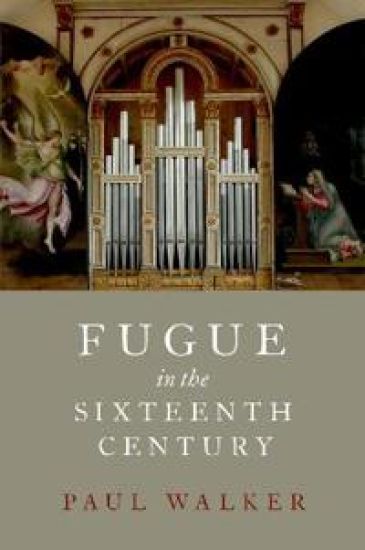
Examining the roots of the classical fugue and the early history of non-canonic fugal writing, Paul Walker's Fugue in the Sixteenth Century explores the three principal fugal genres of the period: motet, ricercar, and canonza. The volume treats each genre in turn, tracing the fugue's development throughout the century and highlighting important moments and trends along the way. Taking a two-tiered approach, Walker, on one level, examines fugue from the perspective of contemporary musicians, and on another level, takes into account fugue's later history and the elements that came to play a significant role in its formation. Walker is the first scholar to successfully tie together the various strands of the "pre-Bach fugue" thanks to the growing availability of editions of the repertories involved. He also takes account of recent work elucidating the change in compositional approach around 1500 from a basis in cantus firmus and canon to one favoring non-canonical, fugal imitation. Featuring well-chosen musical examples to illustrate the compositional developments of the sixteenth century, Fugue in the Sixteenth Century is a definitive study for both specialist musicologists and organists and harpsichordists alike.
The theory of the firm did not exist, in any serious manner, until around 1970. Only then did the current theory of the firm literature begin to emerge, based largely upon the work of Ronald Coase and to a lesser degree Frank Knight. It was work by Armen Alchian, Robert Crawford, Harold Demsetz, Michael Jensen, Benjamin Klein, William Meckling and Oliver Williamson, among others, that drove the upswing in interest in the firm among mainstream economists.This accessible book provides a valuable overview of the ‘prehistory’ of the firm. Spanning an impressive timeline, it delves into Antiquity, the Medieval era, the pre-classical economics period and the 19th and 20th centuries. Next, the book traces the theoretical contributions from pre-classical, classical and neoclassical economics.It will be illuminating reading for students and researchers of the history of economic thought, industrial organization, microeconomic theory and business history.
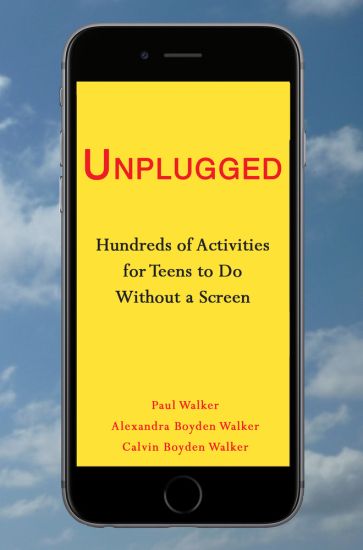
Unplugged
Alexandra Boyden Walker; Calvin Boyden Walker; Paul Walker
Robert D. Reed Publishers
2020
nidottu
UNPLUGGED: Hundreds of Activities for Teens to Do Without a Screen is designed for teenagers; it has hundreds of fun activities that teenagers can do that don't involve a screen. Some of the ideas are free and only take a few minutes while others may cost a small fortune and take years. UNPLUGGED contains useful ideas, such as creative ways to earn money and ideas to make their parents happy. There are a number of activities teens can do with their friends or to do to make new friends. The first section includes lists of activities that people can do, from cooking to earning money. The second includes things that teens should know about, like how to avoid being poor, how to negotiate, how to tell if someone is lying, and other similar skills. The third is similar to the second, only more focused on health. Because some of the sections are simply long lists, at the bottom “activities” were added which serve as hints or jumping-off points for that particular list. ABOUT THE AUTHORS: Paul Walker is the dad. His daughter Alexandra Boyden Walker (age 13) and his son Calvin Boyden Walker (age 17) give their dad “rant scores” whenever he contributes to the book, yet it is obvious they have deep respect for him. Teens themselves, they are concerned their peers will grow up with compromised social skills because of their obsession with their devices, spending the equivalent of 136 days a year on them. So they did extensive research and created lists of healthier activities to do instead.
Firms are a ubiquitous feature of the economic landscape, with much of the activity undertaken within an economy taking place within their boundaries. Given the size of the contribution made by firms to economic activity, employment and growth, having a theoretical understanding of the nature and structure of firms is crucial for understanding how an economy functions. The Theory of the Firm firstly offers a brief overview of the past, consisting of a concise discussion of the classical view of production, followed by an outline of the development of the neoclassical - or ‘textbook’ - approach to firm level production. Secondly, the ‘present’ of the theory of the firm is discussed in three sections. The first section considers the post-1970 theory of the firm literature per se, while the second section scrutinises the relationship between the three most prominent of the modern sets of theories: the reference point, property rights and transaction cost approaches. The third section looks at the theory of privatisation. The unique aspects of this book includes its discussions of the post-1970 contributions to the theory of the firm; the integration of the theory of the entrepreneur with the theory of the firm; and the theory of privatisation. This volume offers an intuitive introduction to the theories of the firm as well as simple formal models of the most important contributions to the literature. It also outlines the historical evolution of the traditional and modern theories of the firm. This book is of great interest to those who study history of economic thought, industrial economics and organizational studies.

'Full of convincing characters both historical and imagined ... a worthy successor to A State of Treason.' Peter Tonkin 1579. William Constable - physician and unwilling spy - is in Plymouth waiting to sail to the New World. The expedition, led by renowned explorers and traders, John Hawkins and Sir Humphrey Gilbert, has already suffered birth pangs. William's friend, Captain Charles Wicken, is accused of killing the son of a wealthy merchant, but the testimonies appear suspect. When William learns that Wicken is one of Walsingham's agents he uncovers evidence to suggest the murder and Wicken's naming are designed to conceal a plot of invasion - backed by Rome and Spain. The sailing of the expedition's fleet is delayed while this threat is examined. William is despatched to St Malo, the lawless haunt of corsairs, to investigate. His betrothed, Helen Morton, together with the fleet, wait for his return. Malign forces conspire to prevent William from carrying vital intelligence back to Plymouth. William must evade enemy agents and unravel a tangle of duplicity if he is to survive - and prevent the invasion. The second book in the bestselling William Constable spy thriller series, A Necessary Killing is perfect for fans of CJ Sansom, Rory Clements and SJ Parris. Praise for Paul Walker: 'A gripping and evocative page-turner that vibrantly brings Elizabeth's London to life.' Steven Veerapen, author of A Dangerous Trade Author Paul Walker lives London

"A gripping and evocative page-turner that vibrantly brings Elizabeth's London to life." Steven Veerapen, author of A Dangerous TradeLondon 1578 - a cauldron of conspiracy, intrigue and torture. The might of Spain and the growing influence of the Catholic League in France all threaten the stability of Queen Elizabeth and her state.William Constable, a physician and astrologer, is summoned to the presence of the Queen's spymaster, Sir Francis Walsingham. He is charged to assist a renowned Puritan, John Foxe, in uncovering the secrets of a mysterious cabinet containing an astrological chart and coded message. Together, these claim Elizabeth has a hidden, illegitimate child (an "unknowing maid") who will be declared to the masses and serve as the focus for an invasion.Constable must uncover the identity of the plotters, unaware that he is also under suspicion.A connection to his estranged mentor, Doctor Dee, comes under scrutiny.Pressured into taking up a position as a court physician, Constable becomes a reluctant spy.Do the stars and cipher speak true, or is there some other malign intent in the complex web of scheming?Constable becomes an unwitting pawn, in a complex game of thrones and power. State of Treason is the first in a series of Elizabethan thrillers featuring William Constable.Recommended for fans of CJ Sansom, S J Parris and Rory Clements.
Have you ever been called upon to speak at an event and the mere thought of doing it is giving you sleepless nights?Do you want to learn how to captivate a crowd with ease just like the pros? Are you looking to make your mark in the world of public speaking but have no clue where to begin?Whether you are speaking as the best man at your friend's wedding, leading a presentation by your team at the next board meeting or speaking to an audience of eager people, this book is just what you need.Dive into the core issues that could be affecting your self-esteem. Get practical tips on how to deliver your speech and overcome your social anxiety with the wealth of information made available in one accessible platform. Unlock the amazing potential within you in the quick and easy steps inside.In this book you will discover: Tips on getting you out of your comfort zoneHow to destroy your limiting beliefs and social conditioningWays to develop unwavering confidenceEffective ways to define yourself as a public speakerA simple guide to delivering the perfect presentation no matter the occasionTips on vocal tonality, pitch, and body language for optimal influenceSecrets to successfully dress to impress like a professional public speakerTools that will help you practice, build confidence, overcome social anxiety, and succeed in your presentationAnd much more The average public speaker earns as much as $104,000 annually in the US. The people in the upper echelon of that statistic have annual earnings that go as high as $300,000 within the same timeframe. In essence, this is a profession that is valued by a lot of people and if done right, it can create a sustainable income that can set you up for the rest of your life. Even if you are not interested in becoming a professional speaker, being a skilled public speaker is one of the most respected skill by your peers.This book provides you with a wholesome perspective on becoming a public speaker that is effective, practical and insightful. The objective of this book is not just to make you a public speaker, but one who is bold enough to stand on any stage and share their truth with their audience. Your fears should not have the power to impede your dreams. Reach into yourself and unleash your full potential with this book one page at a time. Don't let that incredible talent that you have go to waste.
If you've always wanted to be more self-disciplined but can't seem to stop procrastinating, quitting, and get rid of bad habits, then keep reading...Are you sick and tired of your negative habits, preventing you from reaching your goals?Have you told yourself, "This time it will be different" or "I will start tomorrow" endless times only to say the same thing the next day?Do you finally want to say goodbye to quitting and discover how to develop the grit to keep going?If so, then you've come to the right place.You see, being more self-disciplined doesn't have to be complicated.Even if you've tried other solutions that didn't work.In fact, it's easier than you think.The author provides a complete blueprint for beating your inner procrastinator. He'll show you exactly how to overcome your tendency to put off doing essential tasks, not persevering when you can, quitting early, and show how you can build a life-long habit of taking consistent action that catapults your life.Here's just a tiny fraction of what you'll discover The science and psychology of will power, motivation, and disciplineThe secrets to making habits stick The top 10 bad habits that you should avoid and/or break (you probably have these) The 5 essential habits that will instill grit, determination, and discipline in your lifeThat one simple trick that can motivate you to do pretty much anythingHow to develop good habits without sacrificing the things you love Harmful myths about mental toughness that is hurting your progressHow this one thing that you HATE is actually good for you How to transform your life with just a few simple changes in your routineThe biggest mistake people make when developing self-discipline and good habitsThe tactics elite soldiers like the Spartans and Navy Seals use to instill discipline and self-mastery in their ranks.The secrets on how Navy Seals wins the dayTake a second to imagine how you'll feel once you become more self-disciplined. What kind of goals can you accomplish? Even if you struggled with procrastination, putting things off, and quitting all your life, you could change that now with this book.

2018 Anthology: Edited by Paul Walker & Len Maynard
Paul Walker; Len Maynard; Letchworth Writers
Independently Published
2018
nidottu
A collection of short stories from Letchworth Writers.

Practical Emotional Intelligence is a collection of six books that are designed to help you with every aspect of emotional development, interpersonal relationships, becoming more charismatic and influential, improving your communication skills, and building confidence.The combination of the following six books will help you achieve success and happiness in life.Emotional IntelligenceAnger ManagementCognitive Behavioral Therapy Made SimpleStoicismPublic SpeakingSelf-discipline MasteryEach book is packed with simple, yet very effective strategies delivered to you in a straight to the point approach so that you can start implementing in your life today.
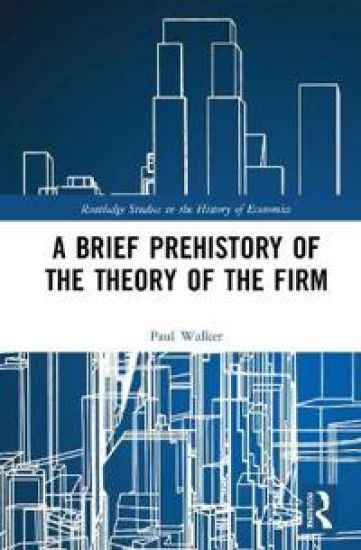
The theory of the firm did not exist, in any serious manner, until around 1970. Only then did the current theory of the firm literature begin to emerge, based largely upon the work of Ronald Coase and to a lesser degree Frank Knight. It was work by Armen Alchian, Robert Crawford, Harold Demsetz, Michael Jensen, Benjamin Klein, William Meckling and Oliver Williamson, among others, that drove the upswing in interest in the firm among mainstream economists.This accessible book provides a valuable overview of the ‘prehistory’ of the firm. Spanning an impressive timeline, it delves into Antiquity, the Medieval era, the pre-classical economics period and the 19th and 20th centuries. Next, the book traces the theoretical contributions from pre-classical, classical and neoclassical economics.It will be illuminating reading for students and researchers of the history of economic thought, industrial organization, microeconomic theory and business history.
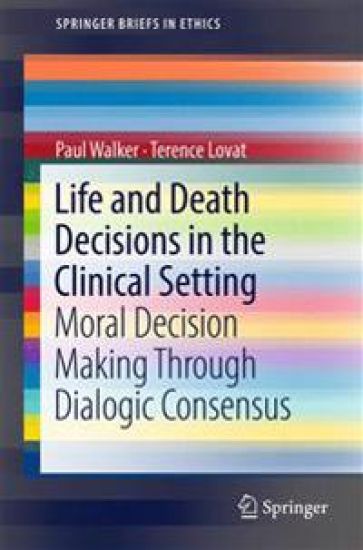
Life and Death Decisions in the Clinical Setting
Paul Walker; Terence Lovat
Springer Verlag, Singapore
2017
nidottu
This book moves away from the frameworks that have traditionally guided ethical decision-making in the Western clinical setting, towards an inclusive, non-coercive and, reflective dialogic approach to moral decision-making. Inspired in part by Jürgen Habermas’s discourse theory of morality and principles of communicative action, the book offers a proportionist approach as a way of balancing out the wisdom in traditional frameworks, set in the actual reality of the clinical situation at hand. Putting this approach into practice requires having a conversation, a dialogue or a discourse, with collaboration amongst all the stakeholders. The aim of the dialogue is to reach consensus in the decision, via mutual understanding of the values held by the patient and others whom they see as significant. This book aims to underscore the moral philosophical foundations for having a meaningful conversation. Life and Death Decision in the Clinical Setting is especially relevant in our contemporary era, characterised medically by an ever-increasing armamentarium of life-sustaining technology, but also by increasing multiculturalism, a multiplicity of faiths, and increasing value pluralism.