Kirjojen hintavertailu. Mukana 12 497 203 kirjaa ja 12 kauppaa.

Kirjailija

Paul Walton

Kirjat ja teokset yhdessä paikassa: 8 kirjaa, julkaisuja vuosilta 2009-2026, suosituimpien joukossa Bad News (Routledge Revivals). Vertaile teosten hintoja ja tarkista saatavuus suomalaisista kirjakaupoista.

8 kirjaa

Kirjojen julkaisuhaarukka 2009-2026.

Bad News (Routledge Revivals)

Bad News (Routledge Revivals)

Peter Beharrell; Howard Davis; John Eldridge; John Hewitt; Jean Hart; Gregg Philo; Paul Walton; Brian Winston

Routledge
2009
nidottu
It is a commonly held belief that television news in Britain, on whatever channel, is more objective, more trustworthy, more neutral than press reporting. The illusion is exploded in this controversial study by the Glasgow University Media Group, originally published in 1976.The authors undertook an exhaustive monitoring of all television broadcasts over 6 months, from January to June 1975, with particular focus upon industrial news broadcasts, the TUC, strikes and industrial action, business and economic affairs.Their analysis showed how television news favours certain individuals by giving them more time and status. But their findings did not merely deny the neutrality of the news, they gave a new insight into the picture of industrial society that TV news constructs.
Jaguar XJ40

Jaguar XJ40

Paul Walton

THE CROWOOD PRESS LTD
2026
sidottu
With a heritage that harks back to the early Twenties, Jaguar is one of UK’s oldest automobile marques still in business. As well being famous for several iconic sports cars such as the XK120, E-type and XK8 along with its many successes in international motorsport, it also has a reputation for producing elegant, luxurious and powerful saloons. These have included the Mk VII, Mk 2 and Mk X, plus eight generations of XJ, all of which set a new standard for their performance, ride and comfort. Launched in 1986, the fourth XJ model – internally known by Jaguar as the XJ40 – not only had a new and more modern design than its more traditional predecessors but also featured an innovative, and at the time class-leading, specification that included a clever onboard diagnostic system. However, never a car without issues – the XJ40’s gestation alone took well over a decade – its many reliability issues would have a long lasting impact on both its reputation as well as Jaguar itself.
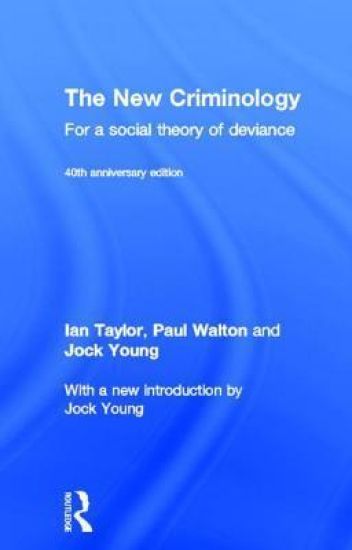
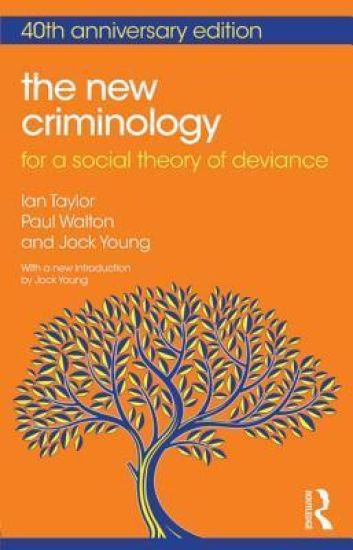
The New Criminology

The New Criminology

Ian Taylor; Paul Walton; Jock Young

Routledge
2013
sidottu
"The New Criminology was written at a particular time and place; it was a product of 1968 and its aftermath: a world turned upside down .It was a time of great changes in personal politics and a surge of politics on the left: Marxism, Anarchism, Situationism as well as radical social democratic ideas became centre stage." Jock Young, from the new introduction.Taylor, Walton and Young’s The New Criminology is one of the seminal texts in Criminology. First published in 1973, it marked a watershed moment in the development of critical criminological theory and is as relevant today as it was forty years ago. It was one of the first texts to bridge the gap between criminological and sociological theory and demonstrated the weaknesses of classical and positivist criminology. Critics at the time saw it as the first truly comprehensive critique of Anglo-American studies of crime and deviance.Reproduced unabridged, the fortieth anniversary edition includes a brand new introductory essay from Jock Young placing the book in its intellectual context and sequence and looking at the theories which built up to it and the theories that have been built upon since. It is essential reading for all serious students engaged in criminological theory and is destined to inspire future generations.
The New Criminology

The New Criminology

Ian Taylor; Paul Walton; Jock Young

Routledge
2013
nidottu
"The New Criminology was written at a particular time and place; it was a product of 1968 and its aftermath: a world turned upside down .It was a time of great changes in personal politics and a surge of politics on the left: Marxism, Anarchism, Situationism as well as radical social democratic ideas became centre stage." Jock Young, from the new introduction.Taylor, Walton and Young’s The New Criminology is one of the seminal texts in Criminology. First published in 1973, it marked a watershed moment in the development of critical criminological theory and is as relevant today as it was forty years ago. It was one of the first texts to bridge the gap between criminological and sociological theory and demonstrated the weaknesses of classical and positivist criminology. Critics at the time saw it as the first truly comprehensive critique of Anglo-American studies of crime and deviance.Reproduced unabridged, the fortieth anniversary edition includes a brand new introductory essay from Jock Young placing the book in its intellectual context and sequence and looking at the theories which built up to it and the theories that have been built upon since. It is essential reading for all serious students engaged in criminological theory and is destined to inspire future generations.
More Bad News (Routledge Revivals)

More Bad News (Routledge Revivals)

Peter Beharrell; Howard Davis; John Eldridge; John Hewitt; Jean Hart; Gregg Philo; Paul Walton; Brian Winston

Routledge
2009
nidottu
First published in 1980, More Bad News is the Second Volume in the research findings of the Glasgow University Media Group. It develops the analytic findings and methods of the first volume Bad News through a series of Case Studies of Television News Coverage, and argues that much of what passes as balanced and factual news reporting is produced from a highly partial viewpoint. Focusing on the British economy in crisis, and its thematic linkage with the Social Contract during the first four months of 1975, the book deals with three main levels of activity: the story, the language and the visuals. As the book unpacks each level of routine news coverage a picture emerges which has the surface appearance of neutrality and balance but is in fact highly partial and restricted
More Bad News (Routledge Revivals)

More Bad News (Routledge Revivals)

Peter Beharrell; Howard Davis; John Eldridge; John Hewitt; Jean Hart; Gregg Philo; Paul Walton; Brian Winston

Routledge
2009
sidottu
First published in 1980, More Bad News is the Second Volume in the research findings of the Glasgow University Media Group. It develops the analytic findings and methods of the first volume Bad News through a series of Case Studies of Television News Coverage, and argues that much of what passes as balanced and factual news reporting is produced from a highly partial viewpoint. Focusing on the British economy in crisis, and its thematic linkage with the Social Contract during the first four months of 1975, the book deals with three main levels of activity: the story, the language and the visuals. As the book unpacks each level of routine news coverage a picture emerges which has the surface appearance of neutrality and balance but is in fact highly partial and restricted
Bad News - Volumes 1 and 2 (Routledge Revivals)

Bad News - Volumes 1 and 2 (Routledge Revivals)

Peter Beharrell; Howard Davis; John Eldridge; John Hewitt; Jean Hart; Gregg Philo; Paul Walton; Brian Winston

Routledge
2009
muu
It is a commonly held belief that television news in Britain, on whatever channel, is more objective, more trustworthy, more neutral than press reporting. The illusion is exploded in this controversial 2-volume study by the Glasgow University Media Group, originally published in 1976 and 1980.
Bad News (Routledge Revivals)

Bad News (Routledge Revivals)

Peter Beharrell; Howard Davis; John Eldridge; John Hewitt; Jean Hart; Gregg Philo; Paul Walton; Brian Winston

Routledge
2009
sidottu
It is a commonly held belief that television news in Britain, on whatever channel, is more objective, more trustworthy, more neutral than press reporting. The illusion is exploded in this controversial study by the Glasgow University Media Group, originally published in 1976.The authors undertook an exhaustive monitoring of all television broadcasts over 6 months, from January to June 1975, with particular focus upon industrial news broadcasts, the TUC, strikes and industrial action, business and economic affairs.Their analysis showed how television news favours certain individuals by giving them more time and status. But their findings did not merely deny the neutrality of the news, they gave a new insight into the picture of industrial society that TV news constructs.