Kirjojen hintavertailu. Mukana 12 203 101 kirjaa ja 12 kauppaa.

Kirjailija

Paul Watson

Kirjat ja teokset yhdessä paikassa: 35 kirjaa, julkaisuja vuosilta 1981-2026, suosituimpien joukossa Clinical Pain Management : Chronic Pain. Vertaile teosten hintoja ja tarkista saatavuus suomalaisista kirjakaupoista.

35 kirjaa

Kirjojen julkaisuhaarukka 1981-2026.

Clinical Pain Management : Chronic Pain

Clinical Pain Management : Chronic Pain

Peter Wilson; Paul Watson; Jennifer Haythornwaite; Troels Jensen

Hodder Arnold
2008
sidottu
The second edition of Chronic Pain now covers a vast scientific and clinical arena, with the scientific background and therapeutic options much expanded. In common with the other titles comprising Clinical Pain Management, the volume gathers together the available evidence-based information in a reader-friendly format without unnecessary detail, and is divided into three parts.The broad coverage under Part One encompasses basic science, including applied physiology, genetics and epidemiology, through societal aspects of chronic pain and disability, to patient assessment, diagnostic procedures and outcome measures.Part Two considers the different therapies available, including pharmacological, psychological, behavioural, interventional and alternative.In Part Three specific and non-specific pain syndromes and their management are described, including pain in neurological disease, in HIV and AIDS patients, and after surgery or spinal cord injury, regional pain in the head, face, neck, back, joints, chest, abdomen and pelvis, and issues related to pain in children, the elderly and in association with substance misuse.
The Only Flag Worth Flying

The Only Flag Worth Flying

Sarah Levy; Paul Watson

TAYLOR FRANCIS LTD
2025
sidottu
The subject of international environmental law is fraught with debate over its legitimacy and efficacy. If laws without enforcement are merely good advice, then how can the environment be meaningfully protected by international legal institutions? This book examines that question through the lens of marine conservation, focusing on the Sea Shepherd Conservation Society (SSCS) and the Captain Paul Watson Foundation (CPWF) as non-state actors intervening directly to enforce international marine conservation laws. The book unfolds in three parts, moving from Soundings, which explores the legal and historical foundations of marine conservation law, to Currents, which traces the emergence of direct-action enforcement and its necessity in instances where states lack the means, will, or jurisdiction to act, and finally to Horizons, which looks ahead to the emerging landscape of ocean governance beyond the state. In these later chapters, the book examines the increasing criminalization of environmental activism, the rise of Indigenous-led and decentralised enforcement models, and the plural legal imaginaries reshaping what legitimacy might mean in a post-sovereign world. Grounded in bio- and ecocentric legal theory, and drawing on legal analysis, political critique, and detailed campaign case studies, the book challenges the assumption that enforcement is the sole domain of the nation-state. Instead, it argues that legitimacy may derive not from formal authority, but from the courage to uphold laws that institutions have abandoned. In doing so, this book reframes direct action as being essential to the law’s integrity: the upholding of a shared responsibility to conserve our oceans. For when legality becomes illusion, resistance may be the most just act of all. In this sea of fallen standards, the pirate flag may be the only one worth flying.
The Only Flag Worth Flying

The Only Flag Worth Flying

Sarah Levy; Paul Watson

TAYLOR FRANCIS LTD
2025
nidottu
The subject of international environmental law is fraught with debate over its legitimacy and efficacy. If laws without enforcement are merely good advice, then how can the environment be meaningfully protected by international legal institutions? This book examines that question through the lens of marine conservation, focusing on the Sea Shepherd Conservation Society (SSCS) and the Captain Paul Watson Foundation (CPWF) as non-state actors intervening directly to enforce international marine conservation laws. The book unfolds in three parts, moving from Soundings, which explores the legal and historical foundations of marine conservation law, to Currents, which traces the emergence of direct-action enforcement and its necessity in instances where states lack the means, will, or jurisdiction to act, and finally to Horizons, which looks ahead to the emerging landscape of ocean governance beyond the state. In these later chapters, the book examines the increasing criminalization of environmental activism, the rise of Indigenous-led and decentralised enforcement models, and the plural legal imaginaries reshaping what legitimacy might mean in a post-sovereign world. Grounded in bio- and ecocentric legal theory, and drawing on legal analysis, political critique, and detailed campaign case studies, the book challenges the assumption that enforcement is the sole domain of the nation-state. Instead, it argues that legitimacy may derive not from formal authority, but from the courage to uphold laws that institutions have abandoned. In doing so, this book reframes direct action as being essential to the law’s integrity: the upholding of a shared responsibility to conserve our oceans. For when legality becomes illusion, resistance may be the most just act of all. In this sea of fallen standards, the pirate flag may be the only one worth flying.
The Big Book Of BrainDumps

The Big Book Of BrainDumps

Chris Tottman; Richard Blundell; Paul Watson; Daisy Tottman

BROWN DOG BOOKS
2025
nidottu
What if you could shortcut years of painful trial and error with the hard-won wisdom of Business Software Founders who’ve already been to war? How to Grow, Run, and Raise Capital for Your Software Business is your tactical field guide to building, scaling, and funding a successful B2B SaaS company. Curated by Chris Tottman (MessageLabs and Notion Capital), Richard Blundell, Paul Watson and Daisy Tottman, this isn’t another theory-heavy business book. It’s a raw, practical, battle-tested toolkit built around more than 70 visual ‘BrainDumps’ – frameworks that have racked up over 20 million impressions on LinkedIn and transformed how Founders think, pitch, lead, and grow. Each BrainDump distils a critical startup concept into a punchy, one-page visual. But in this book, for the first time, they’re unpacked in full, with Founder commentary, investor psychology, and step-by-step guidance to apply them in your business. Whether you’re stuck at $150k ARR or sprinting toward your Series A or way beyond, this book gives you the clarity, confidence, and tools to move faster. From defining your Value Proposition to crafting a killer Investor Deck, it’s all here – no fluff, no filler. Loved by Founders, Operators, and Investors alike – this is the book every software CEO wishes they had when they started. "I learned from Chris what thinking in systems was and it changed my life and business. This book encapsulates that and much more – this is a must read for all SaaS Founders.” - Guillermo Flor, VC Investor and author of the top rated ProductMarketFit.tech Newsletter "A book that cuts through the noise of founder advice. Equal parts sweat, scars, and sharp strategy – this is Founder-first content at its finest.” - Ivan Landabaso, Founder, VC and author of 'StartupRiders.com' newsletter "A must have companion for any Tech Founder. It's an honest, tactical, and relentlessly practical toolkit we all wish we had sooner.” - Rachel Turner, author of the bestselling book The Founders Survival Guide “The BrainDumps that took over LinkedIn and the Most Useful SaaS Book I’ve Read In Years. No filler. No fluff. No 300 pages of things you already know. That’s why *How to Grow, Run and Raise Capital for Your Software Business* stands out.” - Ruben Dominguez Ibar, The VC Corner
Reflux: An Andy Teague Thriller

Reflux: An Andy Teague Thriller

Paul Watson

Independently Published
2019
nidottu
A gripping tale that will intrigue and hook you.When Andy meets his friend for a drink in a London bar, he enjoys a break from the mundanity of his life. A robbery outside the bar starts a train of events that cause Andy to crave the mundane. A mysterious organisation kidnaps his son, Max, with no obvious motive. Andy embarks on a journey to find his son aided by a secret helper with vast financial and technological resources. Where is Max? Why have they taken him? What do they want? Who is the mystery helper?
Ice Ghosts

Ice Ghosts

Paul Watson

WW Norton Co
2018
nidottu
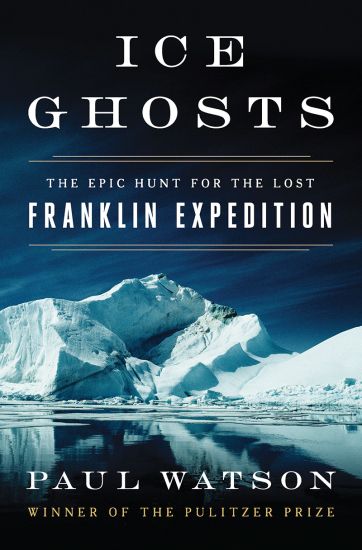
Ice Ghosts weaves together the epic story of the Lost Franklin Expedition of 1845—whose two ships and crew of 129 were lost to the Arctic ice—with the tale of the incredible discovery of the flagship’s wreck in 2014. Paul Watson, who was on the icebreaker that led the discovery expedition, tells a fast-paced historical adventure story: Sir John Franklin and the crew of the HMS Erebus and Terror setting off in search of the fabled Northwest Passage, the hazards they encountered and the reasons they were forced to abandon ship hundreds of miles from the nearest outpost of civilization, and the decades of searching that exposed rumours of cannibalism and a few scattered papers and bones—until a combination of Inuit lore and the latest science yielded a discovery for the ages.
Ice Ghosts

Ice Ghosts

Paul Watson

WW Norton Co
2017
sidottu
Ice Ghosts weaves together the epic story of the Lost Franklin Expedition of 1845—whose two ships and crew of 129 were lost to the Arctic ice—with the tale of the incredible discovery of the flagship’s wreck in 2014. Paul Watson, who was on the icebreaker that led the discovery expedition, tells a fast-paced historical adventure story: Sir John Franklin and the crew of the HMS Erebus and Terror setting off in search of the fabled Northwest Passage, the hazards they encountered and the reasons they were forced to abandon ship hundreds of miles from the nearest outpost of civilization, and the decades of searching that exposed rumours of cannibalism and a few scattered papers and bones—until a combination of Inuit lore and the latest science yielded a discovery for the ages.