Kirjojen hintavertailu. Mukana 12 595 353 kirjaa ja 12 kauppaa.

Kirjailija

Paul Watt

Kirjat ja teokset yhdessä paikassa: 12 kirjaa, julkaisuja vuosilta 2006-2023, suosituimpien joukossa Ernest Newman. Vertaile teosten hintoja ja tarkista saatavuus suomalaisista kirjakaupoista.

12 kirjaa

Kirjojen julkaisuhaarukka 2006-2023.

Music, Morality and Social Reform in Nineteenth-Century Britain
A pioneering work which delves into and reveals the links between music, moral instruction and social reform. This book discusses the role of music in programmes of personal improvement and social reform in nineteenth-century Britain. The pursuit of morality through music was designed not just to improve personal and communal character but to affect social change and transformation. The book examines the musical education of children, women and men through a variety of literature published for various educational settings including mechanics' institutes. It also considers the role of music in narratives of social programs and community-building projects that sought to promote utility, well-being and freedom from the strictures of Christianity as the dominant moral and cultural force. The first book to connect the threads between music, moral instruction and social reform across the educational life cycle in nineteenth-century Britain, it shows how these threads are found in unlikely places, such as games, manners books, economics treatises and short stories. It deftly illustrates the links between everyday life, popular culture and discourses of morality and social reform of the period.
Estate Regeneration and Its Discontents
Public housing estates are disappearing from London’s skyline in the name of regeneration, while new mixed-tenure developments are arising in their place. This richly illustrated book provides a vivid interdisciplinary account of the controversial urban policy of demolition and rebuilding amid London’s housing crisis and the polarisation between the city’s have-nots and have-lots. Drawing on extensive fieldwork and interviews with over 180 residents living in some of the capital’s most deprived areas, Watt shows the dramatic ways that estate regeneration is reshaping London, fuelling socio-spatial inequalities via state-led gentrification. Foregrounding resident experiences and perspectives both before and during regeneration, he examines class, place belonging, home and neighbourhood, and argues that the endless regeneration process results in degeneration, displacement and fragmented communities.
Estate Regeneration and its Discontents
Using extensive original research undertaken in London, Watt provides a vivid account of estate regeneration in relation to key housing and urban policy debates. Using interviews which foreground the experiences and perspectives of estate residents throughout multiple stages of the regeneration process, Watt demonstrates the dramatic impacts that regeneration and gentrification can have on socio-spatial inequality and London’s marginalised communities.
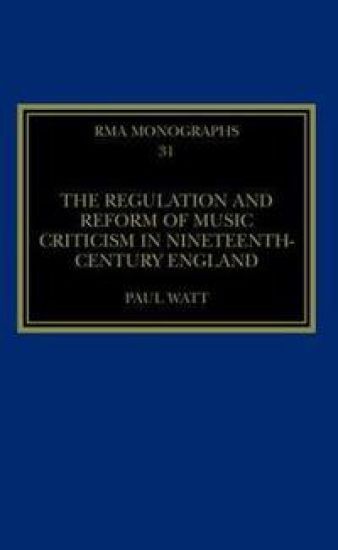
The Regulation and Reform of Music Criticism in Nineteenth-Century England
Music criticism in England underwent profound change from the 1880s to the 1920s. It gave rise to ‘New criticism’ that aimed to be rational, impartial and intellectually authoritative. It was a break from the criticism of old: the work of the opinionated journalist who wrote descriptive concert reviews with invective, cliché, bias and bombast. Critics such as Ernest Newman (1868–1959), John F. Runciman (1866–1916) and Michel D. Calvocoressi (1877–1944) fostered this new school and wrote extensively of their aspirations for musical criticism in their own times and for the future. This book charts the genesis of this new wave of musical criticism that sought to regulate and reform the profession of music critic. Alongside the establishment of principles, training manuals and schools for critics, hundreds of journal articles and dozens of books were written that encouraged new criticism, which also had a bearing on scholarly writing in biography, aesthetics and history. The Regulation and Reform of Music Criticism in Nineteenth-Century England considers the influence and advocacy of individual critics and the role that institutions, such as the Musical Association and the Musical Times, played in this period of change. The book also explores the impact that French and German writers had on their English counterparts, demonstrating the internationalization of critical thought of the period.
The Regulation and Reform of Music Criticism in Nineteenth-Century England
Music criticism in England underwent profound change from the 1880s to the 1920s. It gave rise to ‘New criticism’ that aimed to be rational, impartial and intellectually authoritative. It was a break from the criticism of old: the work of the opinionated journalist who wrote descriptive concert reviews with invective, cliché, bias and bombast. Critics such as Ernest Newman (1868–1959), John F. Runciman (1866–1916) and Michel D. Calvocoressi (1877–1944) fostered this new school and wrote extensively of their aspirations for musical criticism in their own times and for the future. This book charts the genesis of this new wave of musical criticism that sought to regulate and reform the profession of music critic. Alongside the establishment of principles, training manuals and schools for critics, hundreds of journal articles and dozens of books were written that encouraged new criticism, which also had a bearing on scholarly writing in biography, aesthetics and history. The Regulation and Reform of Music Criticism in Nineteenth-Century England considers the influence and advocacy of individual critics and the role that institutions, such as the Musical Association and the Musical Times, played in this period of change. The book also explores the impact that French and German writers had on their English counterparts, demonstrating the internationalization of critical thought of the period.
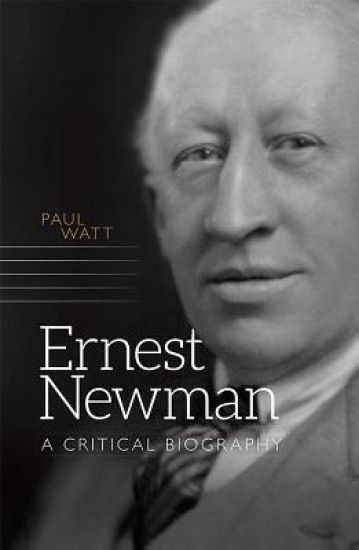
Ernest Newman

Ernest Newman

Paul Watt

The Boydell Press
2017
sidottu
Examines the genesis of Ernest Newman's major publications in the context of prevailing intellectual trends in history, criticism and biography. Ernest Newman (1868-1959) left an indelible mark on British musical criticism in a career spanning more than seventy years. His magisterial Life of Richard Wagner, published in four volumes between 1933 and 1946, is regarded as his crowning achievement, but Newman wrote many other influential books and essays on a variety of subjects ranging from early music to Schoenberg. In this book, the geneses of Newman's major publications are examined in thecontext of prevailing intellectual trends in history, criticism and biography. Newman's career as a writer is traced across a wide range of subjects including English and French literature, evolutionary theory and biographical method, and French, German and Russian music. Underpinning many of these works is Newman's preoccupation with rationalism and historical method. By examining particular sets of writings such as composer-biographies and essays from leading newspapers such as the Manchester Guardian and the Sunday Times, this book illustrates the ways in which Newman's work was grounded in late nineteenth-century intellectual paradigms that made him a unique and at times controversial figure. PAUL WATT is Senior Lecturer in Musicology in the Sir Zelman Cowen School of Music at Monash University.
Bawdy Songbooks of the Romantic Period, Volume 1

Bawdy Songbooks of the Romantic Period, Volume 1

Patrick Spedding; Paul Watt; Ed Cray; David Gregory; Derek B Scott

Routledge
2011
sidottu
The songbooks of the 1830-40s were printed in tiny numbers, and small format so they could be hidden in a pocket, passed round or thrown away. Collectors have sought ‘these priceless chapbooks’, but only recently a collection of 49 songbooks has come to light. This collection represents almost all of the known songbooks from the period.
Bawdy Songbooks of the Romantic Period, Volume 2

Bawdy Songbooks of the Romantic Period, Volume 2

Patrick Spedding; Paul Watt; Ed Cray; David Gregory; Derek B Scott

Routledge
2011
sidottu
The songbooks of the 1830-40s were printed in tiny numbers, and small format so they could be hidden in a pocket, passed round or thrown away. Collectors have sought ‘these priceless chapbooks’, but only recently a collection of 49 songbooks has come to light. This collection represents almost all of the known songbooks from the period.
Bawdy Songbooks of the Romantic Period, Volume 4

Bawdy Songbooks of the Romantic Period, Volume 4

Patrick Spedding; Paul Watt; Ed Cray; David Gregory; Derek B Scott

Routledge
2011
sidottu
The songbooks of the 1830-40s were printed in tiny numbers, and small format so they could be hidden in a pocket, passed round or thrown away. Collectors have sought ‘these priceless chapbooks’, but only recently a collection of 49 songbooks has come to light. This collection represents almost all of the known songbooks from the period.
Bawdy Songbooks of the Romantic Period, Volume 3

Bawdy Songbooks of the Romantic Period, Volume 3

Patrick Spedding; Paul Watt; Ed Cray; David Gregory; Derek B Scott

Routledge
2011
sidottu
The songbooks of the 1830-40s were printed in tiny numbers, and small format so they could be hidden in a pocket, passed round or thrown away. Collectors have sought ‘these priceless chapbooks’, but only recently a collection of 49 songbooks has come to light. This collection represents almost all of the known songbooks from the period.
Understanding Social Inequality

Understanding Social Inequality

Tim Butler; Paul Watt

SAGE Publications Inc
2006
sidottu
"This is a book that should be read by anyone interested in class, inequality, poverty and politics. Actually, probably more importantly it should be read by people who think that those things do not matter! It provides a wonderful summation of the huge amount of work on these topics that now exists and it also offers its own distinctive perspectives on a set of issues that are - despite the claims of some influential commentators - still central to the sociological enterprise and, indeed to political life." - Roger Burrows, University of York "A clear and compelling analysis of the dynamics of social and spatial inequality in an era of globalisation. This is an invaluable resource for students and scholars in sociology, human geography and the social sciences more generally." - Gary Bridge, University of Bristol With the declining attention paid to social class in sociology, how can we analyze continuing and pervasive socio-economic inequality? What is the impact of recent developments in sociology on how we should understand disadvantage? Moving beyond the traditional dichotomies of social theory, this book brings the study of social stratification and inequality into the 21st century. Starting with the widely agreed 'fact' that the world is becoming more unequal, this book brings together the 'identity of displacement' in sociology and the 'spaces of flow' of geography to show how place has become an increasingly important focus for understanding new trends in social inquality.
Understanding Social Inequality

Understanding Social Inequality

Tim Butler; Paul Watt

SAGE Publications Inc
2006
nidottu
"This is a book that should be read by anyone interested in class, inequality, poverty and politics. Actually, probably more importantly it should be read by people who think that those things do not matter! It provides a wonderful summation of the huge amount of work on these topics that now exists and it also offers its own distinctive perspectives on a set of issues that are - despite the claims of some influential commentators - still central to the sociological enterprise and, indeed to political life." - Roger Burrows, University of York "A clear and compelling analysis of the dynamics of social and spatial inequality in an era of globalisation. This is an invaluable resource for students and scholars in sociology, human geography and the social sciences more generally." - Gary Bridge, University of Bristol With the declining attention paid to social class in sociology, how can we analyze continuing and pervasive socio-economic inequality? What is the impact of recent developments in sociology on how we should understand disadvantage? Moving beyond the traditional dichotomies of social theory, this book brings the study of social stratification and inequality into the 21st century. Starting with the widely agreed 'fact' that the world is becoming more unequal, this book brings together the 'identity of displacement' in sociology and the 'spaces of flow' of geography to show how place has become an increasingly important focus for understanding new trends in social inquality.