Kirjojen hintavertailu. Mukana 12 390 323 kirjaa ja 12 kauppaa.

Kirjailija

Paul Wilkin

Kirjat ja teokset yhdessä paikassa: 3 kirjaa, julkaisuja vuosilta 2007-2018, suosituimpien joukossa Computational Botany. Vertaile teosten hintoja ja tarkista saatavuus suomalaisista kirjakaupoista.

3 kirjaa

Kirjojen julkaisuhaarukka 2007-2018.

Computational Botany

Computational Botany

Paolo Remagnino; Simon Mayo; Paul Wilkin; James Cope; Don Kirkup

Springer-Verlag Berlin and Heidelberg GmbH Co. K
2018
nidottu
This book discusses innovative methods for mining information from images of plants, especially leaves, and highlights the diagnostic features that can be implemented in fully automatic systems for identifying plant species. Adopting a multidisciplinary approach, it explores the problem of plant species identification, covering both the concepts of taxonomy and morphology. It then provides an overview of morphometrics, including the historical background and the main steps in the morphometric analysis of leaves together with a number of applications. The core of the book focuses on novel diagnostic methods for plant species identification developed from a computer scientist’s perspective. It then concludes with a chapter on the characterization of botanists' visions, which highlights important cognitive aspects that can be implemented in a computer system to more accurately replicate the human expert’s fixation process. The book not only represents an authoritative guide to advanced computational tools for plant identification, but provides experts in botany, computer science and pattern recognition with new ideas and challenges. As such it is expected to foster both closer collaborations and further technological developments in the emerging field of automatic plant identification.
Computational Botany

Computational Botany

Paolo Remagnino; Simon Mayo; Paul Wilkin; James Cope; Don Kirkup

Springer-Verlag Berlin and Heidelberg GmbH Co. K
2016
sidottu
This book discusses innovative methods for mining information from images of plants, especially leaves, and highlights the diagnostic features that can be implemented in fully automatic systems for identifying plant species. Adopting a multidisciplinary approach, it explores the problem of plant species identification, covering both the concepts of taxonomy and morphology. It then provides an overview of morphometrics, including the historical background and the main steps in the morphometric analysis of leaves together with a number of applications. The core of the book focuses on novel diagnostic methods for plant species identification developed from a computer scientist’s perspective. It then concludes with a chapter on the characterization of botanists' visions, which highlights important cognitive aspects that can be implemented in a computer system to more accurately replicate the human expert’s fixation process. The book not only represents an authoritative guide to advanced computational tools for plant identification, but provides experts in botany, computer science and pattern recognition with new ideas and challenges. As such it is expected to foster both closer collaborations and further technological developments in the emerging field of automatic plant identification.
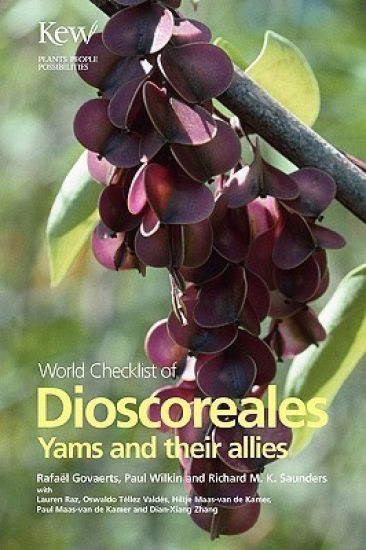
World Checklist of Dioscoreales

World Checklist of Dioscoreales

Rafaël Govaerts; Paul Wilkin; Richard M. K. Saunders

Kew Publishing
2007
nidottu
Dioscoreales are a small but systematically and economically significant order of monocotyledons. The most diverse and important member is the yam genus, Dioscorea L., a source of dietary starch at macroeconomic to rural community levels. Other species of Dioscorea provide the chemical basis of corticosteroid drugs and oral contraceptives. Ally families comprise the unusual, largely achlorophyllous (heteromycotrophic) Burmanniaceae and the relatively unspecialised Nartheciaceae. The World Checklist of Dioscoreales lists all validly published names of yams and their allies, providing the source of their publication and indicating which names are currently accepted and which are synonyms, making it a standard nomenclatural reference for further research into this important family.