Kirjojen hintavertailu. Mukana 12 595 353 kirjaa ja 12 kauppaa.

Kirjailija

Paul Wilkins

Kirjat ja teokset yhdessä paikassa: 14 kirjaa, julkaisuja vuosilta 1996-2025, suosituimpien joukossa Truths of the Unremembered Things. Vertaile teosten hintoja ja tarkista saatavuus suomalaisista kirjakaupoista.

14 kirjaa

Kirjojen julkaisuhaarukka 1996-2025.

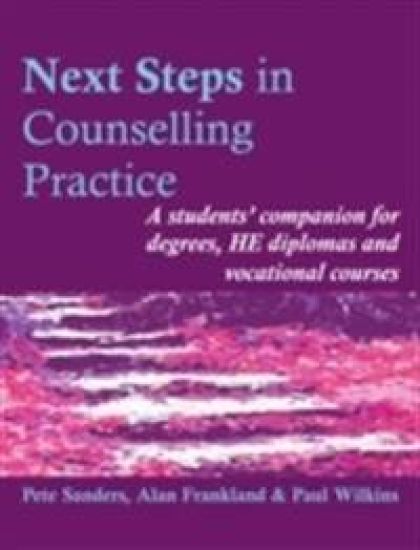
Next Steps in Counselling and Psychotherapy Practice (3rd Edition)

Next Steps in Counselling and Psychotherapy Practice (3rd Edition)

Nicola Blunden; Pete Sanders; Paul Wilkins

PCCS BOOKS
2025
nidottu
This is the third edition of the very popular Next Steps in Counselling Practice, revised, updated and expanded to accompany today's counselling students on their journey towards qualification.Next Steps in Counselling and Psychotherapy Practice is aimed at the more advanced trainee and continues from where the PCCS Books classic First Steps in Counselling leaves off. Like First Steps in Counselling, it is intended as a companion guide, addressed directly to the student counsellor. It is not a theory textbook - there are plenty of those already on the market. Rather, it seeks to answer the many questions that may come up for the individual student counsellor while in training, drawing on the authors' accumulated experience as trainers and practitioners, and as one-time trainees themselves.This book is designed to be of use to and facilitate the learning of all counselling and psychotherapy students, irrespective of the theories that underpin their training programmes and their own approaches to practice. It is not about one model of therapy but about what informs best practice across all therapies.The first part of the book sets the scene, exploring 'human helping' in situations of distress and difficulty, and the place of counselling within that. The second part looks at the nature of the therapeutic relationship and human problems. Next comes the heart of the book - the section on the relationship in action, covering contracting, assessment, diagnosis and case formulation, counselling in difficult situations and the process of referring on. The fourth section looks more broadly at counselling in different contexts and settings and is written by contributors with specific expertise in these areas. These contributions cover anti-racist practice, using counselling skills in other professional contexts, working creatively, working online, and trauma-informed practice. The final, fifth section addresses continuing professional development as the student moves into practice, and deals with the issues of ethics, support and supervision, personal and professional development and reflection, reflexivity and research.In addition to acquiring particular knowledge and skills, becoming an effective therapist requires developing aspects of the self. This book will enable the student counsellor to learn about themself as well as discover new ideas and understand more deeply the skills required to be an effective practitioner.
Poems That Rhyme All Of The Time
Paul Wilkins, born 21.08.1968 in Lancashire in the UK.Although he's half Welsh with his mother coming from Bangor, he has relations in North Wales and is a frequent visitor there.His interests include art, badminton, and creative writing - inclusive of poems, hymns/carols, lyrics and affirmations. He started his creative writing skills in the mid-1990s, and this has developed well despite having no sign of this when at school. Over the last few years, he's had over 120 of his poems published in a local newspaper, and quite a few in books.For lots of poems that rhyme, all the time, and a Good Sense of Humour, which is not just a rumour, without any at all delay, feel free to order this book for a cheap price today
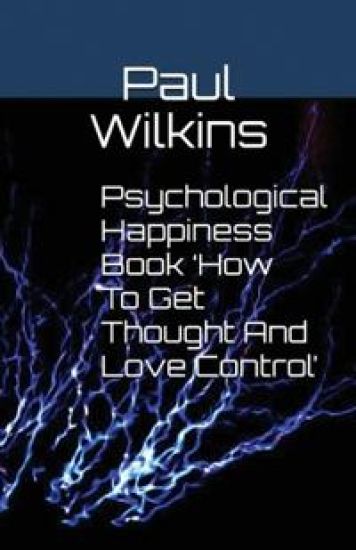
Psychological Happiness Book 'How To Get Thought And Love Control'
In this book please find lots of guidance to happiness and good health. Some very therapeutic poetry, especially the 'Love Joy and Delight' one, which can be very relaxing when needed by anyone.Also some very popular psychological exercises, with the most favourite being 'How to get troubles and upsets Off Your Mind', which lots of people/friends have successfully used to get Off Their Mind For Good anything they'd deeply like to.There's a lot of positive mantras to be read time to time too, in the areas of 'Happiness' 'Health' 'Love' and 'Wealth' which can help bring more positive thoughts and feelings. All of you who purchase this book I'm confident will soon be feeling a lot more happy and optimistic in your life on a lot more regular basis. Best Of Luck.
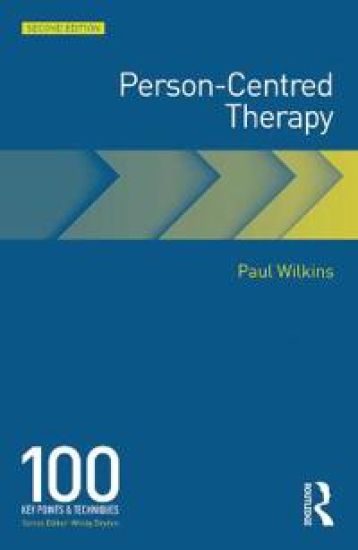
Person-Centred Therapy

Person-Centred Therapy

Paul Wilkins

Routledge
2015
sidottu
Person-centred therapy, rooted in the experience and ideas of the eminent psychotherapist Carl Rogers, is widely practised in the UK and throughout the world. It has applications in health and social care, the voluntary sector and is relevant to work with people who are severely mentally and emotionally distressed. As well as being a valuable sourcebook and offering a comprehensive overview, this edition includes updated references and a new section on recent developments and advances.The book begins with a consideration of the principles and philosophy underpinning person-centred therapy before moving to a comprehensive discussion of the classical theory upon which practice is based. Further areas of discussion include:The model of the person, including the origins of mental and emotional distressThe process of constructive changeA review of revisions of and additions to person-centred theoryChild development, styles of processing and configurations of selfThe quality of presence and working at relational depthCriticisms of the approach are addressed and rebutted and the application of theory to practice is discussed. The new final section is concerned with advances and developments in theory and practice including:Counselling for DepressionThe Social Dimension to Person-Centred TherapyPerson-Centred Practice with People experiencing Severe and Enduring Distress and at the ‘Difficult Edge’A Review of ResearchThroughout the book, attention is drawn to the wider person-centred literature to which it is a valuable key.Person-Centred Therapy will be of particular use to students, scholars and practitioners of person-centred therapy as well as to anyone who wants to know more about one of the major psychotherapeutic modalities.
Person-Centred Therapy

Person-Centred Therapy

Paul Wilkins

Routledge
2015
nidottu
Person-centred therapy, rooted in the experience and ideas of the eminent psychotherapist Carl Rogers, is widely practised in the UK and throughout the world. It has applications in health and social care, the voluntary sector and is relevant to work with people who are severely mentally and emotionally distressed. As well as being a valuable sourcebook and offering a comprehensive overview, this edition includes updated references and a new section on recent developments and advances.The book begins with a consideration of the principles and philosophy underpinning person-centred therapy before moving to a comprehensive discussion of the classical theory upon which practice is based. Further areas of discussion include:The model of the person, including the origins of mental and emotional distressThe process of constructive changeA review of revisions of and additions to person-centred theoryChild development, styles of processing and configurations of selfThe quality of presence and working at relational depthCriticisms of the approach are addressed and rebutted and the application of theory to practice is discussed. The new final section is concerned with advances and developments in theory and practice including:Counselling for DepressionThe Social Dimension to Person-Centred TherapyPerson-Centred Practice with People experiencing Severe and Enduring Distress and at the ‘Difficult Edge’A Review of ResearchThroughout the book, attention is drawn to the wider person-centred literature to which it is a valuable key.Person-Centred Therapy will be of particular use to students, scholars and practitioners of person-centred therapy as well as to anyone who wants to know more about one of the major psychotherapeutic modalities.
First Steps in Practitioner Research

First Steps in Practitioner Research

Pete Sanders; Paul Wilkins

PCCS Books
2010
nidottu
It is widely acknowledged that research is an essential component of the counselling and psychotherapy core curriculum. Therapists and all care practitioners not only need to be able to understand and evaluate research literature, but are also increasingly expected to carry out simple practitioner research to monitor their own practice. With its emphasis on practice-based evidence, this book provides a much-needed, reliable and accessible introduction by two trusted and well-known authors. It builds confidence by not only outlining contemporary methodologies in everyday language, but also by explaining how to approach, understand and evaluate a range of published research. Written for complete beginners in the tried and tested, best-selling style of the other books in the "Steps" series, the book covers first principles through to the development of a simple research project. In simple terms "First Steps in Practitioner Research" provides a 'how to understand and do it' resource for students, tutors and practice supervisors with little or no previous experience.
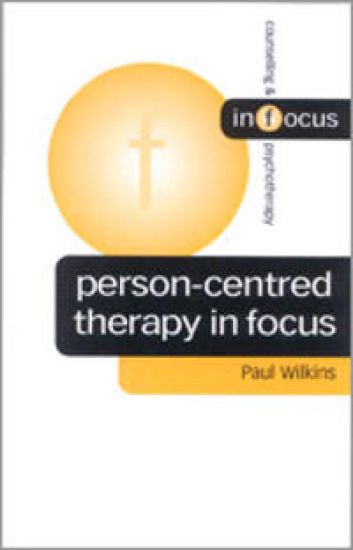
Person-Centred Therapy in Focus

Person-Centred Therapy in Focus

Paul Wilkins

SAGE Publications Inc
2003
sidottu
Person-Centred Therapy in Focus provides a much-needed exploration of the criticisms levelled against one of the most widespread forms of therapeutic practice. Characterized by its critics as theoretically `light', culturally biased and limited in application, until now the person-centred approach has had comparatively little written in its defence. Paul Wilkins provides a rigorous and systematic response to the critics, drawing not only on the work of Carl Rogers, but also of those central to more recent developments in theory and practice (including Goff Barrett-Lennard, Dave Mearns, Jerold Bozarth, Germain Leitauer and Brian Thorne). It traces the epistemological foundations of person-centred therapy and places the approach in its social and political context. Examining the central tenets of the approach, each chapter sets out concisely the criticisms and then counters these with arguments from the person-centred perspective. Chapters cover debates in relation to: - the model of the person - self-actualization - the core conditions - non-directivity - resistance to psychopathology - reflection, and - boundary issues. Person-Centred Therapy in Focus fulfills two important purposes: firstly to answer the criticisms of those who have attacked the person-centred approach and secondly to cultivate a greater critical awareness and understanding within the approach itself. As such it makes a significant contribution to the person-centred literature and provides an excellent resource for use in training.
Person-Centred Therapy in Focus

Person-Centred Therapy in Focus

Paul Wilkins

SAGE Publications Inc
2002
nidottu
Person-Centred Therapy in Focus provides a much-needed exploration of the criticisms levelled against one of the most widespread forms of therapeutic practice. Characterized by its critics as theoretically `light', culturally biased and limited in application, until now the person-centred approach has had comparatively little written in its defence. Paul Wilkins provides a rigorous and systematic response to the critics, drawing not only on the work of Carl Rogers, but also of those central to more recent developments in theory and practice (including Goff Barrett-Lennard, Dave Mearns, Jerold Bozarth, Germain Leitauer and Brian Thorne). It traces the epistemological foundations of person-centred therapy and places the approach in its social and political context. Examining the central tenets of the approach, each chapter sets out concisely the criticisms and then counters these with arguments from the person-centred perspective. Chapters cover debates in relation to: - the model of the person - self-actualization - the core conditions - non-directivity - resistance to psychopathology - reflection, and - boundary issues. Person-Centred Therapy in Focus fulfills two important purposes: firstly to answer the criticisms of those who have attacked the person-centred approach and secondly to cultivate a greater critical awareness and understanding within the approach itself. As such it makes a significant contribution to the person-centred literature and provides an excellent resource for use in training.
Psychodrama

Psychodrama

Paul Wilkins

SAGE Publications Inc
1999
sidottu
`The book is helpfully structured with its cental chapters broadly following the shape of a typical psychodrama session' - Journal of Critical Psychology, Counselling & Psychology `As with all Paul Wilkins writings the book is thorough and well-researched, with a wealth of information arising from wide readership and personal communication.... My own view is that the book fulfils its aim as an introduction to psychodrama for the audience it addresses. It also is packed with information about areas which experienced psychodramatists and sociodramatists will wish to debate' - British Psychodrama Association Journal The text unfolds in such a way that the central feature of psychodrama as an action therapy is spontaneously made manifest. The book is good for students of this method and would be a challenging refresher for practitioners in the field. All the special terms used by psychodramatists are defined in a succinct glossary so that the uninitiated will not be bewildered on first encountering "auxilliary egos", "surplus reality", "social atoms" or even the titillating idea of "act hunger"! The "Guide to further reading" and the section on psychodrama and the internet ensure that old-fashioned book- and journal-worms are as well catered for as cybersleuths' -New Therapist This fascinating book introduces the rationale, theory and psychotherapeutic practice of psychodrama. It provides an insight into its origins, outlining its techniques and bringing to life the dynamic interrelationships that form the core of the practice. Following the theatrical process that lies at the heart of psychodrama, the book shows how the enactment of scenes from the past, present or future, real or imagined, can benefit the group of individuals involved, leading to unexpected insight and growth through creativity and spontaneity. Psychodramatic terms and processes are explained and illustrated using numerous examples from practice.
Psychodrama

Psychodrama

Paul Wilkins

SAGE Publications Inc
1999
nidottu
`The book is helpfully structured with its cental chapters broadly following the shape of a typical psychodrama session' - Journal of Critical Psychology, Counselling & Psychology `As with all Paul Wilkins writings the book is thorough and well-researched, with a wealth of information arising from wide readership and personal communication.... My own view is that the book fulfils its aim as an introduction to psychodrama for the audience it addresses. It also is packed with information about areas which experienced psychodramatists and sociodramatists will wish to debate' - British Psychodrama Association Journal The text unfolds in such a way that the central feature of psychodrama as an action therapy is spontaneously made manifest. The book is good for students of this method and would be a challenging refresher for practitioners in the field. All the special terms used by psychodramatists are defined in a succinct glossary so that the uninitiated will not be bewildered on first encountering "auxilliary egos", "surplus reality", "social atoms" or even the titillating idea of "act hunger"! The "Guide to further reading" and the section on psychodrama and the internet ensure that old-fashioned book- and journal-worms are as well catered for as cybersleuths' -New Therapist This fascinating book introduces the rationale, theory and psychotherapeutic practice of psychodrama. It provides an insight into its origins, outlining its techniques and bringing to life the dynamic interrelationships that form the core of the practice. Following the theatrical process that lies at the heart of psychodrama, the book shows how the enactment of scenes from the past, present or future, real or imagined, can benefit the group of individuals involved, leading to unexpected insight and growth through creativity and spontaneity. Psychodramatic terms and processes are explained and illustrated using numerous examples from practice.