Kirjailija
Paul Williams
Kirjat ja teokset yhdessä paikassa: 179 kirjaa, julkaisuja vuosilta 1980-2026, suosituimpien joukossa AQA A Level Maths: Year 1 / AS Level: Bridging Edition. Vertaile teosten hintoja ja tarkista saatavuus suomalaisista kirjakaupoista.
179 kirjaa
Kirjojen julkaisuhaarukka 1980-2026.
Paul Gilroy has been a controversial force at the forefront of debates around race, nation, and diaspora. Working across a broad range of disciplines, Gilroy has argued that racial identities are historically constructed, formed by colonization, slavery, nationalist philosophies, and consumer capitalism.Paul Williams introduces Gilroy’s key themes and ideas, including: the essential concepts, including ethnic absolutism, civilizationism, postcolonial melancholia, iconization, and the ‘black Atlantic’ analysis of Gilroy’s broad-ranging cultural references, from Edmund Burke to hip-hop a comprehensive overview of Gilroy’s influences and the academic debates his work has inspired.Emphasizing the timeliness and global relevance of Gilroy’s ideas, this guide will appeal to anyone approaching Gilroy’s work for the first time or seeking to further their understanding of race and contemporary culture.
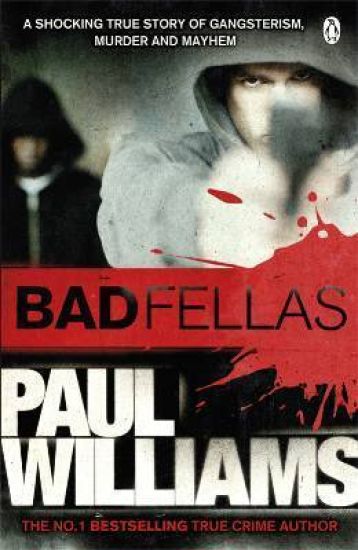
Badfellas is the definitive account by Ireland's most respected crime writer and journalist, Paul Williams, of how organized crime evolved in Ireland over the past four decades.Drawing on his vast inside knowledge of the criminal underworld, an unparalleled range of contacts and eye witness interviews, Williams provides a chilling insight into the godfathers and events - that have dominated gangland since the late 1960s.Until the explosion of paramilitary violence in the 1970s, Ireland was a criminal backwater. However, petty criminals with dreams of the big time were quick to emulate the ruthless actions of the subversives. Organized crime took hold in Ireland and soon armed robberies, kidnappings and murder became commonplace.After the introduction of heroin to Ireland by Dublin's Dunne family in the late 1970s, there was no going back. Badfellas traces how the hugely lucrative drug trade that then emerged led to the gang wars that have corroded communities and devastated countless lives. Badfellas describes in gripping detail the shocking depths to which the mobsters have sunk. Badfellas is essential reading for anyone who cares about keeping communities safe
Collaborative working is an established feature of the public, business and third sector environments, but its effectiveness can be hampered by complex structural and personal variants. This original book explores the influence of agency through the role of individual actors in collaborative working processes, known as boundary spanners. It examines the different aspects of the boundary spanner's role and discusses the skills, abilities, and experience that are necessary. It will be of interest to academics, researchers and students interested in this field of study, and provides learning for policy makers and practitioners active in the fields of collaboration.
This book is a result of the 2nd International Psychoanalytic Conference: "Aggression: From Fantasy to Action", held in May 2010.It contains papers that were delivered to the conference, together with edited summaries of discussions from the floor that followed each paper. The standard of the papers given was extremely high. What was noticeable from the outset of the conference was the intensity of focus on understanding the origins of aggression and violence, from a psychoanalytic perspective. This intensity persisted throughout the two days, leading to a number of the fascinating discussions that are summarized in this book.
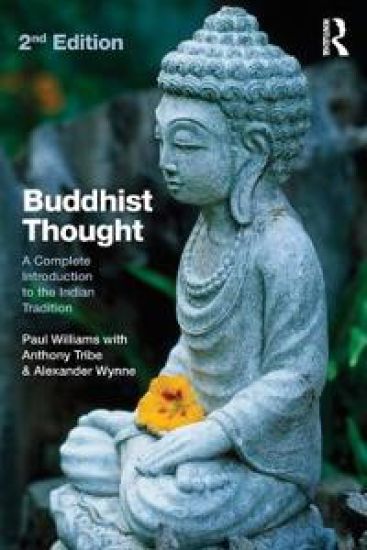
This book serves as an accessible and reliable survey for students wishing to gain familiarity with the basic ideas of Buddhist philosophical and religious thought, and with some of the recent research in the field. It guides readers towards a richer understanding of the central concepts of classical Indian Buddhist thought, from the time of Buddha to the latest scholarly perspectives and controversies. Abstract and complex ideas are made understandable by the authors' clear and engaging style. The second edition has been fully revised in light of new scholarship, in particular on Mahayana Buddhism and Tantric Buddhism, an often neglected and inadequately understood topic. As well as a detailed bibliography this authoritative resource now includes recommended further reading, study questions, a pronunciation guide and extensive glossary of terms, all aimed at helping students to develop their knowledge and appreciation of Buddhist thought.
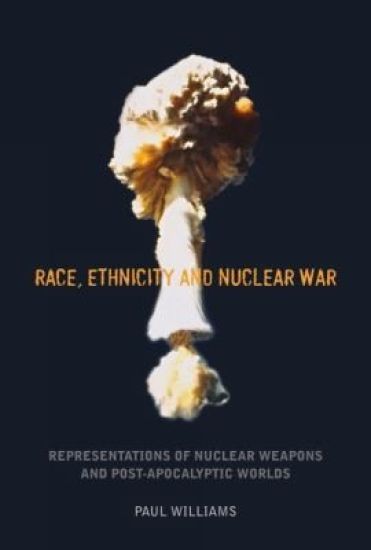
An Open Access edition of this book is available on the Liverpool University Press website and the OAPEN library.Ranging across novels and poetry, critical theory and film, comics and speeches, Race, Ethnicity and Nuclear War: Representations of Nuclear Weapons and Post-Apocalyptic Worlds explores how writers, thinkers, and filmmakers have answered the following question: are nuclear weapons ‘white’? Many texts respond in the affirmative, and arraign nuclear weapons for defending a racial order that privileges whiteness. They are seen as a reminder that the power enjoyed by the white western world imperils the whole of the Earth. Furthermore, the struggle to survive during and after a speculated nuclear attack is often cast as a contest between races and ethnic groups. Race, Ethnicity and Nuclear War listens to voices from around the Anglophone world and the debates followed do not only take place on the soil of the nuclear powers. Filmmakers and writers from the Caribbean, Australia, and India take up positions shaped by their specific place in the decolonizing world and their particular experience of nuclear weapons. The texts considered in Race, Ethnicity and Nuclear War encompass the many guises of representations of nuclear weapons: the Manhattan Project that developed the first atomic weapons, the destruction of Hiroshima and Nagasaki, nuclear tests taking place around the world, and the anxiety surrounding the superpowers’ devastating arsenals. Of particular interest to SF scholars are the extensive analyses of films, novels, and short stories depicting nuclear war and its aftermath. New thoughts are offered on the major texts that SF scholars often return to, such as Philip Wylie’s Tomorrow! and Pat Frank’s Alas Babylon, and a host of little known and under-researched texts are scrutinized too.
This book presents the proceedings of the of the conference on the Psychoanalytic Therapy of Severe Disturbance held in Belfast in June 2008.The aim of the conference was to offer a state of the art communication of the key psychoanalytic thinking and approaches to the conceptualisation and treatment of severe disturbance. The result of a unique gathering of the most eminent psychoanalysts in the field with insights into their work on personality disorder, psychotic states and the nature and function of suicidal ideation. This book will be of interest to mental health professionals - psychiatrists, psychoanalysts, psychotherapists, psychologists, social workers and nurses who have an interest in psychoanalysis and psychotherapy.
Case and the Dreamer
Theodore Sturgeon; Peter S. Beagle; Debbie Notkin; Paul Williams
North Atlantic Books,U.S.
2010
sidottu
This book is the first of three that take as their subject aspects of the author's life, reflects upon a period between birth and eight years of age. It is a piece of literature that furnishes an account of the methods of a mind in its efforts to prevail in oppressive circumstances.
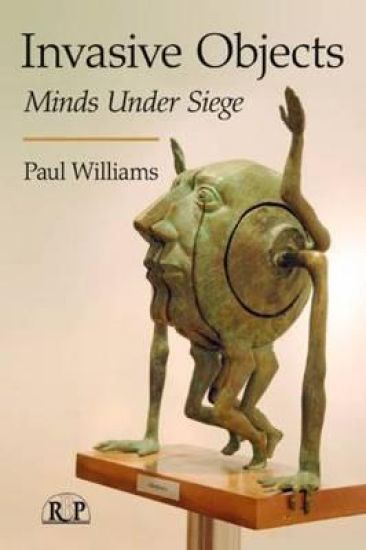
The "Director" controls Ms. B’s life. He flatters her, beguiles her, derides her. His instructions pervade each aspect of her life, including her analytic sessions, during which he suggests promiscuous and dangerous things for Ms. B to say and do, when he suspects that her isolated state is being changed by the therapy. The "Director" is a diabolical foreign body installed in the mind who purports to protect but who keeps Ms. B feeling profoundly ill and alone. The story of Ms. B’s analysis is one of many vivid illustrations presented in this collection of papers by Paul Williams, who shares his lifetime of experience working with severely disturbed patients. As the title suggests, the unifying thread of these papers is the investigation of serious mental disturbance, often characterized by the presence of intrusive and invasive thoughts and fantasies that originate in a traumatic past but which can colonize and destroy the rational mind. The diverse papers are grouped into two related sections. Part one is comprised of papers with a clinical orientation, including a summary of the analysis of Ms. B as well as a speculative paper on the psychosis and recovery of John Nash. In part two, applied psychoanalytic thinking is integrated with Williams’ other professional passion, anthropology, in a paper that exemplifies generative thought through art, poetry, and tribal masks. Other papers in this section include a short essay that takes Freud-bashers to task, a reappraisal of the Rat Man, and a lively discussion of André Green’s "central phobic position" in borderline thinking.Whether engaging in the coconstructed therapeutic relationship or the implications for "madness in society" at large, Williams’ diverse influences – psychoanalytic and otherwise – repeatedly come to the fore in an intellectually stimulating and clinically enriching way. It goes without saying that work with patients whose thinking is psychotic is a challenge, as these papers clearly demonstrate, but Williams reminds us that it is a challenge that psychoanalysis can not only engage but also treat with enduring and impressive therapeutic results.
Does our faith work in all circumstances? On a Monday morning and when we are on holiday? Chatting with friends and surfing the Internet? Doing the washing and driving the car? The Keswick Convention 2009 looked at 'faith that works' - anywhere, everywhere, all the time. This book is the best of that teaching. Dale Ralph Davis takes us through "1 Kings", while Lyndon Bowring considers how to be a Christian voice in the nation. With teaching from Steve Brady, Tim Chester, David Coffey, Stephen Gaukroger, Jonathan Lamb, Peter Maiden, Conrad Mbewe, John Risbridger and Paul Williams, this book is practical, thought-provoking and inspiring. This title is brought to you by Keswick Ministries. Find out more at https://www.keswickministries.org
Anti-Oppressive Practice in Health and Social Care
Viola Nzira; Paul Williams
SAGE Publications Inc
2008
sidottu
Anti-Oppressive Practice in Health and Social Care presents a distinctive holistic approach to developing anti-oppressive practice in a range of health and social care settings, and with a range of service users. Drawing on case studies and practice guidelines, the book proposes strategies which students and professionals can use to develop skills in cultural equality and anti-discrimination and apply them to their everyday practice. The book begins with an account of the nature of anti-oppressive practice and goes on to explore the core theories, concepts and strategies of anti-oppressive practice. Key features of the book include: " a positive preventative approach that sets it apart from existing texts in the field " invaluable practical guidance on how to develop and evaluate personal and organisational cultural practice " a number of helpful features, such as annotated case studies which illustrate best practice, cultural competence and common pitfalls. Anti-Oppressive Practice in Health and Social Care is an essential text for all health and social care undergraduates, on such courses as social work, health care, nursing and counselling. It will also be a useful reference tool for qualified practitioners who wish to reflect on their personal and organisational practice.
Anti-Oppressive Practice in Health and Social Care
Viola Nzira; Paul Williams
SAGE Publications Inc
2008
nidottu
Anti-Oppressive Practice in Health and Social Care presents a distinctive holistic approach to developing anti-oppressive practice in a range of health and social care settings, and with a range of service users. Drawing on case studies and practice guidelines, the book proposes strategies which students and professionals can use to develop skills in cultural equality and anti-discrimination and apply them to their everyday practice. The book begins with an account of the nature of anti-oppressive practice and goes on to explore the core theories, concepts and strategies of anti-oppressive practice. Key features of the book include: " a positive preventative approach that sets it apart from existing texts in the field " invaluable practical guidance on how to develop and evaluate personal and organisational cultural practice " a number of helpful features, such as annotated case studies which illustrate best practice, cultural competence and common pitfalls. Anti-Oppressive Practice in Health and Social Care is an essential text for all health and social care undergraduates, on such courses as social work, health care, nursing and counselling. It will also be a useful reference tool for qualified practitioners who wish to reflect on their personal and organisational practice.