Kirjojen hintavertailu. Mukana 12 595 353 kirjaa ja 12 kauppaa.

Kirjailija

Paula Bialski

Kirjat ja teokset yhdessä paikassa: 4 kirjaa, julkaisuja vuosilta 2012-2024, suosituimpien joukossa Becoming Intimately Mobile. Vertaile teosten hintoja ja tarkista saatavuus suomalaisista kirjakaupoista.

4 kirjaa

Kirjojen julkaisuhaarukka 2012-2024.

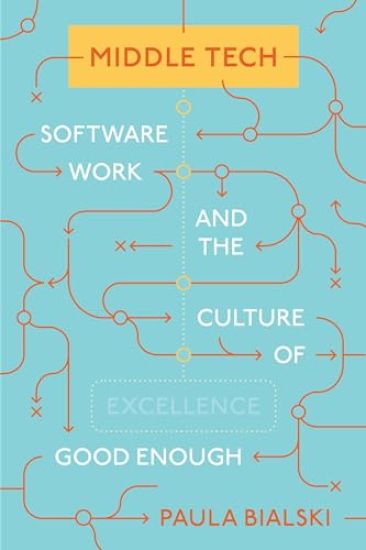
Middle Tech

Middle Tech

Paula Bialski

PRINCETON UNIVERSITY PRESS
2024
pokkari
Why software isn’t perfect, as seen through the stories of software developers at a run-of-the-mill tech companyContrary to much of the popular discourse, not all technology is seamless and awesome; some of it is simply “good enough.” In Middle Tech, Paula Bialski offers an ethnographic study of software developers at a non-flashy, non-start-up corporate tech company. Their stories reveal why software isn’t perfect and how developers communicate, care, and compromise to make software work—or at least work until the next update. Exploring the culture of good enoughness at a technology firm she calls “Middletech,” Bialski shows how doing good-enough work is a collectively negotiated resistance to the organizational ideology found in corporate software settings.The truth, Bialski reminds us, is that technology breaks due to human-related issues: staff cutbacks cause media platforms to crash, in-car GPS systems cause catastrophic incidents, and chatbots can be weird. Developers must often labor to patch and repair legacy systems rather than dream up killer apps. Bialski presents a less sensationalist, more empirical portrait of technology work than the frequently told Silicon Valley narratives of disruption and innovation. She finds that software engineers at Middletech regard technology as an ephemeral object that only needs to be good enough to function until its next iteration. As a result, they don’t feel much pressure to make it perfect. Through the deeply personal stories of people and their practices at Middletech, Bialski traces the ways that workers create and sustain a complex culture of good enoughness.
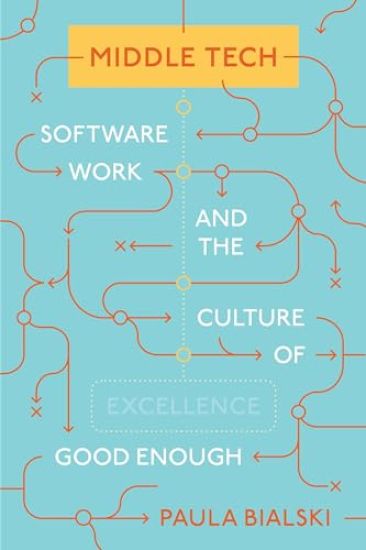
Middle Tech

Middle Tech

Paula Bialski

PRINCETON UNIVERSITY PRESS
2024
sidottu
Why software isn’t perfect, as seen through the stories of software developers at a run-of-the-mill tech companyContrary to much of the popular discourse, not all technology is seamless and awesome; some of it is simply “good enough.” In Middle Tech, Paula Bialski offers an ethnographic study of software developers at a non-flashy, non-start-up corporate tech company. Their stories reveal why software isn’t perfect and how developers communicate, care, and compromise to make software work—or at least work until the next update. Exploring the culture of good enoughness at a technology firm she calls “Middletech,” Bialski shows how doing good-enough work is a collectively negotiated resistance to the organizational ideology found in corporate software settings.The truth, Bialski reminds us, is that technology breaks due to human-related issues: staff cutbacks cause media platforms to crash, in-car GPS systems cause catastrophic incidents, and chatbots can be weird. Developers must often labor to patch and repair legacy systems rather than dream up killer apps. Bialski presents a less sensationalist, more empirical portrait of technology work than the frequently told Silicon Valley narratives of disruption and innovation. She finds that software engineers at Middletech regard technology as an ephemeral object that only needs to be good enough to function until its next iteration. As a result, they don’t feel much pressure to make it perfect. Through the deeply personal stories of people and their practices at Middletech, Bialski traces the ways that workers create and sustain a complex culture of good enoughness.
Communication

Communication

Paula Bialski; Finn Brunton; Mercedes Bunz

University of Minnesota Press
2019
nidottu
On contemporary communication in its various human and nonhuman formsContemporary communication puts us not only in conversation with one another but also with our machinery. Machine communication-to communicate not just via but also with machines-is therefore the focus of this volume. Diving into digital communications history, Finn Brunton brings to the fore the alienness of computational communication by looking at network timekeeping, automated trolling, and early attempts at communication with extraterrestrial life. Picking up this fascination with inhuman communication, Mercedes Bunz then performs a close reading of interaction design and interfaces to show how technology addresses humans (as very young children). Finally, Paula Bialski shares her findings from a field study of software development, analyzing the communicative forms that occur when code is written by separate people. Today, communication unfolds merely between two or more conscious entities but often includes an invisible third party. Inspired by this drastic shift, this volume uncovers new meanings of what it means “to communicate.”
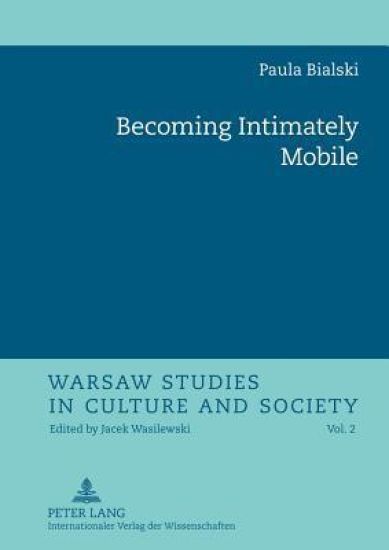
Becoming Intimately Mobile

Becoming Intimately Mobile

Paula Bialski

Peter Lang AG
2012
sidottu
As more and more people become mobile to visit friends, family, and business colleagues using social networking websites, technologies in use today like Couchsurfing.com or online hitchhiking websites (OHWs) are allowing people to create new, planned encounters also between strangers. This book adds to the small body of work currently existing in the social sciences which describes ways in which the internet aids such face-to-face intimacy. Based on extensive research including 5 years of ethnography of couch surfers and OHW users and insights from over 3500 open-ended survey responses, this book explores the way meetings are initiated, relationships are strengthened or avoided, and the way hospitality and homemaking are negotiated. By explaining the process of becoming intimately mobile, this work creates an in-depth account of the relationships being created today as well as the problems that arise when defining friendship and closeness in a mobile world.