Kirjojen hintavertailu. Mukana 12 657 676 kirjaa ja 12 kauppaa.

Kirjailija

Pauline Greenhill

Kirjat ja teokset yhdessä paikassa: 12 kirjaa, julkaisuja vuosilta 1989-2026, suosituimpien joukossa True Poetry. Vertaile teosten hintoja ja tarkista saatavuus suomalaisista kirjakaupoista.

12 kirjaa

Kirjojen julkaisuhaarukka 1989-2026.

True Poetry

True Poetry

Pauline Greenhill

McGill-Queen's University Press
1989
sidottu
Focusing on the importance of traditional and popular poetry for the poets, the presenters, and the local audience, Greenhill examines the activity of creating and using poetry in a community context. She gives numerous examples of Ontario folk verse, among them twenty-one poems about Canadian runner Terry Fox, whose battle with cancer inspired many folk poets. True Poetry pioneers the examination of folk poetry in Canada and adds to a limited body of scholarship on the topic. It will be of interest to anyone concerned with Canadian society, traditional folklore, and popular culture.
Justice in 21st-Century Fairy Tales and the Power of Wonder

Justice in 21st-Century Fairy Tales and the Power of Wonder

Cristina Bacchilega; Pauline Greenhill

BLOOMSBURY PUBLISHING PLC
2026
nidottu
Exploring a range of international works such as films, streaming television series, a graphic novel, and a picture book, this open access book interrogates how, and to what extent, fairy tales are put to work for justice in the areas of environment and ecology, kinship and family, ability and disability, and sex and gender. As Bacchilega and Greenhill demonstrate, some 21st-century fairy tales channel the genre’s wonder to offer otherwise possibilities for being and acting in the world that are not confined to socially sanctioned paths. Drawing on visual and audio-visual case studies of texts such as The Magic Fish, Julián Is A Mermaid, Pokot [Spoor], Gräns [Border], The Dragon Prince, Gatta Cenerentola [Cinderella the Cat], and Sweet Tooth, they examine how the wonder and preternatural of fairy tales model a sustained desire to believe in and realize new ways of existence that have often been too easily dismissed. Guided by theories in fields including ecological, gender, disability, critical race, Indigenous, fantasy, posthuman, and adaptation studies as they intersect with folklore and fairy tale studies, this book examines how creators of wonder tales since the beginning of the new millenium have presented provocations around humans’ political and social relations with nature and culture. Analyzing justice from a variety of positions and establishing how tales of the otherwise can develop optative thinking, Justice in 21st-Century Fairy Tales and the Power of Wonder refutes the conservative, patriarchal, and merely nostalgic Disnified narrative of the genre and insists on the power of wonder within and beyond fairy tales. The eBook editions of this book are available open access under a CC BY-NC-ND 4.0 licence on bloomsburycollections.com. Open access was funded by the Social Sciences and Humanities Research Council of Canada grant 435-2019-0691 and The University of Winnipeg, Canada.
Justice in 21st-Century Fairy Tales and the Power of Wonder

Justice in 21st-Century Fairy Tales and the Power of Wonder

Cristina Bacchilega; Pauline Greenhill

BLOOMSBURY PUBLISHING PLC
2025
sidottu
Exploring a range of international works such as films, streaming television series, a graphic novel, and a picture book, this open access book interrogates how, and to what extent, fairy tales are put to work for justice in the areas of environment and ecology, kinship and family, ability and disability, and sex and gender. As Bacchilega and Greenhill demonstrate, some 21st-century fairy tales channel the genre’s wonder to offer otherwise possibilities for being and acting in the world that are not confined to socially sanctioned paths. Drawing on visual and audio-visual case studies of texts such as The Magic Fish, Julián Is A Mermaid, Pokot [Spoor], Gräns [Border], The Dragon Prince, Gatta Cenerentola [Cinderella the Cat], and Sweet Tooth, they examine how the wonder and preternatural of fairy tales model a sustained desire to believe in and realize new ways of existence that have often been too easily dismissed. Guided by theories in fields including ecological, gender, disability, critical race, Indigenous, fantasy, posthuman, and adaptation studies as they intersect with folklore and fairy tale studies, this book examines how creators of wonder tales since the beginning of the new millenium have presented provocations around humans’ political and social relations with nature and culture. Analyzing justice from a variety of positions and establishing how tales of the otherwise can develop optative thinking, Justice in 21st-Century Fairy Tales and the Power of Wonder refutes the conservative, patriarchal, and merely nostalgic Disnified narrative of the genre and insists on the power of wonder within and beyond fairy tales.The eBook editions of this book are available open access under a CC BY-NC-ND 4.0 licence on bloomsburycollections.com. Open access was funded by the Social Sciences and Humanities Research Council of Canada grant 435-2019-0691 and The University of Winnipeg, Canada.
Reality, Magic, and Other Lies

Reality, Magic, and Other Lies

Pauline Greenhill

Wayne State University Press
2020
sidottu
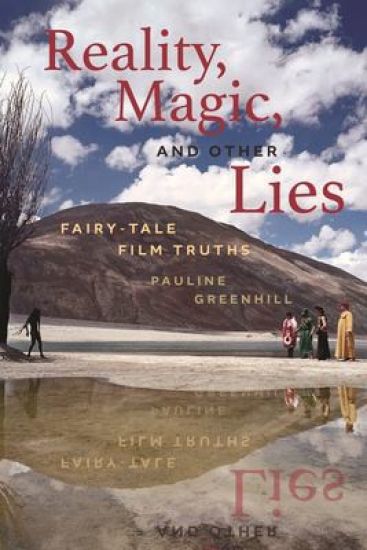
Reality, Magic, and Other Lies: Fairy-Tale Film Truths explores connections and discontinuities between lies and truths in fairy-tale films to directly address the current politics of fairy tale and reality.Since the Enlightenment, notions of magic and wonder have been relegated to the realm of the fanciful, with science and reality understood as objective and true. But the skepticism associated with postmodern thought and critiques from diverse perspectives - including but not limited to anti-racist, decolonial, disability, and feminist theorizing - renders this binary distinction questionable. Further, the precise content of magic and science has shifted through history and across location. Pauline Greenhill offers the idea that fairy tales, particularly through the medium of film, often address those distinctions by making magic real and reality magical.Reality, Magic, and Other Lies consists of an introduction, two sections, and a conclusion, with the first section, "Studio, Director, and Writer Oeuvres", addressing how fairy-tale films engage with and challenge scientific or factual approaches to truth and reality, drawing on films from the stop-motion animation company LAIKA, the independent filmmaker Tarsem, and the storyteller and writer Fred Pellerin. The second section, "Themes and Issues from Three Fairy Tales", shows fairy-tale film magic exploring real-life issues and experiences using the stories of "Hansel and Gretel", "The Juniper Tree\2, and "Cinderella". The concluding section, "Moving Forward?" suggests that the key to facing the reality of contemporary issues is to invest in fairy tales as a guide, rather than a means of escape, by gathering your community and never forgetting to believe.Reality, Magic, and Other Lies-which will be of interest to film and fairy-tale scholars and students-considers the ways in which fairy tales in their mediated forms deconstruct the world and offer alternative views for peaceful, appropriate, just, and intersectionally multifaceted encounters with humans, non-human animals, and the rest of the environment.
Reality, Magic, and Other Lies

Reality, Magic, and Other Lies

Pauline Greenhill

Wayne State University Press
2020
nidottu
Reality, Magic, and Other Lies: Fairy-Tale Film Truths explores connections and discontinuities between lies and truths in fairy-tale films to directly address the current politics of fairy tale and reality.Since the Enlightenment, notions of magic and wonder have been relegated to the realm of the fanciful, with science and reality understood as objective and true. But the skepticism associated with postmodern thought and critiques from diverse perspectives - including but not limited to anti-racist, decolonial, disability, and feminist theorizing - renders this binary distinction questionable. Further, the precise content of magic and science has shifted through history and across location. Pauline Greenhill offers the idea that fairy tales, particularly through the medium of film, often address those distinctions by making magic real and reality magical.Reality, Magic, and Other Lies consists of an introduction, two sections, and a conclusion, with the first section, "Studio, Director, and Writer Oeuvres", addressing how fairy-tale films engage with and challenge scientific or factual approaches to truth and reality, drawing on films from the stop-motion animation company LAIKA, the independent filmmaker Tarsem, and the storyteller and writer Fred Pellerin. The second section, "Themes and Issues from Three Fairy Tales", shows fairy-tale film magic exploring real-life issues and experiences using the stories of "Hansel and Gretel", "The Juniper Tree", and "Cinderella".The concluding section, "Moving Forward?" suggests that the key to facing the reality of contemporary issues is to invest in fairy tales as a guide, rather than a means of escape, by gathering your community and never forgetting to believe.Reality, Magic, and Other Lies-which will be of interest to film and fairy-tale scholars and students-considers the ways in which fairy tales in their mediated forms deconstruct the world and offer alternative views for peaceful, appropriate, just, and intersectionally multifaceted encounters with humans, non-human animals, and the rest of the environment.
Fairy-Tale TV

Fairy-Tale TV

Jill Terry Rudy; Pauline Greenhill

Routledge
2020
sidottu
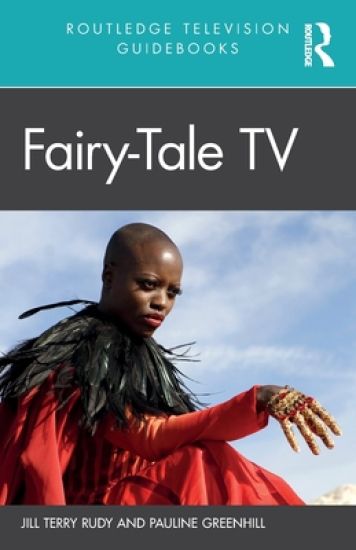
This concise and accessible critical introduction examines the world of popular fairy-tale television, tracing how fairy tales and their social and cultural implications manifest within series, television events, anthologies, and episodes, and as freestanding motifs.Providing a model of televisual analysis, Rudy and Greenhill emphasize that fairy-tale longevity in general, and particularly on TV, results from malleability—morphing from extremely complex narratives to the simple quotation of a name (like Cinderella) or phrase (like "happily ever after")—as well as its perennial value as a form that is good to think with. The global reach and popularity of fairy tales is reflected in the book’s selection of diverse examples from genres such as political, lifestyle, reality, and science fiction TV.With a select mediagraphy, discussion questions, and detailed bibliography for further study, this book is an ideal guide for students and scholars of television studies, popular culture, and media studies, as well as dedicated fairy-tale fans.
Fairy-Tale TV

Fairy-Tale TV

Jill Terry Rudy; Pauline Greenhill

Routledge
2020
nidottu
This concise and accessible critical introduction examines the world of popular fairy-tale television, tracing how fairy tales and their social and cultural implications manifest within series, television events, anthologies, and episodes, and as freestanding motifs.Providing a model of televisual analysis, Rudy and Greenhill emphasize that fairy-tale longevity in general, and particularly on TV, results from malleability—morphing from extremely complex narratives to the simple quotation of a name (like Cinderella) or phrase (like "happily ever after")—as well as its perennial value as a form that is good to think with. The global reach and popularity of fairy tales is reflected in the book’s selection of diverse examples from genres such as political, lifestyle, reality, and science fiction TV.With a select mediagraphy, discussion questions, and detailed bibliography for further study, this book is an ideal guide for students and scholars of television studies, popular culture, and media studies, as well as dedicated fairy-tale fans.
Clever Maids, Fearless Jacks, and a Cat

Clever Maids, Fearless Jacks, and a Cat

Anita Best; Pauline Greenhill; Martin Lovelace

University Press of Colorado
2019
nidottu
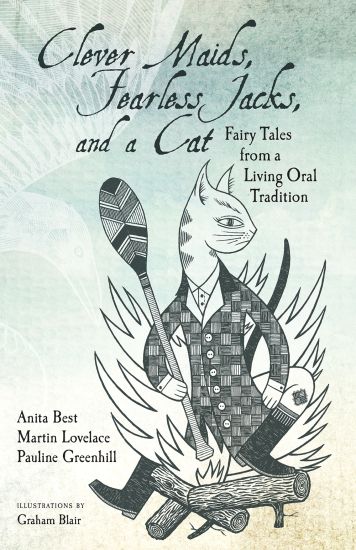
Clever Maids, Fearless Jacks, and a Helpful Cat showcases the stories of two Newfoundland storytellers, Philip Pius Power and Alice Lannon. Ethnopoetic transcriptions of these sensitive and artful tales, which have been passed on orally between generations as part of a community tradition, give accounts of living oral performances from the last quarter of the 20th century and demonstrate the artistry that is possible without the written word. Here, eight tales from Power and five tales from Lannon take up issues of vital concern--such as spousal abuse, bullying, and social and generational conflict--allusively, through a screen of fiction. In commentary following the stories authors Anita Best, Martin Lovelace, and Pauline Greenhill discuss the transmission of fairy tales in oral tradition, address the relation of these magic tales to Lannon's and Power's other stories, and share specifics about Newfoundland storytelling and the two tellers themselves. The text is further enriched by expressive illustrations from artist Graham Blair. Clever Maids, Fearless Jacks, and a Cat presents the fairy-tale oeuvres of two superb storytellers as a contribution to interdisciplinary fairy-tale studies and folklore--countering fairy-tale studies' focus on written traditions and printed texts--as well as to gender studies, cultural studies, Newfoundland studies, and Canadian studies. Students, scholars, and general readers interested in folk and fairy tales, contemporary M rchen, Newfoundland folklore, or oral tradition more generally will find much of value in these pages.
Make the Night Hideous

Make the Night Hideous

Pauline Greenhill

University of Toronto Press
2010
sidottu
The charivari is a loud, late-night surprise house-visiting custom from members of a community, usually to a newlywed couple, accompanied by a quête (a request for a treat or money in exchange for the noisy performance) and/or pranks. Up to the first decades of the twentieth century, charivaris were for the most part enacted to express disapproval of the relationship that was their focus, such as those between individuals of different ages, races, or religions. While later charivaris maintained the same rituals, their meaning changed to a welcoming of the marriage. Make the Night Hideous explores this mysterious transformation using four detailed case studies from different time periods and locations across English Canada, as well as first-person accounts of more recent charivari participants. Pauline Greenhill's unique and fascinating work explores the malleability of a tradition, its continuing value, and its contestation in a variety of discourses.
Make the Night Hideous

Make the Night Hideous

Pauline Greenhill

University of Toronto Press
2010
pokkari
The charivari is a loud, late-night surprise house-visiting custom from members of a community, usually to a newlywed couple, accompanied by a quête (a request for a treat or money in exchange for the noisy performance) and/or pranks. Up to the first decades of the twentieth century, charivaris were for the most part enacted to express disapproval of the relationship that was their focus, such as those between individuals of different ages, races, or religions. While later charivaris maintained the same rituals, their meaning changed to a welcoming of the marriage. Make the Night Hideous explores this mysterious transformation using four detailed case studies from different time periods and locations across English Canada, as well as first-person accounts of more recent charivari participants. Pauline Greenhill's unique and fascinating work explores the malleability of a tradition, its continuing value, and its contestation in a variety of discourses.
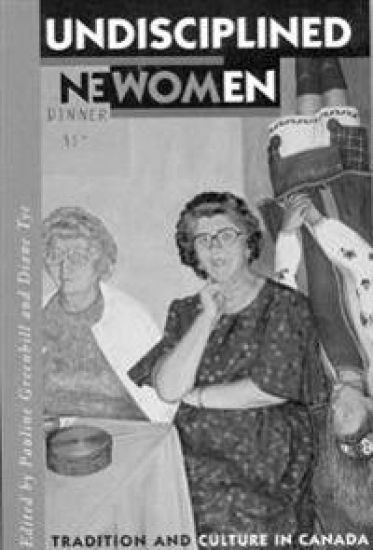
Undisciplined Women

Undisciplined Women

Pauline Greenhill; Diane Tye

McGill-Queen's University Press
1998
nidottu
Dealing with women and culture in Canada, this text explores a range of subjects in folklore scholarship from female sailors to women preachers. Contributors examine how women have been involved in identifying, collecting, and interpreting women's folklore; how various images of women have been created, used, and resisted; and how women transform the lives and culture of themselves and others.
Ethnicity in the Mainstream

Ethnicity in the Mainstream

Pauline Greenhill

McGill-Queen's University Press
1994
sidottu
Greenhill presents three studies from the perspective of a folklorist and within the framework of feminist analysis. Loosely linked by the theme of power and discussion of carnivalesque elements of traditional and popular culture, these studies examine immigrants' narratives about adjusting to life in Canada; Morris dancing as practised by Forest City Morris of London, Ontario; and actions and responses of promoters and residents to the development of the Shakespeare festival in Stratford, Ontario. Greenhill notes that because the English are perceived as lacking carnivalesque traditions, their position vis-a-vis other ethnic groups has been defined solely in terms of power, and demonstrates that concepts of power and entitlement are inextricably bound up in English self-definition. She concludes by examining the implications for social scientific practice of an insider studying her own culture and the political ramifications of such studies for a pluralistic, multicultural society such as Canada. Greenhill's methods, concepts, and conclusions have much to offer practitioners in the fields of folklore, Canadian studies, ethnic studies, anthropology, and women's studies.