Kirjojen hintavertailu. Mukana 12 657 676 kirjaa ja 12 kauppaa.

Kirjailija

Pedro Encarnação

Kirjat ja teokset yhdessä paikassa: 3 kirjaa, julkaisuja vuosilta 2018-2025, suosituimpien joukossa Assistive Technologies. Vertaile teosten hintoja ja tarkista saatavuus suomalaisista kirjakaupoista.

3 kirjaa

Kirjojen julkaisuhaarukka 2018-2025.

Assistive Technologies

Assistive Technologies

Janice Miller Polgar; Pedro Encarnação; Emma Smith; Albert M. Cook

Elsevier Health Sciences
2025
nidottu
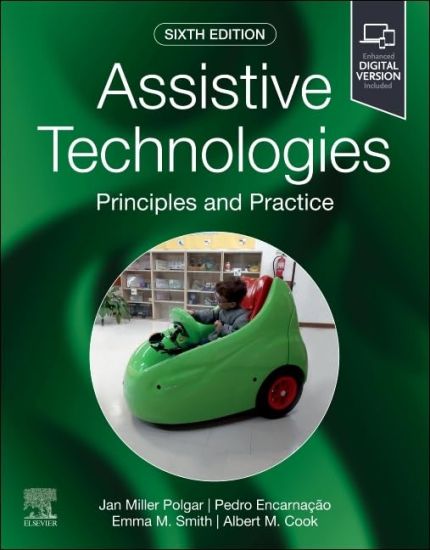
Master the assistive strategies you need to make confident clinical decisions and help improve the quality of life for people with disabilities. Based on the Human Activity Assistive Technology (HAAT) model developed by Albert Cook, Sue Hussey, and Janice Polgar, Assistive Technologies: Principles and Practice, 6th Edition, provides detailed coverage of the broad range of devices, services, and practices that comprise assistive technology. This text offers a systematic process for ensuring the effective application of assistive technologies - and focuses on the relationship between the human user and the assisted activity within specific contexts. New to this edition is updated and expanded content on autonomous features of wheelchairs and vehicles, electronic aids to daily living, robotics, sustainability issues related to assistive technology, and much more. NEW! Enhanced readability and navigation streamline content with a user-friendly layout for a smoother reading experience and quick reference NEW! Enhanced focus on clinical reasoning and clinical decision-making processes in assistive technology service delivery NEW! Updated information on autonomous features of wheelchairs and vehicles, electronic aids to daily living (including mainstream products), and robotics NEW! Integration of global resources and guidelines on assistive technology and wheelchair provision, including the WHO/UNICEF Global Report on Assistive Technology and the WHO Wheelchair Provision Guidelines NEW! Expanded content on global and sustainability issues related to the provision/development of assistive technology products and service delivery NEW! Enhanced ebook version, included with every new print purchase, allows access to all the text, figures, and references, with the ability to search, customize content, make notes and highlights, and have content read aloud Human Activity Assistive Technology (HAAT) framework locates assistive technology within common, everyday contexts for more relevant application Explicit applications of the HAAT model in each of the chapters on specific technologies and more emphasis on the interactions among the elements make content even easier to understand Focus on clinical application guides application of concepts to real-world situations Study questions and chapter summaries in each chapter help assessment of understanding and identification of areas where more study is needed Coverage of changing assistive technology needs throughout the lifespan emphasizes how assistive technology fits into different stages of people’s lives and contributes to their full participation in society Principles and practice of assistive technology provide the foundation for effective reasoning Ethical issues content offers vital information to guide assistive technology service delivery
Assistive Technologies

Assistive Technologies

Albert M. Cook; Janice Miller Polgar; Pedro Encarnação

Mosby
2020
sidottu
Master the assistive strategies you need to make confident clinical decisions and help improve the quality of life for people with disabilities. Based on the Human Activity Assistive Technology (HAAT) model developed by Al Cook, Sue Hussey and Jan Polgar, Assistive Technologies: Principles & Practice, 5th Edition, provides detailed coverage of the broad range of devices, services, and practices that comprise assistive technology. This new text offers a systematic process for ensuring the effective application of assistive technologies - and focuses on the relationship between the human user and the assisted activity within specific contexts. It features over 30 new photos and illustrations, as well as, updated chapters and case studies that reflect current technology. Human Activity Assistive Technology (HAAT) framework locates assistive technology within common, everyday contexts for more relevant application. Focus on clinical application guides application of concepts to real-world situations. Study questions and chapter summaries in each chapter help assessment of understanding and identification of areas where more study is needed. Coverage of changing AT needs throughout the lifespan emphasizes how AT fits into people's lives and contributes to their full participation in society. Principles and practice of assistive technology provide the foundation for effective reasoning. Ethical issues content provides vital information to guide AT service delivery. Explicit applications of the HAAT model in each of the chapters on specific technologies and more emphasis on the interactions among the elements make content even easier to understand. New! Thoroughly updated chapters to reflect current technology and practice. New! Expanded discussion on assistive robotics and smart technologies. New! Review of global initiatives on Assistive Technology. New! Updated art program with 30+ new photos and illustrations. New! Updated case studies to reflect changes in technology and practice since last edition.
Guidelines for supporting children with disabilities' play

Guidelines for supporting children with disabilities' play

Pedro Encarnação; Sylvie Ray-Kaeser; Nicole Bianquin

Sciendo
2018
sidottu
All children want to play. This is also true for children with disabilities. Facilitating their engagement in play, whatever children’s capacities, is a central premise of people who view play as fundamental for their development and well-being. Play for the sake of play, just for recreational pleasure and enjoyment, without any secondary goal. In this book you’ll find guidelines to support children with disabilities’ play. They can be a useful tool for ensuring that children with disabilities can fully enjoy their right to play, for improving the quality of children’s play, enhancing their play satisfaction and participation, and reducing play deprivation. Written in a lay-person language, providing ready-to-use information, this book is for parents, teachers, rehabilitation professionals, toy manufacturers, policy makers and in general for all of those interested in the topic of play for children with disabilities. This publication results from the research and work of a transdisciplinary team, all participants in the COST Action “LUDI - Play for Children with Disabilities”. ABSTRACTING & INDEXING Guidelines for supporting children with disabilities' play is covered by the following services: Baidu Scholar? Bayerische Staatsbibliothek BDS BoD Bowker Book Data Ciando CNKI Scholar (China National Knowledge Infrastructure)? Dimensions? DOAB (Directory of Open Access Books) EBSCO ExLibris Google Books Google Scholar Naviga ReadCube? Semantic Scholar ? TDOne (TDNet)? WorldCat (OCLC)? X-MOL? Additionally, the proceedings volume is registered and indexed in the Crossref database and accessible on Amazon.