Kirjojen hintavertailu. Mukana 12 390 323 kirjaa ja 12 kauppaa.

Kirjailija

Penny Green

Kirjat ja teokset yhdessä paikassa: 5 kirjaa, julkaisuja vuosilta 2004-2026, suosituimpien joukossa State Crime and Civil Activism. Vertaile teosten hintoja ja tarkista saatavuus suomalaisista kirjakaupoista.

5 kirjaa

Kirjojen julkaisuhaarukka 2004-2026.

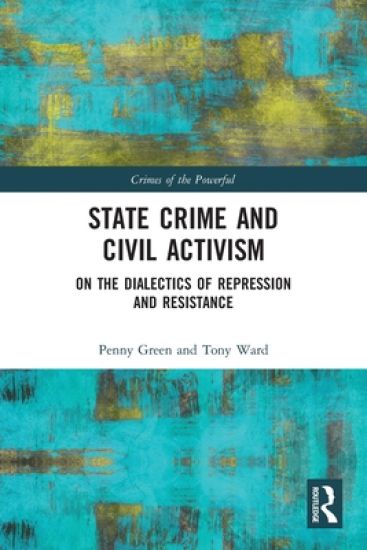
State Crime and Civil Activism

State Crime and Civil Activism

Penny Green; Tony Ward

Routledge
2021
nidottu
State Crime and Civil Activism explores the work of non-government organisations (NGOs) challenging state violence and corruption in six countries – Colombia, Tunisia, Kenya, Turkey, Myanmar and Papua New Guinea. It discusses the motives and methods of activists, and how they document and criticise wrongdoing by governments. It documents the dialectical process by which repression stimulates and shapes the forces of resistance against it.Drawing on over 350 interviews with activists, this book discusses their motives; the tactics they use to withstand and challenge repression; and the legal and other norms they draw upon to challenge the state, including various forms of law and religious teaching. It analyses the relation between political activism and charitable work, and the often ambivalent views of civil society organisations towards violence. It highlights struggles over land as one of the key areas of state and corporate crime and civil resistance. The interviews illustrate and enrich the theoretical premise that civil society plays a vital part in defining, documenting and denouncing state crime. They show the diverse and vibrant forms that civil society takes in a widely varied group of countries.This book will be of much interest to undergraduate and postgraduate social science students studying criminology, international relations, political science, anthropology and development studies. It will also be of interest to human rights defenders, NGOs and civil society.
State Crime and Civil Activism

State Crime and Civil Activism

Penny Green; Tony Ward

Routledge
2019
sidottu
State Crime and Civil Activism explores the work of non-government organisations (NGOs) challenging state violence and corruption in six countries – Colombia, Tunisia, Kenya, Turkey, Myanmar and Papua New Guinea. It discusses the motives and methods of activists, and how they document and criticise wrongdoing by governments. It documents the dialectical process by which repression stimulates and shapes the forces of resistance against it.Drawing on over 350 interviews with activists, this book discusses their motives; the tactics they use to withstand and challenge repression; and the legal and other norms they draw upon to challenge the state, including various forms of law and religious teaching. It analyses the relation between political activism and charitable work, and the often ambivalent views of civil society organisations towards violence. It highlights struggles over land as one of the key areas of state and corporate crime and civil resistance. The interviews illustrate and enrich the theoretical premise that civil society plays a vital part in defining, documenting and denouncing state crime. They show the diverse and vibrant forms that civil society takes in a widely varied group of countries.This book will be of much interest to undergraduate and postgraduate social science students studying criminology, international relations, political science, anthropology and development studies. It will also be of interest to human rights defenders, NGOs and civil society.
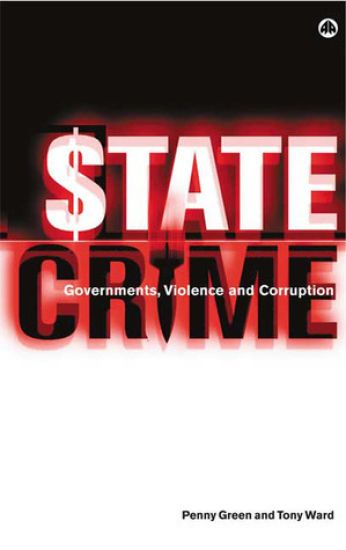
State Crime

State Crime

Penny Green; Tony Ward

Pluto Press
2004
pokkari
What is state crime? This book sets out the parameters of state crime and highlights the complex issues involved. The authors provide a clear chapter-by-chapter assessment of state violence, corruption, state involvement in organised and corporate crime, avoidable 'natural' disasters, torture, criminal policing, war crimes and genocide. Penny Green and Tony Ward put forward a powerful argument drawing from a range of disciplines including law, criminology, human rights, international relations and political science. They develop a theoretical approach to understanding the boundaries of state crime, employing the concepts of deviance and human rights. Making distinctive use of original research and using a variety of international case-studies, this compelling book offers a fresh and sophisticated approach to this controversial and difficult subject.
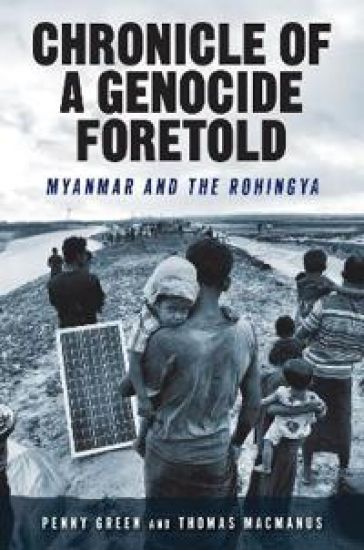
Chronicle of a Genocide Foretold

Chronicle of a Genocide Foretold

Penny Green; Thomas MacManus

RUTGERS UNIVERSITY PRESS
2026
sidottu
Chronicle of a Genocide Foretold is a powerful account of one of the most devastating human crises of the 21st century. Drawing on firsthand research conducted in Burma (Myanmar) and neighboring countries, the book uncovers how the Rohingya Muslims have been systematically isolated, impoverished, and targeted in a state-led genocidal campaign. Through more than 150 interviews with survivors, local officials, religious leaders, and international actors, the authors reveal how discrimination, mass displacement, and organized brutality have created conditions that meet the legal, criminological, and moral definition of genocide. The book also challenges the silence and complicity of the international community. Accessible and grounded in rigorous research, this book speaks to scholars, activists, policymakers, and anyone concerned with justice, human rights, and the global failure to prevent genocide.
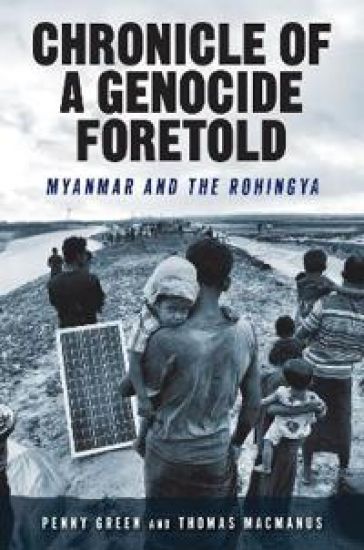
Chronicle of a Genocide Foretold

Chronicle of a Genocide Foretold

Penny Green; Thomas MacManus

RUTGERS UNIVERSITY PRESS
2026
nidottu
Chronicle of a Genocide Foretold is a powerful account of one of the most devastating human crises of the 21st century. Drawing on firsthand research conducted in Burma (Myanmar) and neighboring countries, the book uncovers how the Rohingya Muslims have been systematically isolated, impoverished, and targeted in a state-led genocidal campaign. Through more than 150 interviews with survivors, local officials, religious leaders, and international actors, the authors reveal how discrimination, mass displacement, and organized brutality have created conditions that meet the legal, criminological, and moral definition of genocide. The book also challenges the silence and complicity of the international community. Accessible and grounded in rigorous research, this book speaks to scholars, activists, policymakers, and anyone concerned with justice, human rights, and the global failure to prevent genocide.