Kirjojen hintavertailu. Mukana 12 595 353 kirjaa ja 12 kauppaa.

Kirjailija

Peta Mitchell

Kirjat ja teokset yhdessä paikassa: 6 kirjaa, julkaisuja vuosilta 2007-2015, suosituimpien joukossa Contagious Metaphor. Vertaile teosten hintoja ja tarkista saatavuus suomalaisista kirjakaupoista.

6 kirjaa

Kirjojen julkaisuhaarukka 2007-2015.

Imagined Landscapes

Imagined Landscapes

Jane Stadler; Peta Mitchell; Stephen Carleton

Indiana University Press
2015
pokkari
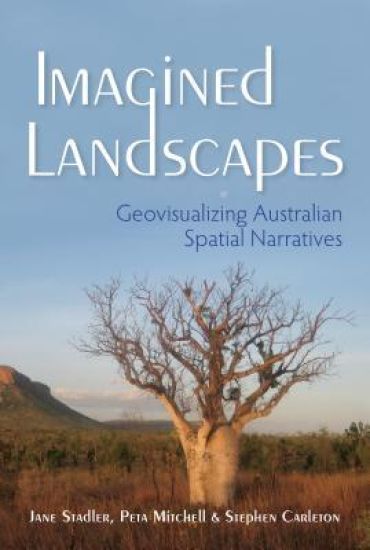
Imagined Landscapes teams geocritical analysis with digital visualization techniques to map and interrogate films, novels, and plays in which space and place figure prominently. Drawing upon A Cultural Atlas of Australia, a database-driven interactive digital map that can be used to identify patterns of representation in Australia's cultural landscape, the book presents an integrated perspective on the translation of space across narrative forms and pioneers new ways of seeing and understanding landscape. It offers fresh insights on cultural topography and spatial history by examining the technical and conceptual challenges of georeferencing fictional and fictionalized places in narratives. Among the items discussed are Wake in Fright, a novel by Kenneth Cook, adapted iconically to the screen and recently onto the stage; the Australian North as a mythic space; spatial and temporal narrative shifts in retellings of the story of Alexander Pearce, a convict who gained notoriety for resorting to cannibalism after escaping from a remote Tasmanian penal colony; travel narratives and road movies set in Western Australia; and the challenges and spatial politics of mapping spaces for which there are no coordinates.
Imagined Landscapes

Imagined Landscapes

Jane Stadler; Peta Mitchell; Stephen Carleton

Indiana University Press
2015
sidottu
Imagined Landscapes teams geocritical analysis with digital visualization techniques to map and interrogate films, novels, and plays in which space and place figure prominently. Drawing upon A Cultural Atlas of Australia, a database-driven interactive digital map that can be used to identify patterns of representation in Australia's cultural landscape, the book presents an integrated perspective on the translation of space across narrative forms and pioneers new ways of seeing and understanding landscape. It offers fresh insights on cultural topography and spatial history by examining the technical and conceptual challenges of georeferencing fictional and fictionalized places in narratives. Among the items discussed are Wake in Fright, a novel by Kenneth Cook, adapted iconically to the screen and recently onto the stage; the Australian North as a mythic space; spatial and temporal narrative shifts in retellings of the story of Alexander Pearce, a convict who gained notoriety for resorting to cannibalism after escaping from a remote Tasmanian penal colony; travel narratives and road movies set in Western Australia; and the challenges and spatial politics of mapping spaces for which there are no coordinates.
Contagious Metaphor

Contagious Metaphor

Peta Mitchell

Bloomsbury Academic
2014
nidottu
The metaphor of contagion pervades critical discourse across the humanities, the medical sciences, and the social sciences. It appears in such terms as 'social contagion' in psychology, 'financial contagion' in economics, 'viral marketing' in business, and even 'cultural contagion' in anthropology. In the twenty-first century, contagion, or 'thought contagion' has become a byword for creativity and a fundamental process by which knowledge and ideas are communicated and taken up, and resonates with André Siegfried's observation that 'there is a striking parallel between the spreading of germs and the spreading of ideas'. In Contagious Metaphor, Peta Mitchell offers an innovative, interdisciplinary study of the metaphor of contagion and its relationship to the workings of language. Examining both metaphors of contagion and metaphor as contagion, Contagious Metaphor suggests a framework through which the emergence and often epidemic-like reproduction of metaphor can be better understood.
Contagious Metaphor

Contagious Metaphor

Peta Mitchell

Bloomsbury Academic USA
2012
sidottu
The metaphor of contagion pervades critical discourse across the humanities, the medical sciences, and the social sciences. It appears in such terms as 'social contagion' in psychology, 'financial contagion' in economics, 'viral marketing' in business, and even 'cultural contagion' in anthropology. In the twenty-first century, contagion, or 'thought contagion' has become a byword for creativity and a fundamental process by which knowledge and ideas are communicated and taken up, and resonates with André Siegfried's observation that 'there is a striking parallel between the spreading of germs and the spreading of ideas'. In Contagious Metaphor, Peta Mitchell offers an innovative, interdisciplinary study of the metaphor of contagion and its relationship to the workings of language. Examining both metaphors of contagion and metaphor as contagion, Contagious Metaphor suggests a framework through which the emergence and often epidemic-like reproduction of metaphor can be better understood.
Cartographic Strategies of Postmodernity
The last fifty years have witnessed the growing pervasiveness of the figure of the map in critical, theoretical, and fictional discourse. References to mapping and cartography are endemic in poststructuralist theory, and, similarly, geographically and culturally diverse authors of twentieth-century fiction seem fixated upon mapping. While the map metaphor has been employed for centuries to highlight issues of textual representation and epistemology, the map metaphor itself has undergone a transformation in the postmodern era. This metamorphosis draws together poststructuralist conceptualizations of epistemology, textuality, cartography, and metaphor, and signals a shift away from modernist preoccupations with temporality and objectivity to a postmodern pragmatics of spatiality and subjectivity. Cartographic Strategies of Postmodernity charts this metamorphosis of cartographic metaphor, and argues that the ongoing reworking of the map metaphor renders it a formative and performative metaphor of postmodernity.
Cartographic Strategies of Postmodernity
The last fifty years have witnessed the growing pervasiveness of the figure of the map in critical, theoretical, and fictional discourse. References to mapping and cartography are endemic in poststructuralist theory, and, similarly, geographically and culturally diverse authors of twentieth-century fiction seem fixated upon mapping. While the map metaphor has been employed for centuries to highlight issues of textual representation and epistemology, the map metaphor itself has undergone a transformation in the postmodern era. This metamorphosis draws together poststructuralist conceptualizations of epistemology, textuality, cartography, and metaphor, and signals a shift away from modernist preoccupations with temporality and objectivity to a postmodern pragmatics of spatiality and subjectivity. Cartographic Strategies of Postmodernity charts this metamorphosis of cartographic metaphor, and argues that the ongoing reworking of the map metaphor renders it a formative and performative metaphor of postmodernity.