Kirjailija
Pete Seeger
Kirjat ja teokset yhdessä paikassa: 18 kirjaa, julkaisuja vuosilta 1993-2024, suosituimpien joukossa Abiyoyo Returns. Vertaile teosten hintoja ja tarkista saatavuus suomalaisista kirjakaupoista.
18 kirjaa
Kirjojen julkaisuhaarukka 1993-2024.
Chopping Wood is Pete Seeger up close and personal like never before. Derived from years of conversations between Seeger and his close friend and collaborator David Bernz, it takes readers on a uniquely personal journey through this legendary folksinger and songwriter remarkable life and career, in his own words.Listen in as Pete unabashedly shares historical and family stories; tells of learning the banjo, traveling with Woody Guthrie, and finding commercial success with The Weavers; explains how he wrote books and put together songs; delves into controversial subjects like communism and the Peekskill Riots; and highlights those he admired and respected, including Bruce Springsteen, who honoured Pete with his Seeger Sessions album in 2006.Pete and David share the heavy lifting as they tackle subjects such as the 1965 Newport Folk Festival, Pete's relationship to Greenwich Village, and the need for copyright reform. Together, they describe how Pete put his worldview into practice in his local community, how he lived with local hero status in later life, and how they made recordings together that resulted in two Grammy Awards.Minimally edited to preserve Seeger's trademark cadence, the book is punctuated by historical images and additional commentary by David Bernz, as well as remembrances from other musicians and friends and a foreword by Arlo Guthrie. Readers will come to know Pete more deeply as they hear this gentle, principled man's voice resonate in their own heads and bear witness to his humility and willingness to respect those whose opinions differed greatly from his own-vital qualities in these troubled and divisive times.
Pete Seeger in His Own Words
Pete Seeger; Rob Rosenthal; Sam Rosenthal
TAYLOR FRANCIS INC
2021
nidottu
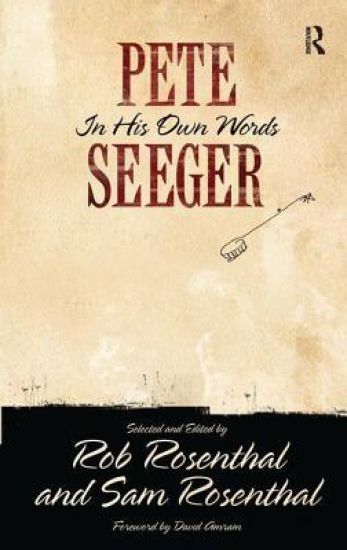
Long an icon of American musical and political life, Pete Seeger has written eloquently in a diverse array of publications but nowhere is his life story more personally chronicled than in these, his private writings, documents and letters stored for decades in his family barn. Pete Seeger: His Life in His Own Words, collects Seeger's letters, notes, published articles, rough drafts, stories and poetry - creating the most intimate picture yet available of Seeger as a musician, an activist and a family man. The book covers the passions, personalities and experiences of a lifetime of struggle - from the pre-WWII labour movement and the Communist Party, to Woody Guthrie, the Civil Rights movement and the struggle against the war in Vietnam. The portrait that emerges is not of a saint, but a flesh-and-blood man, struggling to understand his time and his place.
Report From the Marianas: Notes of an Innocent Bystander
Pete Seeger
Hassell Street Press
2021
nidottu
Pete Seeger Centennial Songbook: Melody Line, Lyrics and Chord Symbols
Pete Seeger
Hal Leonard Publishing Corporation
2019
nidottu
(Richmond Music Folios). This songbook celebrates the legacy of Pete Seeger with 41 favorites presented with words, melody lines, and chord symbols: All Mixed Up * The Bells of Rhymney * Blue Skies * Goodnight, Irene * Guantanamera * If I Had a Hammer (The Hammer Song) * Lonesome Valley * Michael Row the Boat Ashore * Midnight Special * Over the Hills * So Long It's Been Good to Know Yuh (Dusty Old Dust) * This Land Is Your Land * Turn Turn Turn (To Everything There Is a Season) * We Shall Overcome * Where Have All the Flowers Gone? * and more.
If I Had a Hammer: A Pete Seeger Sing-Along Songbook
Pete Seeger
Hal Leonard Publishing Corporation
2019
nidottu
(Personality). This songbook features over 50 of the most memorable songs by legendary folk singer, songwriter and banjo player Pete Seeger presented with words and chords. Edited by Annie Patterson and Peter Blood, the creators of the Rise Up Singing books, it also includes background information on many of the songs with quotations by Seeger drawn from his autobiography Where Have All the Flowers Gone: A Singalong Memoir. Songs include: All Mixed Up * The Bells of Rhymney * Goodnight, Irene * How Can I Keep from Singing * If I Had a Hammer (The Hammer Song) * Kisses Sweeter Than Wine * Last Night I Had the Strangest Dream * Lonesome Valley * Midnight Special * Old Time Religion * Sing People Sing * This Land Is Your Land * Turn Turn Turn (To Everything There Is a Season) * Water Is Wide * We Shall Overcome * Where Have All the Flowers Gone? * and more. Spiral bound.
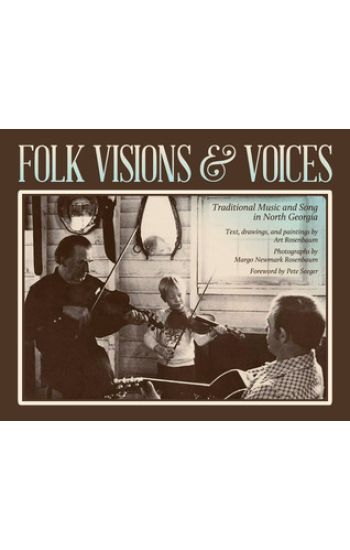
Sampling virtually all of the old-time styles within the musical traditions still extant in north Georgia, Folk Visions and Voices is a collection of eighty-two songs and instrumentals, enhanced by photographs, illustrations, biographical sketches of performers, and examples of their narratives, sermons, tales, and reminiscences.
Twenty-seven years in the making (1940–67), this tapestry of nearly two hundred American popular and protest songs was created by three giants of performance and musical research: Alan Lomax, indefatigable collector and preserver; Woody Guthrie, performer and prolific balladeer; and Pete Seeger, entertainer and educator who has introduced three generations of Americans to their musical heritage.In his afterword, Pete Seeger recounts the long history of collecting and publishing this anthology of Depression-era, union-hopeful, and New Deal melodies. With characteristic modesty, he tells us what's missing and what's wrong with the collection. But more important, he tells us what's right and why it still matters, noting songs that have become famous the world over: "Union Maid," "Which Side Are You On?," "Worried Man Blues," "Midnight Special," and "Tom Joad.""Now, at the turn of the century, the millennium, what's the future of these songs?" he asks. "Music is one of the things that will save us. Future songwriters can learn from the honesty, the courage, the simplicity, and the frankness of these hard-hitting songs. And not just songwriters. We can all learn." In addition to 123 photographs and 195 songs, this edition features an introductory note by Nora Guthrie, the daughter of Woody Guthrie and overseer of the Woody Guthrie Foundation.
Long an icon of American musical and political life, Pete Seeger has written eloquently in a diverse array of publications but nowhere is his life story more personally chronicled than in these, his private writings, documents and letters stored for decades in his family barn. Pete Seeger: His Life in His Own Words, collects Seeger's letters, notes, published articles, rough drafts, stories and poetry - creating the most intimate picture yet available of Seeger as a musician, an activist and a family man. The book covers the passions, personalities and experiences of a lifetime of struggle - from the pre-WWII labour movement and the Communist Party, to Woody Guthrie, the Civil Rights movement and the struggle against the war in Vietnam. The portrait that emerges is not of a saint, but a flesh-and-blood man, struggling to understand his time and his place.
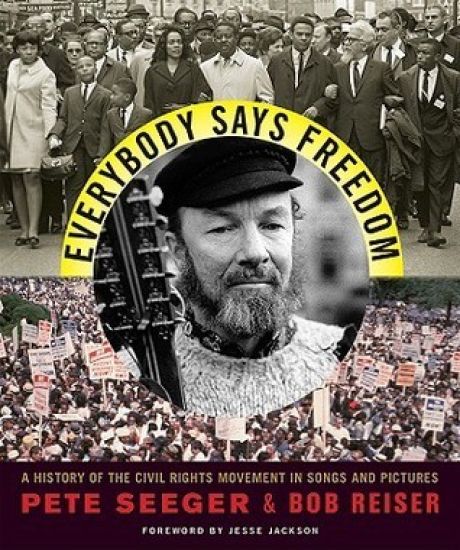
In words, photographs, and music, Pete Seeger and Bob Reiser tell the story of the civil rights movement, building their narrative around the accounts of people involved and the songs that inspired their struggle. It documents the sit-ins, freedom rides, and marches that occurred along the long path to triumph in an uncertain age. This narrative scrapbook collects forty songs and includes profiles of activists and a chronological outline of the extraordinary events from 1955 to 1968. It is a story of courage and resilience on the part of ordinary people. From “This Little Light of Mine” to “We Shall Overcome,” the music of the time was both encouragement and catharsis for those who struggled against adversity in an effort to change the world.
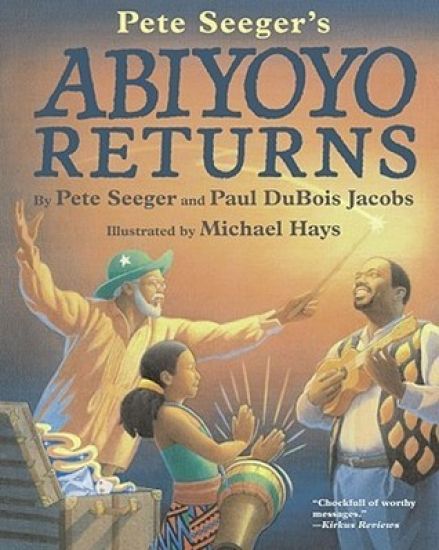
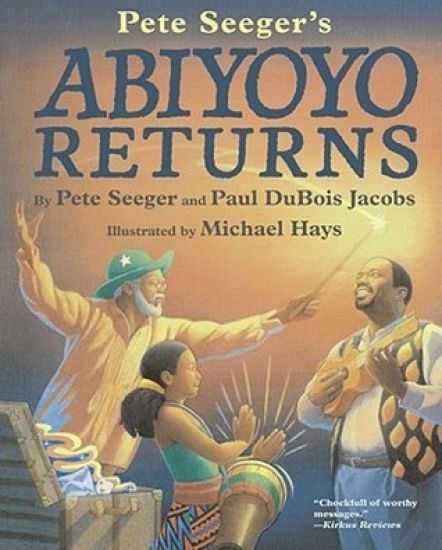
After Abiyoyo the giant left, the small town he had bothered grew by leaps and bounds. The boy who helped his father make Abiyoyo disappear grew older and became a father, too. The people were filled with new life and spirit. But now there are new dangers: droughts and floods. The town needs a dam before it gets washed away. And sitting right where the dam would be is a boulder too big for anyone to move. Anyone, that is, except Abiyoyo. Father still has his courage. Grandfather still has his magic wand. And his granddaughter knows he can bring Abiyoyo back, then make him disappear. But Abiyoyo is dangerous. People think the giant will eat them. Will lots of good food and beautiful songs keep Abiyoyo happy long enough to move the boulder and once again leave the town in peace?
Thirty years later... The little town that was once threatened by the giant Abiyoyo has grown by leaps and bounds. But now that the townspeople have chopped down all their trees, every year they have floods and droughts. Worse yet, there's a giant boulder blocking up the site of their new dam Something has to be done. Well, the young boy who helped make Abiyoyo disappear way back when now has a little girl of his own. And she knows the only way to save the town: Bring back Abiyoyo to help move the boulder. "Bring back Abiyoyo?" the townspeople cry. "The giant that eats people up?" But the little girl has a plan for that, too.... Fifteen years after Pete Seeger's storysong "Abiyoyo" came to life as a picture book, his beloved giant is back in a wonderful new story. With Michael Hays's brilliant illustrations and a sing-along score included, Abiyoyo Returns is destined to become a family favorite.
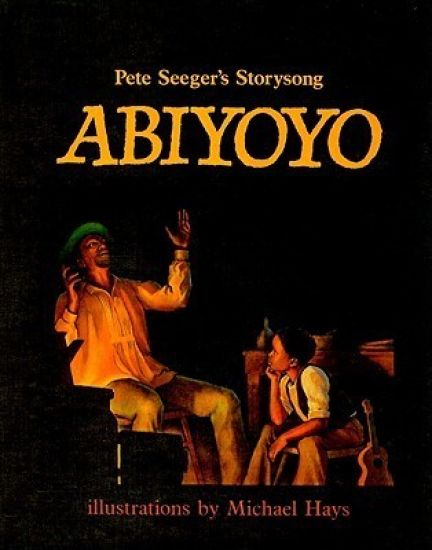
A young boy and his father save the town that ostracized them from a hungry giant in this picture book adaptation of a South African lullaby and folk story. In a small town, one young boy loves walking around playing the ukulele, but the people get tired of the clink, clunk, clonk and beg him to stop while covering their ears The boy's father has a magic wand he uses to make things disappear, like a playing card or a glass of water--or a chair just as someone's about to sit. The townspeople have had quite enough of the boy's noise and the father's tricks and drive them from the town. But then the giant called Abiyoyo comes to town and starts gobbling up everything in sight. If they work together, can the magician and his son make this very big problem disappear?
Red Dust and Broadsides
Agnes Cunningham; Gordon Friesen; Pete Seeger
University of Massachusetts Press
1999
sidottu
Perhaps best-known for ""Broadside"", a magazine founded in 1962, Agnes ""Sis"" Cunningham and Gordon Friesen are radicals on the American left. This is the story of the two dedicated social activists, offering an account of their personal and political odyssey.
Red Dust and Broadsides
Agnes Cunningham; Gordon Friesen; Pete Seeger
University of Massachusetts Press
1999
nidottu
Perhaps best-known for ""Broadside"", a magazine founded in 1962, Agnes ""Sis"" Cunningham and Gordon Friesen are radicals on the American left. This is the story of the two dedicated social activists, offering an account of their personal and political odyssey.
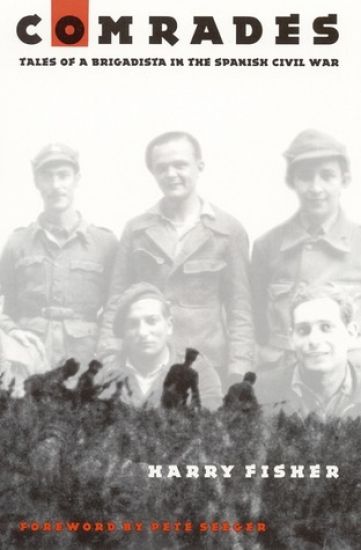
The Spanish Civil War served as an ideological and physical battleground for visionary Americans wishing to combat the spread of fascism. Harry Fisher was one such idealist who became a solider in the famed Abraham Lincoln Brigade, the American contingent of international volunteers dedicated to defeating Franco's forces. Fisher was one of the earliest American volunteers and one of the few to participate in all the major battles. Under a barrage of shells, bombs, and bullets for eighteen months, he lost his illusions about war's efficacy in solving political issues. To this day a despondence often overwhelms him when he recalls a family photograph he found jutting from the pocket of a slain fascist soldier. His involvement taught him that up close, the dead, whether fascist soldiers or his own fallen comrades, looked alike.This is a war story, simply told. Yet it is also a complex story about a young man testing his ideology in the harsh realities of battle.
The Spanish Civil War served as an ideological and physical battleground for visionary Americans wishing to combat the spread of fascism. Harry Fisher was one such idealist who became a solider in the famed Abraham Lincoln Brigade, the American contingent of international volunteers dedicated to defeating Franco's forces. Fisher was one of the earliest American volunteers and one of the few to participate in all the major battles. Under a barrage of shells, bombs, and bullets for eighteen months, he lost his illusions about war's efficacy in solving political issues. To this day a despondence often overwhelms him when he recalls a family photograph he found jutting from the pocket of a slain fascist soldier. His involvement taught him that up close, the dead, whether fascist soldiers or his own fallen comrades, looked alike. This is a war story, simply told. Yet it is also a complex story about a young man testing his ideology in the harsh realities of battle.
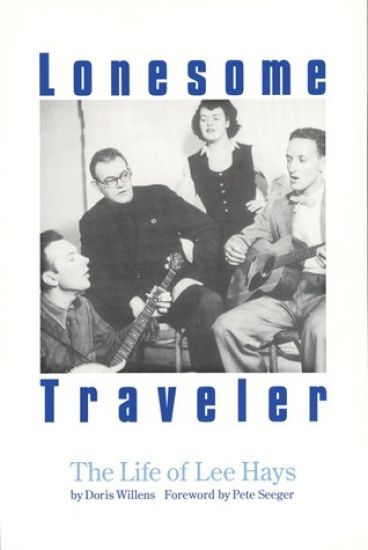
During the Great Depression, Lee Hays, the son of a Southern Methodist minister, used his music to life the hearts of sharecroppers and miners and union organizers. He helped bring black music to America's consciousness. He could make people laugh in times when there seemed little to laugh about. An Arkansas traveler and radical minstrel, he commented wryly on events and impaled reactionary southern congressmen on their own words. A kind of Mark Twain of the left, people said. But Lee Hays, for all his great size and talents and humor, was also a difficult man, plagued by self-doubts and a driving need to discombobulate any person or group that struck him as self-satisfied. Lonesome Traveler is the story of a prodigious talent with a zeal for changing the world. With Pete Seeger he formed the popular folksinging group the Weavers, which sang songs of social justice just as a tidal wave of red-hunting hit America. The rest of his legendary story will anger, touch, and delight.