Kirjojen hintavertailu. Mukana 12 595 353 kirjaa ja 12 kauppaa.

Kirjailija

Peter A. Wilson

Kirjat ja teokset yhdessä paikassa: 10 kirjaa, julkaisuja vuosilta 2005-2022, suosituimpien joukossa Lessons from the Army's Future Combat Systems Program. Vertaile teosten hintoja ja tarkista saatavuus suomalaisista kirjakaupoista.

Mukana myös kirjoitusasut: Peter A Wilson

10 kirjaa

Kirjojen julkaisuhaarukka 2005-2022.

Superpowers in Economic Decline

Superpowers in Economic Decline

Richard Cohen; Peter A. Wilson

TAYLOR FRANCIS LTD
2022
nidottu
This book, first published in 1990, evaluates what future policy adjustments the US will have to make in order to successfully navigate through a national security environment radically altered from that of the past and one determined more than at any point in the post-war period by the economic performance of both superpowers. The structure of the book centres around two issues that will determine the future national security environment facing the US. Discussed are stakes of the threat, the response of the Soviet Union to the challenge of economic and related social/political decline and its implications for the Soviet national defence effort. Also studied are the resources available to the US to meet the threat, the status of the US economic performance and the magnitude of resource stress it is likely to face in the future and its probable impact on the US national defence effort.
Superpowers in Economic Decline

Superpowers in Economic Decline

Richard Cohen; Peter A. Wilson

Routledge
2021
sidottu
This book, first published in 1990, evaluates what future policy adjustments the US will have to make in order to successfully navigate through a national security environment radically altered from that of the past and one determined more than at any point in the post-war period by the economic performance of both superpowers. The structure of the book centres around two issues that will determine the future national security environment facing the US. Discussed are stakes of the threat, the response of the Soviet Union to the challenge of economic and related social/political decline and its implications for the Soviet national defence effort. Also studied are the resources available to the US to meet the threat, the status of the US economic performance and the magnitude of resource stress it is likely to face in the future and its probable impact on the US national defence effort.
The Ukrainian Crisis and European Security

The Ukrainian Crisis and European Security

F. Stephen Larrabee; Peter A. Wilson; John Gordon

RAND
2015
pokkari
In the wake of Russia s annexation of Crimea and attempt to destabilize eastern Ukraine, the United States will have to reexamine the basic premises of its European policy. The requirement that NATO may have to build a more robust deterrence and defense posture in Eastern Europe would require the Army and Air Force to revisit their planning assumptions that have minimized the U.S. military commitments to the region since the end of the Cold War."
Looming Discontinuities in U.S. Military Strategy and Defense Planning
A discontinuity in U.S. defense planning may be looming because of diffusion of inexpensive military technology, geostrategic changes, and the need to prepare forces for diverse adversary types. The way ahead is not yet clear, and economic constraints are a problem. It also seems that the nation needs a comprehensive rebalancing of national security strategy, not just of military capabilities.
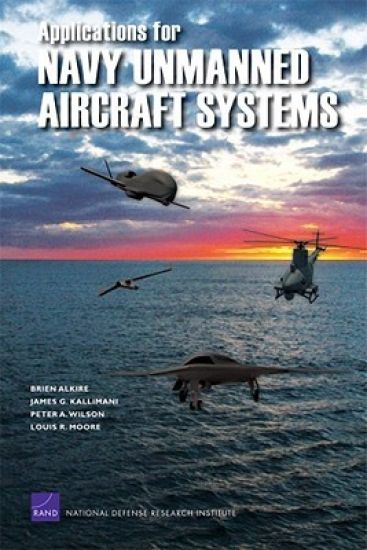
Applications for Navy Unmanned Aircraft Systems

Applications for Navy Unmanned Aircraft Systems

Brien Alkire; James G. Kallimani; Peter A. Wilson; Louis R. Moore

RAND
2010
pokkari
In this book, RAND provides an evaluation of the Navy's ongoing and proposed unmanned aircraft systems (UAS) programs and describes the most promising applications of those UASs to the Navy1s operational tasks. The book identifies robust communications as a key enabler for UASs in many operational tasks and recommends steps the Navy can take to ensure these communications are available.
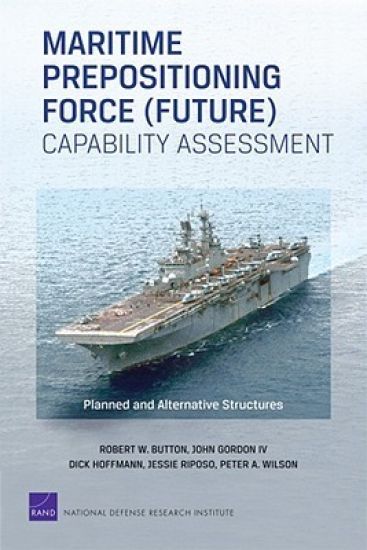
Maritime Prepositioning Force (Future) Capability Assessment

Maritime Prepositioning Force (Future) Capability Assessment

Robert W. Button; John Gordon; Dick Hoffmann; Jessie Riposo; Peter A. Wilson

RAND
2010
pokkari
Navy and Marine Corps Sea Basing concepts envision the rapid deployment, assembly, command, projection, reconstitution, and re-employment of expeditionary forces from the sea. RAND researchers assessed alternative structures for the proposed Maritime Prepositioning Force (Future), or MPF(F), squadron and their effects on operational support. For example, eliminating large-deck ships could be offset by substituting CH-53K helicopters for MV-22s.
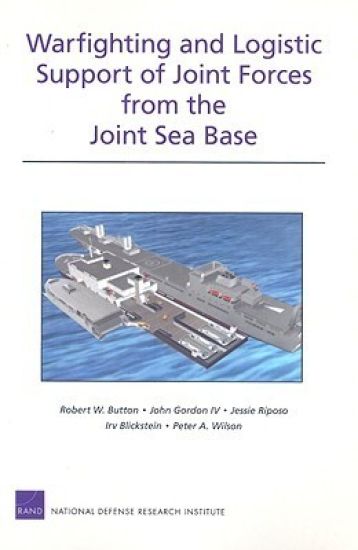
Warfighting and Logistic Support of Joint Forces from the Joint Sea Base

Warfighting and Logistic Support of Joint Forces from the Joint Sea Base

Robert W Button; John Gordon; Jessie Riposo; Irv Blickstein; Peter A Wilson

RAND
2007
pokkari
Sea Basing, a concept fundamental to the U.S. Navy's operational vision for the 21st century, is intended to use the flexibility and protection provided by the sea base while minimizing the presence of forces ashore. This study analyzed the feasibility of simultaneously sustaining Marine Corps and Army elements ashore from a sea base or of moving an Army element in a reasonable period while sustaining a Marine Corps ground element already ashore.
Joint Paths to the Future Force

Joint Paths to the Future Force

Richard E. Darilek; Peter A. Wilson

RAND
2005
pokkari
Presents RAND's analysis of Unified Quest 2004, a wargame cosponsored by Joint Forces Command and the United States Army. This book describes and analyzes a wargame cosponsored by Joint Forces Command and the United States Army that focused on identifying the concepts and capabilities required to counteract an adversary who, having lost most of his conventional capability, seeks victory through a combination of protracted, unconventional operations and use of WMD. The report identifies the wargame's scenario, assumptions, central questions and objectives, study issues, and essential elements of analysis.