Kirjojen hintavertailu. Mukana 12 657 676 kirjaa ja 12 kauppaa.

Kirjailija

Peter Adamson

Kirjat ja teokset yhdessä paikassa: 38 kirjaa, julkaisuja vuosilta 2006-2026, suosituimpien joukossa Al-Kindi. Vertaile teosten hintoja ja tarkista saatavuus suomalaisista kirjakaupoista.

38 kirjaa

Kirjojen julkaisuhaarukka 2006-2026.

Al-Rāzī

Al-Rāzī

Peter Adamson

Oxford University Press Inc
2021
Sidottu
This book introduces readers to Abu Bakr al-Razi (known in Latin as Rhazes), one of the most innovative and divisive figures of the early philosophical tradition in the Islamic world. Drawing on his extant works on ethics and a range of quotations and testimony from often hostile medieval authors, Adamson reconstructs Razi's cosmological system, which posits four principles alongside God for the making of the universe: Soul, Matter, Time, and Place. Adamson argues that this system is fundamentally based on Plato, while it accepts Aristotle's physics as a "relative" or superficial description of the universe. This notorious theory of the "five eternals" led to charges of heresy. But through an examination of his debates with contemporary Islamic theologians and representatives of Ismaili Shiism, Adamson shows that Razi's ideas about religion and prophecy may have been distorted by intellectual opponents. Razi's scientific contributions are also considered in depth. One chapter is devoted to the philosophically rewarding aspects of Razi's extensive writings on medicine. His ideas about alchemy are also discussed along with his atomist account of matter. The final chapter looks at Razi's views on ethics, and argues against a prominent interpretation of him as a hedonist inspired by Epicureanism. The book presupposes no prior knowledge of Razi or specialist knowledge of this period in the history of philosophy. It will be rewarding for anyone with an interest in the reception of Greek philosophy, especially Plato, in the history of medicine, or of medieval philosophy more generally.
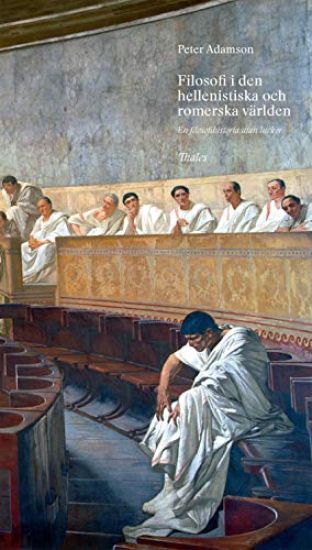
Filosofi i den hellenistiska och romerska världen
Filosofi i den hellenistiska och romerska världen är andra delen i Peter Adamsons bokserie En filosofihistoria utan luckor . I denna volym följer vi filosofins utveckling i Medelhavsområdet under närmare tusen år, från 300-talet f.Kr. fram till 500-talet e.Kr., från de grekisktalande områdena i öst till det romerska riket under kejsartid. Den hellenistiska och romerska filosofin präglas av en ökad inriktning på etik med fokus på frågan om människans möjligheter att uppnå ett lyckligt och bekymmersfritt liv. Den frågan besvaras på olika sätt av kyniker, epikuréer och stoiker, som alla gör anspråk på att förvalta arvet efter Sokrates. De utmanas av den pyrrhonska skepticismen, som försöker uppnå samma mål sinnesfrid genom att ifrågasätta möjligheten att veta någonting alls. Mot denna bakgrund växer nyplatonismen fram med Plotinos som främste representant, vars religiöst färgade platonska metafysik kommer att påverka filosofin under mer än tusen år. Efterhand som kristendomen vinner fotfäste i romarriket går även den i dialog med antikens filosofiska tradition, från de tidiga grekiska och romerska kyrkofäderna till Augustinus och Boethius under senantiken. Peter Adamson är professor i senantik och arabisk filosofi vid Ludwig-Maximilians universitet i München, och en av vår tids främsta filosofihistoriker.
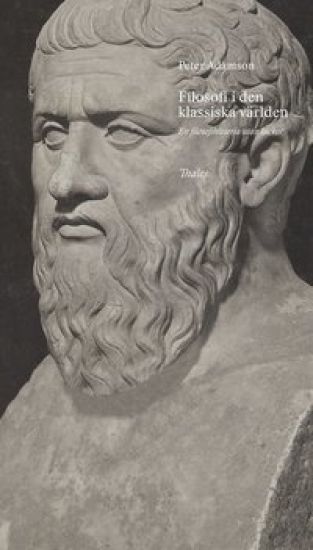
Filosofi i den klassiska världen

Filosofi i den klassiska världen

Peter Adamson

Bokförlaget Thales
2020
sidottu
Filosofi i den klassiska världen är första delen i Peter Adamsons bokserie En filosofihistoria utan luckor , baserad på hans populära podcast med samma namn. Här berättar han om den västerländska filosofins gryning på grekiskt område under 500-talet f.Kr., med början i försokratikernas storslagna naturteorier. De följs på 400-talet av sofisterna och Sokrates, vars ifrågasättanden av rådande normer och kunskapsanspråk bildar bakgrunden till Platons mångskiftande dialoger från 300-talet, där han utvecklar sin lära om ideala former. Perioden avslutas med Aristoteles, Platons främste student och kritiker, som ger filosofin en ny vinkling och ett nytt arbetssätt med sina vetenskapliga avhandlingar och sitt empiriskt inriktade tänkande. Under denna korta tidsrymd läggs grunderna till de flesta teman och frågeställningar som behandlats inom filosofin sedan dess, från metafysik och kunskapsteori, logik och språkfilosofi till etik och politisk filosofi, samtidigt som konturerna till senare tiders vetenskaper avtecknar sig, alltifrån matematik till biologi och medicin. Med de skolor som Platon och Aristoteles inrättade, Akademin respektive Lykeion, bildas också en modell för filosofiska och vetenskapliga forskningsgemenskaper, under resten av antiken liksom i senare tider. Peter Adamson är professor i senantik och arabisk filosofi vid Ludwig-Maximilians universitet i München. Han har publicerat flera böcker och många artiklar i vetenskapliga tidskrifter.
Studies on Plotinus and al-Kindi

Studies on Plotinus and al-Kindi

Peter Adamson

Routledge
2020
nidottu
This book collects 15 papers on the greatest philosopher of late antiquity and founder of Neoplatonism, Plotinus (d.270), and the founding figure of philosophy in the Islamic world: al-KindÄ« (d. ca. 873). A number of the contributions focus on the text that joins the two: the so-called Theology of Aristotle, in fact an Arabic version of Plotinus’ Enneads produced in al- KindÄ«’s translation circle. Across several papers, Adamson argues that this translation is best understood as a reinterpretation of Plotinus designed to appeal to contemporary readers in the culture of the ’AbbÄsid era. Two contributions also analyze the notes on the Theology written by the great Avicenna. Other papers look at aspects of al-KindÄ«’s own thought, exploring his ideas concerning metaphysics, free will astrology, and optics. The traditions of Plotinus and al-KindÄ« are also treated, with papers on Plotinus’ student Porphyry and his Arabic reception, and on followers of al-KindÄ«. Adamson argues that we can identify what he calls a 'Kindian tradition' in the 9th-10th centuries. He discusses the philosophical presuppositions of this movement, and the use of al-KindÄ«’s ideas made by one particular representative of the Kindian tradition, the Persian thinker Miskawayh.
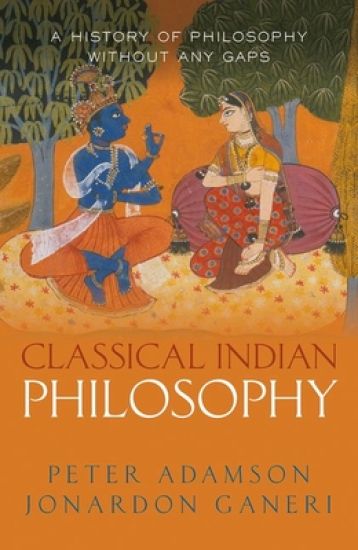
Classical Indian Philosophy

Classical Indian Philosophy

Peter Adamson; Jonardon Ganeri

Oxford University Press
2020
sidottu
Peter Adamson and Jonardon Ganeri present a lively introduction to one of the world's richest intellectual traditions: the philosophy of classical India. They begin with the earliest extant literature, the Vedas, and the explanatory works that these inspired, known as Upani?ads. They also discuss other famous texts of classical Vedic culture, especially the Mahabharata and its most notable section, the Bhagavad-Gita, alongside the rise of Buddhism and Jainism. In this opening section, Adamson and Ganeri emphasize the way that philosophy was practiced as a form of life in search of liberation from suffering. Next, the pair move on to the explosion of philosophical speculation devoted to foundational texts called 'sutras,' discussing such traditions as the logical and epistemological Nyaya school, the monism of Advaita Vedanta, and the spiritual discipline of Yoga. In the final section of the book, they chart further developments within Buddhism, highlighting Nagarjuna's radical critique of 'non-dependent' concepts and the no-self philosophy of mind found in authors like Dignaga, and within Jainism, focusing especially on its 'standpoint' epistemology. Unlike other introductions that cover the main schools and positions in classical Indian philosophy, Adamson and Ganeri's lively guide also pays attention to philosophical themes such as non-violence, political authority, and the status of women, while considering textual traditions typically left out of overviews of Indian thought, like the Carvaka school, Tantra, and aesthetic theory as well. Adamson and Ganeri conclude by focusing on the much-debated question of whether Indian philosophy may have influenced ancient Greek philosophy and, from there, evaluate the impact that this area of philosophy had on later Western thought.
Studies on Early Arabic Philosophy

Studies on Early Arabic Philosophy

Peter Adamson

Routledge
2019
nidottu
Philosophy in the Islamic world from the 9th to 11th centuries was characterized by an engagement with Greek philosophical works in Arabic translation. This volume collects papers on both the Greek philosophers in their new Arabic guise, and on reactions to the translation movement in the period leading up to Avicenna. In a first section, Adamson provides general studies of the ’formative’ period of philosophy in the Islamic world, discussing the Arabic reception of Aristotle and of his commentators. He also argues that this formative period was characterized not just by the use of Hellenic materials, but also by a productive exchange of ideas between Greek-inspired ’philosophy (falsafa)’ and Islamic theology (kalām). A second section considers the underappreciated philosophical impact of Galen, using Arabic sources to understand Galen himself, and exploring the thought of the doctor and philosopher al-RāzÄ«, who drew on Galen as a chief inspiration. A third section looks at al-FārābÄ« and the so-called ’Baghdad school’ of the 10th century, examining their reaction to Aristotle’s Metaphysics, his epistemology, and his famous deterministic ’sea battle’ argument. A final group of papers is devoted to Avicenna’s philosophy, which marks the beginning of a new era of philosophy in the Islamic world.
The Kennedy Moment

The Kennedy Moment

Peter Adamson

MYRIAD EDITIONS
2019
nidottu
Daring, ingenious and profoundly moving, The Kennedy Moment is masterful storytelling from an author whose career has put him at the heart of international affairs. Dr Michael Lowell--a mild-mannered American, unshakeably decent and at the top of his profession--accepts an invitation to a weekend reunion of Oxford college friends. He is looking forward to meeting some of them--including front-line Canadian medic H l ne Hevr and the Australian advertising genius Toby Jenks. But the big attraction is the serene young woman from Karachi who rejected him twenty years ago because he was 'just a little bit too dull'. As the weekend gets underway and old loves and tensions arise, an audacious suggestion is made. It begins as a joke. But it is a joke that none of them can forget. Moving between Oxford, New York, Washington, Geneva and Abidjan, this compelling political thriller is the story of five ordinary people who find themselves drawn into an extraordinary conspiracy--a gamble that could force the hand of governments and affect the lives of millions. But if it should go wrong, the risk to their own lives is incalculable.
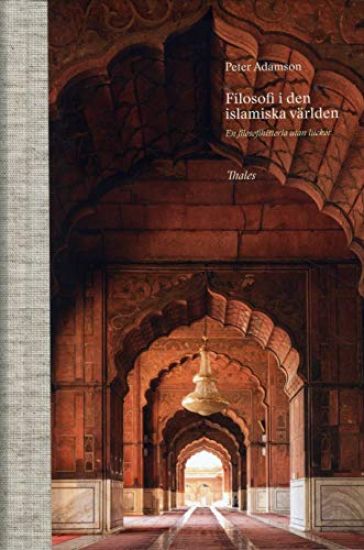
Filosofi i den islamiska världen

Filosofi i den islamiska världen

Peter Adamson

Bokförlaget Thales
2019
sidottu
Filosofi i den islamiska världen är tredje delen i Peter Adamsons bokserie En filosofihistoria utan luckor , baserad på hans populära podcast med samma namn. Här täcks filosofin på det islamiska området från äldsta tider fram till 2000-talet, med uppmärksammande av såväl muslimska som judiska och kristna tänkare, från de arabiska kärnländerna till Andalusien i väster och Indien i öster. Tänkandet i den islamiska världen spelade en viktig roll i förmedlingen av antikens filosofiska och vetenskapliga arv till Europa, men som Adamson visar med många exempel utgör det också en rik och fascinerande idévärld i sig, med originella bidrag inom såväl metafysik och kunskapsteori som etik och religionsfilosofi. De två första delarna i serien, om filosofin i den grekiska och romerska antikens värld, utkommer inom kort. Denna del kan läsas oberoende av de övriga. Peter Adamson är professor i senantik och arabisk filosofi vid Ludwig-Maximilians universitet i München. Han har publicerat flera böcker och många artiklar i vetenskapliga tidskrifter om arabisk filosofi.
The Kennedy Moment

The Kennedy Moment

Peter Adamson

Myriad Editions
2019
nidottu
Dr Michael Lowell-a mild-mannered American, unshakeably decent and at the top of his profession-accepts an invitation to a weekend reunion of Oxford college friends. He is looking forward to meeting some of them-including front-line Canadian medic Helene Hevre and the Australian advertising genius Toby Jenks. But the big attraction is the serene young woman from Karachi who rejected him twenty years ago because he was `just a little bit too dull'. As the weekend gets under way and old loves and tensions arise, an audacious suggestion is made. It begins as a joke. But it is a joke that none of them can forget. Moving between Oxford, New York, Washington, Geneva and Abidjan, this compelling political thriller is the story of five ordinary people who find themselves drawn into an extraordinary conspiracy-a gamble that could force the hand of governments and affect the lives of millions. But if it should go wrong, the risk to their own lives is incalculable.
Philosophy in the Islamic World

Philosophy in the Islamic World

Peter Adamson

Oxford University Press
2018
nidottu
The latest in the series based on the popular History of Philosophy podcast, this volume presents the first full history of philosophy in the Islamic world for a broad readership. It takes an approach unprecedented among introductions to this subject, by providing full coverage of Jewish and Christian thinkers as well as Muslims, and by taking the story of philosophy from its beginnings in the world of early Islam all the way through to the twentieth century. Major figures like Avicenna, Averroes, and Maimonides are covered in great detail, but the book also looks at less familiar thinkers, including women philosophers. Attention is also given to the philosophical relevance of Islamic theology (kalam) and mysticism--the Sufi tradition within Islam, and Kabbalah among Jews--and to science, with chapters on disciplines like optics and astronomy. The book is divided into three sections, with the first looking at the first blossoming of Islamic theology and responses to the Greek philosophical tradition in the world of Arabic learning. This 'formative period' culminates with the work of Avicenna, the pivotal figure to whom most later thinkers feel they must respond. The second part of the book discusses philosophy in Muslim Spain (Andalusia), where Jewish philosophers come to the fore, though this is also the setting for such thinkers as Averroes and Ibn Arabi. Finally, a third section looks in unusual detail at later developments, touching on philosophy in the Ottoman, Mughal, and Safavid empires and showing how thinkers in the nineteenth to the twentieth century were still concerned to respond to the ideas that had animated philosophy in the Islamic world for centuries, while also responding to political and intellectual challenges from the European colonial powers.
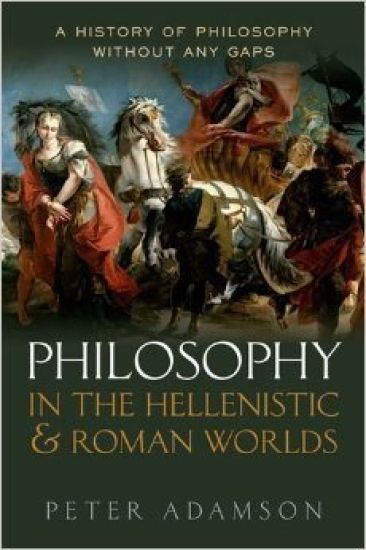
Philosophy in the Hellenistic and Roman Worlds

Philosophy in the Hellenistic and Roman Worlds

Peter Adamson

Oxford University Press
2018
nidottu
Peter Adamson offers an accessible, humorous tour through a period of eight hundred years when some of the most influential of all schools of thought were formed: from the third century BC to the sixth century AD. He introduces us to Cynics and Skeptics, Epicureans and Stoics, emperors and slaves, and traces the development of Christian and Jewish philosophy and of ancient science. Chapters are devoted to such major figures as Epicurus, Lucretius, Cicero, Seneca, Plotinus, and Augustine. But in keeping with the motto of the series, the story is told 'without any gaps,' providing an in-depth look at less familiar topics that remains suitable for the general reader. For instance, there are chapters on the fascinating but relatively obscure Cyrenaic philosophical school, on pagan philosophical figures like Porphyry and Iamblichus, and extensive coverage of the Greek and Latin Christian Fathers who are at best peripheral in most surveys of ancient philosophy. A major theme of the book is in fact the competition between pagan and Christian philosophy in this period, and the Jewish tradition also appears in the shape of Philo of Alexandria. Ancient science is also considered, with chapters on ancient medicine and the interaction between philosophy and astronomy. Considerable attention is paid also to the wider historical context, for instance by looking at the ascetic movement in Christianity and how it drew on ideas from Hellenic philosophy. From the counter-cultural witticisms of Diogenes the Cynic to the subtle skepticism of Sextus Empiricus, from the irreverent atheism of the Epicureans to the ambitious metaphysical speculation of Neoplatonism, from the ethical teachings of Marcus Aurelius to the political philosophy of Augustine, the book gathers together all aspects of later ancient thought in an accessible and entertaining way.
Philosophy in the Islamic World

Philosophy in the Islamic World

Peter Adamson

Oxford University Press
2016
sidottu
The latest in the series based on the popular History of Philosophy podcast, this volume presents the first full history of philosophy in the Islamic world for a broad readership. It takes an approach unprecedented among introductions to this subject, by providing full coverage of Jewish and Christian thinkers as well as Muslims, and by taking the story of philosophy from its beginnings in the world of early Islam all the way through to the twentieth century. Major figures like Avicenna, Averroes, and Maimonides are covered in great detail, but the book also looks at less familiar thinkers, including women philosophers. Attention is also given to the philosophical relevance of Islamic theology (kalam) and mysticism--the Sufi tradition within Islam, and Kabbalah among Jews--and to science, with chapters on disciplines like optics and astronomy. The book is divided into three sections, with the first looking at the first blossoming of Islamic theology and responses to the Greek philosophical tradition in the world of Arabic learning. This 'formative period' culminates with the work of Avicenna, the pivotal figure to whom most later thinkers feel they must respond. The second part of the book discusses philosophy in Muslim Spain (Andalusia), where Jewish philosophers come to the fore, though this is also the setting for such thinkers as Averroes and Ibn Arabi. Finally, a third section looks in unusual detail at later developments, touching on philosophy in the Ottoman, Mughal, and Safavid empires and showing how thinkers in the nineteenth to the twentieth century were still concerned to respond to the ideas that had animated philosophy in the Islamic world for centuries, while also responding to political and intellectual challenges from the European colonial powers.
Philosophy in the Islamic World

Philosophy in the Islamic World

Peter Adamson

Oxford University Press
2015
nidottu
In the history of philosophy, few topics are so relevant to today's cultural and political landscape as philosophy in the Islamic world. Yet, this remains one of the lesser-known philosophical traditions. In this Very Short Introduction, Peter Adamson explores the history of philosophy among Muslims, Jews, and Christians living in Islamic lands, from its historical background to thinkers in the twentieth century. Introducing the main philosophical themes of the Islamic world, Adamson integrates ideas from the Islamic and Abrahamic faiths to consider the broad philosophical questions that continue to invite debate: What is the relationship between reason and religious belief? What is the possibility of proving God's existence? What is the nature of knowledge? Drawing on the most recent research in the field, this book challenges the assumption of the cultural decline of philosophy and science in the Islamic world by demonstrating its rich heritage and overlap with other faiths and philosophies.
Philosophy in the Hellenistic and Roman Worlds

Philosophy in the Hellenistic and Roman Worlds

Peter Adamson

Oxford University Press
2015
sidottu
Peter Adamson offers an accessible, humorous tour through a period of eight hundred years when some of the most influential of all schools of thought were formed: from the third century BC to the sixth century AD. He introduces us to Cynics and Skeptics, Epicureans and Stoics, emperors and slaves, and traces the development of Christian and Jewish philosophy and of ancient science. Chapters are devoted to such major figures as Epicurus, Lucretius, Cicero, Seneca, Plotinus, and Augustine. But in keeping with the motto of the series, the story is told 'without any gaps,' providing an in-depth look at less familiar topics that remains suitable for the general reader. For instance, there are chapters on the fascinating but relatively obscure Cyrenaic philosophical school, on pagan philosophical figures like Porphyry and Iamblichus, and extensive coverage of the Greek and Latin Christian Fathers who are at best peripheral in most surveys of ancient philosophy. A major theme of the book is in fact the competition between pagan and Christian philosophy in this period, and the Jewish tradition also appears in the shape of Philo of Alexandria. Ancient science is also considered, with chapters on ancient medicine and the interaction between philosophy and astronomy. Considerable attention is paid also to the wider historical context, for instance by looking at the ascetic movement in Christianity and how it drew on ideas from Hellenic philosophy. From the counter-cultural witticisms of Diogenes the Cynic to the subtle skepticism of Sextus Empiricus, from the irreverent atheism of the Epicureans to the ambitious metaphysical speculation of Neoplatonism, from the ethical teachings of Marcus Aurelius to the political philosophy of Augustine, the book gathers together all aspects of later ancient thought in an accessible and entertaining way.
Studies on Early Arabic Philosophy

Studies on Early Arabic Philosophy

Peter Adamson

Routledge
2015
sidottu
Philosophy in the Islamic world from the 9th to 11th centuries was characterized by an engagement with Greek philosophical works in Arabic translation. This volume collects papers on both the Greek philosophers in their new Arabic guise, and on reactions to the translation movement in the period leading up to Avicenna. In a first section, Adamson provides general studies of the ’formative’ period of philosophy in the Islamic world, discussing the Arabic reception of Aristotle and of his commentators. He also argues that this formative period was characterized not just by the use of Hellenic materials, but also by a productive exchange of ideas between Greek-inspired ’philosophy (falsafa)’ and Islamic theology (kalām). A second section considers the underappreciated philosophical impact of Galen, using Arabic sources to understand Galen himself, and exploring the thought of the doctor and philosopher al-RāzÄ«, who drew on Galen as a chief inspiration. A third section looks at al-FārābÄ« and the so-called ’Baghdad school’ of the 10th century, examining their reaction to Aristotle’s Metaphysics, his epistemology, and his famous deterministic ’sea battle’ argument. A final group of papers is devoted to Avicenna’s philosophy, which marks the beginning of a new era of philosophy in the Islamic world.
Classical Philosophy

Classical Philosophy

Peter Adamson

Oxford University Press
2014
sidottu
Classical Philosophy is the first of a series of books in which Peter Adamson aims ultimately to present a complete history of philosophy, more thoroughly but also more enjoyably than ever before. In short, lively chapters, based on the popular History of Philosophy podcast, he offers an accessible, humorous, and detailed look at the emergence of philosophy with the Presocratics, the probing questions of Socrates, and the first full flowering of philosophy with the dialogues of Plato and the treatises of Aristotle. The story is told 'without any gaps', discussing not only such major figures but also less commonly discussed topics like the Hippocratic Corpus, the Platonic Academy, and the role of women in ancient philosophy. Within the thought of Plato and Aristotle, the reader will find in-depth introductions to major works, such as the Republic and the Nicomachean Ethics, which are treated in detail that is unusual in an introduction to ancient philosophy. Adamson looks at fascinating but less frequently read Platonic dialogues like the Charmides and Cratylus, and Aristotle's ideas in zoology and poetics. This full coverage allows him to tackle ancient discussions in all areas of philosophy, including epistemology, metaphysics, philosophy of language, philosophy of science, ethics and politics. Attention is also given to the historical and literary context of classical philosophy, with exploration of how early Greek cosmology responded to the poets Homer and Hesiod, how Socrates was presented by the comic playwright Aristophanes and the historian Xenophon, and how events in Greek history may have influenced Plato's thought. This is a new kind of history which will bring philosophy to life for all readers, including those coming to the subject for the first time.