Kirjojen hintavertailu. Mukana 12 290 406 kirjaa ja 12 kauppaa.

Kirjailija

Peter Adey

Kirjat ja teokset yhdessä paikassa: 11 kirjaa, julkaisuja vuosilta 2010-2025, suosituimpien joukossa Moving Towards Transition. Vertaile teosten hintoja ja tarkista saatavuus suomalaisista kirjakaupoista.

11 kirjaa

Kirjojen julkaisuhaarukka 2010-2025.

Moving Towards Transition

Moving Towards Transition

Peter Adey; Tim Cresswell; Jane Yeonjae Lee; Anna Nikolaeva; André Nóvoa; Cristina Temenos

BLOOMSBURY PUBLISHING PLC
2023
nidottu
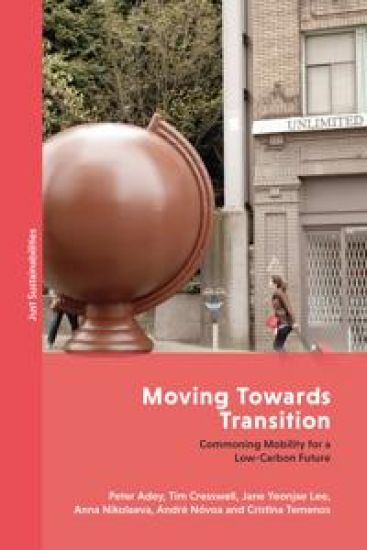
Drawing on an innovative project exploring current mobility transition policies and practices in 14 countries around the world, including key institutions such as the European Union and the United Nations, this book provides a critique of current transitions, mobility and transport policies. The authors consider how our mobility futures have been imagined, what they will potentially look and feel like, what lives we might live in them and what choices we might have to make to get there.
Moving Towards Transition

Moving Towards Transition

Peter Adey; Tim Cresswell; Jane Yeonjae Lee; Anna Nikolaeva; André Nóvoa; Cristina Temenos

Zed Books Ltd
2021
sidottu
Drawing on an innovative project exploring current mobility transition policies and practices in 14 countries around the world, including key institutions such as the European Union and the United Nations, this book provides a critique of current transitions, mobility and transport policies. The authors consider how our mobility futures have been imagined, what they will potentially look and feel like, what lives we might live in them and what choices we might have to make to get there.

Evacuation

Evacuation

Peter Adey

DUKE UNIVERSITY PRESS
2024
pokkari
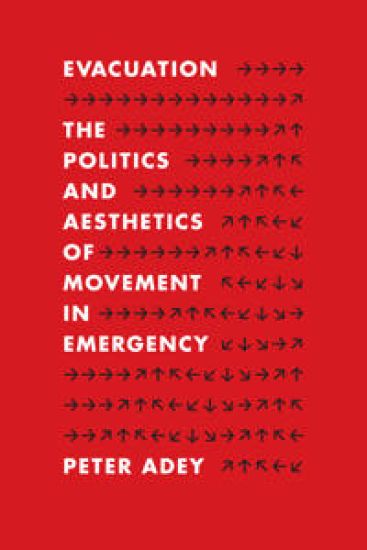
In Evacuation, Peter Adey examines the politics, aesthetics, and practice of moving people and animals from harm during emergencies. He outlines how the governance and design of evacuation are recursive, operating on myriad political, symbolic, and affective levels in ways that reflect and reinforce social hierarchies. Drawing on a wide range of case studies, from the retrieval of wounded soldiers from the battlefield during World War I and escaping the World Trade Center on 9/11 to the human and animal evacuations in response to the 2009 Australian bushfires and the 2010 Haiti earthquake, Adey demonstrates that evacuation is not an equal process. Some people may choose not to move while others are forced; some may even be brought into harm through evacuation. Often the poorest, racialized, and most marginalized communities hold the least power in such moments. At the same time, these communities can generate compassionate, creative, and democratic forms of care that offer alternative responses to crises. Ultimately, Adey contends, understanding the practice of evacuation illuminates its importance to power relations and everyday governance.
Evacuation

Evacuation

Peter Adey

DUKE UNIVERSITY PRESS
2024
sidottu
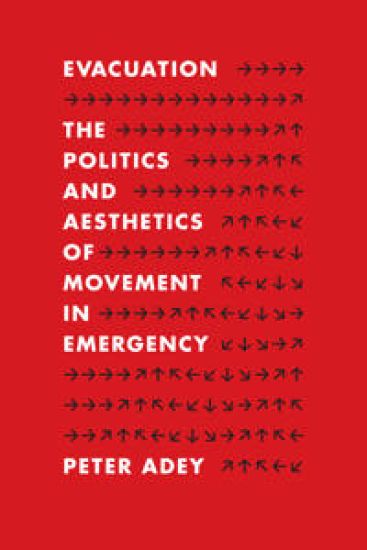
In Evacuation, Peter Adey examines the politics, aesthetics, and practice of moving people and animals from harm during emergencies. He outlines how the governance and design of evacuation are recursive, operating on myriad political, symbolic, and affective levels in ways that reflect and reinforce social hierarchies. Drawing on a wide range of case studies, from the retrieval of wounded soldiers from the battlefield during World War I and escaping the World Trade Center on 9/11 to the human and animal evacuations in response to the 2009 Australian bushfires and the 2010 Haiti earthquake, Adey demonstrates that evacuation is not an equal process. Some people may choose not to move while others are forced; some may even be brought into harm through evacuation. Often the poorest, racialized, and most marginalized communities hold the least power in such moments. At the same time, these communities can generate compassionate, creative, and democratic forms of care that offer alternative responses to crises. Ultimately, Adey contends, understanding the practice of evacuation illuminates its importance to power relations and everyday governance.
Crime, Regulation and Control During the Blitz

Crime, Regulation and Control During the Blitz

Peter Adey; David J. Cox; Barry Godfrey

Bloomsbury Academic
2017
nidottu
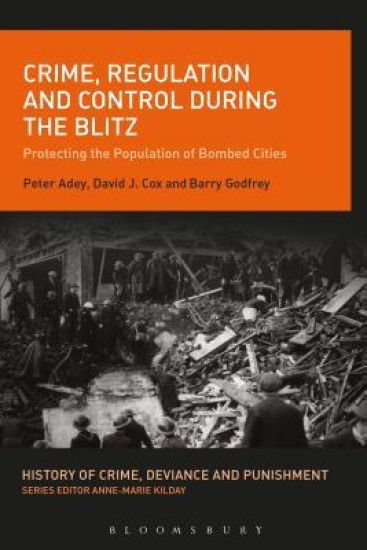
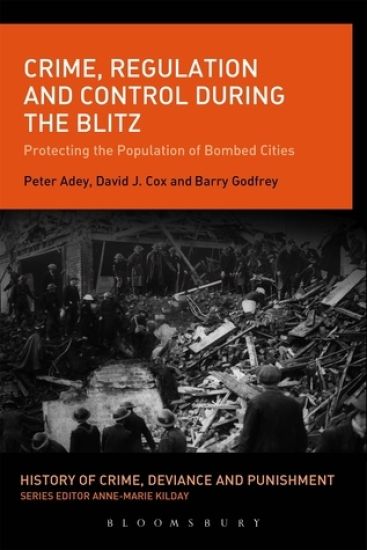
Crime, Regulation and Control during the Blitz looks at the social effect of bombing on urban centres like Liverpool, Coventry and London, critically examining how the wartime authorities struggled to regulate and control crime and offending during the Blitz. Focusing predominantly on Liverpool, it investigates how the authorities and citizens anticipated the aerial war, and how the State and local authorities proposed to contain and protect a population made unruly, potentially deviant and drawn into a new landscape of criminal regulation.Drawing on a range of contemporary sources, the book throws into relief today's experiences of war and terror, the response in crime and deviancy, and the experience and practices of preparedness in anticipation of terrible threats. The authors reveal how everyday activities became criminalised through wartime regulations and explore how other forms of crime such as looting, theft and drunkenness took on a new and frightening aspect. Crime, Regulation and Control during the Blitz offers a critical contribution to how we understand crime, security, and regulation in both the past and the present.
Mobility

Mobility

Peter Adey

Routledge
2017
nidottu
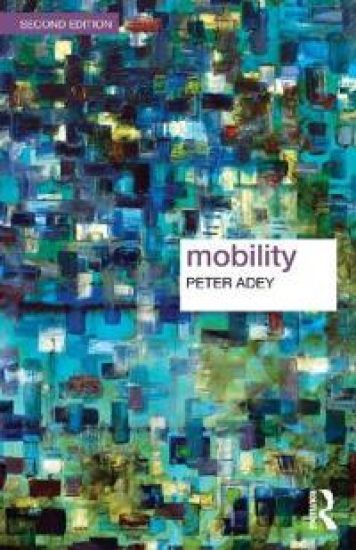
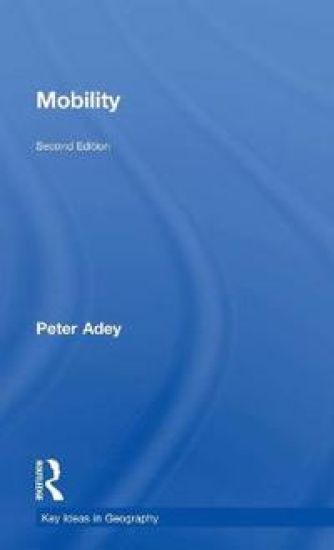
Mobility aims to take the pulse of this enormously expanded and energetic field. It explores the breadth of the disciplinary areas mobility studies now encompass, examining the diverse conceptual and methodological approaches wielded within the field, and explores the utility of mobility to illuminate a cornucopia of mobile lives: from the mass movements of individuals within global processes such as migration and tourism, to homelessness and war; from the entangled relations caught up in the movement of disease, people and aid across borders, to the inability of someone to cross over a road.The new edition explores the more sustained elaboration of mobility studies within a wide variety of disciplinary approaches and subject matters. It echoes the growing internationalization of mobility research, reflected in diverse case studies from the Global South, South Asia, Latin America, the Caribbean and so far under-represented perspectives from China, Australasia, post-socialist Eastern Europe, the Middle East and elsewhere. The book also features an additional chapter on mobility studies, to survey and explore the diverse quality of the field, and methodologies, in order to reflect the growing diversity of methodological approaches to mobilities, from walk-alongs and critical cartography to the mobile arts.The book offers an accessible reading of the way mobility has been tackled and understood, neatly exploring and summarizing a topic that has exploded into different variations and nuances. The text allows scholars and students alike to grasp the central importance of ‘mobility’ to social, cultural, political, economic and everyday terrains by providing accessible writings on key authors within key ideas and case study boxes, suggested further readings and summaries, while at the same time making a significant contribution to scholarly writings and debates.
Mobility

Mobility

Peter Adey

Routledge
2017
sidottu
Mobility aims to take the pulse of this enormously expanded and energetic field. It explores the breadth of the disciplinary areas mobility studies now encompass, examining the diverse conceptual and methodological approaches wielded within the field, and explores the utility of mobility to illuminate a cornucopia of mobile lives: from the mass movements of individuals within global processes such as migration and tourism, to homelessness and war; from the entangled relations caught up in the movement of disease, people and aid across borders, to the inability of someone to cross over a road.The new edition explores the more sustained elaboration of mobility studies within a wide variety of disciplinary approaches and subject matters. It echoes the growing internationalization of mobility research, reflected in diverse case studies from the Global South, South Asia, Latin America, the Caribbean and so far under-represented perspectives from China, Australasia, post-socialist Eastern Europe, the Middle East and elsewhere. The book also features an additional chapter on mobility studies, to survey and explore the diverse quality of the field, and methodologies, in order to reflect the growing diversity of methodological approaches to mobilities, from walk-alongs and critical cartography to the mobile arts.The book offers an accessible reading of the way mobility has been tackled and understood, neatly exploring and summarizing a topic that has exploded into different variations and nuances. The text allows scholars and students alike to grasp the central importance of ‘mobility’ to social, cultural, political, economic and everyday terrains by providing accessible writings on key authors within key ideas and case study boxes, suggested further readings and summaries, while at the same time making a significant contribution to scholarly writings and debates.
Crime, Regulation and Control During the Blitz

Crime, Regulation and Control During the Blitz

Peter Adey; David J. Cox; Barry Godfrey

Bloomsbury Academic USA
2016
sidottu
Crime, Regulation and Control during the Blitz looks at the social effect of bombing on urban centres like Liverpool, Coventry and London, critically examining how the wartime authorities struggled to regulate and control crime and offending during the Blitz. Focusing predominantly on Liverpool, it investigates how the authorities and citizens anticipated the aerial war, and how the State and local authorities proposed to contain and protect a population made unruly, potentially deviant and drawn into a new landscape of criminal regulation.Drawing on a range of contemporary sources, the book throws into relief today's experiences of war and terror, the response in crime and deviancy, and the experience and practices of preparedness in anticipation of terrible threats. The authors reveal how everyday activities became criminalised through wartime regulations and explore how other forms of crime such as looting, theft and drunkenness took on a new and frightening aspect. Crime, Regulation and Control during the Blitz offers a critical contribution to how we understand crime, security, and regulation in both the past and the present.
Aerial Life

Aerial Life

Peter Adey

Wiley-Blackwell (an imprint of John Wiley Sons Ltd)
2010
nidottu
NOMINATED AND SHORT LISTED FOR THE SURVEILLANCE STUDIES BOOK PRIZE 2011! This theoretically informed research explores what the development and transformation of air travel has meant for societies and individuals. Brings together a number of interdisciplinary approaches towards the aeroplane and its relation to societyPresents an original theory that our societies are aerial societies, or 'aerealities', and shows how we are both enabled and threatened by aerial mobilityFeatures a series of detailed international case studies which map the history of aviation over the past century - from the promises of early flight, to World War II bombing campaigns, and to the rise of international terrorism todayDemonstrates the transformational capacity of air transport to shape societies, bodies and individual identitiesOffers startling historical evidence and bold new ideas about how the social and material spaces of the aeroplane are considered in the modern era
Aerial Life

Aerial Life

Peter Adey

Wiley-Blackwell (an imprint of John Wiley Sons Ltd)
2010
sidottu
NOMINATED AND SHORT LISTED FOR THE SURVEILLANCE STUDIES BOOK PRIZE 2011! This theoretically informed research explores what the development and transformation of air travel has meant for societies and individuals. Brings together a number of interdisciplinary approaches towards the aeroplane and its relation to societyPresents an original theory that our societies are aerial societies, or 'aerealities', and shows how we are both enabled and threatened by aerial mobilityFeatures a series of detailed international case studies which map the history of aviation over the past century - from the promises of early flight, to World War II bombing campaigns, and to the rise of international terrorism todayDemonstrates the transformational capacity of air transport to shape societies, bodies and individual identitiesOffers startling historical evidence and bold new ideas about how the social and material spaces of the aeroplane are considered in the modern era