Kirjojen hintavertailu. Mukana 12 302 585 kirjaa ja 12 kauppaa.

Kirjailija

Peter Afflerbach

Kirjat ja teokset yhdessä paikassa: 8 kirjaa, julkaisuja vuosilta 1995-2025, suosituimpien joukossa Balancing Principles for Teaching Elementary Reading. Vertaile teosten hintoja ja tarkista saatavuus suomalaisista kirjakaupoista.

8 kirjaa

Kirjojen julkaisuhaarukka 1995-2025.

Balancing Principles for Teaching Elementary Reading

Balancing Principles for Teaching Elementary Reading

James V. Hoffman; Peter Afflerbach; Ann M. Duffy-Hester; Sarah J. McCarthey; James F. Baumann

Routledge Member of the Taylor and Francis Group
2000
nidottu
This book appears at a time when the crisis rhetoric about schools, teaching, and learning to read is extremely high. There is a rising call within the profession for a balanced perspective on reading. Balancing Principles for Teaching Elementary Reading aspires to help set the agenda for improving the quality of literacy instruction in the United States--by recentering the debate from "What's better, 'whole language' or 'phonics'?" to "What can we do in reading instruction to prepare all children for the literacy demands of the next century?" The authors, all members of the professional community of reading educators, work on a daily basis with teachers in classrooms, prospective teachers, clinicians, and tutors. Their goal for this book is to represent what they have learned about effective teaching and learning as members of this community. It is written with four purposes in mind: * to offer a principled conception of reading and learning to read that is considerate of both the personal dimensions of literacy acquisition as well as the changes that are taking place in society, * to summarize key findings from the research that relate specifically to effective teaching practices, * to describe current practices in reading instruction with specific comparisons to the principles of effective practice that are identified, and * to suggest an action agenda that is school-based and designed to promote positive changes in the quality of instruction. This text offers a perspective for teaching that provokes members of the reading education community to think about their underlying beliefs about teaching and their shared commitment to making schools more effective for the students they serve. It is envisioned as a resource to be used in building a community of learners--to be read with professional colleagues in a course of study, in a teacher-researcher book club, or in some type of in-service setting. Readers are encouraged to debate the ideas presented, to challenge the authors' conceptions with their own reality, to make sense within a community about what action is desirable. Some specific suggestions and strategies are provided as springboards for further exploration and action.
Balancing Principles for Teaching Elementary Reading

Balancing Principles for Teaching Elementary Reading

James V. Hoffman; Peter Afflerbach; Ann M. Duffy-Hester; Sarah J. McCarthey; James F. Baumann

Routledge Member of the Taylor and Francis Group
2000
sidottu
This book appears at a time when the crisis rhetoric about schools, teaching, and learning to read is extremely high. There is a rising call within the profession for a balanced perspective on reading. Balancing Principles for Teaching Elementary Reading aspires to help set the agenda for improving the quality of literacy instruction in the United States--by recentering the debate from "What's better, 'whole language' or 'phonics'?" to "What can we do in reading instruction to prepare all children for the literacy demands of the next century?" The authors, all members of the professional community of reading educators, work on a daily basis with teachers in classrooms, prospective teachers, clinicians, and tutors. Their goal for this book is to represent what they have learned about effective teaching and learning as members of this community. It is written with four purposes in mind: * to offer a principled conception of reading and learning to read that is considerate of both the personal dimensions of literacy acquisition as well as the changes that are taking place in society, * to summarize key findings from the research that relate specifically to effective teaching practices, * to describe current practices in reading instruction with specific comparisons to the principles of effective practice that are identified, and * to suggest an action agenda that is school-based and designed to promote positive changes in the quality of instruction. This text offers a perspective for teaching that provokes members of the reading education community to think about their underlying beliefs about teaching and their shared commitment to making schools more effective for the students they serve. It is envisioned as a resource to be used in building a community of learners--to be read with professional colleagues in a course of study, in a teacher-researcher book club, or in some type of in-service setting. Readers are encouraged to debate the ideas presented, to challenge the authors' conceptions with their own reality, to make sense within a community about what action is desirable. Some specific suggestions and strategies are provided as springboards for further exploration and action.
Understanding and Using Reading Assessment, K-12, Fourth Edition
Well established as a teaching resource and course text, this guide to the "whats," "how-tos," and "whys" of reading assessment is now in a thoroughly revised fourth edition. Peter Afflerbach succinctly introduces major types of assessments, including formative and summative performance assessments, teacher questioning, and high-stakes testing. He provides an innovative framework (the CURRV model) for evaluating the suitability of assessments and combining them effectively to meet all students' needs. Emphasis is given to assessing core reading skills and strategies as well as noncognitive and social–emotional aspects of reading development. Helpful features include detailed examples of assessment done well, within-chapter "Enhance Your Understanding" questions and activities, and 25 reproducible and downloadable checklists and forms. New to This Edition *Explains assessment in a science-of-reading context. *Increased focus on equity issues, plus updated theory and research throughout. *Chapter on assessing early reading. *Chapter on assessing digital and critical reading.
Understanding and Using Reading Assessment, K-12, Fourth Edition
Well established as a teaching resource and course text, this guide to the "whats," "how-tos," and "whys" of reading assessment is now in a thoroughly revised fourth edition. Peter Afflerbach succinctly introduces major types of assessments, including formative and summative performance assessments, teacher questioning, and high-stakes testing. He provides an innovative framework (the CURRV model) for evaluating the suitability of assessments and combining them effectively to meet all students' needs. Emphasis is given to assessing core reading skills and strategies as well as noncognitive and social–emotional aspects of reading development. Helpful features include detailed examples of assessment done well, within-chapter "Enhance Your Understanding" questions and activities, and 25 reproducible and downloadable checklists and forms. New to This Edition *Explains assessment in a science-of-reading context. *Increased focus on equity issues, plus updated theory and research throughout. *Chapter on assessing early reading. *Chapter on assessing digital and critical reading.
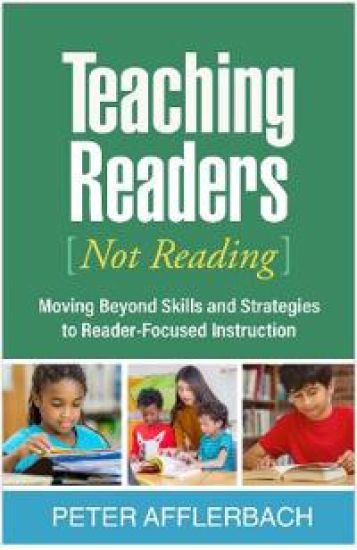
Teaching Readers (Not Reading)

Teaching Readers (Not Reading)

Peter Afflerbach

Guilford Publications
2022
sidottu
Reading instruction is too often grounded in a narrowly defined "science of reading" that focuses exclusively on cognitive skills and strategies. Yet cognition is just one aspect of reading development. This book guides K-8 educators to understand and address other scientifically supported factors that influence each student's literacy learning, including metacognition, motivation and engagement, social–emotional learning, self-efficacy, and more. Peter Afflerbach uses classroom vignettes to illustrate the broad-based nature of student readers’ growth, and provides concrete suggestions for instruction and assessment. The book's utility is enhanced by end-of-chapter review questions and activities and a reproducible tool, the Healthy Readers Profile, which can be downloaded and printed in a convenient 8 1/2" x 11" size.
Teaching Readers (Not Reading)

Teaching Readers (Not Reading)

Peter Afflerbach

Guilford Publications
2022
nidottu
Reading instruction is too often grounded in a narrowly defined "science of reading" that focuses exclusively on cognitive skills and strategies. Yet cognition is just one aspect of reading development. This book guides K-8 educators to understand and address other scientifically supported factors that influence each student's literacy learning, including metacognition, motivation and engagement, social–emotional learning, self-efficacy, and more. Peter Afflerbach uses classroom vignettes to illustrate the broad-based nature of student readers’ growth, and provides concrete suggestions for instruction and assessment. The book's utility is enhanced by end-of-chapter review questions and activities and a reproducible tool, the Healthy Readers Profile, which can be downloaded and printed in a convenient 8 1/2" x 11" size.
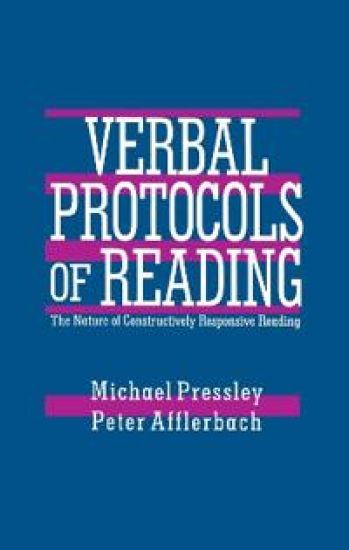
Verbal Protocols of Reading

Verbal Protocols of Reading

Michael Pressley; Peter Afflerbach

Routledge Member of the Taylor and Francis Group
1995
sidottu
Researchers from a variety of disciplines have collected verbal protocols of reading as a window on conscious reading processes. Because such work has occurred in different disciplines, many who have conducted verbal protocol analyses have been unaware of the research of others. This volume brings together the existing literature from the various fields in which verbal protocols of reading have been generated. In so doing, the authors provide an organized catalog of all conscious verbal processes reported in studies to date -- the most complete analysis of conscious reading now available in the literature. When the results of all of the studies are considered, there is clear support for a number of models of reading comprehension including reader response theories, schema perspectives, executive processing models, and bottom-up approaches such as the one proposed by van Dijk and Kintsch. The summary of results also demonstrates that none of the existing models goes far enough. Thus, a new framework -- constructively responsive reading -- is described. This new model encompasses reader response, schematic and executive processing, and induction from word- and phrase-level comprehension to higher-order meaning. The important concept in this new model is that readers respond to bits and pieces of text as they are encountered, all as part of the overarching goal of constructing meaning from text. This volume also includes a critical review of the thinking aloud methodology as it has been used thus far. This examination suggests that it continues to be an immature methodology, and that much work is needed if a complete theory of conscious processing during reading is to be developed via verbal protocol analysis. Finally, after reviewing what has been accomplished to date, the authors provide extensive discussion of the work that remains to be done and the adequacy of the verbal protocol methodology for permitting telling conclusions about text processing.
Verbal Protocols of Reading

Verbal Protocols of Reading

Michael Pressley; Peter Afflerbach

Routledge Member of the Taylor and Francis Group
1995
nidottu
Researchers from a variety of disciplines have collected verbal protocols of reading as a window on conscious reading processes. Because such work has occurred in different disciplines, many who have conducted verbal protocol analyses have been unaware of the research of others. This volume brings together the existing literature from the various fields in which verbal protocols of reading have been generated. In so doing, the authors provide an organized catalog of all conscious verbal processes reported in studies to date -- the most complete analysis of conscious reading now available in the literature. When the results of all of the studies are considered, there is clear support for a number of models of reading comprehension including reader response theories, schema perspectives, executive processing models, and bottom-up approaches such as the one proposed by van Dijk and Kintsch. The summary of results also demonstrates that none of the existing models goes far enough. Thus, a new framework -- constructively responsive reading -- is described. This new model encompasses reader response, schematic and executive processing, and induction from word- and phrase-level comprehension to higher-order meaning. The important concept in this new model is that readers respond to bits and pieces of text as they are encountered, all as part of the overarching goal of constructing meaning from text. This volume also includes a critical review of the thinking aloud methodology as it has been used thus far. This examination suggests that it continues to be an immature methodology, and that much work is needed if a complete theory of conscious processing during reading is to be developed via verbal protocol analysis. Finally, after reviewing what has been accomplished to date, the authors provide extensive discussion of the work that remains to be done and the adequacy of the verbal protocol methodology for permitting telling conclusions about text processing.