Kirjojen hintavertailu. Mukana 12 599 224 kirjaa ja 12 kauppaa.
Kirjailija
Peter Armstrong
Kirjat ja teokset yhdessä paikassa: 15 kirjaa, julkaisuja vuosilta 2002-2024, suosituimpien joukossa White Collar Workers. Vertaile teosten hintoja ja tarkista saatavuus suomalaisista kirjakaupoista.
Originally published in 1986, the 1970s and 80s saw the emergence of the ‘the new working class’ or ‘new middle class’. This book is an authoritative study of the ‘white collar workers’ relationship with their unions and analysis of their newly designated class. The authors drew extensively on original fieldwork and verbatim accounts from technical workers and foremen in industry. White Collar Workers examines the particular circumstances of different groups of workers and their functions in relation to capital and labour. It analyses changes in the composition of union membership and the effect of these changes on the structure and policy of unions.


The western Japanese city of Hagi is the town in Japan which has preserved the greatest level of Tokugawa period (1600-1868) urban and architectural fabric. As such it is a major tourist destination for both Japanese and non-Japanese visitors. The city is also very important historically in that it was the capital of the feudal daimyo domain – Choshu – which spearheaded the reform movement from the 1850s onwards which led to the overthrow of the Tokugawa shogunate and the foundation of Japan in its modern form. This book, rich in detail and very well illustrated, is both an urban and social history of this important town. It outlines the development of the layout of the city and its castle, relates this to the history of its lords, the Mori family, and their place in Japanese history; and sets Hagi in the context of the wider Choshu domain. The book includes a discussion of contemporary arrangements aimed at preserving Hagi’s historical heritage.
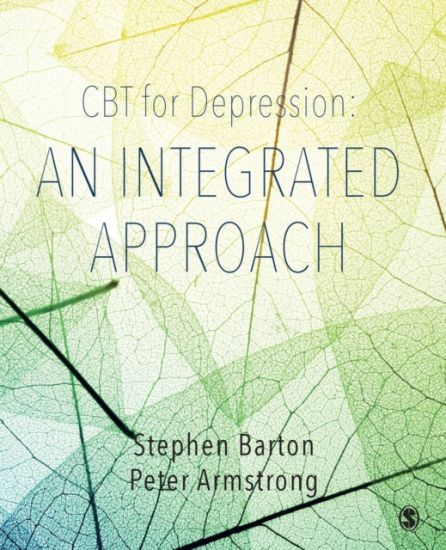
This book introduces an approach to CBT for depression that integrates cognitive-behavioural models, evidence and therapies. Rooted in evidence-based practice and practically focused, it draws on components of first, second and third-wave CBT to help readers tailor therapy to the needs of individual clients. There is a particular focus on challenging presentations: the authors equip students with the skills to work with different depression sub-types, co-morbid disorders and a broad range of bio-psychosocial factors that can complicate depression and its therapy. Linking theory, evidence and case illustrations, the authors provide a wealth of practical tips that support clinical practice. In-depth cases studies and client contributions add further depth to this rich and stimulating book. This book is relevant to those taking postgraduate training courses in mental health such as CBT therapists, counsellors, nurses, clinical psychologists, occupational therapists, social workers and psychiatrists.
Diagnostic Imaging will help medical students, junior doctors, residents and trainee radiologists understand the principles behind interpreting all forms of imaging. Providing a balanced account of all the imaging modalities available – including plain film, ultrasound, computed tomography, magnetic resonance imaging, radionuclide imaging and interventional radiology – it explains the techniques used and the indications for their use. Organised by body system, it covers all anatomical regions. In each region the authors discuss the most suitable imaging technique and provide guidelines for interpretation, illustrating clinical problems with normal and abnormal images. Diagnostic Imaging is extensively illustrated throughout, featuring high quality full-colour images and more than 600 photographs. The images are downloadable in PowerPoint format from the brand new companion website at www.wileydiagnosticimaging.com, which also has over 100 interactive MCQs, to aid learning and teaching. When you purchase the book you also receive access to the Wiley E-Text: Powered by VitalSource. This is an interactive digital version of the book, featuring downloadable text and images, highlighting and note-taking facilities, bookmarking, cross-referencing, in-text searching, and linking to references and abbreviations. Diagnostic Imaging is also available on CourseSmart, offering extra functionality as well as an immediate way to access the book. For more details, see www.coursesmart.com or ‘The Anytime, Anywhere Textbook ’ section.
HIGHLIGHT A fast-paced, hands-on tutorial that both teaches and entertains readers as they learn Flex 4 while building a complete application. DESCRIPTION Flex 4 is an open-source tool that allows developers to easily add life to web applications with dynamic user features, colorful transitions, and eye-catching animations. Flex also provides powerful data handling for industrial-strength applications. We think it should be just as much fun to learn Flex as it is to use it. And we know that fun learning gets better results. Hello! Flex 4 demonstrates how to get started without getting bogged down in technical detail or academic edge cases. In this book, User Friendly cartoon characters offer commentary and snide side comments, as the book moves quickly from Hello World into practical techniques. Each one is illustrated with a hands-on example. Along the way, readers will build a unique Flex application that mashes Yahoo Maps with Twitter to keep track of friends. KEY POINTS • Demonstrates a complete application built over the course of the book • Entertaining style with User Friendly graphics • Accessible to HTML or web developers without programming experience
In his "Chronicles", Froissart described Otterburn as the best fought and the most severe battle of his time. Fought at Redesdale, in Northumberland, in August 1388, the battle originated from the ongoing war between the Scots and the English but rapidly descended into a personal feud between the Scottish clan, Douglas, and the aristocratic English family, Percy. This book details the events that led up to this clash on the borders, using all the contemporary sources, gives a full account of the battle and examines the opposing armies motivations, training and weaponry, as well as the personalities of Black Douglas and Henry 'Hotspur' Percy.
The sponsorship of the entrepreneur as an agent of economic growth is now at the centre of a vast promotional industry, involving politicians, government departments and higher education. This book examines the origins of this phenomenon and subjects its mythologies, hero-figures and policies to an empirically based critical examination.
The death of King Alexander III of Scotland and his only direct descendant Margaret, "Maid of Norway", triggered a succession crisis in Scotland. King Edward I of England was asked to arbitrate. This work covers how Edward's attempts to undermine Scottish independence led to Scottish unrest. In May 1297 William Wallace murdered the Sheriff of Lanark, sparking open revolt. Defeating the English at Stirling Bridge, Wallace led his men into battle with the returned Edward I at Falkirk on 22 July 1298. Amid accusations of treachery, Wallace's spearmen were practically annihilated, leading to Wallace's execution and a re-establishment of Scottish control by Edward and his men.
Pete Armstrong's illustrated account of the Battle of Bannockburn, a pivotal campaign in the First War of Scottish Independence.Bannockburn was the climax of the career of King Robert the Bruce. In 1307 King Edward I of England, 'The Hammer of the Scots' and nemesis of William Wallace, died and his son, Edward II, was not from the same mould.Idle and apathetic, he allowed the Scots the chance to recover from the grievous punishment inflicted upon them. By 1314 Bruce had captured every major English-held castle bar Stirling and Edward II took an army north to subdue the Scots.Pete Armstrong's account of this battle culminates at the decisive battle of Bannockburn that finally won Scotland her independence.