Kirjojen hintavertailu. Mukana 12 595 353 kirjaa ja 12 kauppaa.

Kirjailija

Peter Barry

Kirjat ja teokset yhdessä paikassa: 15 kirjaa, julkaisuja vuosilta 1987-2025, suosituimpien joukossa Birds: What's in a Name. Vertaile teosten hintoja ja tarkista saatavuus suomalaisista kirjakaupoista.

15 kirjaa

Kirjojen julkaisuhaarukka 1987-2025.

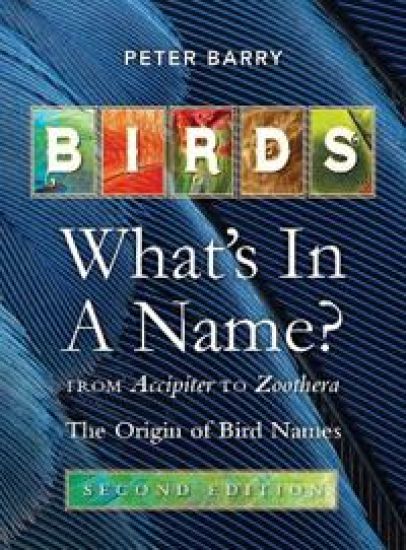
Birds: What's in a Name

Birds: What's in a Name

Peter Barry

NEW HOLLAND PUBLISHERS
2025
nidottu
This entertaining and informative guide explains the meanings of bird names, many of which have fascinating origins and stories behind them. The universal system of ‘scientific’ names, based largely on Greek and Latin, is used in all good bird books and assists birdwatchers around the world in figuring out exactly what they are looking at. While some of the names are fairly self-explanatory – such as Troglodytes for wren, meaning ‘cave-dweller’ – others are more mysterious – Caprimulgus for nightjar, for example, meaning ‘goat-sucker’. Covering hundreds of bird species from around the world, Birds: What’s In A Name? includes explanations of hundreds of scientific names and common names, as well as delivering a wealth of other facts and trivia relating to the species concerned. In short, it’s the most readable and entertaining book on the subject available anywhere. Anas platyrhynchos (Mallard) ‘The duck with the flat beak’. Ixobrychus minutus (Little Bittern) ‘Small reed bellower’. Strigops habroptilus (Kakapo) A bird that ‘looks like an owl, with soft feathers’. Ptilonorhynchus violaceus (Satin Bowerbird) ‘Violet bird with a feathered bill’. Tachybaptus ruficollis (Little Grebe) Literally translated, this is the ‘red-collared fast-sinker’.
Insanity

Insanity

Peter Barry

Peter Barry
2020
pokkari
16-year old Alan Crosthwaite is committed to a mental asylum when he takes action against an international oil company polluting the environment. The only reason he doesn't end up in prison is because the company's CEO is his father.In therapy, Alan writes about the doomsday scenario confronting our planet, his feelings for the girl he met at a School Strike for Climate demonstration, and his family. But it's his preoccupation with the world's political and business leaders' persistent refusal to respond meaningfully to climate change that compels Alan to take one final, desperate step.Like many of his generation, Alan Crosthwaite feels compelled to take up the fight against the looming climate change catastrophe because big business and petty politicians, worldwide, have seemingly disclaimed all responsibility for the problem.Insanity is the disturbing story of a teenager who courageously confronts the challenge to our very survival: the rapidly accelerating and wanton destruction of our planet.
Beginning Theory

Beginning Theory

Peter Barry

Manchester University Press
2017
nidottu
Beginning theory has been helping students navigate through the thickets of literary and cultural theory for over two decades. This new and expanded fourth edition continues to offer readers the best single-volume introduction to the field. The bewildering variety of approaches, theorists and technical language is lucidly and expertly unravelled. Unlike many books which assume certain positions about the critics and the theories they represent, Beginning theory allows readers to develop their own ideas once first principles and concepts have been grasped. The book has been updated for this edition and includes a new introduction, expanded chapters, and an overview of the subject ('Theory after "Theory"') which maps the arrival of new 'isms' since the second edition appeared in 2002 and the third edition in 2009.
Reading Poetry

Reading Poetry

Peter Barry

Manchester University Press
2014
nidottu
Witty, direct and articulate, Peter Barry illustrates the key elements of poetry at work, covering many different kinds of verse, from traditional forms to innovative versions of the art, such as ‘concrete’ poetry, minimalism and word-free poems. The emphasis is on meanings rather than words, looking beyond technical devices like alliteration and assonance so that poems are understood as dynamic structures creating specific ends and effects. The three sections cover progressively expanding areas – ‘Reading the lines’ deals with such basics as imagery, diction and metre; ‘Reading between the lines’ concerns broader matters, such as poetry and context, and the reading of sequences of poems, while ‘Reading beyond the lines’ looks at ‘theorised’ readings and the ‘textual genesis’ of poems from manuscript to print. Reading poetry is for students, lecturers and teachers looking for new ways of discussing poetry, and all those seriously interested in poetry, whether as readers or writers.
Reading Poetry

Reading Poetry

Peter Barry

Manchester University Press
2014
sidottu
Witty, direct and articulate, Peter Barry illustrates the key elements of poetry at work, covering many different kinds of verse, from traditional forms to innovative versions of the art, such as ‘concrete’ poetry, minimalism and word-free poems. The emphasis is on meanings rather than words, looking beyond technical devices like alliteration and assonance so that poems are understood as dynamic structures creating specific ends and effects. The three sections cover progressively expanding areas – ‘Reading the lines’ deals with such basics as imagery, diction and metre; ‘Reading between the lines’ concerns broader matters, such as poetry and context, and the reading of sequences of poems, while ‘Reading beyond the lines’ looks at ‘theorised’ readings and the ‘textual genesis’ of poems from manuscript to print. Reading poetry is for students, lecturers and teachers looking for new ways of discussing poetry, and all those seriously interested in poetry, whether as readers or writers.
English in Practice

English in Practice

Peter Barry

Bloomsbury Academic
2013
nidottu
Fully revised and updated, this new edition of English in Practice continues to be an essential practical guide to studying English at University. It is for all those who are about to embark on an English degree or are in the midst of completing one, and for those who want to re-engage with their reasons for teaching it. The second edition now includes new chapters offering practical advice on writing undergraduate dissertations and on taking your studies beyond undergraduate level, as well as a thoroughly updated chapter on getting the most of out of online resources. Written by an experienced writer and teacher, the book also covers such topics as: • Reading and interpretation • English and Creative Writing • Literary criticism and theory • The English language • Exploring historical contexts • Constructing an essay Including an annotated guide to further reading, English in Practice is an important resource for students keen to succeed in their study of English at University.
Literature in Contexts

Literature in Contexts

Peter Barry

Manchester University Press
2012
nidottu
Is it possible to return the literary text in all its particularity to the centre of literary study, without going back to the ‘words-on-the page’ myopia of the past? That is the primary question which Literature in contexts engages with. In the 1980s the study of literary theory eclipsed the study of the literary text, but today, we are told, we are ‘post-theory’. Yet as it emerged from the shadow of theory, the literary text was eclipsed all over again by the study of context. Historicist contextualisation became the dominant orientation in literary studies, and this (not quite) New Historicism spread in turn through period after period, from the Early Modern, through Romanticism, and on to the Victorian era. ‘Is English History?’ people began to ask, as it became impossible to attend an academic conference without being subjected to a diet of history lessons.This book seeks to problematise the very notion of context, which has remained for the most part stubbornly un-theorised and un-examined, and it seeks out – in a series of contextualising experiments – contexts which are text-specific, author-specific or literary, rather than historical, putting forward a distinction between ‘deep’ and ‘broad’ contexts and arguing that we need to counter the prevalence of the latter if literary studies is to avoid becoming a minor branch of history.
Modern Embedded Computing

Modern Embedded Computing

Peter Barry; Patrick Crowley

Morgan Kaufmann Publishers In
2012
nidottu
Modern Embedded Computing: Designing Connected, Pervasive, Media-Rich Systems provides a thorough understanding of the platform architecture of modern embedded computing systems that drive mobile devices. The book offers a comprehensive view of developing a framework for embedded systems-on-chips. Examples feature the Intel Atom processor, which is used in high-end mobile devices such as e-readers, Internet-enabled TVs, tablets, and net books. This is a unique book in terms of its approach – moving towards consumer. It teaches readers how to design embedded processors for systems that support gaming, in-vehicle infotainment, medical records retrieval, point-of-sale purchasing, networking, digital storage, and many more retail, consumer and industrial applications. Beginning with a discussion of embedded platform architecture and Intel Atom-specific architecture, modular chapters cover system boot-up, operating systems, power optimization, graphics and multi-media, connectivity, and platform tuning. Companion lab materials complement the chapters, offering hands-on embedded design experience. This text will appeal not only to professional embedded system designers but also to students in computer architecture, electrical engineering, and embedded system design.
Financial Management in Agriculture

Financial Management in Agriculture

Peter Barry; Paul Ellinger

Pearson
2011
sidottu
Financial Management in Agriculture, Seventh Edition, introduces students to modern concepts and tools of finance, developed and applied to the agricultural sector. Using case studies, practical problems, and a lucid presentation, the text focuses on planning, analyzing, and controlling business performance in agriculture and related financial markets. This new edition addresses recent structural changes in the food system, covering important topics such as the growth in vertical coordination within the food and fiber system, and the significant implications for financial analysis and risk management by those managing or financing the agricultural sector.
Literature in Contexts

Literature in Contexts

Peter Barry

Manchester University Press
2007
sidottu
Is it possible to return the literary text in all its particularity to the centre of literary study, without going back to the ‘words-on-the page’ myopia of the past? That is the primary question which Literature in contexts engages with. In the 1980s the study of literary theory eclipsed the study of the literary text, but today, we are told, we are ‘post-theory’. Yet as it emerged from the shadow of theory, the literary text was eclipsed all over again by the study of context. Historicist contextualisation became the dominant orientation in literary studies, and this (not quite) New Historicism spread in turn through period after period, from the Early Modern, through Romanticism, and on to the Victorian era. ‘Is English History?’ people began to ask, as it became impossible to attend an academic conference without being subjected to a diet of history lessons.This book seeks to problematise the very notion of context, which has remained for the most part stubbornly un-theorised and un-examined, and it seeks out – in a series of contextualising experiments – contexts which are text-specific, author-specific or literary, rather than historical, putting forward a distinction between ‘deep’ and ‘broad’ contexts and arguing that we need to counter the prevalence of the latter if literary studies is to avoid becoming a minor branch of history.
Poetry Wars

Poetry Wars

Peter Barry; Andrew Motion

Salt Publishing
2006
nidottu
Poetry Wars is an account of the six-year battle at the National Poetry Society during the 1970s when this highly conservative institution and its journal Poetry Review were taken over by radical poets. The story is told from primary sources, including the Arts Council’s Records at the Victoria & Albert Museum, the Eric Mottram Archive at King's College London, and the Barry MacSweeney Collection at Newcastle University, and from contemporary newspaper accounts. The story has never been made public before in documentary detail, though brief reference is often made to it in accounts of contemporary poetry, and anecdotes and hearsay about these events have been in circulation for over twenty years. The repercussions continue to reverberate, and struggles of the same nature continue in the Poetry Society and other cultural institutions today. The question of how an avant-garde ‘negotiates’ with the ‘centre’ it seeks to displace remains crucial, and this issue is of increasing importance to the study of literature and the arts in the twentieth and twenty first centuries. The book is in three sections: the first, ‘Chronology’ (chapters 1-5), tells the story of the events; the second, ‘Themes’ (chapters 6-9), considers the events from various thematic viewpoints, and includes a detailed chapter on the writing, teaching, and editing practice of Eric Mottram, and another on the characteristics of the ‘British Poetry Revival’ of the 1970s. The third section, ‘Documents’, reproduces a series of contemporary documents from the relevant archives, along with new summary data about the personalities involved.
English in Practice

English in Practice

Peter Barry

Hodder Arnold
2003
nidottu
This is a book about English Studies, aimed at all those who are taking English degrees, or teaching them. It gives a detailed account of the core of the discipline - the close reading of texts, contexts, and "intertexts". It also treats some of the major current issues within the discipline, such as the relationship between literature and history. It works through a series of fully developed applied examples, rather than by abstract exposition and exhortation. It is a reflective overview which constanlty exemplifies the practice it reflects upon.
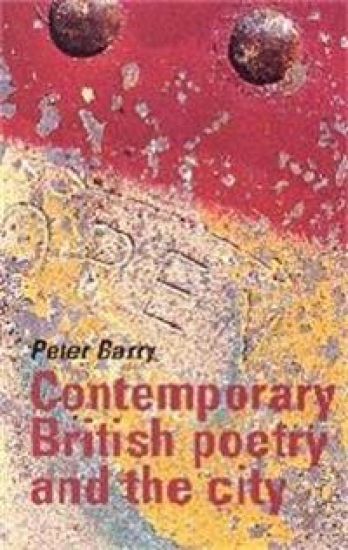
Contemporary British Poetry and the City

Contemporary British Poetry and the City

Peter Barry

Manchester University Press
2000
nidottu
Though poets have always written about cities, the commonest critical categories (pastoral poetry, nature poetry, Romantic poetry, Georgian poetry, etc.) have usually stressed the rural, so that poetry can seem irrelevant to a predominantly urban populati. Explores a range of contemporary poets who visit the 'mean streets' of the contemporary urban scene, seeking the often cacophonous music of what happens here. Poets discussed include: Ken Smith, Iain Sinclair, Roy Fisher, Edwin Morgan, Sean O’Brien, Ciaran Carson, Peter Reading, Matt Simpson, Douglas Houston, Deryn Rees-Jones, Denise Riley, Ken Edwards, Levi Tafari, Aidan Hun, and Robert Hampson. Approaches contemporary poetry within a broad spectrum of personal, social, literary, and cultural concerns. Includes ‘loco-specific’ chapters, on cities including Hull, Liverpool, London, and Birmingham, with an additional chapter on ‘post-industrial’ cities such as Belfast, Glasgow and Dundee.