Kirjojen hintavertailu. Mukana 12 595 353 kirjaa ja 12 kauppaa.

Kirjailija

Peter Beharrell

Kirjat ja teokset yhdessä paikassa: 8 kirjaa, julkaisuja vuosilta 1977-2009, suosituimpien joukossa Bad News (Routledge Revivals). Vertaile teosten hintoja ja tarkista saatavuus suomalaisista kirjakaupoista.

8 kirjaa

Kirjojen julkaisuhaarukka 1977-2009.

Bad News (Routledge Revivals)

Bad News (Routledge Revivals)

Peter Beharrell; Howard Davis; John Eldridge; John Hewitt; Jean Hart; Gregg Philo; Paul Walton; Brian Winston

Routledge
2009
nidottu
It is a commonly held belief that television news in Britain, on whatever channel, is more objective, more trustworthy, more neutral than press reporting. The illusion is exploded in this controversial study by the Glasgow University Media Group, originally published in 1976.The authors undertook an exhaustive monitoring of all television broadcasts over 6 months, from January to June 1975, with particular focus upon industrial news broadcasts, the TUC, strikes and industrial action, business and economic affairs.Their analysis showed how television news favours certain individuals by giving them more time and status. But their findings did not merely deny the neutrality of the news, they gave a new insight into the picture of industrial society that TV news constructs.
More Bad News (Routledge Revivals)

More Bad News (Routledge Revivals)

Peter Beharrell; Howard Davis; John Eldridge; John Hewitt; Jean Hart; Gregg Philo; Paul Walton; Brian Winston

Routledge
2009
nidottu
First published in 1980, More Bad News is the Second Volume in the research findings of the Glasgow University Media Group. It develops the analytic findings and methods of the first volume Bad News through a series of Case Studies of Television News Coverage, and argues that much of what passes as balanced and factual news reporting is produced from a highly partial viewpoint. Focusing on the British economy in crisis, and its thematic linkage with the Social Contract during the first four months of 1975, the book deals with three main levels of activity: the story, the language and the visuals. As the book unpacks each level of routine news coverage a picture emerges which has the surface appearance of neutrality and balance but is in fact highly partial and restricted
More Bad News (Routledge Revivals)

More Bad News (Routledge Revivals)

Peter Beharrell; Howard Davis; John Eldridge; John Hewitt; Jean Hart; Gregg Philo; Paul Walton; Brian Winston

Routledge
2009
sidottu
First published in 1980, More Bad News is the Second Volume in the research findings of the Glasgow University Media Group. It develops the analytic findings and methods of the first volume Bad News through a series of Case Studies of Television News Coverage, and argues that much of what passes as balanced and factual news reporting is produced from a highly partial viewpoint. Focusing on the British economy in crisis, and its thematic linkage with the Social Contract during the first four months of 1975, the book deals with three main levels of activity: the story, the language and the visuals. As the book unpacks each level of routine news coverage a picture emerges which has the surface appearance of neutrality and balance but is in fact highly partial and restricted
Bad News - Volumes 1 and 2 (Routledge Revivals)

Bad News - Volumes 1 and 2 (Routledge Revivals)

Peter Beharrell; Howard Davis; John Eldridge; John Hewitt; Jean Hart; Gregg Philo; Paul Walton; Brian Winston

Routledge
2009
muu
It is a commonly held belief that television news in Britain, on whatever channel, is more objective, more trustworthy, more neutral than press reporting. The illusion is exploded in this controversial 2-volume study by the Glasgow University Media Group, originally published in 1976 and 1980.
Bad News (Routledge Revivals)

Bad News (Routledge Revivals)

Peter Beharrell; Howard Davis; John Eldridge; John Hewitt; Jean Hart; Gregg Philo; Paul Walton; Brian Winston

Routledge
2009
sidottu
It is a commonly held belief that television news in Britain, on whatever channel, is more objective, more trustworthy, more neutral than press reporting. The illusion is exploded in this controversial study by the Glasgow University Media Group, originally published in 1976.The authors undertook an exhaustive monitoring of all television broadcasts over 6 months, from January to June 1975, with particular focus upon industrial news broadcasts, the TUC, strikes and industrial action, business and economic affairs.Their analysis showed how television news favours certain individuals by giving them more time and status. But their findings did not merely deny the neutrality of the news, they gave a new insight into the picture of industrial society that TV news constructs.
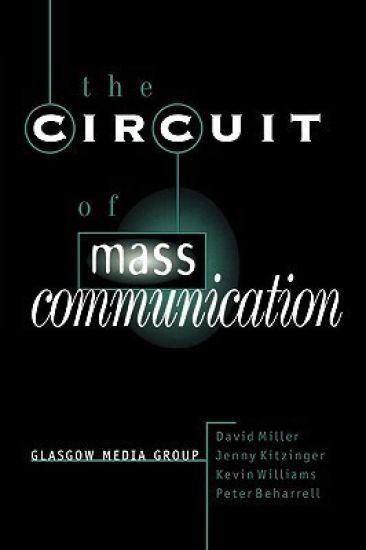
The Circuit of Mass Communication

The Circuit of Mass Communication

David Miller; Jenny Kitzinger; Peter Beharrell

SAGE Publications Ltd
1998
sidottu
This book moves beyond the narrow focus of much of the work on media and cultural studies to examine the whole process of interaction between the media and the social world. Rejecting approaches which focus only on ownership or discourse or audience reception, this new book from the Glasgow Media Group, examines: promotional strategies; media production; representation and audience responses; as well as broader impacts on policy, culture and society. Using a detailed analysis of the struggle over representation during the AIDS crisis as point of departure, The Circuit of Mass Communication reveals the power of the media to influence public opinion, and the complex interaction between media coverage, audience response and contemporary power relations. Based on extensive empirical research, this book offers a range of challenging insights on media power, active audiences and moral panics.
The Circuit of Mass Communication

The Circuit of Mass Communication

David Miller; Jenny Kitzinger; Peter Beharrell

SAGE Publications Ltd
1998
nidottu
This book moves beyond the narrow focus of much of the work on media and cultural studies to examine the whole process of interaction between the media and the social world. Rejecting approaches which focus only on ownership or discourse or audience reception, this new book from the Glasgow Media Group, examines: promotional strategies; media production; representation and audience responses; as well as broader impacts on policy, culture and society. Using a detailed analysis of the struggle over representation during the AIDS crisis as point of departure, The Circuit of Mass Communication reveals the power of the media to influence public opinion, and the complex interaction between media coverage, audience response and contemporary power relations. Based on extensive empirical research, this book offers a range of challenging insights on media power, active audiences and moral panics.