Kirjojen hintavertailu. Mukana 12 595 353 kirjaa ja 12 kauppaa.

Kirjailija

Peter Blatchford

Kirjat ja teokset yhdessä paikassa: 18 kirjaa, julkaisuja vuosilta 1998-2026, suosituimpien joukossa Young Children at School in the Inner City. Vertaile teosten hintoja ja tarkista saatavuus suomalaisista kirjakaupoista.

18 kirjaa

Kirjojen julkaisuhaarukka 1998-2026.

Young Children at School in the Inner City

Young Children at School in the Inner City

Barbara Tizard; Peter Blatchford; Jessica Burke; Clare Farquhar; Ian Plewis

Routledge
2018
nidottu
First published in 1988, this work reports on a major British study of children’s progress and behaviour in 33 infant schools. The research looks at children from nursery through to junior school and asks why some children had higher attainments and made more progress than others. Using observations not only in schools but also interviews with children and parents, the children’s skills on entering school were found to have an important effect on progress. In each school, black and white children, and girls and boys were studied, in order gauge whether gender or ethnicity were related to progress.
Young Children at School in the Inner City

Young Children at School in the Inner City

Barbara Tizard; Peter Blatchford; Jessica Burke; Clare Farquhar; Ian Plewis

Routledge
2017
sidottu
First published in 1988, this work reports on a major British study of children’s progress and behaviour in 33 infant schools. The research looks at children from nursery through to junior school and asks why some children had higher attainments and made more progress than others. Using observations not only in schools but also interviews with children and parents, the children’s skills on entering school were found to have an important effect on progress. In each school, black and white children, and girls and boys were studied, in order gauge whether gender or ethnicity were related to progress.
Inside Classrooms

Inside Classrooms

Peter Blatchford

TAYLOR FRANCIS LTD
2026
sidottu
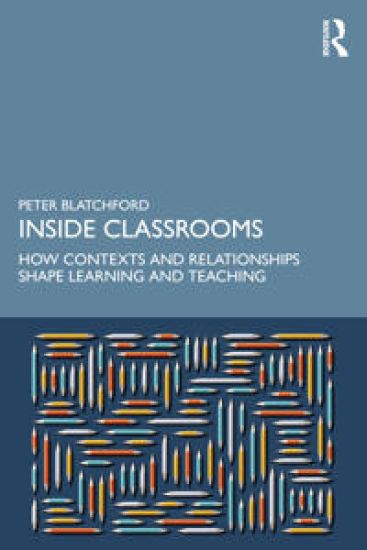
This compelling book explores the dynamics of learning in school classrooms, drawing on over 30 years of large-scale educational research. Through extensive, naturalistic, and systematic observations of pupils and teachers, it challenges traditional explanations for learning differences, arguing that factors like motivation, sociological influences, parental involvement and teacher effectiveness are insufficient because they overlook the immediate contextual and interactive processes that directly shape learning outcomes. The book introduces a new eco-relational approach with three key dimensions. The first focuses on the immediate classroom context, including factors such as the layout, group organisation, and the types of tasks and interactional settings. The second examines the interactions and relationships within the classroom, both between teachers and students and among students themselves. The third dimension explores how these contextual and relational elements align—or fail to align—within the interconnected and dynamic classroom system. Organised into three sections, the book begins with an in-depth review of educational and psychological research and theory to show the importance of context in human development. The second section applies the eco-relational framework to findings from three of the author’s research programmes, covering class size effects, group organisation and group work, and the inclusion of pupils with SEND in mainstream schools. The final section outlines the eco-relational foundation for the SPRinG project, a unique programme designed to support collaborative group work in schools. Inside Classrooms is an integration of research that offers a new approach to thinking about factors influencing learning. It is meant for academics and researchers but also teachers and school leaders, those involved in initial teacher training and professional development of teachers, policy makers and commentators, teacher representatives, and parents.
Inside Classrooms

Inside Classrooms

Peter Blatchford

TAYLOR FRANCIS LTD
2026
nidottu
This compelling book explores the dynamics of learning in school classrooms, drawing on over 30 years of large-scale educational research. Through extensive, naturalistic, and systematic observations of pupils and teachers, it challenges traditional explanations for learning differences, arguing that factors like motivation, sociological influences, parental involvement and teacher effectiveness are insufficient because they overlook the immediate contextual and interactive processes that directly shape learning outcomes. The book introduces a new eco-relational approach with three key dimensions. The first focuses on the immediate classroom context, including factors such as the layout, group organisation, and the types of tasks and interactional settings. The second examines the interactions and relationships within the classroom, both between teachers and students and among students themselves. The third dimension explores how these contextual and relational elements align—or fail to align—within the interconnected and dynamic classroom system. Organised into three sections, the book begins with an in-depth review of educational and psychological research and theory to show the importance of context in human development. The second section applies the eco-relational framework to findings from three of the author’s research programmes, covering class size effects, group organisation and group work, and the inclusion of pupils with SEND in mainstream schools. The final section outlines the eco-relational foundation for the SPRinG project, a unique programme designed to support collaborative group work in schools. Inside Classrooms is an integration of research that offers a new approach to thinking about factors influencing learning. It is meant for academics and researchers but also teachers and school leaders, those involved in initial teacher training and professional development of teachers, policy makers and commentators, teacher representatives, and parents.
Promoting Effective Group Work in the Primary Classroom

Promoting Effective Group Work in the Primary Classroom

Ed Baines; Peter Blatchford; Peter Kutnick

Routledge
2016
nidottu
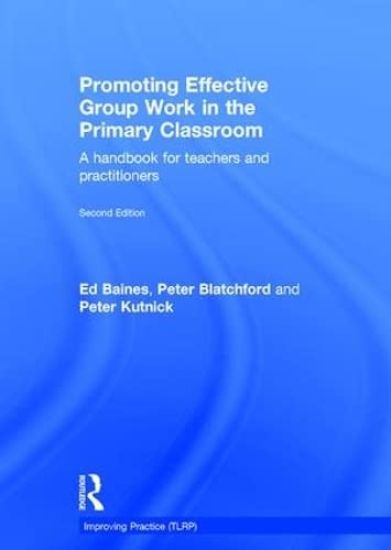
Promoting Effective Group Work in the Primary Classroom, 2nd ed. is designed to enhance teachers’ and teaching assistants’ confidence in engaging their children in effective group work, allowing for more active participation, more on-task focus and higher levels of achievement.This accessible second edition is packed full of valuable strategies for teachers and fun activities for children, offering guidance on how to create an inclusive and supportive classroom by developing the social, communicative and group working skills of all pupils. It has been thoroughly updated and includes new material on whole school approaches to group work, the risks and challenges involved, and how to involve Teaching Assistants and other support staff in undertaking inclusive and effective group work in classrooms. A tried-and-tested, step-by-step approach encourages both children and their teachers to develop supportive relationships that have been found to facilitate academic performance, positive social behaviour and motivation. Since the first edition the authors have found that this handbook can be used successfully in many different countries around the world.With ideas to help resolve problems that might arise and suggested training activities to support pupils, this text is a one-stop resource to ensure effective group work in the classroom. It is an essential guide for both trainee and practising teachers, as well as TAs and support staff, and a valuable basis for school action.
Promoting Effective Group Work in the Primary Classroom

Promoting Effective Group Work in the Primary Classroom

Ed Baines; Peter Blatchford; Peter Kutnick

Routledge
2016
sidottu
Promoting Effective Group Work in the Primary Classroom, 2nd ed. is designed to enhance teachers’ and teaching assistants’ confidence in engaging their children in effective group work, allowing for more active participation, more on-task focus and higher levels of achievement.This accessible second edition is packed full of valuable strategies for teachers and fun activities for children, offering guidance on how to create an inclusive and supportive classroom by developing the social, communicative and group working skills of all pupils. It has been thoroughly updated and includes new material on whole school approaches to group work, the risks and challenges involved, and how to involve Teaching Assistants and other support staff in undertaking inclusive and effective group work in classrooms. A tried-and-tested, step-by-step approach encourages both children and their teachers to develop supportive relationships that have been found to facilitate academic performance, positive social behaviour and motivation. Since the first edition the authors have found that this handbook can be used successfully in many different countries around the world.With ideas to help resolve problems that might arise and suggested training activities to support pupils, this text is a one-stop resource to ensure effective group work in the classroom. It is an essential guide for both trainee and practising teachers, as well as TAs and support staff, and a valuable basis for school action.
Maximising the Impact of Teaching Assistants

Maximising the Impact of Teaching Assistants

Rob Webster; Anthony Russell; Peter Blatchford

Routledge
2015
nidottu
Teaching assistants are an integral part of classroom life, yet pioneering research by the authors has shown schools are not making the most of this valued resource. Evidence shows the more support pupils receive from TAs, the less academic progress they made. Yet the reason for this has little to do with TAs. It is decisions made about them by school leaders and teachers that best explain this provocative finding.The fully updated second edition of this book draws on the experiences of schools that have put this guidance into action via the Maximising the Impact of Teaching Assistants programme. Revised to reflect the latest research evidence and changes within education, including the 2014 SEND Code of Practice, this book will help school leaders and teachers in primary and secondary settings to rethink the role, purpose and contribution of TAs, and add real value to what can be achieved in classrooms.Setting out a field-tested process, structured around a coherent and empirically sound conceptual framework, this book:helps school leaders review, reform and reenergise their TA workforceprovides practical strategies to implement in the classroomillustrates key points with new case studiesprovides photocopiable templates and resources to support decision-making and actionMaximising the Impact of Teaching Assistants provides much-needed and evidence-informed guidance on how to unleash the huge potential of TAs, and is essential reading for all school leaders.
Maximising the Impact of Teaching Assistants

Maximising the Impact of Teaching Assistants

Rob Webster; Anthony Russell; Peter Blatchford

Routledge
2015
sidottu
Teaching assistants are an integral part of classroom life, yet pioneering research by the authors has shown schools are not making the most of this valued resource. Evidence shows the more support pupils receive from TAs, the less academic progress they made. Yet the reason for this has little to do with TAs. It is decisions made about them by school leaders and teachers that best explain this provocative finding.The fully updated second edition of this book draws on the experiences of schools that have put this guidance into action via the Maximising the Impact of Teaching Assistants programme. Revised to reflect the latest research evidence and changes within education, including the 2014 SEND Code of Practice, this book will help school leaders and teachers in primary and secondary settings to rethink the role, purpose and contribution of TAs, and add real value to what can be achieved in classrooms.Setting out a field-tested process, structured around a coherent and empirically sound conceptual framework, this book:helps school leaders review, reform and reenergise their TA workforceprovides practical strategies to implement in the classroomillustrates key points with new case studiesprovides photocopiable templates and resources to support decision-making and actionMaximising the Impact of Teaching Assistants provides much-needed and evidence-informed guidance on how to unleash the huge potential of TAs, and is essential reading for all school leaders.
The Child at School

The Child at School

Peter Blatchford; Anthony D. Pellegrini; Ed Baines

Routledge
2015
nidottu
What is the nature of children’s social life in school? How do their relationships and interactions with peers, teachers and other school staff influence their development and experience of school? This book, written by leading researchers in educational and developmental psychology, provides answers to these questions by offering an integrated perspective on children’s social interactions and relationships with their peers and teachers in school. Peer interactions in school have tended to be underestimated by educationalists, and this book redresses the balance by giving them equal weight to teacher–child interactions.In this second edition, the authors extensively revise the text on the basis of many years of research and teaching experience. They highlight common misconceptions about children, their social lives, and school achievement which have often resulted in ineffective school policy. The book includes a number of important topics, including: The significance of peer-friendships at school The nature and importance of play and break-times Aggression and bullying at school Peer relations and learning at school The classroom environment and teacher-pupil interaction The influence of gender in how children learn at school. Advantages and disadvantages of different methodological approaches for studying children in school settings Policy implications of current research findings. The Child at School will be essential reading for all students of child development and educational psychology. It will also be an invaluable source for both trainee and practicing teachers and teaching assistants, as well as clinical psychologists and policy makers in this area.
The Child at School

The Child at School

Peter Blatchford; Anthony D. Pellegrini; Ed Baines

Routledge
2015
sidottu
What is the nature of children’s social life in school? How do their relationships and interactions with peers, teachers and other school staff influence their development and experience of school? This book, written by leading researchers in educational and developmental psychology, provides answers to these questions by offering an integrated perspective on children’s social interactions and relationships with their peers and teachers in school. Peer interactions in school have tended to be underestimated by educationalists, and this book redresses the balance by giving them equal weight to teacher–child interactions.In this second edition, the authors extensively revise the text on the basis of many years of research and teaching experience. They highlight common misconceptions about children, their social lives, and school achievement which have often resulted in ineffective school policy. The book includes a number of important topics, including: The significance of peer-friendships at school The nature and importance of play and break-times Aggression and bullying at school Peer relations and learning at school The classroom environment and teacher-pupil interaction The influence of gender in how children learn at school. Advantages and disadvantages of different methodological approaches for studying children in school settings Policy implications of current research findings. The Child at School will be essential reading for all students of child development and educational psychology. It will also be an invaluable source for both trainee and practicing teachers and teaching assistants, as well as clinical psychologists and policy makers in this area.
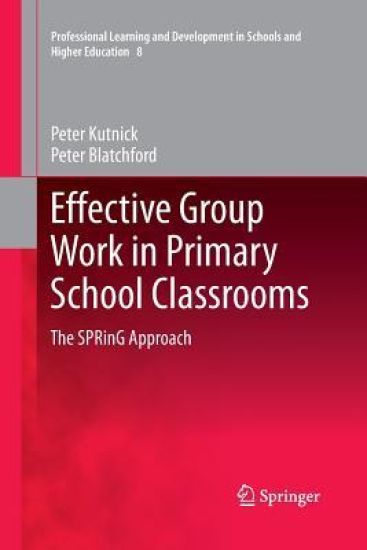
Effective Group Work in Primary School Classrooms

Effective Group Work in Primary School Classrooms

Peter Kutnick; Peter Blatchford

Springer
2015
nidottu
This book offers a challenge to traditional approaches to classroom teaching and pedagogy. The SPRinG (Social Pedagogic Research into Groupwork) project, part of a larger research programme on teaching and learning funded by the Economic and Social Research Council (ESRC), was developed to enhance the learning potential of pupils working in classroom groups by actively involving teachers in a programme designed to raise levels of group work during typical classroom learning activities. Internationally, the SPRinG project is the largest evaluation of effective group working methods in comparison to traditional teaching, with findings that show raised levels of pupil achievement and a doubling of sustained, active engagement in learning. The opening chapters present arguments regarding the relationship of social interaction and children’s cognitive development and examine theories that explain why social interactional processes should be integrated into primary school pedagogic practices. Next, the book describes the conceptual and methodological basis for the SPRinG studies, especially its focus on the relational approach, the type of involvement of teachers and classroom planning. Further chapters present key results and describe the background and methods used to establish SPRinG-based effects on pupil progress in mathematics, literacy and science, including both macro and micro assessments; how the SPRinG approach affected pupil-pupil interactions and teacher-pupil interactions, as measured by systematic on-the-spot observations and analyses of videotapes of groups working on specially designed tasks work; and effects on pupil self-completed measures of motivation and attitudes to group work.The book also analyses reflections of teachers who have worked with SPRinG: moving from theory to practice as well as adding insights associated with implementing SPRinG principles in schools. Drawing upon developmental psychological, socialpsychological and classroom research, it develops a new and ambitious social pedagogic approach to classroom learning, with a stress on group work, which will be of interest to researchers, teachers and policy-makers.This book includes contributions from Andrew Tolmie and Ed Baines, who were also involved in the ScotSPRinG and SPRinG projects.
Effective Group Work in Primary School Classrooms

Effective Group Work in Primary School Classrooms

Peter Kutnick; Peter Blatchford

Springer
2013
sidottu
This book offers a challenge to traditional approaches to classroom teaching and pedagogy. The SPRinG (Social Pedagogic Research into Groupwork) project, part of a larger research programme on teaching and learning funded by the Economic and Social Research Council (ESRC), was developed to enhance the learning potential of pupils working in classroom groups by actively involving teachers in a programme designed to raise levels of group work during typical classroom learning activities. Internationally, the SPRinG project is the largest evaluation of effective group working methods in comparison to traditional teaching, with findings that show raised levels of pupil achievement and a doubling of sustained, active engagement in learning. The opening chapters present arguments regarding the relationship of social interaction and children’s cognitive development and examine theories that explain why social interactional processes should be integrated into primary school pedagogic practices. Next, the book describes the conceptual and methodological basis for the SPRinG studies, especially its focus on the relational approach, the type of involvement of teachers and classroom planning. Further chapters present key results and describe the background and methods used to establish SPRinG-based effects on pupil progress in mathematics, literacy and science, including both macro and micro assessments; how the SPRinG approach affected pupil-pupil interactions and teacher-pupil interactions, as measured by systematic on-the-spot observations and analyses of videotapes of groups working on specially designed tasks work; and effects on pupil self-completed measures of motivation and attitudes to group work.The book also analyses reflections of teachers who have worked with SPRinG: moving from theory to practice as well as adding insights associated with implementing SPRinG principles in schools. Drawing upon developmental psychological, socialpsychological and classroom research, it develops a new and ambitious social pedagogic approach to classroom learning, with a stress on group work, which will be of interest to researchers, teachers and policy-makers.This book includes contributions from Andrew Tolmie and Ed Baines, who were also involved in the ScotSPRinG and SPRinG projects.
Reassessing the Impact of Teaching Assistants

Reassessing the Impact of Teaching Assistants

Peter Blatchford; Anthony Russell; Rob Webster

Routledge
2011
sidottu
Over the last decade, teaching assistants (TAs) have become an established part of everyday classroom life. TAs are often used by schools to help low-attaining pupils and those with special educational needs. Yet despite the huge rise in the number of TAs working in UK classrooms, very little is known about their impact on pupils. This key and timely text examines the impact of TAs on pupils’ learning and behaviour, and on teachers and teaching. The authors present the provocative findings from the ground-breaking and seminal Deployment and Impact of Support Staff (DISS) project. This was the largest, most in-depth study ever to be carried out in this field. It critically examined the effect of TA support on the academic progress of 8,200 pupils, made extensive observations of nearly 700 pupils and over 100 TAs, and collected data from over 17,800 questionnaire responses and interviews with over 470 school staff and pupils.This book reveals the extent to which the pupils in most need are let down by current classroom practice. The authors present a robust challenge to the current widespread practices concerning TA preparation, deployment and practice, structured around a conceptually and empirically strong explanatory framework. The authors go on to show how schools need to change if they are to realise the potential of TAs.With serious implications not just for classroom practice, but also whole-school, local authority and government policy, this will be an indispensable text for primary, secondary and special schools, senior management teams, those involved in teacher training and professional development, policy-makers and academics.
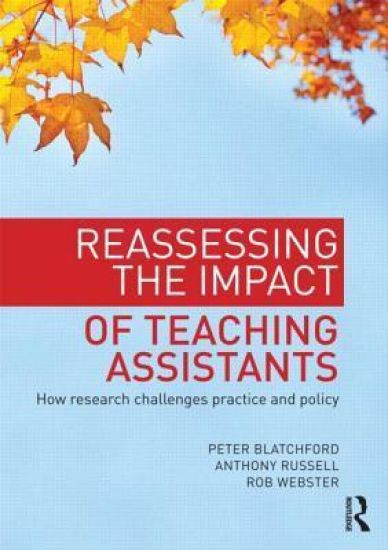
Reassessing the Impact of Teaching Assistants

Reassessing the Impact of Teaching Assistants

Peter Blatchford; Anthony Russell; Rob Webster

Routledge
2011
nidottu
Over the last decade, teaching assistants (TAs) have become an established part of everyday classroom life. TAs are often used by schools to help low-attaining pupils and those with special educational needs. Yet despite the huge rise in the number of TAs working in UK classrooms, very little is known about their impact on pupils. This key and timely text examines the impact of TAs on pupils’ learning and behaviour, and on teachers and teaching. The authors present the provocative findings from the ground-breaking and seminal Deployment and Impact of Support Staff (DISS) project. This was the largest, most in-depth study ever to be carried out in this field. It critically examined the effect of TA support on the academic progress of 8,200 pupils, made extensive observations of nearly 700 pupils and over 100 TAs, and collected data from over 17,800 questionnaire responses and interviews with over 470 school staff and pupils.This book reveals the extent to which the pupils in most need are let down by current classroom practice. The authors present a robust challenge to the current widespread practices concerning TA preparation, deployment and practice, structured around a conceptually and empirically strong explanatory framework. The authors go on to show how schools need to change if they are to realise the potential of TAs.With serious implications not just for classroom practice, but also whole-school, local authority and government policy, this will be an indispensable text for primary, secondary and special schools, senior management teams, those involved in teacher training and professional development, policy-makers and academics.
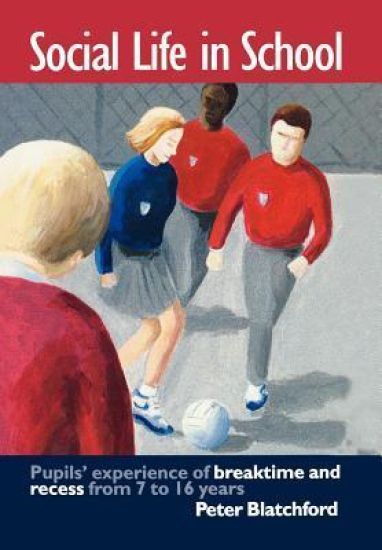
Social Life in School

Social Life in School

Peter Blatchford

Routledge Falmer
1998
sidottu
Are breaktimes really just a time of violence and bullying that could be better used for working? Based on a unique and fascinating longitudinal study of a group of pupils from primary to secondary school, the author of this timely new book proposes an alternative view. He believes that breaktime plays an important part in children's social development, and through his gathering of pupil's own views on breaktimes over a period of ten years, we see how breaktimes offer children time to play; to develop friendships; to build social networks; to develop social skills and competence; to be independent from adults; and to learn to manage conflict, aggression and inter-group relations. Where else will they learn these important skills if not in the playground? What will happen in a society where these skills are not developed?
Social Life in School

Social Life in School

Peter Blatchford

Routledge Falmer
1998
nidottu
Are breaktimes really just a time of violence and bullying that could be better used for working? Based on a unique and fascinating longitudinal study of a group of pupils from primary to secondary school, the author of this timely new book proposes an alternative view. He believes that breaktime plays an important part in children's social development, and through his gathering of pupil's own views on breaktimes over a period of ten years, we see how breaktimes offer children time to play; to develop friendships; to build social networks; to develop social skills and competence; to be independent from adults; and to learn to manage conflict, aggression and inter-group relations. Where else will they learn these important skills if not in the playground? What will happen in a society where these skills are not developed?