Kirjojen hintavertailu. Mukana 12 390 323 kirjaa ja 12 kauppaa.

Kirjailija

Peter Bloom

Kirjat ja teokset yhdessä paikassa: 25 kirjaa, julkaisuja vuosilta 1998-2026, suosituimpien joukossa Organizing Power. Vertaile teosten hintoja ja tarkista saatavuus suomalaisista kirjakaupoista.

25 kirjaa

Kirjojen julkaisuhaarukka 1998-2026.

CEO Society

CEO Society

Peter Bloom; Carl Rhodes

Zed Books Ltd
2018
nidottu
Chief Executive Officers (CEOs) have become the cultural icons of the 21st century. Figures like Steve Jobs and Mark Zuckerberg are held up as role models who epitomise the modern pursuit of innovation, wealth and success. We now live, Bloom and Rhodes argue, in a ‘CEO society’ – a society where corporate leadership has become the model for transforming not just business, but all spheres of life, where everyone from politicians to jobseekers to even those seeking love are expected to imitate the qualities of the lionized corporate executive.But why, in the wake of the failings exposed by the 2008 financial crisis, does the corporate ideal continue to exert such a grip on popular attitudes? In this insightful new book, Bloom and Rhodes examine the rise of the CEO society, and how it has started to transform governments, culture and the economy. This influence, they argue, holds troubling implications for the future of democracy - as evidenced by the disturbing political rise of Donald Trump in the US - and for our society as a whole.
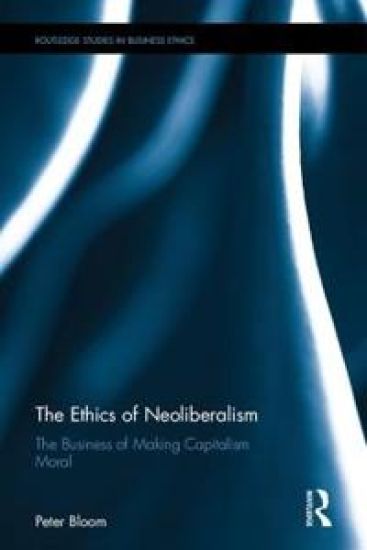
The Ethics of Neoliberalism

The Ethics of Neoliberalism

Peter Bloom

Routledge
2017
sidottu
The 21st century is the age of "neo-liberalism" – a time when the free market is spreading to all areas of economic, political and social life. Yet how is this changing our individual and collective ethics? Is capitalism also becoming our new morality? From the growing popular demand for corporate social responsibility to personal desire for "work-life balance" it would appear that non-market ideals are not only surviving but also thriving. Why then does it seem that capitalism remains as strong as ever?The Ethics of Neoliberalism boldly proposes that neoliberalism strategically co-opts traditional ethics to ideologically and structurally strengthen capitalism. It produces "the ethical capitalist subject" who is personally responsible for making their society, workplace and even their lives "more ethical" in the face of an immoral but seemingly permanent free market.Rather than altering our morality, neoliberalism "individualizes" ethics, making us personally responsible for dealing with and resolving its moral failings. In doing so, individuals end up perpetuating the very market system that they morally oppose and feel powerless to ultimately change. This analysis reveals the complex and paradoxical way capitalism is currently shaping us as "ethical subjects". People are increasingly asked to ethically "save" capitalism both collectively and personally. This can range from the "moral responsibility" to politically accept austerity following the financial crisis to the willingness of employees to sacrifice their time and energy to make their neoliberal organizations more "humane" to the efforts by individuals to contribute to their family and communities despite the pressures of a franetic global business environment. Neoliberalism, thus, uses our ethics against us, relying on our "good nature" and sense of personal responsibility to reduce its human cost in practice. Ironically
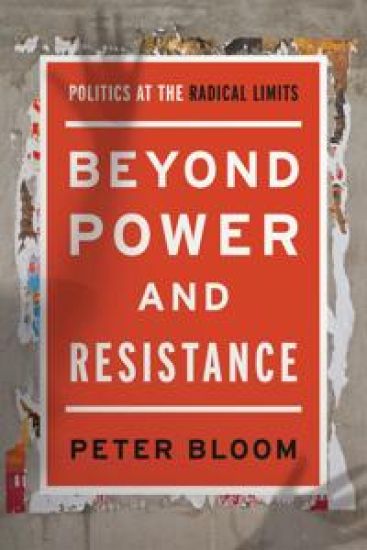
Beyond Power and Resistance

Beyond Power and Resistance

Peter Bloom

Rowman Littlefield International
2016
sidottu
Has political resistance has lost its ability to confront political and economic power and achieve social change? Despite its best intentions, resistance has often become incorporated and neutered before it achieves its aims, as new forms of power absorb it and turn it towards their own ends. Since the Enlightenment, the opposing forces of power and resistance have framed our view of society and politics. Exploring that development, this book shows how resistance can, ironically, reinforce existing status quos and fundamentally strengthen capitalist and colonial desires for “sovereignty” and “domination”. It highlights, therefore, the urgent need for new critical perspectives that breaks free from this imprisoning modern history. In this spirit, this book seeks to theorize the radical potential for a post-resistance existence and politics. One that exchanges a permanent revolution against authority with the discovery of novel forms of agency, social relations and the self that are currently lacking. That aims to construct economic and social systems based not on the possibility of freedom but enlarging the freedom of possibility. In the 21st century can we move beyond power and resistance to a politics at the radical limits that eternally expands what is socially possible?
Beyond Power and Resistance

Beyond Power and Resistance

Peter Bloom

Rowman Littlefield International
2016
nidottu
Has political resistance has lost its ability to confront political and economic power and achieve social change? Despite its best intentions, resistance has often become incorporated and neutered before it achieves its aims, as new forms of power absorb it and turn it towards their own ends. Since the Enlightenment, the opposing forces of power and resistance have framed our view of society and politics. Exploring that development, this book shows how resistance can, ironically, reinforce existing status quos and fundamentally strengthen capitalist and colonial desires for “sovereignty” and “domination”. It highlights, therefore, the urgent need for new critical perspectives that breaks free from this imprisoning modern history. In this spirit, this book seeks to theorize the radical potential for a post-resistance existence and politics. One that exchanges a permanent revolution against authority with the discovery of novel forms of agency, social relations and the self that are currently lacking. That aims to construct economic and social systems based not on the possibility of freedom but enlarging the freedom of possibility. In the 21st century can we move beyond power and resistance to a politics at the radical limits that eternally expands what is socially possible?
The Life of Berlioz

The Life of Berlioz

Peter Bloom

Cambridge University Press
1998
sidottu
The Life of Berlioz situates the celebrated French musician in the vibrant and highly politicized musical culture of the periods of the Bourbon Restoration, July Monarchy, Second Republic, and Second Empire in which he lived and worked as composer, conductor, concert manager, and writer. The author of the Symphonie fantastique was indeed possessed of a fertile and fantastical imagination; but the common image of Berlioz as a misunderstood and mistreated genius obscures both the solidity of his work as a musical architect and the reality of his position as one sometimes favored by those in power. Berlioz is the quintessential romantic composer by dint of the conspicuous intermingling of art and life that marks his musical and literary output. Studying this away from the subjective sentimentality that can still mar studies of the composer in France, serves only to enhance the uncommon radiance of his music and uncommon esprit of his art.