Kirjojen hintavertailu. Mukana 12 595 353 kirjaa ja 12 kauppaa.

Kirjailija

Peter Bondanella

Kirjat ja teokset yhdessä paikassa: 11 kirjaa, julkaisuja vuosilta 1987-2017, suosituimpien joukossa Umberto Eco and the Open Text. Vertaile teosten hintoja ja tarkista saatavuus suomalaisista kirjakaupoista.

11 kirjaa

Kirjojen julkaisuhaarukka 1987-2017.

Umberto Eco and the Open Text

Umberto Eco and the Open Text

Peter Bondanella

Cambridge University Press
2005
pokkari
Umberto Eco is Italy's most famous living intellectual, known among academics for his literary and cultural theories, and to an enormous international audience through his novels, The Name of the Rose, Foucault's Pendulum and The Island of the Day Before. Umberto Eco and the Open Text is the first comprehensive study in English of Eco's work. In clear and accessible language, Peter Bondanella considers not only Eco's most famous texts, but also many occasional essays not yet translated into English. Tracing Eco's intellectual development from early studies in medieval aesthetics to seminal works on popular culture, postmodern fiction, and semiotic theory, he shows how Eco's own fiction grows out of his literary and cultural theories. Bondanella cites all texts in English, and provides a full bibliography of works by and about Eco.
Umberto Eco and the Open Text

Umberto Eco and the Open Text

Peter Bondanella

Cambridge University Press
1997
sidottu
Umberto Eco is Italy’s most famous living intellectual, known among academics for his literary and cultural theories, and to an enormous international audience through his novels, The Name of the Rose, Foucault’s Pendulum and The Island of the Day Before. Umberto Eco and the Open Text is the first comprehensive study in English of Eco’s work. In clear and accessible language, Peter Bondanella considers not only Eco’s most famous texts, but also many occasional essays not yet translated into English. Tracing Eco’s intellectual development from early studies in medieval aesthetics to seminal works on popular culture, postmodern fiction, and semiotic theory, he shows how Eco’s own fiction grows out of his literary and cultural theories. Bondanella cites all texts in English, and provides a full bibliography of works by and about Eco.
A History of Italian Cinema

A History of Italian Cinema

Peter Bondanella; Federico Pacchioni

Bloomsbury Academic USA
2017
nidottu
A History of Italian Cinema, 2nd edition is the much anticipated update from the author of the bestselling Italian Cinema - which has been published in four landmark editions and will celebrate its 35th anniversary in 2018. Building upon decades of research, Peter Bondanella and Federico Pacchioni reorganize the current History in order to keep the book fresh and responsive not only to the actual films being created in Italy in the twenty-first century but also to the rapidly changing priorities of Italian film studies and film scholars.The new edition brings the definitive history of the subject, from the birth of cinema to the present day, up to date with a revised filmography as well as more focused attention on the melodrama, the crime film, and the historical drama. The book is expanded to include a new generation of directors as well as to highlight themes such as gender issues, immigration, and media politics. Accessible, comprehensive, and heavily illustrated throughout, this is an essential purchase for any fan of Italian film.
The Italian Cinema Book

The Italian Cinema Book

Peter Bondanella

BFI Publishing
2014
nidottu
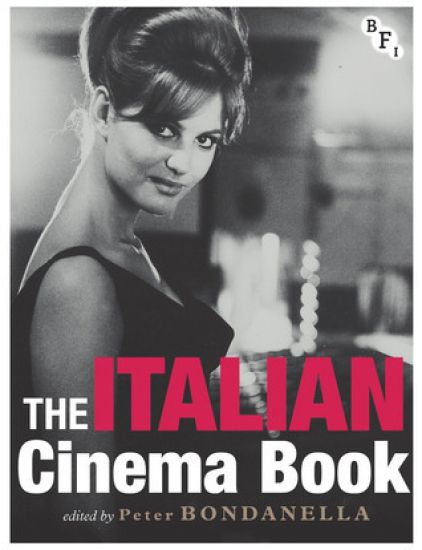
THE ITALIAN CINEMA BOOK is an essential guide to the most important historical, aesthetic and cultural aspects of Italian cinema, from 1895 to the present day. With contributions from 39 leading international scholars, the book is structured around six chronologically organised sections: THE SILENT ERA (1895–22)THE BIRTH OF THE TALKIES AND THE FASCIST ERA (1922–45)POSTWAR CINEMATIC CULTURE (1945–59)THE GOLDEN AGE OF ITALIAN CINEMA (1960–80)AN AGE OF CRISIS, TRANSITION AND CONSOLIDATION (1981 TO THE PRESENT)NEW DIRECTIONS IN CRITICAL APPROACHES TO ITALIAN CINEMA Acutely aware of the contemporary 'rethinking' of Italian cinema history, Peter Bondanella has brought together a diverse range of essays which represent the cutting edge of Italian film theory and criticism. This provocative collection will provide the film student, scholar or enthusiast with a comprehensive understanding of the major developments in what might be called twentieth-century Italy's greatest and most original art form.
The Films of Federico Fellini

The Films of Federico Fellini

Peter Bondanella

Cambridge University Press
2002
pokkari
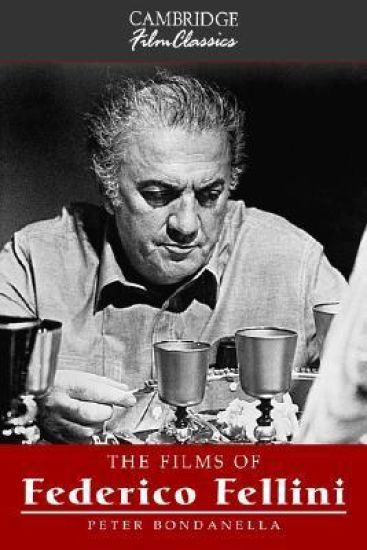
The Films of Federico Fellini examines the career of one of Italy’s most renowned filmmakers through close analysis of five masterpieces that span his career: La Strada, La Dolce Vita, 8 1/2, Amarcord and Interview. Providing an overview of Fellini’s early career as a cartoonist and scriptwriter for neorealist directors such as Roberto Rossellini, this study traces the development of Fellini’s unique and personal cinematic vision as it transcends Italian neorealism. Rejecting an overtly ideological approach to Fellini’s cinema, Bondanella emphasizes the director’s interest in fantasy, the irrational and individualism.
Cassell Dictionary Italian Literature

Cassell Dictionary Italian Literature

Peter Bondanella; Julia Conway Bondanella

Continuum International Publishing Group Ltd.
1999
nidottu
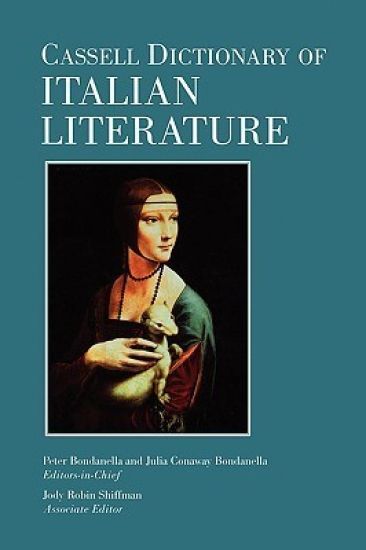
The Cassell Dictionary of Italian Literature includes some 400 entries on major and minor Italian writers from the twelfth century to the present day; on Italian metrics and poetic forms or genres; and on literary or critical schools, periods, problems and movements. In addition there are specific entries on Italian Literature, Film and art, as well as feminism, post-modernism and other topics of contemporary interest.
Dictionary of Italian Literature

Dictionary of Italian Literature

Peter Bondanella; Julia C. Bondanella; Jody R. Shiffman

Greenwood Press
1996
sidottu
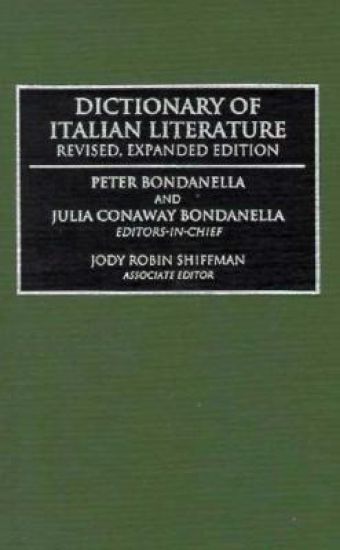
This revised and expanded edition of the only English-language dictionary of Italian literature provides some 400 alphabetically arranged entries on Italian writers, periods, literary movements, and versification, and on critical problems related to literary history. The volume covers Italian literature from the Middle Ages to the present and includes a number of new entries for contemporary writers. The entries, written by expert contributors, include current bibliographical information and have often been updated to reflect new scholarship. Unlike most Italian dictionaries, this book is aimed specifically at the English-language market and provides copious information on English translations as well as a guide to Italian literature in comparative contexts. Entries are arranged alphabetically and include extensive cross-references. Each entry provides a basic identification of the term, followed by a more extensive discussion of the term's background and significance. A bibliography concludes each entry, and citations reflect the most current general works on the topic. Unlike most Italian dictionaries, this volume is aimed specifically at the user whose primary language is English. All Italian titles have been translated, and the entries provide copious information on English translations of Italian works. Appendices trace the chronological development of Italian literature and place it within the larger context of world literature, history, and culture.
The Cinema of Federico Fellini

The Cinema of Federico Fellini

Peter Bondanella

Princeton University Press
1992
pokkari
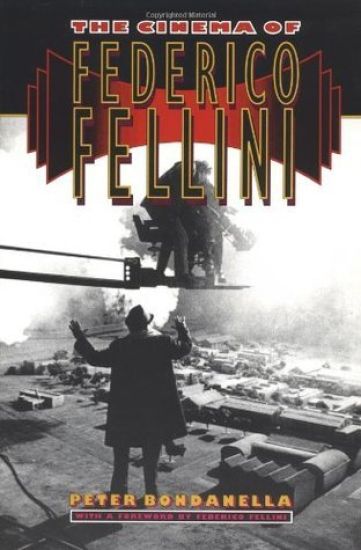
This major artistic biography of Federico Fellini shows how his exuberant imagination has been shaped by popular culture, literature, and his encounter with the ideas of C. G. Jung, especially Jungian dream interpretation. Covering Fellini's entire career, the book links his mature accomplishments to his first employment as a cartoonist, gagman, and sketch-artist during the Fascist era and his development as a leading neo-realist scriptwriter. Peter Bondanella thoroughly explores key Fellinian themes to reveal the director's growth not only as an artistic master of the visual image but also as an astute interpreter of culture and politics. Throughout the book Bondanella draws on a new archive of several dozen manuscripts, obtained from Fellini and his scriptwriters. These previously unexamined documents allow a comprehensive treatment of Fellini's important part in the rise of Italian neorealism and the even more decisive role that he played in the evolution of Italian cinema beyond neorealism in the 1950s. By probing Fellini's recurring themes, Bondanella reinterprets the visual qualities of the director's body of work--and also discloses in the films a critical and intellectual vitality often hidden by Fellini's reputation as a storyteller and entertainer. After two chapters on Fellini's precinematic career, the book covers all the films to date in analytical chapters arranged by topic: Fellini and his growth beyond his neorealist apprenticeship, dreams and metacinema, literature and cinema, Fellini and politics, Fellini and the image of women, and La voce della luna and the cinema of poetry.
La Strada

La Strada

Peter Bondanella

Rutgers University Press
1987
nidottu
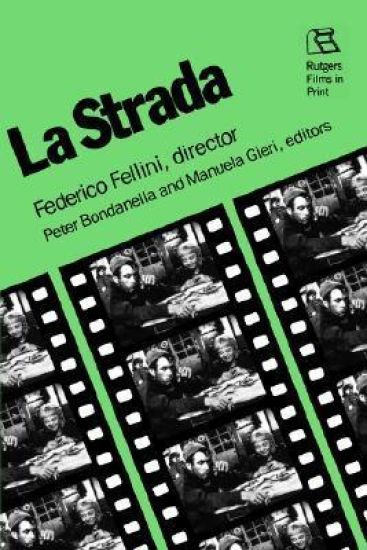
The performances by Giulietta Masina as the waif Gelsomina, Richard Basehart as the fool, and Anthony Quinn as the strongman Zampano, have been acclaimed for their power and sometimes ridiculed for their sentimentality. The debates over what these characters and the story represent, and the position of the film within the neorealist genre, continue today. This translation and critical edition of the continuity script for "La Strada" is a guide to the film. The notes to the shooting script enable the reader to reconstruct some of Fellini's changes while shooting the film. The edition also contains an introduction, which analyzes the work's place in film history and provides a number of articles on the film's production. Fellini's most interviews and statements on "La Strada" are included as well.