Kirjojen hintavertailu. Mukana 12 595 353 kirjaa ja 12 kauppaa.

Kirjailija

Peter Brears

Kirjat ja teokset yhdessä paikassa: 9 kirjaa, julkaisuja vuosilta 2010-2026, suosituimpien joukossa Jellies and Their Moulds. Vertaile teosten hintoja ja tarkista saatavuus suomalaisista kirjakaupoista.

9 kirjaa

Kirjojen julkaisuhaarukka 2010-2026.

Jellies and Their Moulds

Jellies and Their Moulds

Peter Brears

Prospect Books
2010
nidottu
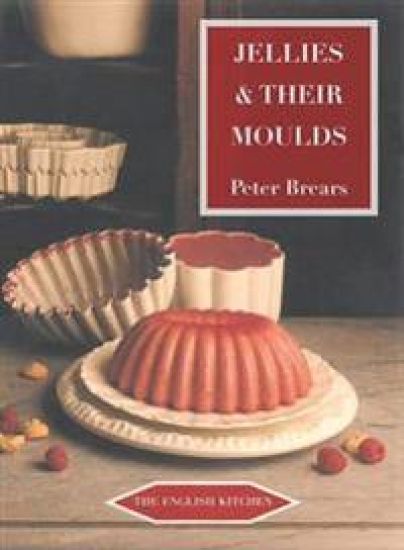
Peter Brears has a long acquaintance with jellies in every guise. He was fed them in childhood, he turned to curating their moulds and associated artefacts while director of York and Leeds museums, he has made them for innumerable historical food shows and events.And jelly is a much bigger thing than some packet from the supermarket mixed with boiling water. In the first place, it was not factory-made gelatine that did the setting, but any number of ingenious adaptations of kitchen materials and ingredients. In the second, it was not just a simple clear, coloured solid, but an optical prism to show off and transform the foods contained within it. It was the cook's greatest resource for introducing colour, variety and delight into the table display.The book sketches in the history of jellies, particularly in England, and discusses their place within a meal; gives several recipes based on the various setting agents (carrageen, gelatine, isinglass) and also for cereal moulds (flummery, tapioca, semolina, rice, cornflour, etc.); describes how jellies may be assembled by layering, embedding, lining and inclusion of fruit, nuts, gold, etc.; and gives an excellent illustrated account of the various forms of jelly moulds.
Cooking & Dining in Georgian England

Cooking & Dining in Georgian England

Peter Brears

EQUINOX PUBLISHING LTD
2026
sidottu
With unlimited wealth drawn from land and international trade, the upper classes of Georgian England were able to enjoy the most lavish foods and lifestyles. This was only made possible, however, by massively investing in suites of huge new kitchen offices, and having the most up-to-date fixtures and equipment and a highly-trained staff. French cooks and confectioners were among the country's most highly-paid professionals as rich families competed to provide the finest entertainments. Though on lower wages, the largely English butlers, housekeepers, maids and footmen ensured that all meals were served in the most elegant manner in magnificent dining rooms provided with some of the world's best gold and silver, porcelain, glassware and furniture. This was the age of Robert Adam, Thomas Chippendale, Josiah Wedgwood, and Paul Storr. As in the three preceding volumes of this unique series, this book draws on over thirty years of research into the records, buildings, artefacts and manners of the period to follow foods from their arrival through to serving at the table. It does this by describing each department in turn, including specially-prepared measured drawings and illustrations of their structures, equipment, products and staffs. Moving on into the dining room table settings, meals and manners are all then detailed in a similar way and the text is accompanied by 93 illustrations and line drawings . Since it is essential to use all the senses when studying food, numerous Georgian recipes that can be followed using currently available ingredients have also been provided. Now for the first time, re-enactors and all others can dine in Georgian authenticity by using a single book.
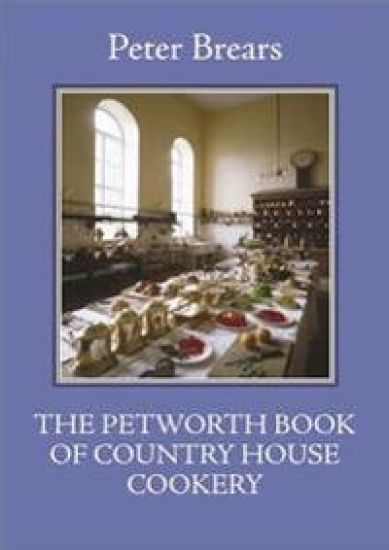
The Petworth Book of Country House Cooking
Petworth House has been the home of the Leconfield family since it was granted to them by Queen Adeliza, the second wife of Henry I, in 1150. The kitchens dealt with a myriad of natural ingredients from eels and oysters to black pudding and quince jellies. The recipes include Oeufs Soubise made with onion and cream, Petworth Venison Pie, Mint Ice, Friar's Omelette, an apple pudding which in fact has no eggs, and delicious Carrolines au Parmesan, savory cheese-filled eclairs.Peter Brears is former director of the Leeds City Museums and one of England's foremost authorities on domestic artifacts, historical kitchens, and cooking technology.
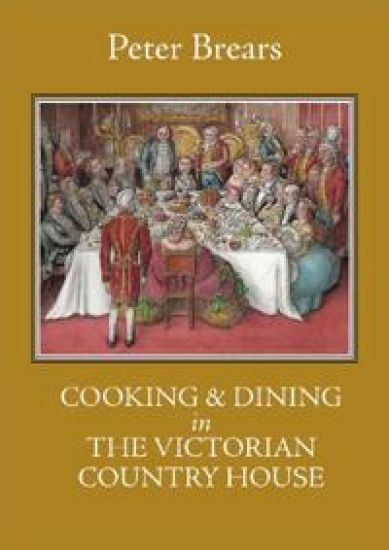
Cooking & Dining in the Victorian Country House
For centuries the food cooked in our country houses was the finest available, its variety greatly expanded by Victorian investment in new technology and professional cooks who were employed in the country houses. Adventurous, international trade in the Victorian period also meant that new ingredients became available. This great culinary tradition began its decline around the time of the First World War, and collapsed with the outbreak of war in 1939. Now, over eighty years later, it remains forgotten, as even those who experienced its final stages have passed away. Hopefully Peter Brears' book will go a long way in reviving interest in it, and encouraging further appreciation and enjoyment of all its diverse aspects.
The Real Wuthering Heights

The Real Wuthering Heights

Steven Wood; Peter Brears; Tony Robinson

Amberley Publishing
2016
nidottu
Top Withins farm on Stanbury Moor, West Yorkshire, is internationally famous as the inspiration for Emily Brontë’s Wuthering Heights and is visited by hundreds of thousands of people from all over the world every year. Apart from the Brontë connection, it stands on the Pennine Way and is one of the highlights for the many who walk it each year. As well as tracing the history of the Withins farms and their inhabitants from 1567 to the present day, this book looks at the everyday life of the farmers who lived there. It gives a full account of the building history, farming practices, textile production and domestic life over the years, illustrated by Peter Brears’ splendid reconstructions of the buildings and their interiors and of the tools and utensils used in farming, weaving and cooking. A walk from Stanbury to Top Withins and back to Haworth is described in detail, including the history of all the farms that are passed on the way. Many of these are now almost forgotten, but a surprising amount of information about them is included. The final chapter gives a full account of the life and work of Timmy Feather, the last of the handloom weavers on these moors. This book is the most complete and wide-ranging account of the life and work of a South Pennine hill farm ever attempted and is of relevance far beyond the small area with which it deals. It will appeal to all who are interested in the history of Yorkshire, to Brontë enthusiasts and to Pennine Way walkers.
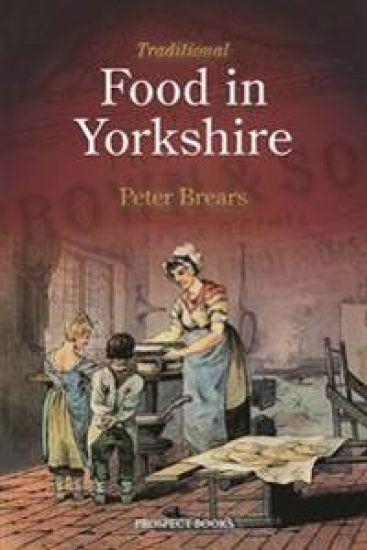
Traditional Food in Yorkshire

Traditional Food in Yorkshire

Peter Brears

Prospect Books
2014
sidottu
There has been no serious consideration of local food in England. Most available material is lightweight, not very informative, and a waste of time for serious students. Prospect Books is about to change this, in the first instance with respect to the north country. Last year Peter Brears publishedTraditional Food in Northumbria(Excellent Press). This title has now been taken on by Prospect Books. The next county for treatment is Yorkshire, the author s home. He has already written on this subject (John Donald, 1987) but this new work is double the length, with many more illustrations and supporting material.The book opens with a survey of the various economic and social groups in the county. progresses to a study of cooking, fuel and installations, then concentrates in a series of single subject chapters on staple foods porridge, oatcake, bread, meat, fish, puddings, and cakes. There then follows chapters on dairy products and drinks, and closes with a folkloric survey of feats, fairs and calendar customers, and rites of passage such as headwashings, weddings and funerals."
Cooking and Dining in Medieval England

Cooking and Dining in Medieval England

Peter Brears

Prospect Books
2012
nidottu
The history of medieval food and cookery has received a fair amount of attention from the point of view of recipes (of which many survive) and of the general context of feasts and feasting. It has never, as yet, been studied with an eye to the real mechanics of food production and service: the equipment used, the household organisation, the architectural arrangements for kitchens, store-rooms, pantries, larders, cellars, and domestic administration. This new work by Peter Brears, perhaps Britain's foremost expert on the historical kitchen, looks at these important elements of cooking and dining. A series of chapters looks at the cooking departments in large households: the counting house, dairy, brewhouse, pastry, boiling house and kitchen. These are illustrated by architectural perspectives of surviving examples in castles and manor houses throughout the land. There are chapters dealing with the various sorts of kitchen equipment: fires, fuel, pots and pans. Sections are then devoted to recipes and types of food cooked. The recipes are those which have been used and tested by Peter Brears in hundreds of demonstrations to the public and cooking for museum displays.Finally there are chapters on the service of dinner and the rituals that grew up around these. Here, Peter Brears has drawn a strip cartoon of the serving of a great feast (the washing of hands, the delivery of napery, the tasting for poison, etc.) which will be of permanent utility to historical re-enactors who wish to get their details right.
The Country House Kitchen 1650-1900

The Country House Kitchen 1650-1900

Pamela A Sambrook; Peter Brears

The History Press Ltd
2010
nidottu
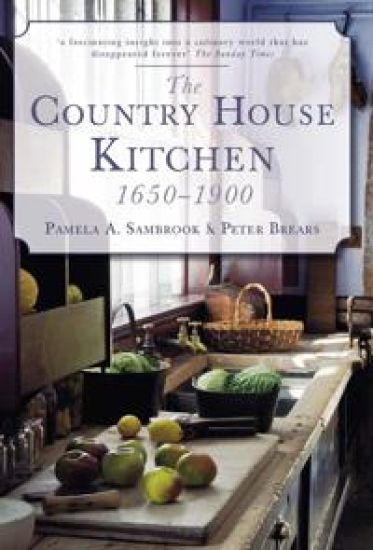
The kitchen was very much the heart of the home in country houses the length and breadth of Britain. Although this hive of activity was kept behind closed doors and often hidden away in the bowels of vast mansions, these rooms ensured that the house and those who lived in it were provisioned. Country houses were formerly self-sufficient to an incredible degree, requiring a range of purpose-built accommodation for food storage and a hierarchy of servants with unique skills. From brewing and baking through to distilling, working in the dairy and even ice-storage, this book offers an intimate look at the ingenuity and creativity that kept these kitchens running smoothly. It also explores the evolution of the kitchen range, cooking techniques, vessels and gadgets and the kitchen staff who used them, as well as the relationship between kitchen, servery and dining room. This book is a must-read for anyone interested in food, history and country houses, revealing how, above and below stairs, good food was always on the table.