Kirjojen hintavertailu. Mukana 12 595 353 kirjaa ja 12 kauppaa.

Kirjailija

Peter Brooks

Kirjat ja teokset yhdessä paikassa: 25 kirjaa, julkaisuja vuosilta 1992-2025, suosituimpien joukossa Chungleberry Bunting Learns to Fly. Vertaile teosten hintoja ja tarkista saatavuus suomalaisista kirjakaupoista.

25 kirjaa

Kirjojen julkaisuhaarukka 1992-2025.

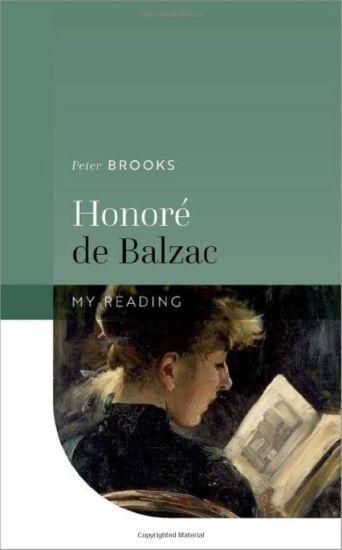
Honoré de Balzac

Honoré de Balzac

Peter Brooks

Oxford University Press
2022
sidottu
A book on the experience of reading Honoré de Balzac's La Comédie humaine which recounts the process of Peter Brooks's own discovery of Balzac. A personal account of coming to terms with Balzac: moving from more classical and restrained authors to the highly-coloured melodramatic novels of the Human Comedy, which give us the dynamics of a new and challenging world on the threshold of modernity. This volume shows readers how to read, and to love reading, Balzac, and how to engage with his vast work.
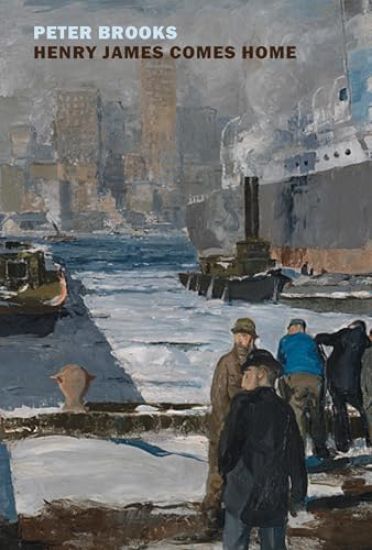
Henry James Comes Home

Henry James Comes Home

Peter Brooks

New York Review Books
2025
nidottu
In this enthralling re-creation of American novelist Henry James' famous ten-month trip around the United States, lauded critic Peter Brooks brings to life both the literary giant and America in its Gilded Age. In 1904, after two decades of living and travelling abroad, Henry James returned to the United States to discover a world drastically different from the one he had left behind. Suddenly, the future of world seemed to be in his native land, which he had once considered provincial, lacking in nourishment for the novelist. James thus set forth to refamiliarize himself with the United States, travelling the width and breadth of the land and exercising his acute powers of observation to document all that he saw. James's ten-month journey across America and its product, the ethnographic work The American Scene, are the focus of Henry James Comes Home, scholar and literary critic Peter Brooks's dazzling follow-up to his book Henry James Goes to Paris. Brooks combines biography and criticism to recreate James's American journey, tracing his travels around New England, down south to Florida, across the Midwest, up the coast of California and eventually to Seattle and Portland. For James, being American was "a complex fate," and Brooks shows how James's keen remarks on rampant materialism and the challenges at the heart of democracy are still of enduring relevance to us in this day.
Seduced by Story

Seduced by Story

Peter Brooks

New York Review Books
2022
nidottu
In this spiritual sequel to his influential Reading for the Plot, Peter Brooks examines the dangerously alluring power of storytelling. "'There's nothing in the world more powerful than a good story. Nothing can stop it. Nothing can defeat it.' Thus spake Tyrion in the final episode of Game of Thrones, claiming the throne for Bran the Broken. Many viewers liked neither the choice of king nor its rationale. But the claim that story brings you to world dominance seems by now so banal that it's common wisdom. Narrative seems to have become accepted as the one and only form of knowledge and speech that regulates human affairs. So begins the scholar and literary critic Peter Brooks's reckoning with today's flourishing cult of story. Forty years after Brooks published his seminal work Reading for the Plot, his own important contribution to what came to be known as the "narrative turn" in contemporary criticism and philosophy, he returns to question the unquestioning fashion in which story is now embraced as excuse or explanation and the fact that every brand or politician comes equipped with one. In a discussion that ranges from Gone Girl to legal argument, to the power storytellers exercise over their audiences, to what it means for readers and listeners to project themselves imaginatively into fictional characters, Brooks reminds us that among the powers of narrative is the power to deceive. Precisely because story does command our attention so, we must be skeptical of it and cultivate ways of thinking about our world and ourselves that run counter to our penchant for a good story.
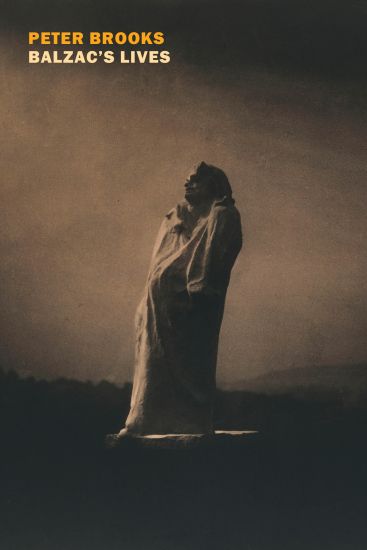
Balzac's Lives

Balzac's Lives

Peter Brooks

The New York Review of Books, Inc
2020
nidottu
Enter the mind of French literary giant Honor de Balzac with this groundbreaking biography that illuminates the writer's life and era through close study of the unforgettable characters and places in Balzac's expansive and inimitable works. Peter Brook's Balzac's Lives is a biography like no other, a vivid and searching portrait of the great novelist that is based on a close examination of the extraordinary characters that throng his work. More than anyone, Balzac invented the nineteenth-century novel, with its interwoven plots and diverse and overlapping realities, political, economic, domestic, psychological; indeed, Oscar Wilde went so far as to say that Balzac invented the nineteenth century It was, in any case, above all the wonderful, unforgettable, extravagant characters he dreamed up and made flesh--entrepreneurs, bankers, inventors, industrialists, poets, artists, bohemians of both sexes, journalists, aristocrats, politicians, prostitutes--that allowed Balzac to bring to life the dynamic forces of the new era that ushered in our own. Brooks singles out the capitalist Gobseck, the aspiring writer Lucien de Rubembr , the ambitious politican Rastignac, the gay criminal mastermind, Collin, among others, to disclose the secret workings of a great writer's inner world.
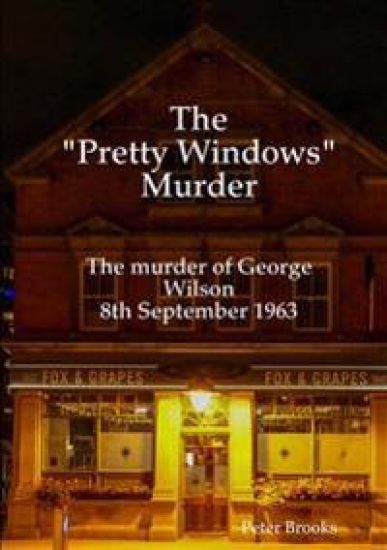
The "Pretty Windows" Murder: The murder of George Wilson 8th September 1963
In 1963 George Wilson, the landlord of the Fox and Grapes public house in Sneinton, Nottingham was brutally stabbed to death outside his pub. The pub was known to all of the citizens of Nottingham as "The Pretty Windows" and this name became synonymous with one of Nottingham's most vicious and frenzied murders.George Wilson's attacker was never brought to justice.This book charts a brief history of Sneinton and the part that the pub played, and still plays, in the local community. It uses contemporary newspaper reports to examine the murder, and explores the possible links to other murders committed in the same area in the years immediately prior to and just after 1963.
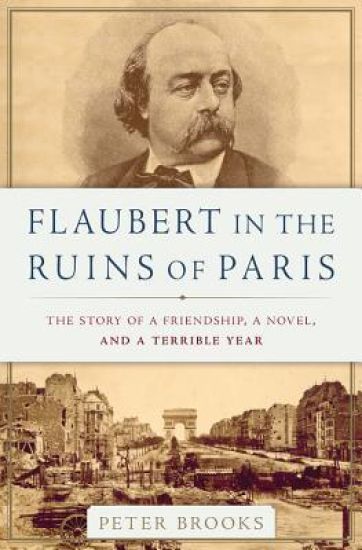
Flaubert in the Ruins of Paris

Flaubert in the Ruins of Paris

Peter Brooks

Basic Books
2017
sidottu
In 1869, Gustave Flaubert published what he considered to be his masterwork novel, A Sentimental Education, which told a deeply human and deeply pessimistic story of the 1848 revolutions. The book was a critical and commercial flop. Flaubert was devastated.
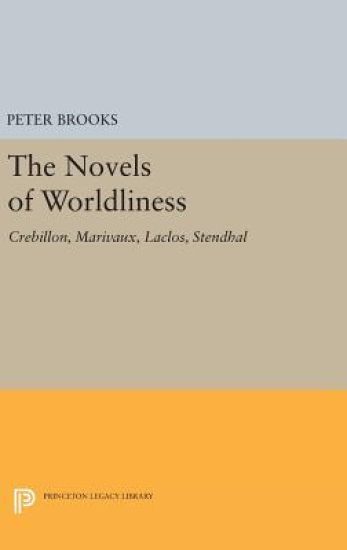
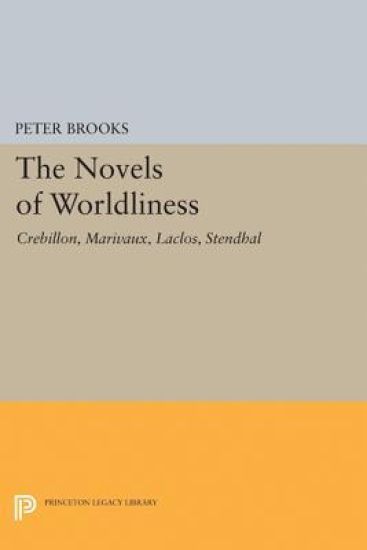
The Novel of Worldliness

The Novel of Worldliness

Peter Brooks

Princeton University Press
2016
sidottu
Contending that a search for "realism" distorts the writing of Crebillon, Marivaux, Laclos, and Stendahl, Peter Brooks considers their novels with reference to the manner in which the characters explore their worth and pursue their own systems of relationships. The novels discussed are used as examples of the fictional exploitation of the drama inherent in man's social existence and the encounters of personal styles within the framework and code provided by a coterie which is an object of conscious cultivation for its own sake. The author gives detailed readings of the four authors' works and moves backward to consider the seventeenth-century moralistes and the drawing rooms in which literary forms applied to social man were eloquently elaborated. Originally published in 1969. The Princeton Legacy Library uses the latest print-on-demand technology to again make available previously out-of-print books from the distinguished backlist of Princeton University Press. These editions preserve the original texts of these important books while presenting them in durable paperback and hardcover editions. The goal of the Princeton Legacy Library is to vastly increase access to the rich scholarly heritage found in the thousands of books published by Princeton University Press since its founding in 1905.
The Novel of Worldliness

The Novel of Worldliness

Peter Brooks

Princeton University Press
2015
pokkari
Contending that a search for "realism" distorts the writing of Crebillon, Marivaux, Laclos, and Stendahl, Peter Brooks considers their novels with reference to the manner in which the characters explore their worth and pursue their own systems of relationships. The novels discussed are used as examples of the fictional exploitation of the drama inherent in man's social existence and the encounters of personal styles within the framework and code provided by a coterie which is an object of conscious cultivation for its own sake. The author gives detailed readings of the four authors' works and moves backward to consider the seventeenth-century moralistes and the drawing rooms in which literary forms applied to social man were eloquently elaborated. Originally published in 1969. The Princeton Legacy Library uses the latest print-on-demand technology to again make available previously out-of-print books from the distinguished backlist of Princeton University Press. These editions preserve the original texts of these important books while presenting them in durable paperback and hardcover editions. The goal of the Princeton Legacy Library is to vastly increase access to the rich scholarly heritage found in the thousands of books published by Princeton University Press since its founding in 1905.
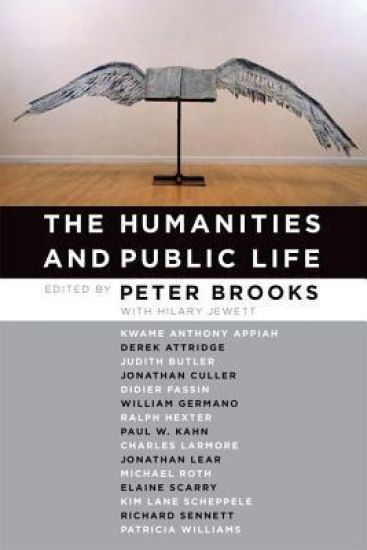
The Humanities and Public Life

The Humanities and Public Life

Peter Brooks

Fordham University Press
2014
pokkari
This book tests the proposition that the humanities can, and at their best do, represent a commitment to ethical reading. And that this commitment, and the training and discipline of close reading that underlie it, represent something that the humanities need to bring to other fields: to professional training and to public life. What leverage does reading, of the attentive sort practiced in the interpretive humanities, give you on life? Does such reading represent or produce an ethics? The question was posed for many in the humanities by the "Torture Memos" released by the Justice Department a few years ago, presenting arguments that justified the use of torture by the U.S. government with the most twisted, ingenious, perverse, and unethical interpretation of legal texts. No one trained in the rigorous analysis of poetry could possibly engage in such bad-faith interpretation without professional conscience intervening to say: This is not possible. Teaching the humanities appears to many to be an increasingly disempowered profession—and status—within American culture. Yet training in the ability to read critically the messages with which society, politics, and culture bombard us may be more necessary than ever in a world in which the manipulation of minds and hearts is more and more what running the world is all about. This volume brings together a group of distinguished scholars and intellectuals to debate the public role and importance of the humanities. Their exchange suggests that Shelley was not wrong to insist that poets are the unacknowledged legislators of mankind: Cultural change carries everything in its wake. The attentive interpretive reading practiced in the humanities ought to be an export commodity to other fields and to take its place in the public sphere.
The Humanities and Public Life

The Humanities and Public Life

Peter Brooks

Fordham University Press
2014
sidottu
This book tests the proposition that the humanities can, and at their best do, represent a commitment to ethical reading. And that this commitment, and the training and discipline of close reading that underlie it, represent something that the humanities need to bring to other fields: to professional training and to public life. What leverage does reading, of the attentive sort practiced in the interpretive humanities, give you on life? Does such reading represent or produce an ethics? The question was posed for many in the humanities by the “Torture Memos” released by the Justice Department a few years ago, presenting arguments that justified the use of torture by the U.S. government with the most twisted, ingenious, perverse, and unethical interpretation of legal texts. No one trained in the rigorous analysis of poetry could possibly engage in such bad-faith interpretation without professional conscience intervening to say: This is not possible. Teaching the humanities appears to many to be an increasingly disempowered profession—and status—within American culture. Yet training in the ability to read critically the messages with which society, politics, and culture bombard us may be more necessary than ever in a world in which the manipulation of minds and hearts is more and more what running the world is all about. This volume brings together a group of distinguished scholars and intellectuals to debate the public role and importance of the humanities. Their exchange suggests that Shelley was not wrong to insist that poets are the unacknowledged legislators of mankind: Cultural change carries everything in its wake. The attentive interpretive reading practiced in the humanities ought to be an export commodity to other fields and to take its place in the public sphere.
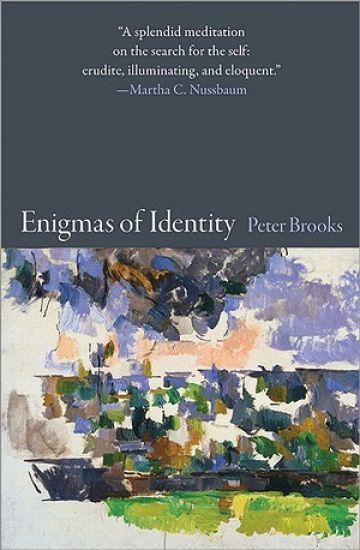
Enigmas of Identity

Enigmas of Identity

Peter Brooks

Princeton University Press
2013
pokkari
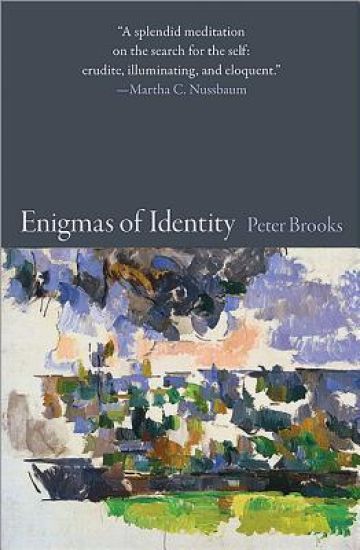
"We know that it matters crucially to be able to say who we are, why we are here, and where we are going," Peter Brooks writes in Enigmas of Identity. Many of us are also uncomfortably aware that we cannot provide a convincing account of our identity to others or even ourselves. Despite or because of that failure, we keep searching for identity, making it up, trying to authenticate it, and inventing excuses for our unpersuasive stories about it. This wide-ranging book draws on literature, law, and psychoanalysis to examine important aspects of the emergence of identity as a peculiarly modern preoccupation. In particular, the book addresses the social, legal, and personal anxieties provoked by the rise of individualism and selfhood in modern culture. Paying special attention to Rousseau, Freud, and Proust, Brooks also looks at the intersection of individual life stories with the law, and considers the creation of an introspective project that culminates in psychoanalysis. Elegant and provocative, Enigmas of Identity offers new insights into the questions and clues about who we think we are.
Enigmas of Identity

Enigmas of Identity

Peter Brooks

Princeton University Press
2011
sidottu
"We know that it matters crucially to be able to say who we are, why we are here, and where we are going," Peter Brooks writes in Enigmas of Identity. Many of us are also uncomfortably aware that we cannot provide a convincing account of our identity to others or even ourselves. Despite or because of that failure, we keep searching for identity, making it up, trying to authenticate it, and inventing excuses for our unpersuasive stories about it. This wide-ranging book draws on literature, law, and psychoanalysis to examine important aspects of the emergence of identity as a peculiarly modern preoccupation. In particular, the book addresses the social, legal, and personal anxieties provoked by the rise of individualism and selfhood in modern culture. Paying special attention to Rousseau, Freud, and Proust, Brooks also looks at the intersection of individual life stories with the law, and considers the creation of an introspective project that culminates in psychoanalysis. Elegant and provocative, Enigmas of Identity offers new insights into the questions and clues about who we think we are.
The Emperor's Body

The Emperor's Body

Peter Brooks

WW Norton Co
2011
sidottu
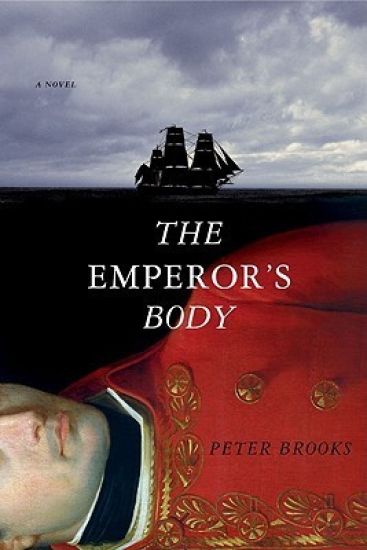
Against the historical backdrop of the French expedition in 1840 to retrieve Napoleon's body from Saint Helena, two men and a woman find themselves engulfed in long-dormant and dangerous political passions. Philippe de Rohan-Chabot, an aristocratic young diplomat, is charged with bringing the body from the island prison where Napoleon died to a glorious tomb at Les Invalides in Paris. Chabot's rival is the aging diplomat and author Henri Beyle, known to posterity as Stendhal. The enigmatic and impulsive Amelia Curial must free herself from the shadow of her mother's scandalous loves and untimely death, and from the life of stale convention that her family urges upon her. The dead emperor is a token in a political game to appease the enemies of the monarchy, but that gamble imperils the king's rule and a new revolution looms. Meanwhile, the interplay of the three central characters traces a delicate pattern of romance, longing, misunderstanding, and the obstacles to the pursuit of happiness.
Henry James Goes to Paris

Henry James Goes to Paris

Peter Brooks

Princeton University Press
2008
pokkari
Henry James's reputation as The Master is so familiar that it's hard to imagine he was ever someone on whom some things really were lost. This is the story of the year--1875 to 1876--when the young novelist moved to Paris, drawn by his literary idols living at the center of the early modern movement in art. As Peter Brooks skillfully recounts, James largely failed to appreciate or even understand the new artistic developments teeming around him during his Paris sojourn. But living in England twenty years later, he would recall the aesthetic lessons of Paris, and his memories of the radical perspectives opened up by French novelists and painters would help transform James into the writer of his adventurous later fiction. A narrative that combines biography and criticism and uses James's writings to tell the story from his point of view, Henry James Goes to Paris vividly brings to life the young American artist's Paris year--and its momentous artistic and personal consequences. James's Paris story is one of enchantment and disenchantment. He initially loved Paris, he succeeded in meeting all the writers he admired (Turgenev, Flaubert, Zola, Maupassant, Goncourt, and Daudet), and he witnessed the latest development in French painting, Impressionism. But James largely found the writers disappointing, and he completely misunderstood the paintings he saw. He also seems to have fallen in and out of love in a more ordinary sense--with a young Russian aesthete, Paul Zhukovsky. Disillusioned, James soon retreated to England--for good. But James would eventually be changed forever by his memories of Paris.
Realist Vision

Realist Vision

Peter Brooks

Yale University Press
2008
pokkari
A lively and distinctive look at realism in great modern books and art?Realist Vision exploresthe claim to represent the world “as it is.” Peter Brooks takes a new look at the realist tradition and its intense interest in the visual. Discussing major English and French novels and paintings from the nineteenth and twentieth centuries, Brooks provides a lively and perceptive view of the realist project. Centering each chapter on a single novel or group of paintings, Brooks examines the “invention” of realism beginning with Balzac and Dickens, its apogee in the work of such as Flaubert, Eliot, and Zola, and its continuing force in James and modernists such as Woolf. He considers also the painting of Courbet, Manet, Caillebotte, Tissot, and Lucian Freud, and such recent phenomena as “photorealism” and “reality TV.”