

Kirjailija
Peter Byrne
Kirjat ja teokset yhdessä paikassa: 15 kirjaa, julkaisuja vuosilta 1998-2021, suosituimpien joukossa Viele Welten. Vertaile teosten hintoja ja tarkista saatavuus suomalaisista kirjakaupoista.
15 kirjaa
Kirjojen julkaisuhaarukka 1998-2021.

A novel... a rollicking tale of adventure and action centering around the poem, THE GREEN EYE OF THE LITTLE YELLOW GOD and involving jewel smuggling, rogues, thugs, murder, torture, a monstrous character, a professional international courier and his tough Sherpa henchman and a beautiful Australian partner... a racy story set in England, India and the Nepal Himalaya.

Peter Byrne's autobiography. An adventurous life that embraces WW II service in the Royal Air Force, tea planting in north India, big game hunting in South East Asia, Yeti hunting in the Nepal Himalaya, international professional river-running, Bigfoot hunting and research in the Pacific NW of the U.S., romance and love affairs, humor, anecdotes ... adventures unlimited.
This study offers students of religion and philosophy introductory chapters concerning the concept of natural religion. It holds that we can’t engage in useful discussion about the present concept of religion without a knowledge of the philosophical history that has shaped that concept. This is discussed with reference to the notion of natural religion to illustrate certain aspects of deism and its legacy. Originally published in 1989.
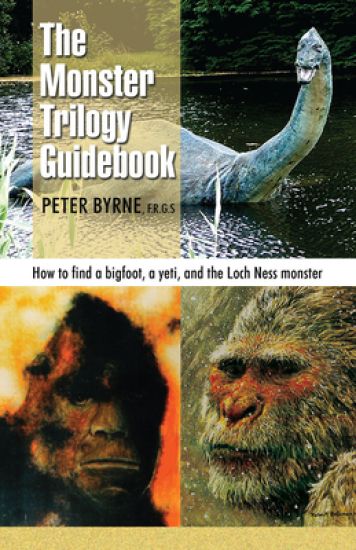
Monster Trilogy Guidebook, The
Peter Byrne; Christopher L. Murphy
Hancock House Publishers Ltd ,
2013
pokkari
This study offers students of religion and philosophy introductory chapters concerning the concept of natural religion. It holds that we can’t engage in useful discussion about the present concept of religion without a knowledge of the philosophical history that has shaped that concept. This is discussed with reference to the notion of natural religion to illustrate certain aspects of deism and its legacy. Originally published in 1989.

Peter Byrne tells the story of Hugh Everett III (1930-1982), whose "many worlds" theory of multiple universes has had a profound impact on physics and philosophy. Using Everett's unpublished papers (recently discovered in his son's basement) and dozens of interviews with his friends, colleagues, and surviving family members, Byrne paints, for the general reader, a detailed portrait of the genius who invented an astonishing way of describing our complex universe from the inside. Everett's mathematical model (called the "universal wave function") treats all possible events as "equally real", and concludes that countless copies of every person and thing exist in all possible configurations spread over an infinity of universes: many worlds. Afflicted by depression and addictions, Everett strove to bring rational order to the professional realms in which he played historically significant roles. In addition to his famous interpretation of quantum mechanics, Everett wrote a classic paper in game theory; created computer algorithms that revolutionized military operations research; and performed pioneering work in artificial intelligence for top secret government projects. He wrote the original software for targeting cities in a nuclear hot war; and he was one of the first scientists to recognize the danger of nuclear winter. As a Cold Warrior, he designed logical systems that modeled "rational" human and machine behaviors, and yet he was largely oblivious to the emotional damage his irrational personal behavior inflicted upon his family, lovers, and business partners. He died young, but left behind a fascinating record of his life, including correspondence with such philosophically inclined physicists as Niels Bohr, Norbert Wiener, and John Wheeler. These remarkable letters illuminate the long and often bitter struggle to explain the paradox of measurement at the heart of quantum physics. In recent years, Everett's solution to this mysterious problem - the existence of a universe of universes - has gained considerable traction in scientific circles, not as science fiction, but as an explanation of physical reality.
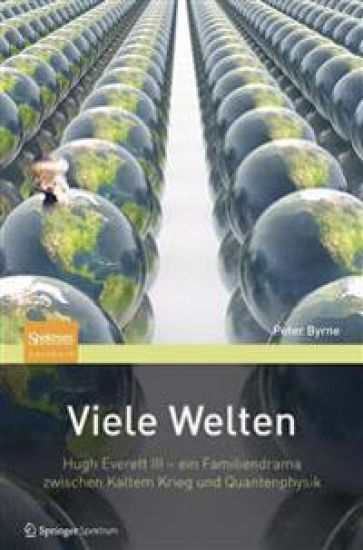
Peter Byrne erzählt die Lebensgeschichte von Hugh Everett III (1930-1982), dessen „viele Welten“ Theorie der multiplen Universen die Physik und Philosophie entscheidend beeinflusst hat. Anschaulich und für das breite Publikum zugänglich entwirft Byrne ein detailliertes Porträt des Genies, das eine erstaunliche Methode erfand, unser komplexes Universum von Innen zu beschreiben. Byrne verwendet hierbei bisher unveröffentlichte Schriften von Everett (die kürzlich im Keller seines Sohn entdeckt wurden) und zahlreiche Interviews mit Freunden, Arbeitskollegen und noch lebenden Familienmitgliedern. Everetts mathematisches Model („Universal Wave Function“) beschreibt alle denkbaren Ereignisse als „gleichwertig real“ und folgert, dass endlose Kopien jedes Menschen und Gegenstandes in allen nur denkbaren Strukturen existieren, die sich über endlose Universen erstrecken: viele Welten. Everett, gezeichnet von Depressionen und Sucht, strebte danach, eine rational Ordnung in jene Wissenschaftsbereiche zu bringen, in denen ihm historisch bedeutende Rollen zukamen. Neben seiner berühmten Interpretation der Quantenmechanik verfasste Everett eine klassische Arbeit zur Spieltheorie. Zudem entwickelte er Computeralgorithmen, die die Forschung im Bereich der Militäreinsätze revolutionierten, und leistete Pionierarbeit auf dem Gebiet der künstlichen Intelligenz für streng geheime Regierungsprojekte. Ferner schrieb Everett die Grundsoftware zur Anzielung von Städten in einem Nuklearkrieg und er gehörte zu den ersten Wissenschaftlern, die die Gefahr des nuklearen Winters erkannten. Als Kalter Krieger entwickelte er logische Systeme, die die „rationalen“ Verhaltensweisen von Mensch und Maschine darstellten, und war sich dennoch weitestgehend nicht des emotionalen Schadens bewusst, den sein eigenes irrationales Verhalten seiner Familie und seinen Geschäftspartnern zufügte. Everett starb sehr früh, hinterließ jedoch ein faszinierendesLebenszeugnis, einschließlich des Schriftverkehrs mit solch philosophisch geprägten Physikern wie Niels Bohr, Norbert Wiener und John Wheeler. Diese außergewöhnlichen Briefe werfen Licht auf Everetts langwierige und oftmals schmerzliche Anstrengungen, das Messproblem im Herzen der Quantenphysik zu erklären. In den letzten Jahren gewann Everetts Lösung für dieses mysteriöse Problem – die Existenz eines Universums von Universen – beachtlichen Zuspruch in Wissenschaftskreisen, nicht als Science Fiction, aber als Erklärung der physikalischen Realität.
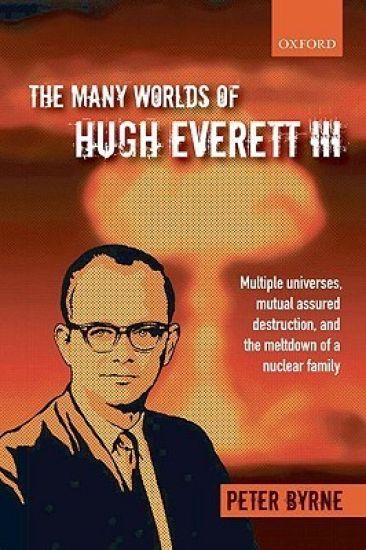
Peter Byrne tells the story of Hugh Everett III (1930-1982), whose "many worlds" theory of multiple universes has had a profound impact on physics and philosophy. Using Everett's unpublished papers (recently discovered in his son's basement) and dozens of interviews with his friends, colleagues, and surviving family members, Byrne paints, for the general reader, a detailed portrait of the genius who invented an astonishing way of describing our complex universe from the inside. Everett's mathematical model (called the "universal wave function") treats all possible events as "equally real", and concludes that countless copies of every person and thing exist in all possible configurations spread over an infinity of universes: many worlds. Afflicted by depression and addictions, Everett strove to bring rational order to the professional realms in which he played historically significant roles. In addition to his famous interpretation of quantum mechanics, Everett wrote a classic paper in game theory; created computer algorithms that revolutionized military operations research; and performed pioneering work in artificial intelligence for top secret government projects. He wrote the original software for targeting cities in a nuclear hot war; and he was one of the first scientists to recognize the danger of nuclear winter. As a Cold Warrior, he designed logical systems that modeled "rational" human and machine behaviors, and yet he was largely oblivious to the emotional damage his irrational personal behavior inflicted upon his family, lovers, and business partners. He died young, but left behind a fascinating record of his life, including correspondence with such philosophically inclined physicists as Niels Bohr, Norbert Wiener, and John Wheeler. These remarkable letters illuminate the long and often bitter struggle to explain the paradox of measurement at the heart of quantum physics. In recent years, Everett's solution to this mysterious problem - the existence of a universe of universes - has gained considerable traction in scientific circles, not as science fiction, but as an explanation of physical reality.

Psychiatry
Peter Byrne; Nicola Byrne
Wiley-Blackwell (an imprint of John Wiley Sons Ltd)
2008
nidottu
Rehearse for life in clinical practice with this easy-to-use and unique series, which combines cases drawn from real-life experiences with a refreshing approach to presentations as you would see them in day-to-day situations. Get the most from clinical practice, with Clinical Cases Uncovered Psychiatry is one of the most interesting and challenging areas of study in medicine and Clinical Cases Uncovered is your guide through. With presentations ranging from psychosis to memory loss and from insomnia to self-harm, you tackle each problem as it arises in everyday settings. Tips and key features are highlighted throughout so you can refer back to each case for exam revision and well into your career. For further information, visit www.clinicalcasesuncovered.com
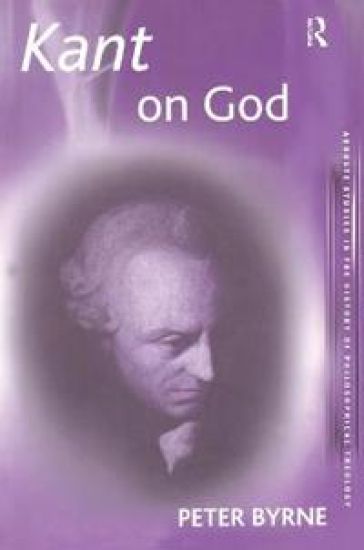
Peter Byrne presents a detailed study of the role of the concept of God in Kant's Critical Philosophy. After a preliminary survey of the major interpretative disputes over the understanding of Kant on God, Byrne explores his critique of philosophical proofs of God’s existence. Examining Kant’s account of religious language, Byrne highlights both the realist and anti-realist elements contained within it. The notion of the highest good is then explored, with its constituent elements - happiness and virtue, in pursuit of an assessment of how far Kant establishes that we must posit God. The precise role God plays in ethics according to Kant is then examined, along with the definition of religion as the recognition of duties as divine commands. Byrne also plots Kant’s critical re-working of the concept of grace. The book closes with a survey of the relation between the Critical Philosophy and Christianity on the one hand and deism on the other.
Peter Byrne’s study of God and realism offers a critical survey of issues surrounding the realist interpretation of theism and theology. Byrne presents a general argument for interpreting the intent of talk about God in a realist fashion and argues that judging the intent of theistic discourse should be the primary object of concern in the philosophy of religion. He considers a number of important ideas and thinkers supporting global anti-realism, and finds them all wanting. After the refutation of global anti-realism, Byrne considers a number of important arguments in favour of the notion that there is something specific to talk about God which invites an anti-realist interpretation of it. Here he looks at verificationism, the writings of Don Cupitt, forms of radical feminist theory and the ideas of D.Z. Phillips. The book concludes with a discussion of whether theology as a discursive, academic discipline can be interpreted realistically. Offering a comprehensive survey of the topic and of the leading literature in the field, this book presents key arguments for exploring issues brought to bear upon the realism debate. Students and scholars of philosophy of religion, philosophy of language, metaphysics, theory of knowledge and theology, will find this an invaluable new contribution to the field.
This study is an introduction to the problems of moral philosophy designed particularly for students of theology and religious studies. It offers an account of the nature and subject matter of moral reasoning and of the major types of moral theory current in contemporary moral philosophy. The account aims to bring out the major issues in moral theory, to present a clear, non-technical articulation of the structure of moral knowledge and to explore the relation between religious belief and morality.

This study is an introduction to the problems of moral philosophy designed particularly for students of theology and religious studies. It offers an account of the nature and subject matter of moral reasoning and of the major types of moral theory current in contemporary moral philosophy. The account aims to bring out the major issues in moral theory, to present a clear, non-technical articulation of the structure of moral knowledge and to explore the relation between religious belief and morality.
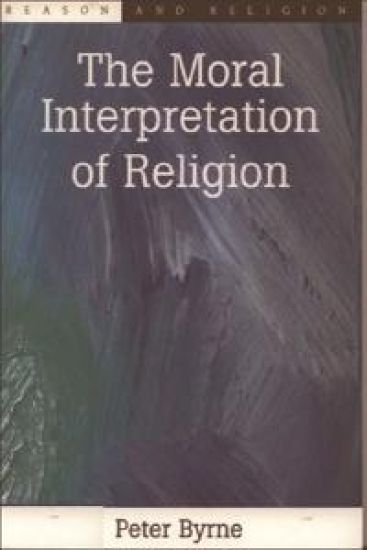
This text takes the reader through the essential characteristics of moral interpretation, including the idea of a personal creator and the secular problem of evil, assessing its viability as an approach.