Kirjojen hintavertailu. Mukana 12 390 323 kirjaa ja 12 kauppaa.

Kirjailija

Peter C. Brown

Kirjat ja teokset yhdessä paikassa: 14 kirjaa, julkaisuja vuosilta 1994-2022, suosituimpien joukossa Birmingham Airport Through Time. Vertaile teosten hintoja ja tarkista saatavuus suomalaisista kirjakaupoista.

Mukana myös kirjoitusasut: Peter C Brown

14 kirjaa

Kirjojen julkaisuhaarukka 1994-2022.

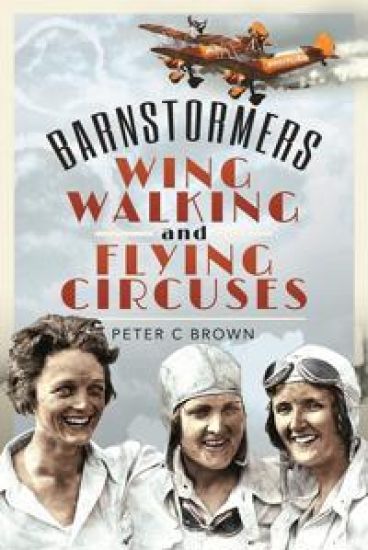
Barnstormers, Wing-Walking and Flying Circuses

Barnstormers, Wing-Walking and Flying Circuses

Peter C Brown

PEN SWORD BOOKS LTD
2022
sidottu
While large numbers of aeroplanes had been produced In America for the war effort overseas at the Western Front, it was found that that the British, French and Germans were far ahead of them when it came to flight technology, which led to a huge surplus of aeroplanes in the United States. The government's solution to recover some of the money was to sell the surplus stock off for as little as $200 dollars each. With no licence being required to fly a plane, the offer attracted many ex-fighter pilots as well as civilians, who developed a new American pastime known as barnstorming. Part entertainers, part thrill-seekers, the barnstormers made their way across the country as solo acts and in groups called 'Flying Circuses'. The American flier Ormer Locklear wowed the crowds by climbing out of his aeroplane and walk along the wing, and it wasn't long before flying circuses held less appeal for spectators if it didn't have a wing-walking act. Handstands, jumps across planes, and even the odd game of tennis were attempted by barnstormers to attract larger paying audiences. In 1936, the US Government banned wing-walking under 1,500 ft, which doomed aerial stunting, and while a few wing-walking teams operated in the 1970s, it wasn't until barnstormer Vic Norman founded his famous AeroSuperBatics wing-walking team in the early 1980s that the sight of daredevils hand-standing and flying upside down on the wing was seen in Europe. Several teams around the world subsequently formed using aeroplanes such as the Boeing Stearman or the Curtiss 'Jenny' biplanes to wow crowds as a part of regular air displays, and their appeal has continued to rise since the 2000s.

The Forgotten German Genocide

The Forgotten German Genocide

Peter C Brown

Pen Sword History
2021
sidottu
The Potsdam Conference (officially known as the "Berlin Conference"), was held from 17 July to 2 August 1945 at Cecilienhof Palace, the home of Crown Prince Wilhelm, in Brandenburg, and saw the leaders of the United Kingdom, the Soviet Union and the United States, gathered together to decide how to demilitarise, denazify, decentralise, and administer Germany, which had agreed to unconditional surrender on 8 May (VE Day). They determined that the remaining German populations in Poland, Czechoslovakia and Hungary - both the ethnic (Sudeten) and the more recent arrivals (as part of the long-term plan for the domination of Eastern Europe) - should to be transferred to Germany, but despite an undertaking that these would be effected in an orderly and humane manner, the expulsions were carried out in a ruthless and often brutal manner. Land was seized with farms and houses expropriated; the occupants placed into camps prior to mass expulsion from the country. Many of these were labour camps already occupied by Jews who had survived the concentration camps, where they were equally unwelcome. Further cleansing was carried out in Romania and Yugoslavia, and by 1950, an estimated 11.5 million German people had been removed from Eastern Europe with up to three million dead. The number of ethnic Germans killed during the 'cleansing' period is suggested at 500,000, but in 1958, Statistisches Bundesamt (the Federal Statistical Office of Germany) published a report which gave the figure of 1.6 million relating to expulsion-related population losses in Poland alone. Further investigation may in due course provide a more accurate figure to avoid the accusation of sensationalism.
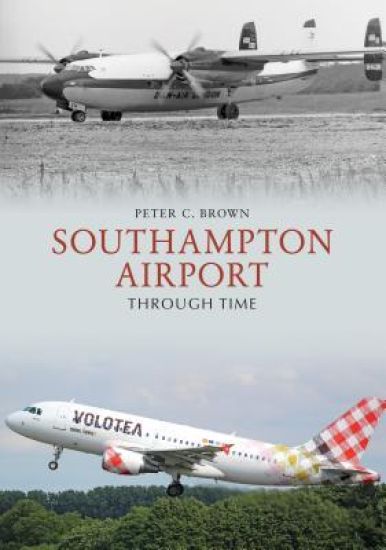
Southampton Airport Through Time

Southampton Airport Through Time

Peter C. Brown

Amberley Publishing
2019
nidottu
Southampton Airport boasts a long history, with the first aircraft taking off from the original site at Stoneham Farm in 1910. Requisitioned by the War Office in 1917 as an aircraft assembly area, it was given to the US Navy to develop. The current airport was established in 1932, and was the test bed for R. J. Mitchell’s prototype Spitfire. The airport was commissioned as HMS Raven in 1939, and subsequently spent most of the war in service with the Royal Navy. Regular air services returned in 1945, and by the early 1950s Southampton was one of the busiest airports outside of London. Despite the nationwide slump in air passenger traffic during the 1970s, huge investment was made by its owners Airports UK Ltd, and a decade later it was purchased by the British Airports Authority. Currently owned by Heathrow Airport Holdings, it is steadily climbing the ranks of the UK’s busiest airports.
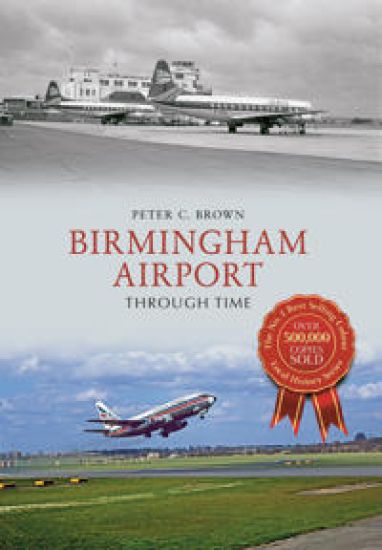
Birmingham Airport Through Time

Birmingham Airport Through Time

Peter C. Brown

Amberley Publishing
2017
nidottu
Birmingham Airport has a history stretching back to the Second World War, when it was requisitioned for use by the military. During the post-war years, races and public events were held at the site and it grew steadily throughout the remaining years of the twentieth century. By the mid-1970s, Birmingham Airport was handling over a million passengers and, in May 1984, the main terminal was opened by the Queen, with capacity for 3 million passengers, giving opportunity for more routes and an increase in passengers using Birmingham Airport. After the West Midlands County Council was abolished in 1986, ownership of the airport was transferred to a joint committee of the seven West Midlands District Councils. The old terminal at Elmdon has been turned over to cargo, and the old terminal building protected with ‘Listed’ status. On 20 October 2003, Concorde made her final visit to Birmingham Airport as part of her farewell tour. In July 2007, Birmingham was voted the best airport in Europe in the 5 million to 10 million passengers per year category, and it continues to go from strength to strength. In this book Peter C. Brown explores the history of Birmingham Airport, using a range of period and contemporary images.
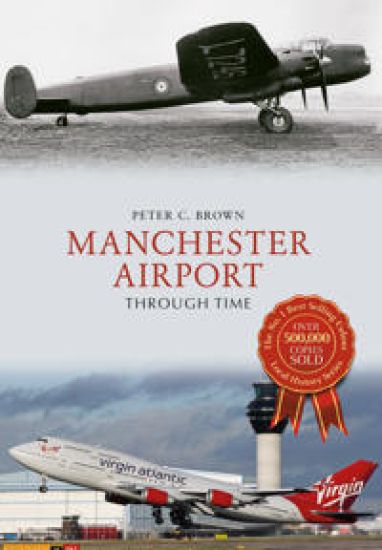
Manchester Airport Through Time

Manchester Airport Through Time

Peter C. Brown

Amberley Publishing
2017
nidottu
Manchester Airport (EGCC) is a Category 10 international passenger airport located in Lancashire, UK, comprising three passenger terminals and a world freight terminal. It operates long-haul and short-haul flights to around 225 destinations worldwide. It is one of the largest centres of employment in the north-west of England, with more than 19,000 people directly employed on site, and supporting a further 42,500 jobs in the area. It is the fourth busiest airport in England, and is the only British airport other than London’s Heathrow Airport to operate two full-length parallel runways. In 2013, Manchester recorded a passenger rate of 20.8 million, with the capacity to manage millions more. More than a million people a year visit the airport’s Runway Visitor Park, which is home to the retired Concorde (G-BOAC), as well as a Monarch Airlines DC-10, a BEA Hawker Siddeley Trident 3B and an Avro 146-RJX – the last civil airliner to be fully built in the UK. In this book, Peter C. Brown explores the history of Manchester Airport, using a range of period and contemporary images.
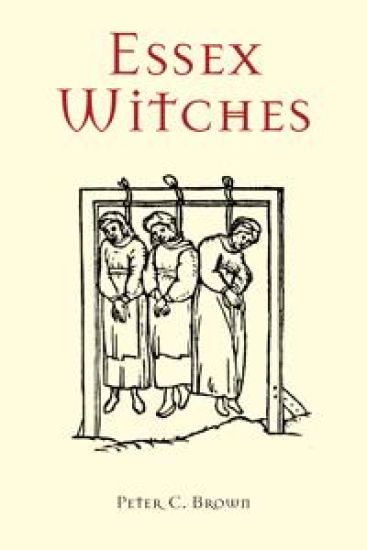
Essex Witches

Essex Witches

Peter C. Brown

The History Press Ltd
2014
nidottu
Medieval folk had long suspected that the Devil was carrying out his work on earth with the help of his minions. In 1484, Pope Innocent VIII declared this to be true, which resulted in witch-hunts across Europe that lasted for nearly 200 years. In 1645, England – and Essex in particular – was in the grip of witch fever. Between 1560 and 1680, 317 women and 23 men were tried for witchcraft in Essex alone, and over 100 were hanged. Essex Witches includes biographies of many of the local common folk who were tried in the courts for their beliefs and practice in herbal remedies and potions, and for causing the deaths of neighbours and even family members. These unfortunate citizens suffered the harshest penalties for their alleged sorcery and demonic ways, and those punishments are recorded here.
Shoreham Airport

Shoreham Airport

Peter C. Brown

Amberley Publishing
2014
nidottu
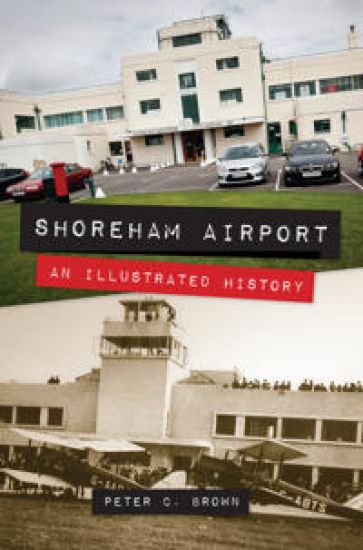
Shoreham is the oldest airport in the UK, aviator Harold Piffard first flying from there in 1910, although the aerodrome only officially opened on 20 June 1911. It served as a base for Alliott Verdon Roe (founder of Avro) and John Alcock (one of the first men to fly the Atlantic). At the start of the First World War, the first flight of British military aircraft left from Shoreham to join the fighting in France. In the 1930s the airfield became an airport for Brighton, Hove and Worthing and a new terminal building in the art deco style was opened in 1936. This building is still in use today and is now Grade II listed. During the Second World War, Shoreham again served as a military airfield, coming under attack several times. The airfield is still operational today and is used by light aircraft and flying schools and as a venue for an air show and a filming location. In this book, aviation historian Peter C. Brown takes us through the history of this key centre in early British aviation.
Voices from the Arctic Convoys

Voices from the Arctic Convoys

Peter C. Brown

Fonthill Media
2014
nidottu
With the invasion of Russia by Germany in 1941, Britain gained a new ally and a responsibility to provide material for the new front. More than four million tonnes of supplies such as tanks, fighters, bombers, ammunition, raw materials and food were transported to Russia during a four-year period. The cost was high and by May 1945, the campaign had seen the loss of 104 merchant ships and sixteen military vessels, and the thousands of seamen they carried. The Arctic route was the most arduous of all convoy routes. The ever-present threat of attack from German U-boats and Luftwaffe bombers such as the dreaded Focke-Wulf Fw 200 Condor were not all the Arctic convoys had to contend with. They had to deal with severe cold, storms, fog, ice floes and waves so huge they tore at the ships' armour plating. It is to the memory of these brave men that this book is dedicated and the stories of the immeasurable contribution they made to the Allied efforts during the Second World War have been collected for this book by their veteran comrades.
Make It Stick

Make It Stick

Peter C. Brown; Henry L. Roediger; Mark A. McDaniel

The Belknap Press
2014
sidottu
The international bestseller that has helped millions of students, teachers, and lifelong learners use proven approaches to learn better and remember longer. “We have made Make It Stick a touchstone for our instructors … to gain a real advantage for our learners as they tackle some of the toughest work in the world.” —Carl Czech, former Senior Instructional Systems Specialist/Advisor, US Navy SEALsAre you tired of forgetting what you learn? This groundbreaking book, based on the latest research in cognitive science, offers powerful strategies to boost memory and learning. To most of us, learning something “the hard way” means wasted time and effort. Good teaching, many believe, should be tailored to the different learning styles of students and should use strategies that make learning easier. Make It Stick turns fashionable ideas like these on their head. Drawing on recent discoveries in cognitive psychology and a ten-year collaboration among some of the world’s leading experts on human learning and memory, the authors explain what really drives successful learning. With clear, real-world examples, they show how we can confidently hone our skills and learn more effectively.Many common study habits simply don’t work. Underlining, highlighting, rereading, cramming, and single-minded repetition of new skills create the illusion of mastery, but gains fade quickly. Science shows that more durable learning comes from self-testing, introducing certain difficulties in practice, waiting to re-study new material until a little forgetting has occurred, and interleaving the practice of one skill or topic with another. Make It Stick breaks down these proven approaches in compelling ways and offers concrete techniques for becoming more productive learners. Full of eye-opening and inspiring stories for students, educators, and parents, Make It Stick is an indispensable guide for all those interested in the challenge of lifelong learning and self-improvement.
Edinburgh Airport Through Time

Edinburgh Airport Through Time

Peter C. Brown

Amberley Publishing
2013
nidottu
The land around Turnhouse Farm was converted to a military airfield in 1916 following a Zeppelin attack on Edinburgh. Known as RAF Turnhouse after 1918, the site served as a base for fighter squadrons defending Edinburgh and the Firth of Forth. Edinburgh Corporation first expressed interest in February 1944 in operating civilian flights from Turnhouse after the war and in 1946 British European scheduled the first flight between Edinburgh and London. Turnhouse officially opened as a civil airport in 1949 but the site was not fully demilitarised until 1960. Passenger numbers began to increase and in 1976 a new runway was built. Between 1983 and 1984 passenger numbers at Edinburgh exceeded 1 million; for the twelve months to November 2007, they exceeded 9 million. In this book, Peter C. Brown tells the story of Edinburgh Airport using a collection of period and modern images.
RAF Southend

RAF Southend

Peter C. Brown

The History Press Ltd
2012
nidottu
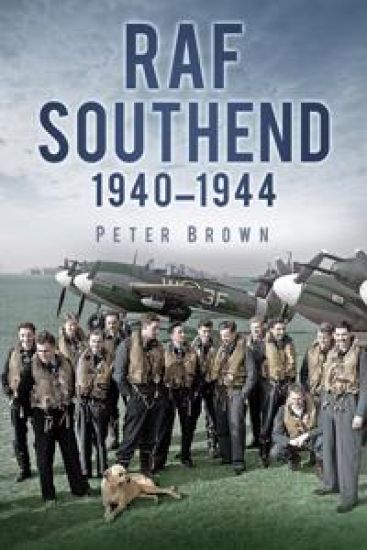
RAF Southend focuses on the airport’s role in the Second World War, between October 1940 and August 1944, from when it became a fighter station in its own right, until it became an armament practice camp later in the war. It describes the manning and maintenance of the forward fighter station, often under attack, and follows the varying fortunes of the staff and personnel who were posted there, and the highs and lows of the events, occasionally tragic, that occurred on and around the aerodrome. It also gives in-depth details of the numerous defensive and offensive operations carried out by the various RAF fighter squadrons during their time based at Southend. Through interviews with ex-staff and eyewitnesses, and the meticulous cross-referencing of original material, this book makes will make a fascinating read for anyone with an interest in local, aviation or military history. Author Peter Brown is an established local historian, with many years of research in the Southend area.
Fugitive Wife

Fugitive Wife

Peter C. Brown

WW Norton Co
2007
pokkari
The year is 1900 in gold-prospecting Alaska. Essie, a Midwestern farm girl fleeing from a stormy marriage, joins up with prospectors bound for Nome, where the golden sands teem with dreamers, schemers, and high rollers. When Leonard, Essie's stubborn and volatile husband, travels north, astonishing scenes of pursuit, sacrifice, and crucial decision rise to a conclusion that is both surprising and inevitable. Powerfully evoking a past world and the variable territory of the heart, this novel establishes Peter C. Brown as a consummate storyteller. Reading group guide included.
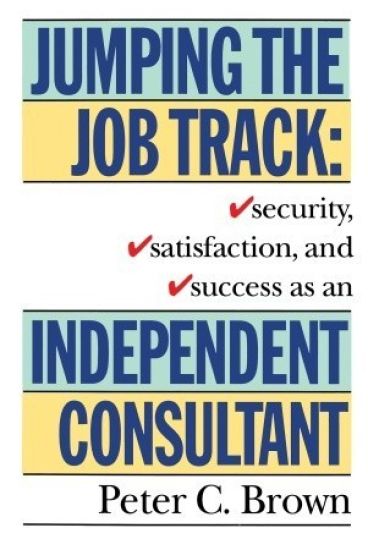
Jumping the Job Track

Jumping the Job Track

Peter C. Brown

Crown Publications
1994
pokkari
A potentially life-changing book, filled with profiles of people who have successfully made the transition from employee to entrepreneur. Practical and inspiring, it covers everything from getting your employer's help, finding clients, and estimating your income, to the psychological adjustments that go along with self-employment. Line drawings.