Kirjojen hintavertailu. Mukana 12 390 323 kirjaa ja 12 kauppaa.

Kirjailija

Peter C. Craigie

Kirjat ja teokset yhdessä paikassa: 11 kirjaa, julkaisuja vuosilta 1959-2019, suosituimpien joukossa Ezekiel. Vertaile teosten hintoja ja tarkista saatavuus suomalaisista kirjakaupoista.

Mukana myös kirjoitusasut: Peter C Craigie

11 kirjaa

Kirjojen julkaisuhaarukka 1959-2019.

Ezekiel

Ezekiel

Peter C. Craigie

Westminster/John Knox Press,U.S.
1983
nidottu
Peter C. Craigie's study sheds light on the multifaceted message and vocation of the prophet Ezekiel, emphasizing God's holiness and the promise of hope within his prophecies.Author Peter C. Craigie writes about the complex book of Ezekiel, “We may never grasp its message fully, but in the attempt we shall be enriched enormously.” His illuminating study enables the reader to better understand the vocation and message of an extraordinary prophet. Exiled in Babylon, Ezekiel embodied all the varieties of prophetic experience. The message Ezekiel delivered to the people of Babylon centered on the holiness of God. Even though he foretold doom and judgement, the prophet held out the promise of hope, based on the continuing mercy and forgiveness of God.The Daily Study Bible series seamlessly continues the legacy of William Barclay’s renowned New Testament series by delving into the texts of the Old Testament, weaving together ancient wisdom and modern insights for a transformative reading experience. Perfectly tailored for individual study, spirited group discussions, or classroom exploration, the Daily Study Bible series offers an indispensable resource for spiritual seekers and scholars alike. Within these volumes, readers will encounter a profound exploration of the Scriptures, uncovering the profound messages they held in the past and discerning their relevance in the present.
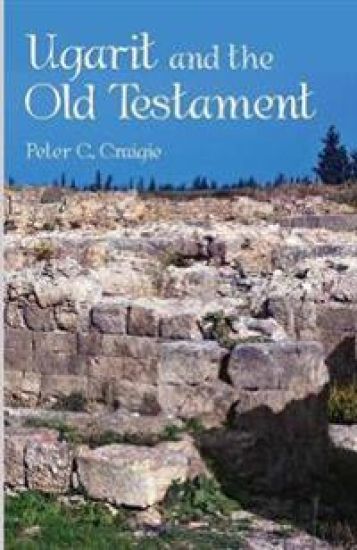
Ugarit and the Old Testament

Ugarit and the Old Testament

Peter C Craigie

Wipf Stock Publishers
2019
pokkari
In 1929, a remarkable discovery was made by archaeologists at Ras Shamra in syria; beneath the soils of a small hill, they discovered the remains and libraries of the ancient city of Ugarit, which had been destroyed by barbarian invaders shortly after 1200BC. This book tells the story of that discovery and describes the life and civilization of the ancient city of Ugarit. In addition to updating the story with more recent archeological finds, this study recounts and assesses the extraordinary impact that the rediscovery has had on the last 50 years of the Old Testament studies. Written in a non-technical fashion, Ugarit and the Old Testament should be of interest to all readers of the Bible, particularly students and pastors concerned with the impact of contemporary archaeological discoveries on Old Testament studies. ""An excellent introduction to Ugarit and its culture for the general reader. Craigie gives a fascinating account of the work undertaken at the site, including the deciphering of the language, and discusses the literature of Ugarit with reference to the Old Testament. A guide for further study completes this excellent survey, which I can recommend most highly."" Roland K. Harrison, Wycliffe College, University of Toronto ""A valuable work . . . carefully done, well balanced, and clearly written. Professor Craigie, rejecting the attitude that uses archaeology as a prop to support crumbling faith, correctly views such materials as background for better understanding of the Old Testament."" William Sanford LaSor, Fuller Theological Seminary ""Brief, up-to-date, and competent. Clearly demonstrates how archeological discoveries and studies are making the Bible more understandable and meaningful for the modern reader."" Bastiaan Van Elderen, Calvin Theological Seminary ""A valuable resource on discoveries that have fascinated and challenged biblical scholars for over fifty years."" John C. Trevor, School of Theology at Claremont Peter C. Craigie was dean of the faculty of Humanities, University of Calgary. He is the author of The Problem of War in the Old Testament and The Old Testament: It's Background, Growth, and Content.
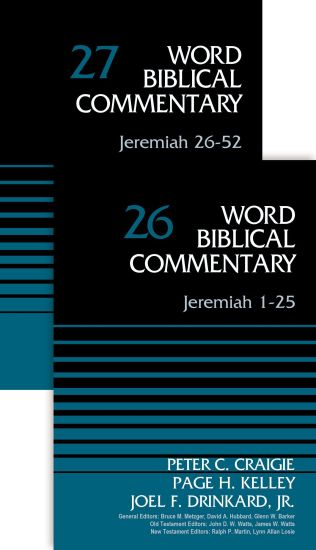
Jeremiah (2-Volume Set---26 and 27)

Jeremiah (2-Volume Set---26 and 27)

Peter C. Craigie; Paige Kelley; Joel F. Drinkard; Pamela Scalise; Thomas G. Smothers

Zondervan
2017
sidottu
The Word Biblical Commentary delivers the best in biblical scholarship, from the leading scholars of our day who share a commitment to Scripture as divine revelation. This series emphasizes a thorough analysis of textual, linguistic, structural, and theological evidence. The result is judicious and balanced insight into the meanings of the text in the framework of biblical theology. These widely acclaimed commentaries serve as exceptional resources for the professional theologian and instructor, the seminary or university student, the working minister, and everyone concerned with building theological understanding from a solid base of biblical scholarship. Overview of Commentary Organization Introduction—covers issues pertaining to the whole book, including context, date, authorship, composition, interpretive issues, purpose, and theology. Each section of the commentary includes: Pericope Bibliography—a helpful resource containing the most important works that pertain to each particular pericope. Translation—the author’s own translation of the biblical text, reflecting the end result of exegesis and attending to Hebrew and Greek idiomatic usage of words, phrases, and tenses, yet in reasonably good English. Notes—the author’s notes to the translation that address any textual variants, grammatical forms, syntactical constructions, basic meanings of words, and problems of translation. Form/Structure/Setting—a discussion of redaction, genre, sources, and tradition as they concern the origin of the pericope, its canonical form, and its relation to the biblical and extra-biblical contexts in order to illuminate the structure and character of the pericope. Rhetorical or compositional features important to understanding the passage are also introduced here. Comment—verse-by-verse interpretation of the text and dialogue with other interpreters, engaging with current opinion and scholarly research. Explanation—brings together all the results of the discussion in previous sections to expose the meaning and intention of the text at several levels: (1) within the context of the book itself; (2) its meaning in the OT or NT; (3) its place in the entire canon; (4) theological relevance to broader OT or NT issues. General Bibliography—occurring at the end of each volume, this extensive bibliographycontains all sources used anywhere in the commentary.
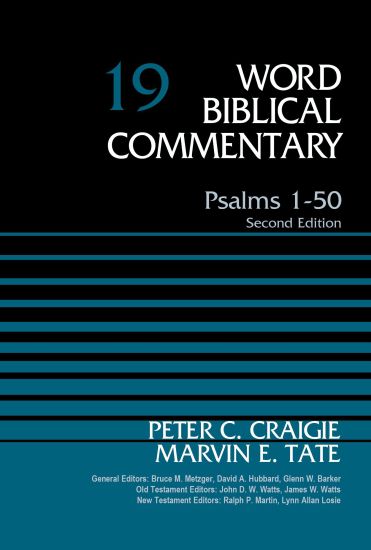
Psalms 1-50, Volume 19

Psalms 1-50, Volume 19

Peter C. Craigie; Marvin Tate

Zondervan
2016
sidottu
The Word Biblical Commentary delivers the best in biblical scholarship, from the leading scholars of our day who share a commitment to Scripture as divine revelation. This series emphasizes a thorough analysis of textual, linguistic, structural, and theological evidence. The result is judicious and balanced insight into the meanings of the text in the framework of biblical theology. These widely acclaimed commentaries serve as exceptional resources for the professional theologian and instructor, the seminary or university student, the working minister, and everyone concerned with building theological understanding from a solid base of biblical scholarship.Overview of Commentary OrganizationIntroduction—covers issues pertaining to the whole book, including context, date, authorship, composition, interpretive issues, purpose, and theology.Each section of the commentary includes:Pericope Bibliography—a helpful resource containing the most important works that pertain to each particular pericope.Translation—the author’s own translation of the biblical text, reflecting the end result of exegesis and attending to Hebrew and Greek idiomatic usage of words, phrases, and tenses, yet in reasonably good English.Notes—the author’s notes to the translation that address any textual variants, grammatical forms, syntactical constructions, basic meanings of words, and problems of translation.Form/Structure/Setting—a discussion of redaction, genre, sources, and tradition as they concern the origin of the pericope, its canonical form, and its relation to the biblical and extra-biblical contexts in order to illuminate the structure and character of the pericope. Rhetorical or compositional features important to understanding the passage are also introduced here.Comment—verse-by-verse interpretation of the text and dialogue with other interpreters, engaging with current opinion and scholarly research.Explanation—brings together all the results of the discussion in previous sections to expose the meaning and intention of the text at several levels: (1) within the context of the book itself; (2) its meaning in the OT or NT; (3) its place in the entire canon; (4) theological relevance to broader OT or NT issues.General Bibliography—occurring at the end of each volume, this extensive bibliographycontains all sources used anywhere in the commentary.
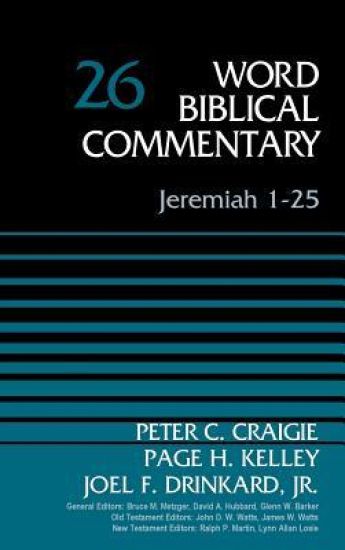
Jeremiah 1-25, Volume 26

Jeremiah 1-25, Volume 26

Peter C. Craigie; Paige Kelley; Joel F. Drinkard

Zondervan
2016
sidottu
The Word Biblical Commentary delivers the best in biblical scholarship, from the leading scholars of our day who share a commitment to Scripture as divine revelation. This series emphasizes a thorough analysis of textual, linguistic, structural, and theological evidence. The result is judicious and balanced insight into the meanings of the text in the framework of biblical theology. These widely acclaimed commentaries serve as exceptional resources for the professional theologian and instructor, the seminary or university student, the working minister, and everyone concerned with building theological understanding from a solid base of biblical scholarship.Overview of Commentary OrganizationIntroduction—covers issues pertaining to the whole book, including context, date, authorship, composition, interpretive issues, purpose, and theology.Each section of the commentary includes:Pericope Bibliography—a helpful resource containing the most important works that pertain to each particular pericope.Translation—the author’s own translation of the biblical text, reflecting the end result of exegesis and attending to Hebrew and Greek idiomatic usage of words, phrases, and tenses, yet in reasonably good English.Notes—the author’s notes to the translation that address any textual variants, grammatical forms, syntactical constructions, basic meanings of words, and problems of translation.Form/Structure/Setting—a discussion of redaction, genre, sources, and tradition as they concern the origin of the pericope, its canonical form, and its relation to the biblical and extra-biblical contexts in order to illuminate the structure and character of the pericope. Rhetorical or compositional features important to understanding the passage are also introduced here.Comment—verse-by-verse interpretation of the text and dialogue with other interpreters, engaging with current opinion and scholarly research.Explanation—brings together all the results of the discussion in previous sections to expose the meaning and intention of the text at several levels: (1) within the context of the book itself; (2) its meaning in the OT or NT; (3) its place in the entire canon; (4) theological relevance to broader OT or NT issues.General Bibliography—occurring at the end of each volume, this extensive bibliographycontains all sources used anywhere in the commentary.
Twelve Prophets, Volume 2

Twelve Prophets, Volume 2

Peter C. Craigie

Westminster/John Knox Press,U.S.
1985
nidottu
Peter C. Craigie provides commentary on several of the minor prophets, emphasizing their shared task of conveying God's Word to His people across different eras.The author of Twelve Prophets, Volume 1 completes his study with a commentary on Micah, a contemporary of Isaiah, who foretold the birth of the Messiah; Nahum, Habakkuk, and Zephaniah, prophets who spoke for God in the last days of the Kingdom of Judah; and Haggai, Zechariah, and Malachi, whose messages were directed to those reforming the community of God's people after the Babylonian Exile. Individuals who proclaimed different messages according to the times in which they lived, these prophets nevertheless have in common the task of speaking the Word of God to the people of God. Through his insightful commentary, Peter C. Craigie shows the persistent meaning of this Word through the ages.The Daily Study Bible series seamlessly continues the legacy of William Barclay’s renowned New Testament series by delving into the texts of the Old Testament, weaving together ancient wisdom and modern insights for a transformative reading experience. Perfectly tailored for individual study, spirited group discussions, or classroom exploration, the Daily Study Bible series offers an indispensable resource for spiritual seekers and scholars alike. Within these volumes, readers will encounter a profound exploration of the Scriptures, uncovering the profound messages they held in the past and discerning their relevance in the present.
Twelve Prophets, Volume 1

Twelve Prophets, Volume 1

Peter C. Craigie

Westminster/John Knox Press,U.S.
1984
nidottu
Peter C. Craigie explores the Twelve Prophets, showcasing Israel's religious evolution from monarchy to exile and new beginnings.Taken together, the Twelve Prophets offer a panoramic view of Israel's religion during one of the most critical periods in the Israelites' history. From their false confidence at the time of the monarchy, to their despair during the Exile, and finally to the period of new hopes and aspirations after the Exile, these books provide an understanding of the transition from an old state religion to the birth pangs of a newly formed community of God’s people. Hosea, Joel, Amos, Obadiah, and Jonah are the figures considered in this first of Peter C. Craigie’s two-volume work. Although differing in substance as well as style, these prophetic books are united in their common purpose: the declaration of the word of God to the people of God.The Daily Study Bible series seamlessly continues the legacy of William Barclay’s renowned New Testament series by delving into the texts of the Old Testament, weaving together ancient wisdom and modern insights for a transformative reading experience. Perfectly tailored for individual study, spirited group discussions, or classroom exploration, the Daily Study Bible series offers an indispensable resource for spiritual seekers and scholars alike. Within these volumes, readers will encounter a profound exploration of the Scriptures, uncovering the profound messages they held in the past and discerning their relevance in the present.
The Book of Deuteronomy

The Book of Deuteronomy

Peter C. Craigie

William B Eerdmans Publishing Co
1959
sidottu
Craigie's study on the Book of Deuteronomy is part of The New International Commentary on the Old Testament. Like its companion series on the New Testament, this commentary devotes considerable care to achieving a balance between technical information and homiletic-devotional interpretation.