Kirjojen hintavertailu. Mukana 12 101 337 kirjaa ja 12 kauppaa.

Kirjailija

Peter C. Myers

Kirjat ja teokset yhdessä paikassa: 3 kirjaa, julkaisuja vuosilta 1998-2023, suosituimpien joukossa Our Only Star and Compass. Vertaile teosten hintoja ja tarkista saatavuus suomalaisista kirjakaupoista.

3 kirjaa

Kirjojen julkaisuhaarukka 1998-2023.

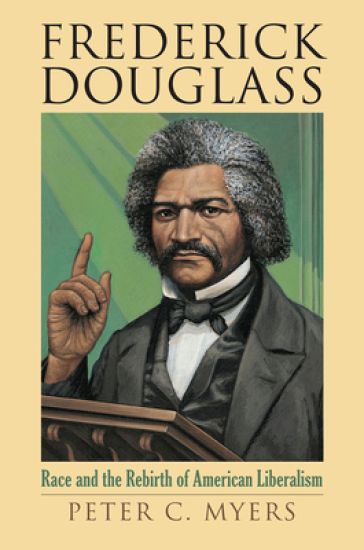
Frederick Douglass

Frederick Douglass

Peter C. Myers

UNIVERSITY PRESS OF KANSAS
2023
nidottu
For Frederick Douglass, the iconic nineteenth-century slave and abolitionist, the foundations for his arguments in support of racial equality rested on natural rights and natural law-and the bold proclamation of the Declaration of Independence that all men are created equal. But because many Americans never observed this principle—and in Douglass’s day even renounced it—he made it his life’s work to move the nation toward this vision of a more noble liberalism. Peter Myers now considers that effort and the natural rights arguments by which Douglass confronted race in America.Myers examines the philosophic core of Douglass’s political thought, offering a greater understanding of its depth and coherence. He depicts Douglass as the leading thinker to apply the Founders’ doctrine of natural rights to the plight of African Americans—an activist who grounded his arguments on the rights guaranteed by the Constitution and the inherent injustice not only of slavery but of any form of racial superiority.Myers first reconsiders Douglass’s descriptive analysis of slavery, developing his arguments for its natural wrongness and for its natural weakness in conjunction with the right of resistance. He then examines Douglass’s understandings of civil government in general and of the U.S. constitutional order in particular, exploring his argument on the Constitution’s relation to slavery and his thoughts on the powers and duties of the federal and state governments in the matter of postslavery race relations—including new insight into Douglass’s controversial “do nothing” doctrine.Myers argues that Douglass’s political thought at its core is both more coherent and more defensible in substance than his critics acknowledge. He maintains that Douglass was right in finding the natural rights principles of the Declaration a sufficient theoretical basis for addressing the nation’s racial problems and contends that his hopefulness for the demise of slavery and white supremacy was marked by moderation and realism.Myers finds in Douglass’s political thought the foundations of a revitalized argument for the mainstream civil rights, integrationist tradition of African American political thought. His analysis offers a new way of looking at an important thinker, as well as a compelling case for hoping that race relations in America will improve over time.
Frederick Douglass

Frederick Douglass

Peter C. Myers

University Press of Kansas
2008
sidottu
For Frederick Douglass, the iconic nineteenth-century slave and abolitionist, the foundations for his arguments in support of racial equality rested on natural rights and natural law - and the bold proclamation of the Declaration of Independence that all men are created equal. But because many Americans never observed this principle - and in Douglass' day even renounced it - he made it his life's work to move the nation toward this vision of a more noble liberalism. Peter Myers now considers that effort and the natural rights arguments by which Douglass confronted race in America.Myers examines the philosophic core of Douglass' political thought, offering a greater understanding of its depth and coherence. He depicts Douglass as the leading thinker to apply the Founders' doctrine of natural rights to the plight of African Americans - an activist who grounded his arguments on the rights guaranteed by the Constitution and the inherent injustice not only of slavery but of any form of racial superiority.Myers first reconsiders Douglass' descriptive analysis of slavery, developing his arguments for its natural wrongness and for its natural weakness in conjunction with the right of resistance. He then examines Douglass' understandings of civil government in general and of the U.S. constitutional order in particular, exploring his argument on the Constitution's relation to slavery and his thoughts on the powers and duties of the federal and state governments in the matter of postslavery race relations - including new insight into Douglass' controversial ""do nothing"" doctrine.Myers argues that Douglass' political thought at its core is both more coherent and more defensible in substance than his critics acknowledge. He maintains that Douglass was right in finding the natural rights principles of the Declaration a sufficient theoretical basis for addressing the nation's racial problems and contends that his hopefulness for the demise of slavery and white supremacy was marked by moderation and realism.Myers finds in Douglass' political thought the foundations of a revitalized argument for the mainstream civil rights, integrationist tradition of African American political thought. His analysis offers a new way of looking at an important thinker, as well as a compelling case for hoping that race relations in America will improve over time.
Our Only Star and Compass

Our Only Star and Compass

Peter C. Myers

Rowman Littlefield
1998
nidottu
In Our Only Star and Compass: Locke and the Struggle for Political Rationality, Peter C. Myers reexamines the role of Locke in liberal political philosophy. Myers considers Locke's philosophy in relation both to contemporary liberalism and to the great works of classical and modern political philosophy. With an emphasis on the human capacity for rational self-government, Myers clarifies Locke's insights into the status of reason in political life, arguing that Locke presents reason as a way of life that offers humans fulfillment, and moral and political moderation.