Kirjojen hintavertailu. Mukana 12 476 206 kirjaa ja 12 kauppaa.

Kirjailija

Peter Cappelli

Kirjat ja teokset yhdessä paikassa: 24 kirjaa, julkaisuja vuosilta 1997-2025, suosituimpien joukossa Reskilling and Upskilling: The Insights You Need from Harvard Business Review. Vertaile teosten hintoja ja tarkista saatavuus suomalaisista kirjakaupoista.

24 kirjaa

Kirjojen julkaisuhaarukka 1997-2025.

HBR's 10 Must Reads on Employee Engagement

HBR's 10 Must Reads on Employee Engagement

Adam Grant; Marcus Buckingham; Renee A. Mauborgne; Peter Cappelli

Harvard Business Review Press
2025
sidottu
Engage your employees and transform your organization. If you read nothing else on employee engagement, read this book. We've combed through hundreds of Harvard Business Review articles and selected the most important ones to help you make your employees feel valued, motivated, and ready to do great things. This book will inspire you to: Invest in a culture of cohesive teams Turn employee feedback into action Learn why people quit—and how to retain them Curb burnout by designing better jobs Make HR a champion of employees Create a purpose-driven organization This collection of articles includes "Creating a Purpose-Driven Organization," by Robert E. Quinn and Anjan V. Thakor; "How Customers Can Rally Your Troops," by Adam Grant, "Why Employees Quit," by Ethan Bernstein, Michael B. Horn, and Bob Moesta; "The Power of Hidden Teams," by Marcus Buckingham and Ashley Goodall; "Do You Tell Your Employees You Appreciate Them?" by Jack Zenger and Joseph Folkman; "The Case for Good Jobs," by Zeynep Ton; "To Curb Burnout, Design Jobs to Better Match Employees' Needs," by Michael P. Leiter and Christina Maslach; "HR's New Role," by Peter Cappelli and Ranya Nehmeh; "Turn Employee Feedback into Action," by Ethan Burris, Benjamin Thomas, Ketaki Sodhi, and Dawn Klinghoffer; "Beware a Culture of Busyness," by Adam Waytz; "Collaborative Overload," by Rob Cross, Reb Rebele, and Adam Grant; "Designing the Hybrid Office," by Anne-Laure Fayard, John Weeks, and Mahwesh Khan; and "Blue Ocean Leadership," by W. Chan Kim and Renee Mauborgne. HBR's 10 Must Reads are definitive collections of classic ideas, practical advice, and essential thinking from the pages of Harvard Business Review. Exploring topics like disruptive innovation, emotional intelligence, and new technology in our ever-evolving world, these books empower any leader to make bold decisions and inspire others.
In Praise of the Office

In Praise of the Office

Peter Cappelli; Ranya Nehmeh

Wharton Digital Press
2025
pokkari
Five years after the pandemic forced a global experiment in remote work, organizations are facing a critical inflection point. For the first time, we have evidence, drawn from experience and research, on what works and what doesn't. In their important new book, In Praise of the Office: The Limits to Hybrid and Remote Work, Wharton professor Peter Cappelli and workplace strategist Ranya Nehmeh deliver a balanced, research-based approach to navigating the complex landscape of remote and hybrid work. They provide a fresh perspective on why hybrid models often fail and what organizations must do differently to succeed in this new era—with takeaways that may not be welcome to all. In this timely book, discover: + Why remote work succeeded initially but has become increasingly problematic over time + What has been lost with the move away from in-office work + The hidden benefits of in-person work + How work dynamics post-pandemic have further influenced workplace culture and employee attitudes + How career advancement opportunities have changed + How new hires are faring + How the changes have impacted home life In Praise of the Office also reveals when in-office works best, when fully remote work works best, and what is required to make hybrid work. Plus, it identifies what aspects of hybrid can do the most damage to employers and employees. Fast-reading and practical, In Praise of the Office offers all of us—employers and employees alike— the tools and insights to make informed decisions about the future of work, whether navigating a return-to-office initiative, refining hybrid models, or fully embracing remote work. Cappelli and Nehmeh provide leaders with the clarity and direction to build stronger, more resilient workplaces.
HBR's 10 Must Reads on Employee Engagement

HBR's 10 Must Reads on Employee Engagement

Adam Grant; Marcus Buckingham; Renee A. Mauborgne; Peter Cappelli

Harvard Business Review Press
2025
pokkari
Engage your employees and transform your organization. If you read nothing else on employee engagement, read this book. We've combed through hundreds of Harvard Business Review articles and selected the most important ones to help you make your employees feel valued, motivated, and ready to do great things. This book will inspire you to: Invest in a culture of cohesive teams Turn employee feedback into action Learn why people quit—and how to retain them Curb burnout by designing better jobs Make HR a champion of employees Create a purpose-driven organization This collection of articles includes "Creating a Purpose-Driven Organization," by Robert E. Quinn and Anjan V. Thakor; "How Customers Can Rally Your Troops," by Adam Grant, "Why Employees Quit," by Ethan Bernstein, Michael B. Horn, and Bob Moesta; "The Power of Hidden Teams," by Marcus Buckingham and Ashley Goodall; "Do You Tell Your Employees You Appreciate Them?" by Jack Zenger and Joseph Folkman; "The Case for Good Jobs," by Zeynep Ton; "To Curb Burnout, Design Jobs to Better Match Employees' Needs," by Michael P. Leiter and Christina Maslach; "HR's New Role," by Peter Cappelli and Ranya Nehmeh; "Turn Employee Feedback into Action," by Ethan Burris, Benjamin Thomas, Ketaki Sodhi, and Dawn Klinghoffer; "Beware a Culture of Busyness," by Adam Waytz; "Collaborative Overload," by Rob Cross, Reb Rebele, and Adam Grant; "Designing the Hybrid Office," by Anne-Laure Fayard, John Weeks, and Mahwesh Khan; and "Blue Ocean Leadership," by W. Chan Kim and Renee Mauborgne. HBR's 10 Must Reads are definitive collections of classic ideas, practical advice, and essential thinking from the pages of Harvard Business Review. Exploring topics like disruptive innovation, emotional intelligence, and new technology in our ever-evolving world, these books empower any leader to make bold decisions and inspire others.
The Future of the Office, with a New Afterword by the Author
A GLOBE & MAIL BEST BUSINESS BOOK OF 2021 Now with an updated introduction and a new afterword by the author The COVID-19 pandemic forced an unprecedented experiment that reshaped white-collar work and turned remote work into a kind of "new normal." A little over a year into the pandemic, with vaccines more widely available, employers began to think about bringing employees back to the office. Both employers and employees had great trepidation about what the future held. Into this fraught moment stepped Wharton professor Peter Cappelli with The Future of the Office, which provided employers and employees with guidance as they faced urgent decisions with limited information. Cappelli's insights have proven remarkably prophetic and provide valuable insights for those wrestling with these issues today. In an updated introduction, Cappelli reminds readers where we were at that historical inflection point and what was at stake. He offers insight into what today's readers can take away from the book and why the questions raised a year into the pandemic still apply today. In an all-new afterword, Cappelli shares what we have learned since the book first published. Employers, he says, have failed to grapple with the hardest challenges about remote work and remain in a state of indecision, often prioritizing financial results over employee well-being. Employees want to keep remote work in the mix, but evidence shows that these arrangements are not working as well as the in-person alternative.He offers insights that have the potential to positively transform the way we work. But he cautions that the challenges—and our questions about what works—are sure to linger for a long time. Whether you're an executive crafting company policy, a manager leading hybrid teams, or an employee navigating this shifting landscape, The Future of the Office provides a unique lens for understanding the pandemic's impact on work and the strategic choices that lie ahead.
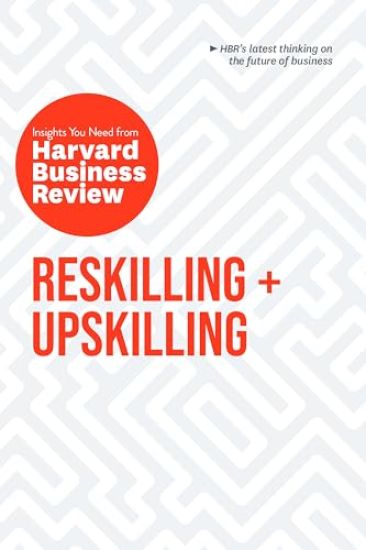
Reskilling and Upskilling: The Insights You Need from Harvard Business Review

Reskilling and Upskilling: The Insights You Need from Harvard Business Review

Peter Cappelli; Ginni Rometty; Boris Groysberg; Raffaella Sadun

Harvard Business Review Press
2025
pokkari
Reskilling is the new imperative in the war for talent. As the pace of technological change accelerates, the demand for new skills is increasing. And as technologies like AI take on new tasks and jobs, smart organizations aren't waiting for their new workforces to appear. They are investing in reskilling the workers. They're adopting a skills-based approach to hiring and developing talent. And they're leveraging digital learning tech to upskill their employees dynamically and efficiently. What new approaches should your organization be taking to build the workforce you need—now and tomorrow? Reskilling and Upskilling: The Insights You Need from Harvard Business Review brings you today's most essential thinking on rebuilding and retraining your workforce. It explains how to launch the right skilling initiatives, how to measure their impact, and how to prepare your company to compete in the new skills economy. Business is changing. Will you adapt or be left behind? Get up to speed and deepen your understanding of the topics that are shaping your company's future with the Insights You Need from Harvard Business Review series. Featuring HBR's smartest thinking on fast-moving issues—blockchain, cybersecurity, AI, and more—each book provides the foundational introduction and practical case studies your organization needs to compete today and collects the best research, interviews, and analysis to get it ready for tomorrow. You can't afford to ignore how these issues will transform the landscape of business and society. The Insights You Need series will help you grasp these critical ideas—and prepare you and your company for the future.
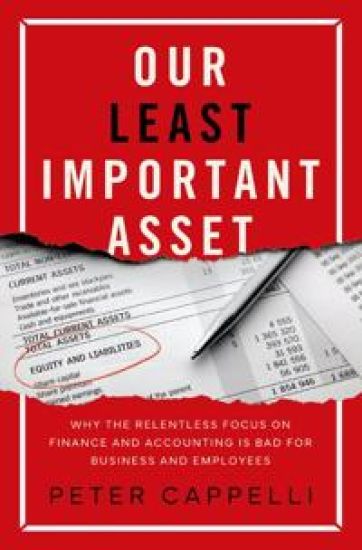
Our Least Important Asset

Our Least Important Asset

Peter Cappelli

OXFORD UNIVERSITY PRESS INC
2023
sidottu
A comprehensive and insightful look at the modern workplace and how employees are managed, where the new approach is driven by the quirks of financial accounting to the detriment of employees and the long-term success of the organization. Real wages have stagnated or declined for most workers, job insecurity has increased, and retirement income is uncertain. Hours of work for white collar employees have increased steadily, opportunities for advancement have withered, and evidence of the negative effects of workplace stress on health continues to accumulate. Why have jobs gotten so much worse? As Peter Cappelli argues, these issues are not a result of companies trying to be cost effective. They stem from the logic of financial accounting--the arbiter for determining whether a company is maximizing shareholder value--and its fundamental flaws in dealing with human capital. Financial accounting views employee costs as fixed costs that cannot be reduced and fails to account for the costs of bad employees and poor management. The simple goal of today's executives is to drive down employment costs, even if it raises costs elsewhere. In Our Least Important Asset, Cappelli argues that the financial accounting problem explains many puzzling practices in contemporary management--employers' emphasis on costs per hire over the quality of hires, the replacement of regular employees with "leased" workers, the shift to unlimited vacations, and the transition of hiring responsibilities from professional recruiters to more expensive line managers. In the process, employers undercut all the evidence about what works to improve the quality, productivity, and creativity of workers. Drawing on decades of experience and research, Cappelli provides a comprehensive and insightful critique of the modern workplace where the gaps in financial accounting make things worse for everyone, from employees to investors.
HBR's 10 Must Reads on Performance Management

HBR's 10 Must Reads on Performance Management

Harvard Business Review; Marcus Buckingham; Heidi K. Gardner; Lynda Gratton; Peter Cappelli

Harvard Business Review Press
2023
sidottu
Performance management is changing. Adapt your approach along with it.For decades, performance management has been seen as an annual chore by managers and HR departments alike. But this process is changing, and there are ways to make it more effective at all levels of your organization.If you read nothing else on performance management in your organization, read these 10 articles. We've combed through hundreds of Harvard Business Review articles and selected the most important ones to help you make your process more adaptable, conduct better feedback conversations, and encourage the growth of your employees.This book will inspire you to:Learn where current performance management processes are falling shortOvercome organizational bias to evaluate performance fairlySculpt employees' jobs to meet their skill sets and interestsBoost collaboration by aligning goals across functionsUse people analytics ethically and transparentlyHelp your people identify and use their strengthsThis collection of articles includes "The Performance Management Revolution," by Peter Cappelli and Anna Tavis; "Reinventing Performance Management," by Marcus Buckingham and Ashley Goodall; "Getting 360-Degree Feedback Right," by Maury A. Peiperl; "The Set-Up-to-Fail Syndrome," by Jean-François Manzoni and Jean-Louis Barsoux; "Job Sculpting: The Art of Retaining Your Best People," by Timothy Butler and James Waldroop; "Performance Management Shouldn't Kill Collaboration," by Heidi K. Gardner and Ivan Matviak; "The Happy Tracked Employee," by Ben Waber; "Don't Let Metrics Undermine Your Business," by Michael Harris and Bill Tayler; "Numbers Take Us Only So Far," by Maxine Williams; "Managers Can't Do It All," by Diane Gherson and Lynda Gratton; and "Creating Sustainable Performance," by Gretchen Spreitzer and Christine Porath.HBR's 10 Must Reads paperback series is the definitive collection of books for new and experienced leaders alike. Leaders looking for the inspiration that big ideas provide, both to accelerate their own growth and that of their companies, should look no further. HBR's 10 Must Reads series focuses on the core topics that every ambitious manager needs to know: leadership, strategy, change, managing people, and managing yourself. Harvard Business Review has sorted through hundreds of articles and selected only the most essential reading on each topic. Each title includes timeless advice that will be relevant regardless of an ever-changing business environment.
HBR's 10 Must Reads on Performance Management

HBR's 10 Must Reads on Performance Management

Harvard Business Review; Marcus Buckingham; Heidi K. Gardner; Lynda Gratton; Peter Cappelli

Harvard Business Review Press
2023
pokkari
Performance management is changing. Adapt your approach along with it.For decades, performance management has been seen as an annual chore by managers and HR departments alike. But this process is changing, and there are ways to make it more effective at all levels of your organization.If you read nothing else on performance management in your organization, read these 10 articles. We've combed through hundreds of Harvard Business Review articles and selected the most important ones to help you make your process more adaptable, conduct better feedback conversations, and encourage the growth of your employees.This book will inspire you to:Learn where current performance management processes are falling shortOvercome organizational bias to evaluate performance fairlySculpt employees' jobs to meet their skill sets and interestsBoost collaboration by aligning goals across functionsUse people analytics ethically and transparentlyHelp your people identify and use their strengthsThis collection of articles includes "The Performance Management Revolution," by Peter Cappelli and Anna Tavis; "Reinventing Performance Management," by Marcus Buckingham and Ashley Goodall; "Getting 360-Degree Feedback Right," by Maury A. Peiperl; "The Set-Up-to-Fail Syndrome," by Jean-François Manzoni and Jean-Louis Barsoux; "Job Sculpting: The Art of Retaining Your Best People," by Timothy Butler and James Waldroop; "Performance Management Shouldn't Kill Collaboration," by Heidi K. Gardner and Ivan Matviak; "The Happy Tracked Employee," by Ben Waber; "Don't Let Metrics Undermine Your Business," by Michael Harris and Bill Tayler; "Numbers Take Us Only So Far," by Maxine Williams; "Managers Can't Do It All," by Diane Gherson and Lynda Gratton; and "Creating Sustainable Performance," by Gretchen Spreitzer and Christine Porath.HBR's 10 Must Reads paperback series is the definitive collection of books for new and experienced leaders alike. Leaders looking for the inspiration that big ideas provide, both to accelerate their own growth and that of their companies, should look no further. HBR's 10 Must Reads series focuses on the core topics that every ambitious manager needs to know: leadership, strategy, change, managing people, and managing yourself. Harvard Business Review has sorted through hundreds of articles and selected only the most essential reading on each topic. Each title includes timeless advice that will be relevant regardless of an ever-changing business environment.
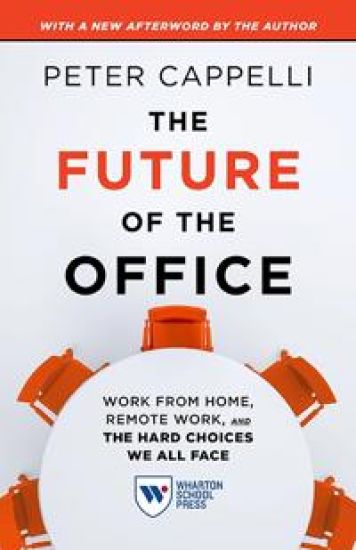
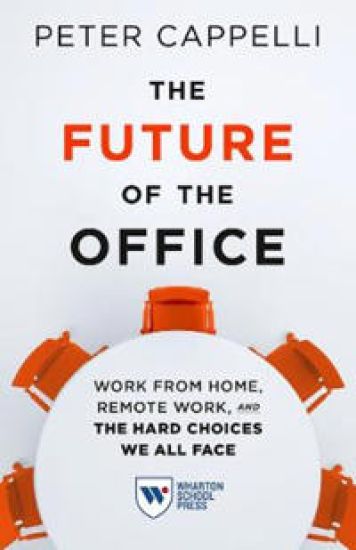
The Future of the Office

The Future of the Office

Peter Cappelli

Wharton Digital Press
2021
sidottu
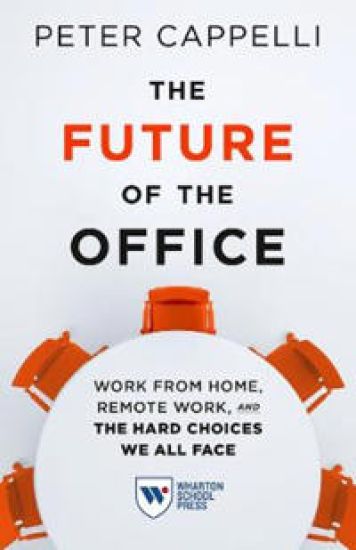
A GLOBE & MAIL BEST BUSINESS BOOK OF 2021 The COVID-19 pandemic forced an unprecedented experiment that reshaped white-collar work and turned remote work into a kind of "new normal." Now comes the hard part. Many employees want to continue that normal and keep working remotely, and most at least want the ability to work occasionally from home. But for employers, the benefits of employees working from home or hybrid approaches are not so obvious. What should both groups do? In a prescient new book, The Future of the Office: Work from Home, Remote Work, and the Hard Choices We All Face, Wharton professor Peter Cappelli lays out the facts in an effort to provide both employees and employers with a vision of their futures. Cappelli unveils the surprising tradeoffs both may have to accept to get what they want. Cappelli illustrates the challenges we face by in drawing lessons from the pandemic and deciding what to do moving forward. Do we allow some workers to be permanently remote? Do we let others choose when to work from home? Do we get rid of their offices? What else has to change, depending on the approach we choose? His research reveals there is no consensus among business leaders. Even the most high-profile and forward-thinking companies are taking divergent approaches: Facebook, Twitter, and other tech companies say many employees can work remotely on a permanent basis. Goldman Sachs, JP Morgan, and others say it is important for everyone to come back to the office. Ford is redoing its office space so that most employees can work from home at least part of the time, and GM is planning to let local managers work out arrangements on an ad-hoc basis. As Cappelli examines, earlier research on other types of remote work, including telecommuting offers some guidance as to what to expect when some people will be in the office and others work at home, and also what happened when employers tried to take back offices. Neither worked as expected. In a call to action for both employers and employees, Cappelli explores how we should think about the choices going forward as well as who wins and who loses. As he implores, we have to choose soon.
The Future of the Office

The Future of the Office

Peter Cappelli

Wharton Digital Press
2021
pokkari
A GLOBE & MAIL BEST BUSINESS BOOK OF 2021 The COVID-19 pandemic forced an unprecedented experiment that reshaped white-collar work and turned remote work into a kind of "new normal." Now comes the hard part. Many employees want to continue that normal and keep working remotely, and most at least want the ability to work occasionally from home. But for employers, the benefits of employees working from home or hybrid approaches are not so obvious. What should both groups do? In a prescient new book, The Future of the Office: Work from Home, Remote Work, and the Hard Choices We All Face, Wharton professor Peter Cappelli lays out the facts in an effort to provide both employees and employers with a vision of their futures. Cappelli unveils the surprising tradeoffs both may have to accept to get what they want. Cappelli illustrates the challenges we face by in drawing lessons from the pandemic and deciding what to do moving forward. Do we allow some workers to be permanently remote? Do we let others choose when to work from home? Do we get rid of their offices? What else has to change, depending on the approach we choose? His research reveals there is no consensus among business leaders. Even the most high-profile and forward-thinking companies are taking divergent approaches: Facebook, Twitter, and other tech companies say many employees can work remotely on a permanent basis. Goldman Sachs, JP Morgan, and others say it is important for everyone to come back to the office. Ford is redoing its office space so that most employees can work from home at least part of the time, and GM is planning to let local managers work out arrangements on an ad-hoc basis. As Cappelli examines, earlier research on other types of remote work, including telecommuting offers some guidance as to what to expect when some people will be in the office and others work at home, and also what happened when employers tried to take back offices. Neither worked as expected. In a call to action for both employers and employees, Cappelli explores how we should think about the choices going forward as well as who wins and who loses. As he implores, we have to choose soon.
HBR's 10 Must Reads 2021

HBR's 10 Must Reads 2021

Harvard Business Review; Marcus Buckingham; Amy C. Edmondson; Peter Cappelli; Laura Morgan Roberts

Harvard Business Review Press
2021
sidottu
A year's worth of management wisdom, all in one place.We've reviewed the ideas, insights, and best practices from the past year of Harvard Business Review to keep you up-to-date on the most cutting-edge, influential thinking driving business today. With authors from Marcus Buckingham to Amy Edmondson and company examples from Lyft to Disney, this volume brings the most current and important management conversations right to your fingertips.This book will inspire you to:Rethink whether constant, candid feedback really helps employees thriveMove beyond diversity and inclusion to creating a racially just workplaceAdopt connected strategies that anticipate your customers' needsNavigate the challenges of dual-career relationshipsUnderstand when data creates competitive advantage&#8212and when it doesn'tBreak through the organizational barriers that impede AI initiativesLead in a new era of climate actionThis collection of articles includes “The Feedback Fallacy,” by Marcus Buckingham and Ashley Goodall; “Cross-Silo Leadership,” by Tiziana Casciaro, Amy C. Edmondson, and Sujin Jang; “Toward a Racially Just Workplace,” by Laura Morgan Roberts and Anthony J. Mayo; “The Age of Continuous Connection,” by Nicolaj Siggelkow and Christian Terwiesch; “The Hard Truth about Innovative Cultures,” by Gary P. Pisano; “Creating a Trans-Inclusive Workplace,” by Christian N. Thoroughgood, Katina B. Sawyer, and Jennica R. Webster; “When Data Creates Competitive Advantage,” by Andrei Hagiu and Julian Wright; “Your Approach to Hiring Is All Wrong,” by Peter Cappelli; “How Dual-Career Couples Make It Work,” by Jennifer Petriglieri; “Building the AI-Powered Organization,” by Tim Fountaine, Brian McCarthy, and Tamim Saleh; “Leading a New Era of Climate Action,” by Andrew Winston; and “That Discomfort You’re Feeling Is Grief,” by Scott Berinato.
HBR's 10 Must Reads 2021

HBR's 10 Must Reads 2021

Harvard Business Review; Marcus Buckingham; Amy C. Edmondson; Peter Cappelli; Laura Morgan Roberts

Harvard Business Review Press
2020
pokkari
A year's worth of management wisdom, all in one place.We've reviewed the ideas, insights, and best practices from the past year of Harvard Business Review to keep you up-to-date on the most cutting-edge, influential thinking driving business today. With authors from Marcus Buckingham to Amy Edmondson and company examples from Lyft to Disney, this volume brings the most current and important management conversations right to your fingertips.This book will inspire you to:Rethink whether constant, candid feedback really helps employees thriveMove beyond diversity and inclusion to creating a racially just workplaceAdopt connected strategies that anticipate your customers' needsNavigate the challenges of dual-career relationshipsUnderstand when data creates competitive advantage&#8212and when it doesn'tBreak through the organizational barriers that impede AI initiativesLead in a new era of climate actionThis collection of articles includes “The Feedback Fallacy,” by Marcus Buckingham and Ashley Goodall; “Cross-Silo Leadership,” by Tiziana Casciaro, Amy C. Edmondson, and Sujin Jang; “Toward a Racially Just Workplace,” by Laura Morgan Roberts and Anthony J. Mayo; “The Age of Continuous Connection,” by Nicolaj Siggelkow and Christian Terwiesch; “The Hard Truth about Innovative Cultures,” by Gary P. Pisano; “Creating a Trans-Inclusive Workplace,” by Christian N. Thoroughgood, Katina B. Sawyer, and Jennica R. Webster; “When Data Creates Competitive Advantage,” by Andrei Hagiu and Julian Wright; “Your Approach to Hiring Is All Wrong,” by Peter Cappelli; “How Dual-Career Couples Make It Work,” by Jennifer Petriglieri; “Building the AI-Powered Organization,” by Tim Fountaine, Brian McCarthy, and Tamim Saleh; “Leading a New Era of Climate Action,” by Andrew Winston; and “That Discomfort You’re Feeling Is Grief,” by Scott Berinato.
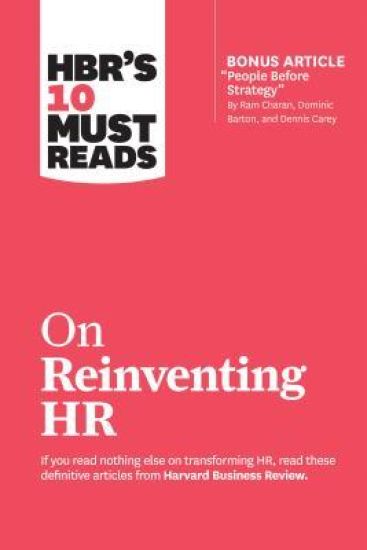
HBR's 10 Must Reads on Reinventing HR (with bonus article "People Before Strategy" by Ram Charan, Dominic Barton, and Dennis Carey)

HBR's 10 Must Reads on Reinventing HR (with bonus article "People Before Strategy" by Ram Charan, Dominic Barton, and Dennis Carey)

Harvard Business Review; Marcus Buckingham; Reid Hoffman; Ram Charan; Peter Cappelli

Harvard Business Review Press
2019
sidottu
How HR can lead.If you read nothing else on reinventing human resources, read these 10 articles. We've combed through hundreds of Harvard Business Review articles and selected the most important ones on how HR leaders can partner with the C-suite, drive change throughout the organization, and develop the workforce of the future.This book will inspire you to:Overhaul performance management practices to jump-start motivation and engagementUse agile processes to transform how you hire, develop, and manage peopleEstablish diversity programs that increase innovation and competitiveness as well as inclusionUse people analytics to bring unprecedented insight to hiring and talent managementPrepare your company for the double waves of artificial intelligence and an older workforceClose the gap between HR and strategyThis collection of articles includes: "People Before Strategy: A New Role for the CHRO," by Ram Charan, Dominic Barton, and Dennis Carey; "How Netflix Reinvented HR," by Patty McCord; "HR Goes Agile," by Peter Cappelli and Anna Tavis; "Reinventing Performance Management," by Marcus Buckingham and Ashley Goodall; "Better People Analytics," by Paul Leonardi and Noshir Contractor; "21st-Century Talent Spotting," by Claudio Fernandez-Araoz; "Tours of Duty: The New Employer-Employee Contract," by Reid Hoffman, Ben Casnocha, and Chris Yeh; "Creating the Best Workplace on Earth," by Rob Goffee and Gareth Jones; "Why Diversity Programs Fail," by Frank Dobbins and Alexandra Kalev; "When No One Retires," by Paul Irving; and "Collaborative Intelligence: Humans and AI Are Joining Forces," by H. James Wilson and Paul R. Daugherty.
HBR's 10 Must Reads on Reinventing HR (with bonus article "People Before Strategy" by Ram Charan, Dominic Barton, and Dennis Carey)

HBR's 10 Must Reads on Reinventing HR (with bonus article "People Before Strategy" by Ram Charan, Dominic Barton, and Dennis Carey)

Harvard Business Review; Marcus Buckingham; Reid Hoffman; Ram Charan; Peter Cappelli

Harvard Business Review Press
2019
pokkari
How HR can lead.If you read nothing else on reinventing human resources, read these 10 articles. We've combed through hundreds of Harvard Business Review articles and selected the most important ones on how HR leaders can partner with the C-suite, drive change throughout the organization, and develop the workforce of the future.This book will inspire you to:Overhaul performance management practices to jump-start motivation and engagementUse agile processes to transform how you hire, develop, and manage peopleEstablish diversity programs that increase innovation and competitiveness as well as inclusionUse people analytics to bring unprecedented insight to hiring and talent managementPrepare your company for the double waves of artificial intelligence and an older workforceClose the gap between HR and strategyThis collection of articles includes: "People Before Strategy: A New Role for the CHRO," by Ram Charan, Dominic Barton, and Dennis Carey; "How Netflix Reinvented HR," by Patty McCord; "HR Goes Agile," by Peter Cappelli and Anna Tavis; "Reinventing Performance Management," by Marcus Buckingham and Ashley Goodall; "Better People Analytics," by Paul Leonardi and Noshir Contractor; "21st-Century Talent Spotting," by Claudio Fernandez-Araoz; "Tours of Duty: The New Employer-Employee Contract," by Reid Hoffman, Ben Casnocha, and Chris Yeh; "Creating the Best Workplace on Earth," by Rob Goffee and Gareth Jones; "Why Diversity Programs Fail," by Frank Dobbins and Alexandra Kalev; "When No One Retires," by Paul Irving; and "Collaborative Intelligence: Humans and AI Are Joining Forces," by H. James Wilson and Paul R. Daugherty.
Fortune Makers

Fortune Makers

Michael Useem; Harbir Singh; Liang Neng; Peter Cappelli

PublicAffairs,U.S.
2017
sidottu
When Peter Drucker wrote Concept of the Corporation in 1946, he revealed what made the large American corporation tick. Similarly, The Art of Japanese Management by Richard Pascale in 1981 explained the unique practices developed by the Japanese to bring that country's economy out of the ashes. The emerging Chinese juggernauts-the Alibabas, Lenovos, and Haiers-need similar revelation since they are a different breed in their own right. Little is understood about them, how they work, and what makes them such potentially imposing competitors.Now, based on unprecedented access to the people who have created and grown the great private companies of China-the "General Electrics and Sonys" of that country, Michael Useem, Harbir Singh, Peter Cappelli and Neng Liang bring to life the distinctive practices of Chinese business leaders as they invent their own way forward to create world-class companies, and provide a comprehensive look at the leaders and businesses that are the future of the Chinese economy-and major competition to Western companies.Chinese companies are emerging on the global stage as never before, and their leadership lessons are invaluable in understanding and coping with their growing commercial presence worldwide. Company managers everywhere will want to understand China's distinct way of doing business if they are to compete against the companies that already dominate the domestic Chinese market and are coming to the fore in foreign markets, including the U.S.
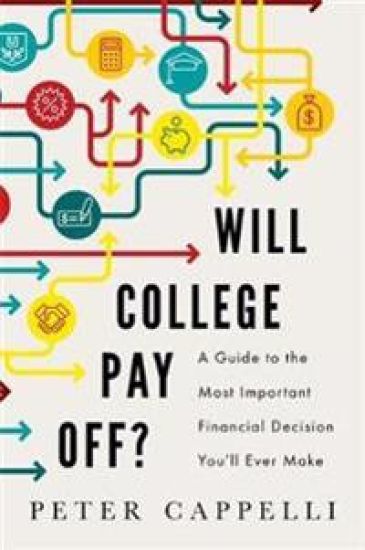
Will College Pay Off?

Will College Pay Off?

Peter Cappelli

PublicAffairs,U.S.
2015
sidottu
The decision of whether to go to college, or where, is hampered by poor information and inadequate understanding of the financial risk involved.Adding to the confusion, the same degree can cost dramatically different amounts for different people. A barrage of advertising offers new degrees designed to lead to specific jobs, but we see no information on whether graduates ever get those jobs. Mix in a frenzied applications process, and pressure from politicians for relevant" programs, and there is an urgent need to separate myth from reality.Peter Cappelli, an acclaimed expert in employment trends, the workforce, and education, provides hard evidence that counters conventional wisdom and helps us make cost-effective choices. Among the issues Cappelli analyzes are:What is the real link between a college degree and a job that enables you to pay off the cost of college, especially in a market that is in constant change?Why it may be a mistake to pursue degrees that will land you the hottest jobs because what is hot today is unlikely to be so by the time you graduate.Why the most expensive colleges may actually be the cheapest because of their ability to graduate students on time.How parents and students can find out what different colleges actually deliver to students and whether it is something that employers really want.College is the biggest expense for many families, larger even than the cost of the family home, and one that can bankrupt students and their parents if it works out poorly. Peter Cappelli offers vital insight for parents and students to make decisions that both make sense financially and provide the foundation that will help students make their way in the world.
Why Good People Can't Get Jobs

Why Good People Can't Get Jobs

Peter Cappelli

Wharton Digital Press
2012
sidottu
Peter Cappelli confronts the myth of the skills gap and provides an actionable path forward to put people back to work. Even in a time of perilously high unemployment, companies contend that they cannot find the employees they need. Pointing to a skills gap, employers argue applicants are simply not qualified; schools aren't preparing students for jobs; the government isn't letting in enough high-skill immigrants; and even when the match is right, prospective employees won't accept jobs at the wages offered. In this powerful and fast-reading book, Peter Cappelli, Wharton management professor and director of Wharton's Center for Human Resources, debunks the arguments and exposes the real reasons good people can't get hired. Drawing on jobs data, anecdotes from all sides of the employer-employee divide, and interviews with jobs professionals, he explores the paradoxical forces bearing down on the American workplace and lays out solutions that can help us break through what has become a crippling employer-employee stand-off. Among the questions he confronts: Is there really a skills gap? To what extent is the hiring process being held hostage by automated software that can crunch thousands of applications an hour? What kind of training could best bridge the gap between employer expectations and applicant realities, and who should foot the bill for it? Are schools really at fault? Named one of HR Magazine's Top 20 Most Influential Thinkers of 2011, Cappelli not only changes the way we think about hiring but points the way forward to rev America's job engine again.
Why Good People Can't Get Jobs

Why Good People Can't Get Jobs

Peter Cappelli

Wharton Digital Press
2012
pokkari
Peter Cappelli confronts the myth of the skills gap and provides an actionable path forward to put people back to work. Even in a time of perilously high unemployment, companies contend that they cannot find the employees they need. Pointing to a skills gap, employers argue applicants are simply not qualified; schools aren't preparing students for jobs; the government isn't letting in enough high-skill immigrants; and even when the match is right, prospective employees won't accept jobs at the wages offered. In this powerful and fast-reading book, Peter Cappelli, Wharton management professor and director of Wharton's Center for Human Resources, debunks the arguments and exposes the real reasons good people can't get hired. Drawing on jobs data, anecdotes from all sides of the employer-employee divide, and interviews with jobs professionals, he explores the paradoxical forces bearing down on the American workplace and lays out solutions that can help us break through what has become a crippling employer-employee stand-off. Among the questions he confronts: Is there really a skills gap? To what extent is the hiring process being held hostage by automated software that can crunch thousands of applications an hour? What kind of training could best bridge the gap between employer expectations and applicant realities, and who should foot the bill for it? Are schools really at fault? Named one of HR Magazine's Top 20 Most Influential Thinkers of 2011, Cappelli not only changes the way we think about hiring but points the way forward to rev America's job engine again.