Kirjojen hintavertailu. Mukana 12 595 353 kirjaa ja 12 kauppaa.

Kirjailija

Peter Chalk

Kirjat ja teokset yhdessä paikassa: 31 kirjaa, julkaisuja vuosilta 2001-2017, suosituimpien joukossa The Muslim World After 9/11. Vertaile teosten hintoja ja tarkista saatavuus suomalaisista kirjakaupoista.

31 kirjaa

Kirjojen julkaisuhaarukka 2001-2017.

The U.S. Army in Asia, 2030-2040

The U.S. Army in Asia, 2030-2040

Terrence K. Kelly; James Dobbins; David A. Shlapak; David C. Gompert; Eric Heginbotham; Peter Chalk; Lloyd Thrall

RAND
2015
pokkari
Looking to the 2030 2040 time frame, U.S. policy and military strategy will need to strike a balance among maintaining a cooperative relationship with China, deterring Chinese aggression in regional disputes, and preparing for the possibility that China could become more assertive. The U.S. Army will have an important role to play in preparing for these developments and for protecting and furthering U.S. interests in the region."
Breaching the Fortress Wall

Breaching the Fortress Wall

Brian A. Jackson; Peter Chalk; Kim Cragin; Bruce Newsome; John V. Parachini; William Rosenau; Erin M. Simpson; Melanie Sisson; Donald Temple

RAND
2006
pokkari
Technology systems play a key role within a larger, integrated strategy to target groups' efforts and protect the public from the threat of terrorist violence. This study draws on relevant data from the history of a variety of terrorist conflicts to understand terrorists' counter-technology efforts. Fully exploring adversaries' counter-technology behaviors can help make the best choices to protect the nation from the threat of terrorism.
The Muslim World After 9/11

The Muslim World After 9/11

Angel Rabasa; Cheryl Benard; Peter Chalk; Christine Fair; Theodore Karasik; Rollie Lal; Ian O. Lesser; David Thaler

RAND
2004
sidottu
This book examines the major dynamics that drive changes in the religio-political landscape of the Muslim world, the effects of 9/11, the global war on terrorism, and the war in Iraq, and their implications for global security and U.S. and Western interests.
Counternetwork

Counternetwork

Angel Rabasa; Christopher M. Schnaubelt; Peter Chalk; Douglas Farah; Gregory Midgette; Howard J. Shatz

RAND
2017
pokkari
Through an analysis of transnational criminal networks originating in South America, this report presents operational characteristics of these networks, strategic alliances they have established, and the multiple threats that they pose to U.S. interests and to the stability of the countries where they operate. It also identifies U.S. government policies and programs to counter these networks and examines the military's role in that context.
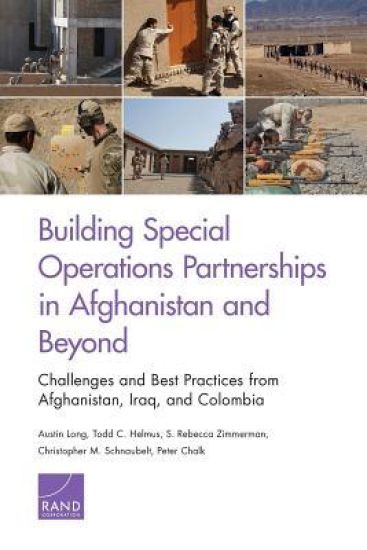
Building Special Operations Partnerships in Afghanistan and Beyond

Building Special Operations Partnerships in Afghanistan and Beyond

Austin Long; Todd C. Helmus; S. Rebecca Zimmerman; Christopher M. Schnaubelt; Peter Chalk

RAND
2015
pokkari
Building the capacity of Afghan special operations forces (SOF) is a key goal of the United States and its coalition partners. This report summarizes key partnering practices and presents findings from SOF partnership case studies in Afghanistan, Iraq, and Colombia. The goal is to identify best practices to benefit the development of Afghan SOF, as well as for special operations partnerships beyond Afghanistan.
Lessons from Department of Defense Disaster Relief Efforts in the Asia-Pacific Region

Lessons from Department of Defense Disaster Relief Efforts in the Asia-Pacific Region

Jennifer D. P. Moroney; Stephanie Pezard; Laurel E. Miller; Jeffrey Engstrom; Peter Chalk; Abby Doll

RAND
2013
pokkari
The Department of Defense has long played a major role in humanitarian assistance/disaster response (HA/DR) operations due to its unique capabilities, manpower, and forward-deployed resources. The Asia-Pacific region is of particular importance because it bears the brunt of the majority of the world's natural disasters and is home to key U.S. allies. In an effort to improve the effectiveness of such operations, this report analyzes recent HA/DR operations in Burma, Indonesia, Pakistan, and Japan, and identifies lessons that can be applied in the future.
India's and Pakistan's Strategies in Afghanistan
India and Pakistan have very different visions for Afghanistan, and they seek to advance highly disparate interests through their respective engagements in the country. This paper reviews the countries' interests in Afghanistan, how they have tried to further their interests, how Afghanistan navigates their rivalry, and the rivalry's implications for U.S. and Indian policy.
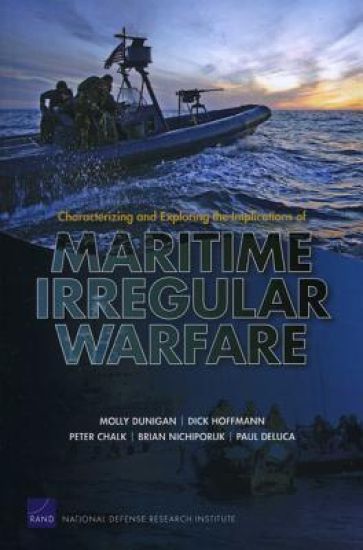
Characterizing and Exploring the Implications of Maritime Irregular Warfare

Characterizing and Exploring the Implications of Maritime Irregular Warfare

Molly Dunigan; Dick Hoffmann; Peter Chalk; Brian Nichiporuk; Paul DeLuca

RAND
2012
pokkari
Although irregular warfare includes a range of activities in which naval forces have played an integral role, there has been little examination of the characteristics or potential of such operations in maritime environments. An assessment of the maritime component of a series of historical and ongoing operations reveals that current notions of irregular warfare would benefit from increased recognition of potential maritime contributions.
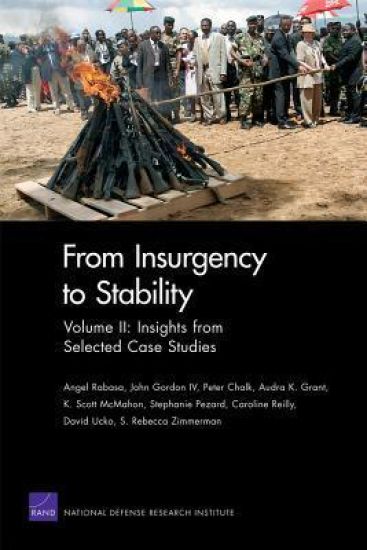
From Insurgency to Stability

From Insurgency to Stability

Angel Rabasa; John Gordon; Peter Chalk; Audra K. Grant; Scott K. McMahon; Stephanie Pezard; Caroline Reilly; David Ucko; Rebecca Zimmerman

RAND
2011
nidottu
This book examines six case studies of insurgencies from around the world to determine the key factors necessary for a successful transition from counterinsurgency to a more stable situation. The authors review the causes of each insurgency and the key players involved, and examine what the government did right - or wrong - to bring the insurgency to an end and to transition to greater stability.
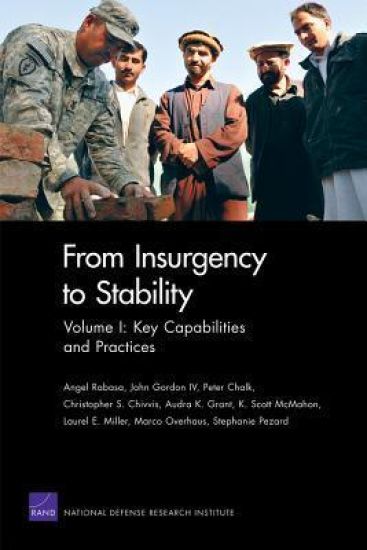
From Insurgency to Stability

From Insurgency to Stability

Angel Rabasa; John Gordon; Peter Chalk; Christopher S. Chivvis; Audra K. Grant; Scott K. McMahon; Laurel E. Miller; Marco Overhaus; Stephanie Pezard

RAND
2011
pokkari
This book identifies the procedures and capabilities that the U.S. Department of Defense, other agencies of the U.S. government, U.S. allies and partners, and international organizations require in order to support the transition from counterinsurgency, when the military takes primary responsibility for security and economic operations, to stability and reconstruction, when police and civilian government agencies take the lead.
Corporations and Counterinsurgency

Corporations and Counterinsurgency

William Rosenau; Peter Chalk; Renny McPherson; Michelle Parker; Austin Long

RAND
2009
pokkari
Multinational corporations can be significant actors in zones of violent conflict. Corporate actions to shape their environment can sometimes mitigate conflict, but as the authors show in their case studies, corporate activities can help generate and sustain violence.
The Evolving Terrorist Threat to Southeast Asia
Building on prior RAND research analyzing the motives, drivers, and capabilities of the principal extremist groups operating in the Philippines, southern Thailand, and Indonesia, this study examined the historical roots of militancy in these countries, the development and perpetuation of extremist ideological frameworks, and national and international government response efforts.
The Malay-Muslim Insurgency in Southern Thailand
Current unrest in the Malay-Muslim provinces of southern Thailand has captured growing national, regional, and international attention due to the heightened tempo and scale of rebel attacks, the increasingly jihadist undertone that has come to characterize insurgent actions, and the central government's often brutal handling of the situation on the ground. This paper assesses the current situation and its probable direction. This paper assesses the current situation and its probable direction.
The Maritime Dimension of International Security
The vast size and highly unregulated nature of the world's waterways have made the maritime environment an increasingly attractive theater for perpetrators of transnational violence. Piracy and sea-borne terrorism have been on the rise since 2000. While the United States has spearheaded several important initiatives to improve maritime security, the author urges policymakers to consider four additional measures to safeguard the world's oceans.
Sharing the Dragon's Teeth

Sharing the Dragon's Teeth

Kim Cragin; Peter Chalk; Sara A. Daly; Brian A. Jackson

RAND
2007
pokkari
Terrorist groups - both inside and outside the al Qaeda network - sometimes form mutually beneficial partnerships to exchange "best practices." Operation Enduring Freedom and the global war on terrorism forced many members of al Qaeda to disperse, while like-minded terrorist groups have formed regional alliances and other terrorist groups that are not linked ideologically have formed mutually beneficial partnerships. Understanding these interactions is essential to ongoing and future efforts to counter terrorist threats. This volume examines how eleven terrorist groups in three distinct areas (Mindanao, the West Bank and Gaza Strip, and southwest Colombia) have attempted to exchange technologies and knowledge. The authors chose case studies in regions where terrorist groups are highly capable, thus the technologies and exchange processes are weighed toward success and should be of significant concern to the U.S. national security community. The authors examine a variety of technologies and exchange processes, ranging from remote-detonation devises to converted field ordnance to katyusha rockets.The authors' conclusions relate to improving threat assessments, disrupting innovation processes, and affecting terrorist groups' cost-benefit analyses. This volume should be of interest to homeland security policymakers, the national security community, as well as academics, students, and professionals in counterterrorism, homeland security, and organizational learning.
Securing Tyrants or Fostering Reform?

Securing Tyrants or Fostering Reform?

Seth G Jones; Olga Oliker; Peter Chalk; Christine Fair; Rollie Lal

RAND
2006
pokkari
This study examines the results of U.S. assistance to the internal security forces of four repressive states: El Salvador, Uzbekistan, Afghanistan, and Pakistan. Efforts to improve the security, human rights, and accountability of security forces appear more likely to succeed in states transitioning from repressive to democratic systems. In addition, several factors are critical for success: the duration of assistance, viability of the justice system, and support and buy-in from the local government (including key ministries).