Kirjojen hintavertailu. Mukana 12 290 406 kirjaa ja 12 kauppaa.

Kirjailija

Peter Clark

Kirjat ja teokset yhdessä paikassa: 60 kirjaa, julkaisuja vuosilta 1988-2026, suosituimpien joukossa The Price of Power. Vertaile teosten hintoja ja tarkista saatavuus suomalaisista kirjakaupoista.

60 kirjaa

Kirjojen julkaisuhaarukka 1988-2026.

Life

Life

Peter Clark

UNIVERSITY OF TORONTO PRESS
2026
sidottu
Examining how life came to be on Earth, this book asks the question: How could life have emerged from a catastrophic event? Primordial Earth was rendered into a blank canvas when it was struck by a Mars-sized object. The discussion in this book illustrates the importance of the high-temperature, chaotic system created in reaction and offers a consequential explanation of how chiral selection of amino acids occurred in the first steps to life. Unlike much of the discussion in origin-of-life literature that favours an RNA-first world, chemistry researcher Peter D. Clark proposes a sequence of events based on their probability: namely, conversion of simple gases into amino acids, their simultaneous chiral selection and polymerization to L-enriched polypeptides, and then synthesis of RNA. Consequential evolution of this chemical system would then lead to the emergence of a codependent polypeptide–RNA chemical landscape and a rudimentary genetic code. Clark suggests that the important step of encapsulating replicating assemblies in a rudimentary cell membrane facilitated phosphate re-cycle – enabling development of life’s universal energy generation machinery, the proton motive force. Applying these hypotheses to the potential for the development of life elsewhere in the solar system, this book demonstrates the possibility of simple life throughout the universe.

Dickens's Kent

Dickens's Kent

Peter Clark

Haus Publishing
2024
pokkari
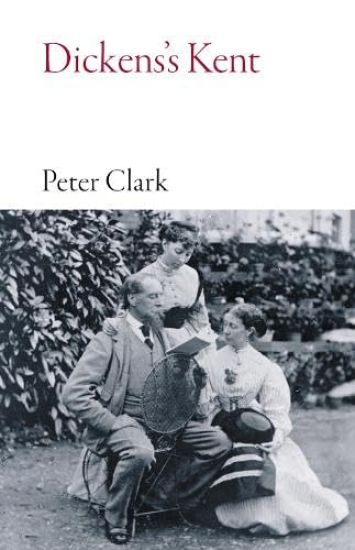
Outside London, there is no part of Britain that has such intimate and sustained associations with Charles Dickens as Kent. Dickens's life was restless and nomadic, but it was the tranquillity of his Kentish childhood that provided the background for some of his first ventures into fiction and inspiration for parts of his later novels. The county remained a lifelong refuge from the chaos of the capital.In Dickens's Kent, Peter Clark follows the writer's footsteps from the house he shared with his first wife, Catherine, in Tavistock Square to his home at Gad's Hill Place, near Rochester, where he died in 1870. Clark goes on to explore the areas of Kent most closely associated with Dickens's life and work - the Medway Towns and their surroundings, Thanet and East Kent, and finally Staplehurst, the scene of the railway accident that almost killed him.
The Men of 1924

The Men of 1924

Peter Clark

Haus Publishing
2023
sidottu
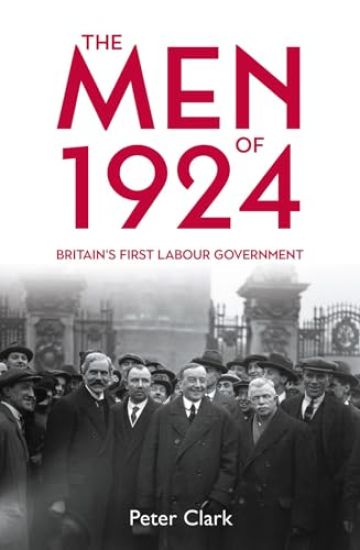
The new Cabinet in January 1924 consisted, as governments had for generations, of twenty white, middle-aged men. But that is where the similarities with previous governments ended, for the election of Britain's first Labour administration witnessed a radical departure from government by the ruling class. Replacing Stanley Baldwin's Conservatives were Ramsay MacDonald's Labour, the majority of whom had left school by the age of fifteen. Five of them had started work by the time they were twelve years old. Three were working down the mines before they entered their teens. Two were illegitimate, one was a foundling, three were of Irish immigrant descent. For the first time in Britain's history the Cabinet could truly be said to represent all of Britain's social classes.This unheralded revolution in representation is the subject of Peter Clark's fascinating new book, The Men of 1924. Who were these men? Clark's vivid portrayal is full of evocative portraits of a new breed of politician, the forerunners of all those who, later in the last century and in this one, overcame a system from which they had been excluded for too long.
Churchill's Britain

Churchill's Britain

Peter Clark

Haus Publishing
2023
pokkari
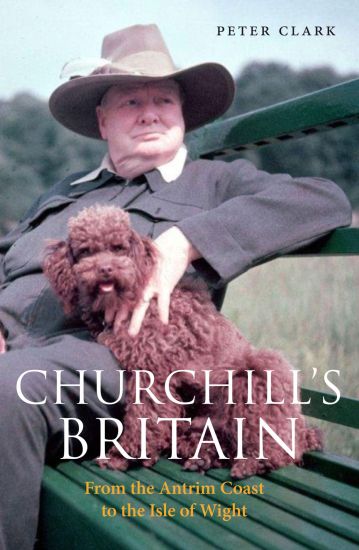
More books have been written about Winston Churchill than any modern historical figure, but Peter Clark's Churchill's Britain does something quite different. It takes the reader the length and breadth of Britain and Ireland to lesser-known places associated with Churchill's life. Some are familiar - Blenheim Palace, Chartwell, the Cabinet War Rooms - but we also see his schools, far-flung parliamentary constituencies in Dundee and Epping, the sites of famous speeches, the place he started to paint, the shop he bought his cigars, and the final resting places of his family and close friends. We read about these places in his own words alongside Clark's insightful analysis and, by visiting sites that made important but less-celebrated contributions to the story of Churchill's life, we come closer to a full picture. Clark takes us from the site of his father's marriage proposal to his American future wife on the Isle of Wight to his grave in a country churchyard in Oxfordshire. Each of the eight regions of the United Kingdom is introduced with a map, and the entries cross-referenced. It can be dipped into, consulted by the traveller, or read straight through. However used, Churchill's Britain provides fascinating and fresh insights into this extraordinary man.
Alpha One Sixteen

Alpha One Sixteen

Peter Clark

Casemate
2022
nidottu
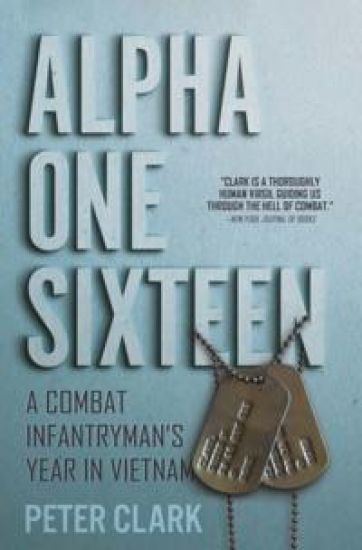
Peter Clark's year in Vietnam began in July 1966, when he was shipped out with hundreds of other young recruits, as a replacement in the 1st Infantry Division. Clark was assigned to the Alpha Company. Clark gives a visceral, vivid and immediate account of life in the platoon, as he progresses from green recruit to seasoned soldier over the course of a year in the complexities of the Vietnamese conflict. Clark gradually learns the techniques developed by US troops to cope with the daily horrors they encountered, the technical skills needed to fight and survive, and how to deal with the awful reality of civilian casualties. Fighting aside, it rained almost every day and insect bites constantly plagued the soldiers as they moved through dense jungle, muddy rice paddy and sandy roads. From the food they ate (largely canned meatballs, beans and potatoes) to the inventive ways they managed to shower, every aspect of the platoon's lives is explored in this revealing book. The troops even managed to fit in some R&Rwhilst off-duty in the bars of Tokyo. Alpha One Sixteen follows Clark as he discovers how to cope with the vagaries of the enemy and the daily confusion the troops faced in distinguishing combatants from civilians. The Viet Cong were a largely unseen enemy who fought a guerrilla war, setting traps and landmines everywhere. Clark's vigilance develops as he gets used to 'living in mortal terror,' which a brush with death in a particularly terrifying fire fight does nothing to dispel. As he continues his journey, he chronicles those less fortunate; the heavy toll being taken all round him is powerfully described at the end of each chapter.
Churchill's Britain

Churchill's Britain

Peter Clark

Haus Publishing
2020
sidottu
More than half a century after his death, Winston Churchill, the most significant British statesman of the twentieth century, continues to intrigue us. Peter Clark's book, however, is not merely another Churchill biography. Churchill's Britain takes us on a geographical journey through Churchill's life, leading us in Churchill's footsteps through locations in Britain and Ireland that are tied to key aspects of his biography. Some are familiar-Blenheim Palace, where he was born; Chartwell, his beloved house in the country; and the Cabinet War Rooms, where he planned the campaigns of World War II. But we also are taken to his schools, his parliamentary constituencies, locations of famous speeches, the place where he started to paint, the tobacco shop where he bought his cigars, and the graves of his family and close friends. Clark brings us close to the statesman Churchill by visiting sites that were important to the story of his long life, from the site where his father proposed to his American mother on the Isle of Wight to his grave in a country churchyard in Oxfordshire. Designed as a gazetteer with helpful regional maps, Churchill's Britain can be dipped into, consulted by the traveler on a Churchill tour of Britain, or read straight through--and no matter how it's read, it will deliver fresh insights into this extraordinary man.
Dickens's London

Dickens's London

Peter Clark

The Armchair Traveller at the Bookhaus
2019
pokkari
Few novelists have written so intimately about a city in the way that Charles Dickens wrote about London. A near-photographic memory made his contact with the city indelible from a very young age and it remained his constant focus. Virginia Woolf maintained that, `we remodel our psychological geography when we read Dickens,’ as he produces `characters who exist not in detail, not accurately or exactly, but abundantly in a cluster of wild yet extraordinarily revealing remarks.’ But the `character’ he was drawn back to throughout his novels was London itself, all aspects of the capital from the coaching inns of his early years to the taverns and watermen of the Thames; these were the constant cityscapes of his life and work. Based on five walks in central London, Peter Clark illuminates the settings of Dickens’s London, his life, his journalism and his fiction. He also explores `The First Suburbs’ (Camden Town, Chelsea, Greenwich, Hampstead, Highgate and Limehouse) as they feature in Dickens’s writing.
Chalk Hill

Chalk Hill

Peter Clark; Grant Shand; Jake Weekes

Sidestone Press
2019
nidottu
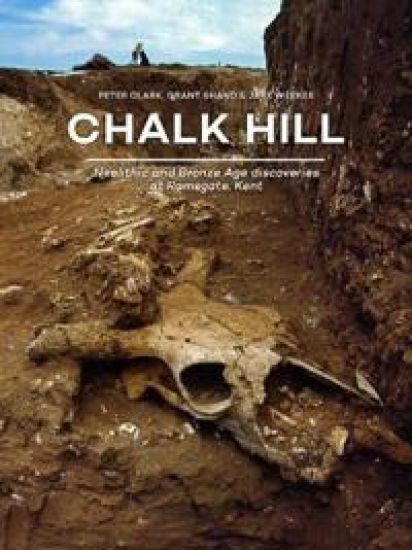
Excavations at Chalk Hill, Ramsgate in south-eastern Britain were primarily aimed at investigating the remains of a possible early Neolithic causewayed enclosure visible on aerial photographs. However, the monument could not in fact be categorised as a causewayed enclosure, but instead represented a type of early Neolithic ritual monument unique to the British Isles.The earliest significant features recorded on the site dated to the early Neolithic (roughly 3700–3600 cal BC). They took the form of three concentric arcs of intercutting pit clusters forming discrete ‘segments’, the fills of which produced rich assemblages of pottery, flintwork, animal bone and other material. Much of this material appeared to have been deliberately placed in the pits rather than representing casual disposal of refuse. There are indications that material placed in different pits at different times may have derived from the same source, a ‘midden’ or some such which was not located during the excavations. The pit clusters appeared to have resulted from repeated pit-digging in the same location over an extended period of time. The site therefore contributes a more nuanced understanding of the heterogeneity of monumental architecture in the early Neolithic of the British Isles.This report is therefore critical for understanding the early Neolithisation of southern Britain, the relations between Neolithic incomers and indigenous Mesolithic hunter-gatherers, the potential creolisation of different cultural groups and cross-Channel relations in the early 4th Millennium BC.The site probably went out of use in around 3600 cal BC, and subsequent use of the landscape in the Bronze Age and later periods is evocative of the perception of ‘special places’ in the landscape long after they were abandoned.With contributions by Enid Allison, Alex Bayliss, Robin Bendrey, Christopher Bronk Ramsey, Kate Clark, Alex Gibson, Chris Green, Louise Harrison, Frances Healy, Linda Hurcombe, Rob Ixer, Jacqueline McKinley, Barbara McNee, Ruth Pelling, Nicola Powell, Louise Rayner, Paula Reimer, Johannes van der Plicht, Alasdair Whittle and Tania Wilson
Chalk Hill

Chalk Hill

Peter Clark; Grant Shand; Jake Weekes

Sidestone Press
2019
sidottu
Excavations at Chalk Hill, Ramsgate in south-eastern Britain were primarily aimed at investigating the remains of a possible early Neolithic causewayed enclosure visible on aerial photographs. However, the monument could not in fact be categorised as a causewayed enclosure, but instead represented a type of early Neolithic ritual monument unique to the British Isles.The earliest significant features recorded on the site dated to the early Neolithic (roughly 3700–3600 cal BC). They took the form of three concentric arcs of intercutting pit clusters forming discrete ‘segments’, the fills of which produced rich assemblages of pottery, flintwork, animal bone and other material. Much of this material appeared to have been deliberately placed in the pits rather than representing casual disposal of refuse. There are indications that material placed in different pits at different times may have derived from the same source, a ‘midden’ or some such which was not located during the excavations. The pit clusters appeared to have resulted from repeated pit-digging in the same location over an extended period of time. The site therefore contributes a more nuanced understanding of the heterogeneity of monumental architecture in the early Neolithic of the British Isles.This report is therefore critical for understanding the early Neolithisation of southern Britain, the relations between Neolithic incomers and indigenous Mesolithic hunter-gatherers, the potential creolisation of different cultural groups and cross-Channel relations in the early 4th Millennium BC.The site probably went out of use in around 3600 cal BC, and subsequent use of the landscape in the Bronze Age and later periods is evocative of the perception of ‘special places’ in the landscape long after they were abandoned.With contributions by Enid Allison, Alex Bayliss, Robin Bendrey, Christopher Bronk Ramsey, Kate Clark, Alex Gibson, Chris Green, Louise Harrison, Frances Healy, Linda Hurcombe, Rob Ixer, Jacqueline McKinley, Barbara McNee, Ruth Pelling, Nicola Powell, Louise Rayner, Paula Reimer, Johannes van der Plicht, Alasdair Whittle and Tania Wilson
Emirates Diaries

Emirates Diaries

Peter Clark

Medina Publishing Ltd
2017
pokkari
Emirates Diaries tells the story of how Peter Clark came to love the Emirates and its people. He got to know Abu Dhabi sheikhs and Dubai merchants and people at every level of society. The country was on the cusp of enormous economic expansion and this book is an affectionate picture of the Emirates when it was still like a chain of large informal villages. The people of the UAE were aware of their good fortune and were, he found, open, generous and innovative. Clark arranged for the explorer Wilfred Thesiger to return to the country he had celebrated before it became oil-rich. Thanks to Peter, Thesiger met up with his old companions who had accompanied him in crossing the Empty Quarter 40 years earlier. Peter embedded himself in the local cultural scene and translated stories by Dubai's best known writer, Muhammad al-Murr. Emirates Diaries tells of opera in Ras Al Khaimah, how Shakespeare was brought to large audiences of young people, how to organize a royal visit, an outbreak of foot and mouth disease among the oryx in the Al Ain zoo, the culture of camel racing and an unpaid bill left by Margaret Thatcher. The diaries sparkle with mischievous humor and acute observation. This book is a prequel to Peter Clark's Damascus Diaries: Life under the Assads, described by The Economist as 'quirky, digressive and indiscreet'.
Inner Peace Volume 3 Pocket Edition LH: 55 Mandala Images Left Handed

Inner Peace Volume 3 Pocket Edition LH: 55 Mandala Images Left Handed

Peter Clark

Createspace Independent Publishing Platform
2017
nidottu
A left-handed coloring book of mandala-style images. Fifty-five images to delight the colorists of various styles and levels of difficulty.Each mandala image is printed one-sided and has a removable page at the back to slip under the colored page. This pocket version and left-handed will delight anyone who hates turning coloring books upside down for comfort. 6" x 9" is an excellent size for slipping into a pocket, handbag, or beach bag.Whenever traveling, take it with you for quiet moments. Order today, and it will be with you in a few days. A right-hand version of this adult coloring book is also available, as are right and left-hand full-size versions.