Kirjojen hintavertailu. Mukana 12 390 323 kirjaa ja 12 kauppaa.

Kirjailija

Peter D. Hershock

Kirjat ja teokset yhdessä paikassa: 9 kirjaa, julkaisuja vuosilta 1999-2025, suosituimpien joukossa Chan Buddhism. Vertaile teosten hintoja ja tarkista saatavuus suomalaisista kirjakaupoista.

9 kirjaa

Kirjojen julkaisuhaarukka 1999-2025.

Chan Buddhism

Chan Buddhism

Peter D. Hershock

University of Hawai'i Press
2004
nidottu
Chan Buddhism has become paradigmatic of Buddhist spirituality. Known in Japan as Zen and in Korea as Son, it is one of the most strikingly iconoclastic spiritual traditions in the world. This succinct and lively work clearly expresses the meaning of Chan as it developed in China more than a thousand years ago and provides useful insights into the distinctive aims and forms of practice associated with the tradition, including its emphasis on the unity of wisdom and practice; the reality of ""sudden awakening""; the importance of meditation; the use of ""shock tactics""; the centrality of the teacher-student relationship; and the celebration of enlightenment narratives, or koans. Unlike many scholarly studies, which offer detailed perspectives on historical development, or guides for personal practice written by contemporary Buddhist teachers, this volume takes a middle path between these two approaches, weaving together both history and insight to convey to the general reader the conditions, energy, and creativity that characterize Chan. Following a survey of the birth and development of Chan, its practices and spirituality are fleshed out through stories and teachings drawn from the lives of four masters: Bodhidharma, Huineng, Mazu, and Linji. Finally, the meaning of Chan as a living spiritual tradition is addressed through a philosophical reading of its practice as the realization of wisdom, attentive mastery, and moral clarity.
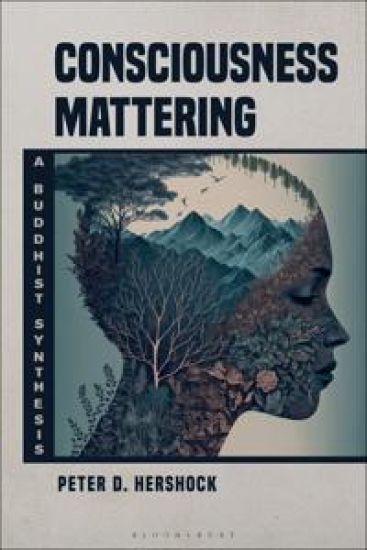
Consciousness Mattering

Consciousness Mattering

Peter D. Hershock

BLOOMSBURY PUBLISHING PLC
2025
nidottu
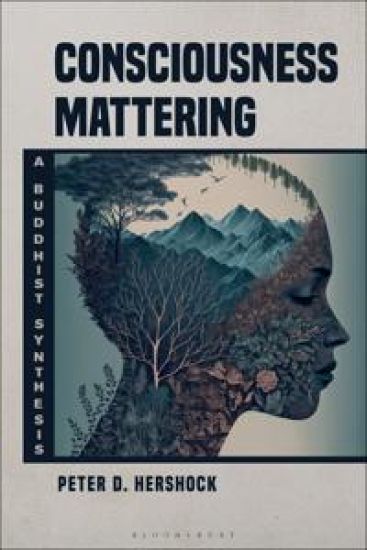
Consciousness Mattering presents a contemporary Buddhist theory in which brains, bodies, environments, and cultures are relational infrastructures for human consciousness. Drawing on insights from meditation, neuroscience, physics, and evolutionary theory, it demonstrates that human consciousness is not something that occurs only in our heads and consists in the creative elaboration of relations among sensed and sensing presences, and more fundamentally between matter and what matters. Hershock argues that without consciousness there would only be either unordered sameness or nothing at all. Evolution is consciousness mattering. Shedding new light on the co-emergence of subjective awareness and culture, the possibility of machine consciousness, the risks of algorithmic consciousness hacking, and the potentials of intentionally altered states of consciousness, Hershock invites us to consider how freely, wisely, and compassionately consciousness matters.
Consciousness Mattering

Consciousness Mattering

Peter D. Hershock

BLOOMSBURY PUBLISHING PLC
2023
sidottu
Consciousness Mattering presents a contemporary Buddhist theory in which brains, bodies, environments, and cultures are relational infrastructures for human consciousness. Drawing on insights from meditation, neuroscience, physics, and evolutionary theory, it demonstrates that human consciousness is not something that occurs only in our heads and consists in the creative elaboration of relations among sensed and sensing presences, and more fundamentally between matter and what matters. Hershock argues that without consciousness there would only be either unordered sameness or nothing at all. Evolution is consciousness mattering. Shedding new light on the co-emergence of subjective awareness and culture, the possibility of machine consciousness, the risks of algorithmic consciousness hacking, and the potentials of intentionally altered states of consciousness, Hershock invites us to consider how freely, wisely, and compassionately consciousness matters.
Buddhism and Intelligent Technology

Buddhism and Intelligent Technology

Peter D. Hershock

Bloomsbury Academic
2021
nidottu
Machine learning, big data and AI are reshaping the human experience and forcing us to develop a new ethical intelligence. Peter Hershock offers a new way to think about attention, personal presence, and ethics as intelligent technology shatters previously foundational certainties and opens entirely new spaces of opportunity.Rather than turning exclusively to cognitive science and contemporary ethical theories, Hershock shows how classical Confucian and Socratic philosophies help to make visible what a history of choices about remaking ourselves through control biased technology has rendered invisible. But it is in Buddhist thought and practice that Hershock finds the tools for valuing and training our attention, resisting the colonization of consciousness, and engendering a more equitable and diversity-enhancing human-technology-world relationship. Focusing on who we need to be present as to avoid a future in which machines prevent us from either making or learning from our own mistakes, Hershock offers a constructive response to the unprecedented perils of intelligent technology and seamlessly blends ancient and contemporary philosophies to envision how to realize its equally unprecedented promises.
Buddhism and Intelligent Technology

Buddhism and Intelligent Technology

Peter D. Hershock

Bloomsbury Academic
2021
sidottu
Machine learning, big data and AI are reshaping the human experience and forcing us to develop a new ethical intelligence. Peter Hershock offers a new way to think about attention, personal presence, and ethics as intelligent technology shatters previously foundational certainties and opens entirely new spaces of opportunity.Rather than turning exclusively to cognitive science and contemporary ethical theories, Hershock shows how classical Confucian and Socratic philosophies help to make visible what a history of choices about remaking ourselves through control biased technology has rendered invisible. But it is in Buddhist thought and practice that Hershock finds the tools for valuing and training our attention, resisting the colonization of consciousness, and engendering a more equitable and diversity-enhancing human-technology-world relationship. Focusing on who we need to be present as to avoid a future in which machines prevent us from either making or learning from our own mistakes, Hershock offers a constructive response to the unprecedented perils of intelligent technology and seamlessly blends ancient and contemporary philosophies to envision how to realize its equally unprecedented promises.
Public Zen, Personal Zen

Public Zen, Personal Zen

Peter D. Hershock

Rowman Littlefield
2014
sidottu
Among Buddhist traditions, Zen has been remarkably successful in garnering and sustaining interest outside the Buddhist homelands of Asia, and “zen” is now part of the global cultural lexicon. This deeply informed book explores the history of this enduring Japanese tradition—from its beginnings as a form of Buddhist thought and practice imported from China to its reinvention in medieval Japan as a force for religious, political, and cultural change to its role in Japan’s embrace of modernity. Going deeper, it also explores Zen through the experiences and teachings of key individuals who shaped Zen as a tradition committed to the embodiment of enlightenment by all. By bringing together Zen’s institutional and personal dimensions, Peter D. Hershock offers readers a nuanced yet accessible introduction to Zen as well as distinctive insights into issues that remain relevant today, including the creative tensions between globalization and localization, the interplay of politics and religion, and the possibilities for integrating social transformation with personal liberation. Including an introduction to the basic teachings and practices of Buddhism and an account of their spread across Asia, Public Zen, Personal Zen deftly blends historical detail with the felt experiences of Zen practitioners grappling with the meaning of human suffering, personal freedom, and the integration of social and spiritual progress.
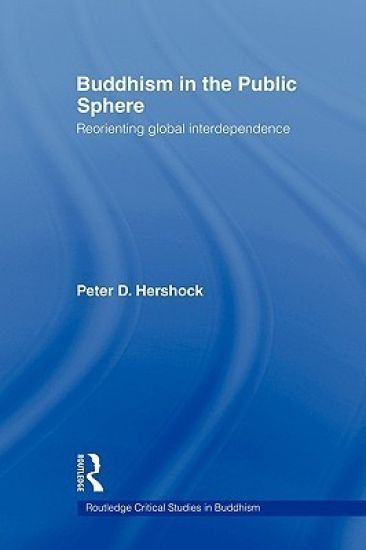
Buddhism in the Public Sphere

Buddhism in the Public Sphere

Peter D. Hershock

Routledge
2009
nidottu
The core teachings and practices of Buddhism are systematically directed toward developing keen and caring insight into the relational or interdependent nature of all things. Hershock applies Buddhist thought to reflect on the challenges to public good, created by emerging social, economic, and political realities associated with increasingly complex global interdependence.In eight chapters, the key arenas for public policy are addressed: the environment, health, media, trade and development, the interplay of politics and religion, international relations, terror and security, and education. Each chapter explains how a specific issue area has come to be shaped by complex interdependence and offers specific insights into directing the growing interdependence toward greater equity, sustainability, and freedom. Thereby, a sustained meditation on the meaning and means of realizing public good is put forward, which results in a solid Buddhist conception of diversity. Hershock argues that concepts of Karma and emptiness are relevant across the full spectrum of policy domains and that Buddhist concepts become increasingly forceful as concerns shift from the local to the global. A remarkable book on this fascinating religion, Buddhism in the Public Sphere will be of interest to scholars and students in Buddhist studies and Asian religion in general.
Buddhism in the Public Sphere

Buddhism in the Public Sphere

Peter D. Hershock

Routledge
2006
sidottu
The core teachings and practices of Buddhism are systematically directed toward developing keen and caring insight into the relational or interdependent nature of all things. Hershock applies Buddhist thought to reflect on the challenges to public good, created by emerging social, economic, and political realities associated with increasingly complex global interdependence.In eight chapters, the key arenas for public policy are addressed: the environment, health, media, trade and development, the interplay of politics and religion, international relations, terror and security, and education. Each chapter explains how a specific issue area has come to be shaped by complex interdependence and offers specific insights into directing the growing interdependence toward greater equity, sustainability, and freedom. Thereby, a sustained meditation on the meaning and means of realizing public good is put forward, which results in a solid Buddhist conception of diversity. Hershock argues that concepts of Karma and emptiness are relevant across the full spectrum of policy domains and that Buddhist concepts become increasingly forceful as concerns shift from the local to the global. A remarkable book on this fascinating religion, Buddhism in the Public Sphere will be of interest to scholars and students in Buddhist studies and Asian religion in general.
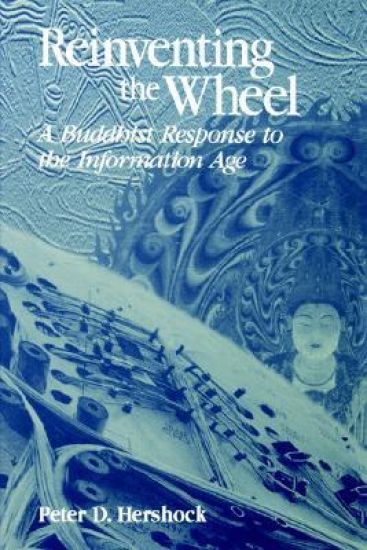
Reinventing the Wheel

Reinventing the Wheel

Peter D. Hershock

State University of New York Press
1999
pokkari
Suggests that certain Buddhist notions may act as an antidote to the adverse effects of high-tech media.By uniquely using Buddhist teachings, Reinventing the Wheel assesses the personal and communal costs of our global economic and technological commitments. Hershock urges reinvention of the technological "wheel," and, at the same time, acknowledges the need for new forms of practice suited to our rapidly evolving social, political, and economic circumstances. His persuasive presentation urges the skillful spinning of a new "wheel of the dharma."