Kirjojen hintavertailu. Mukana 12 390 323 kirjaa ja 12 kauppaa.

Kirjailija

Peter D. McDonald

Kirjat ja teokset yhdessä paikassa: 9 kirjaa, julkaisuja vuosilta 1997-2026, suosituimpien joukossa The Impossible Reversal. Vertaile teosten hintoja ja tarkista saatavuus suomalaisista kirjakaupoista.

Mukana myös kirjoitusasut: Peter D McDonald

9 kirjaa

Kirjojen julkaisuhaarukka 1997-2026.

The Impossible Reversal

The Impossible Reversal

Peter D. McDonald

UNIVERSITY OF MINNESOTA PRESS
2026
nidottu
Tracing the cultural history of play - from Fluxus to SimCity Games and gamified activities have become ubiquitous in many adults' lives, and play is widely valued for fostering creativity, community, growth, and empathy. But how did we come to our current understanding of what it means to play? The Impossible Reversal charts the transformation of notions of playfulness beginning in the second half of the twentieth century, when a legion of artists, academics, and engineers developed new ways of theorizing, structuring, and designing ludic activity. Through examples ranging from experimental Fluxus games to corporate role-playing exercises and from the Easy Bake Oven to Tetris, The Impossible Reversal presents four styles of playfulness characteristic of the "era of designed play": the impossible reversal, which puts a player in a seemingly hopeless scenario they must upend with a tiny gesture; expending the secret, which involves silly rules that gain an obscure power and require players to embrace failure; simulated freedom, a satiric criticism of the ordinary world; and oblique repetition, a way of playing that stumbles toward unimaginable outcomes through simple, meaningless, and endlessly iterated acts. A unique genealogical account of play as both concept and practice, The Impossible Reversal illuminates how playfulness became essential for understanding cultural, technical, and economic production in the United States. Retail e-book files for this title are screen-reader friendly with images accompanied by short alt text and/or extended descriptions.
The Impossible Reversal

The Impossible Reversal

Peter D. McDonald

UNIVERSITY OF MINNESOTA PRESS
2026
sidottu
Tracing the cultural history of play - from Fluxus to SimCity Games and gamified activities have become ubiquitous in many adults' lives, and play is widely valued for fostering creativity, community, growth, and empathy. But how did we come to our current understanding of what it means to play? The Impossible Reversal charts the transformation of notions of playfulness beginning in the second half of the twentieth century, when a legion of artists, academics, and engineers developed new ways of theorizing, structuring, and designing ludic activity. Through examples ranging from experimental Fluxus games to corporate role-playing exercises and from the Easy Bake Oven to Tetris, The Impossible Reversal presents four styles of playfulness characteristic of the "era of designed play": the impossible reversal, which puts a player in a seemingly hopeless scenario they must upend with a tiny gesture; expending the secret, which involves silly rules that gain an obscure power and require players to embrace failure; simulated freedom, a satiric criticism of the ordinary world; and oblique repetition, a way of playing that stumbles toward unimaginable outcomes through simple, meaningless, and endlessly iterated acts. A unique genealogical account of play as both concept and practice, The Impossible Reversal illuminates how playfulness became essential for understanding cultural, technical, and economic production in the United States. Retail e-book files for this title are screen-reader friendly with images accompanied by short alt text and/or extended descriptions.
The Double Life of Books

The Double Life of Books

Peter D McDonald

EDINBURGH UNIVERSITY PRESS
2024
sidottu
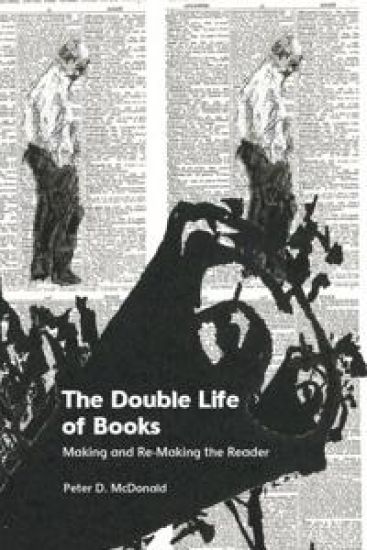
The Double Life of Books confronts a central challenge for the history of reading: how to investigate and then describe the elusive process of what the leading book historian Robert Darnton calls 'inner appropriation.' It does so by bringing two voices together for the first time: the so-called 'ordinary reader' who began life as a devotee of Dr Seuss's The Cat in the Hat and the literature professor who writes about the history of media and reading. Ranging across world literatures in English since the 1890s and drawing on the latest research into the neuroscience of the reading brain, The Double Life of Books is at once an exercise in materialist autobibliobiography, asking what it means to be a living reader in our multimedia age, and a sustained reflection on academic professionalization, raising new questions about the limits of disciplinarity and critique.
Run and Jump

Run and Jump

Peter D. McDonald

MIT PRESS LTD
2024
nidottu
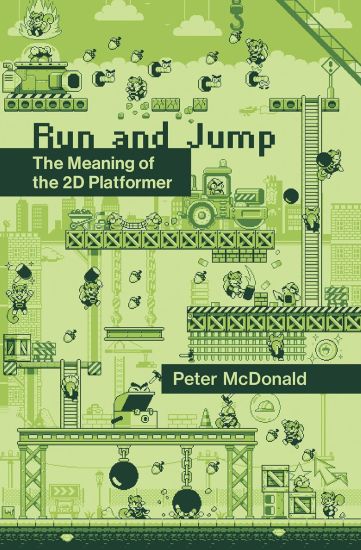
How abstract design decisions in 2D platform games create rich worlds of meaning for players. Since the 1980s, 2D platform games have captivated their audiences. Whether the player scrambles up the ladders in Donkey Kong or leaps atop an impossibly tall pipe in Super Mario Bros., this deceptively simple visual language has persisted in our cultural imagination of video games. In Run and Jump, Peter McDonald surveys the legacy of 2D platform games and examines how abstract and formal design choices have kept players playing. McDonald argues that there is a rich layer of meaning underneath, say, the quality of an avatar's movement, the pacing and rhythm of level design, the personalities expressed by different enemies, and the emotion elicited by collecting a coin. To understand these games, McDonald draws on technical discussions by game designers as well as theoretical work about the nature of signs from structuralist semiotics. Interspersed throughout are design exercises that show how critical interpretation can become a tool for game designers to communicate with their players. With examples drawn from over forty years of game history, and from games made by artists, hobbyists, iconic designers, and industry studios, Run and Jump presents a comprehensive--and engaging--vision of this slice of game history.
Artefacts of Writing

Artefacts of Writing

Peter D. McDonald

Oxford University Press
2017
sidottu
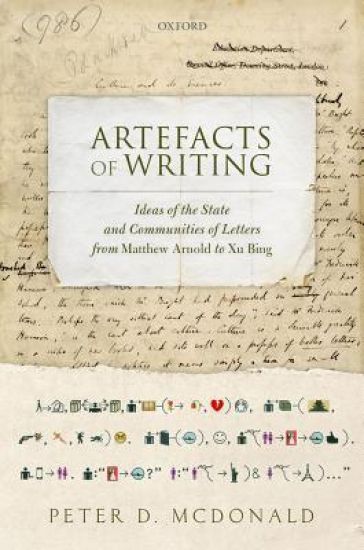
Some forms of literature interfere with the workings of the literate brain, posing a challenge to readers of all kinds, including professional literary critics. In Artefacts of Writing, Peter D. McDonald argues they pose as much of a challenge to the way states conceptualise language, culture, and community. Drawing on a wealth of evidence, from Victorian scholarly disputes over the identity of the English language to the constitutional debates about its future in Ireland, India, and South Africa, and from the quarrels over the idea of culture within the League of Nations in the interwar years to UNESCO's ongoing struggle to articulate a viable concept of diversity, McDonald brings together a large ensemble of legacy writers, including T.S. Eliot, James Joyce, and Rabindranath Tagore, putting them in dialogue with each other and with the policy-makers who shaped the formation of modern states and the history of internationalist thought from the 1860s to the 1940s. In the second part of the book, he reflects on the continuing evolution of these dialogues, showing how a varied array of more contemporary writers from Amit Chaudhuri, J. M. Coetzee, and Salman Rushdie to Antjie Krog, Arvind Krishna Mehrotra, and Es'kia Mphahlele cast new light on a range of questions concerning education, literacy, human rights, translation, indigenous knowledge, and cultural diversity that have preoccupied UNESCO since 1945. At once a novel contribution to institutional and intellectual history and an innovative exercise in literary and philosophical analysis, Artefacts of Writing affords a unique perspective on literature's place at the centre of some of the most fraught, often lethal public controversies that defined the long-twentieth century and that continue to haunt us today
The Literature Police

The Literature Police

Peter D. McDonald

Oxford University Press
2010
nidottu
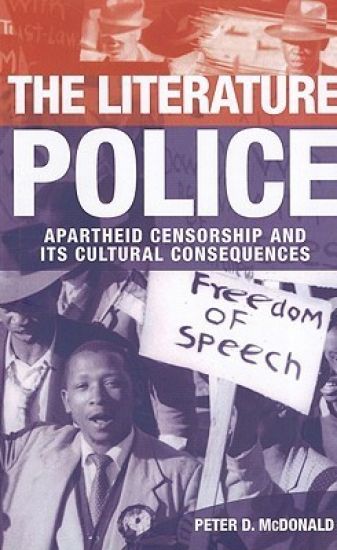
'Censorship may have to do with literature', Nadine Gordimer once said, 'but literature has nothing whatever to do with censorship.' As the history of many repressive regimes shows, this vital borderline has seldom been so clearly demarcated. Just how murky it can sometimes be is compellingly exemplified in the case of apartheid South Africa. For reasons that were neither obvious nor historically inevitable, the apartheid censors were not only the agents of the white minority government's repressive anxieties about the medium of print. They were also officially-certified guardians of the literary. This book is centrally about the often unpredictable cultural consequences of this paradoxical situation. Peter D. McDonald brings to light a wealth of new evidence - from the once secret archives of the censorship bureaucracy, from the records of resistance publishers and writers' groups both in the country and abroad - and uses extensive oral testimony. He tells the strangely tangled stories of censorship and literature in apartheid South Africa and, in the process, uncovers an extraordinarily complex web of cultural connections linking Europe and Africa, East and West. The Literature Police affords a unique perspective on one of the most anachronistic, exploitative, and racist modern states of the post-war era, and on some of the many forms of cultural resistance it inspired. It also raises urgent questions about how we understand the category of the literary in today's globalized, intercultural world.
British Literary Culture and Publishing Practice, 1880–1914

British Literary Culture and Publishing Practice, 1880–1914

Peter D. McDonald

Cambridge University Press
2002
pokkari
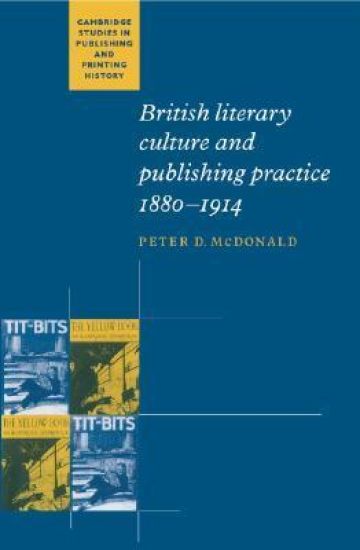
This book examines the radical transformation of British literary culture during the period 1880–1914 as seen through the early publishing careers of three highly influential writers, Joseph Conrad, Arnold Bennett and Arthur Conan Doyle. Peter D. McDonald examines the cultural politics of the period by considering the social structure of the literary world in which these writers were read and understood. Through a wealth of historical detail, he links the publishing history of key texts with the wider commercial, ideological, and literary themes in the period as a whole. By tracing the complex network of relationships among writers, publishers, printers, distributors, reviewers, and readers, McDonald demonstrates that the discursive qualities of these texts cannot be fully appreciated without understanding the material conditions of their production. In so doing, he makes social history a central part of literary studies, and shows the importance of the history of publishing in questions of critical interpretation.
British Literary Culture and Publishing Practice, 1880–1914

British Literary Culture and Publishing Practice, 1880–1914

Peter D. McDonald

Cambridge University Press
1997
sidottu
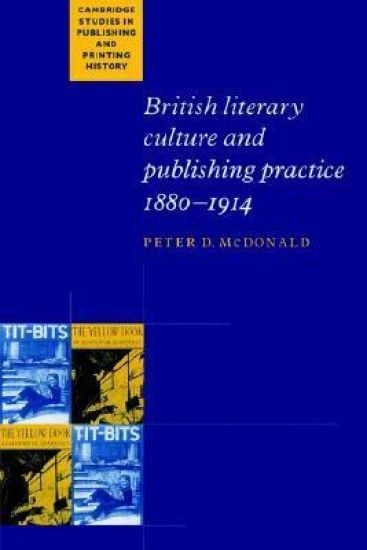
This book examines the radical transformation of British literary culture during the period 1880–1914 as seen through the early publishing careers of three highly influential writers, Joseph Conrad, Arnold Bennett and Arthur Conan Doyle. Peter D. McDonald examines the cultural politics of the period by considering the social structure of the literary world in which these writers were read and understood. Through a wealth of historical detail, he links the publishing history of key texts with the wider commercial, ideological, and literary themes in the period as a whole. By tracing the complex network of relationships among writers, publishers, printers, distributors, reviewers, and readers, McDonald demonstrates that the discursive qualities of these texts cannot be fully appreciated without understanding the material conditions of their production. In so doing, he makes social history a central part of literary studies, and shows the importance of the history of publishing in questions of critical interpretation.