Kirjojen hintavertailu. Mukana 12 166 913 kirjaa ja 12 kauppaa.

Kirjailija

Peter Dale Scott

Kirjat ja teokset yhdessä paikassa: 25 kirjaa, julkaisuja vuosilta 1989-2024, suosituimpien joukossa Minding the Darkness. Vertaile teosten hintoja ja tarkista saatavuus suomalaisista kirjakaupoista.

25 kirjaa

Kirjojen julkaisuhaarukka 1989-2024.

Dreamcraft

Dreamcraft

Peter Dale Scott

MCGILL-QUEEN'S UNIVERSITY PRESS
2024
nidottu
so the long stretch of life / reveals its curvature / by those widely separated // moments when we are / brushed / by this awareness // of an other / that we do not knowIn his latest collection of poems, poet, deep state researcher, and radical medievalist Peter Dale Scott interrogates topics that have occupied his later thought and writing, such as moreness (our need, as humans, to be more than we are), minding, and enmindment (the generative synergy, engaging both hemispheres of our bicameral mind, of intellectual and spiritual enlightenment, now out of kilter).In pursuit of these themes, Scott’s voice ranges far, from engaging with poets of the past and, hopefully, the future to critiques of coercive political power, from elegies for important figures in his life – Leonard Cohen, Daniel Ellsberg, Czeslaw Milosz, and Robert Silvers – to fan letters for “minders” Chelsea Manning and Dr Christine Blasey Ford.Dreamcraft is a book that crosses distances and straddles boundaries, moving from whistleblower law to the mimetic properties of DNA, from “the entropic spread / of the drifting cosmos / after the big bang” to “the push of lawn grass / under foot.”
Reading the Dream

Reading the Dream

Peter Dale Scott

BLOOMSBURY PUBLISHING PLC
2024
sidottu
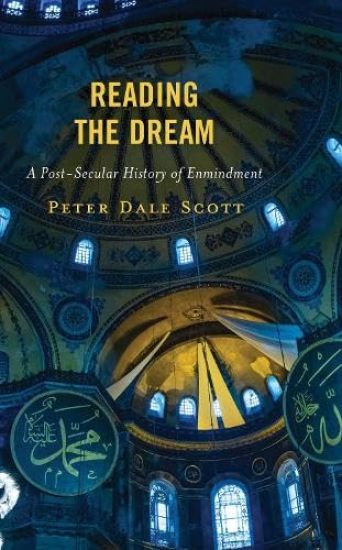
This book is at once a sweeping work of intellectual history and an intimate exploration of the human spiritual psyche. It covers the enduring development of social, cultural, and spiritual values that underlies the superficial rise and fall of political structures — and provides an inspiring basis of hope for the future of humanity. Appropriate for courses in Philosophy or Religion courses, this book will likely have a general following due to Scott’s name recognition in intellectual circles.
Reading the Dream

Reading the Dream

Peter Dale Scott

BLOOMSBURY PUBLISHING PLC
2024
nidottu
This book is at once a sweeping work of intellectual history and an intimate exploration of the human spiritual psyche. It covers the enduring development of social, cultural, and spiritual values that underlies the superficial rise and fall of political structures — and provides an inspiring basis of hope for the future of humanity. Appropriate for courses in Philosophy or Religion courses, this book will likely have a general following due to Scott’s name recognition in intellectual circles.
Die Politik des Tiefen Staats der USA

Die Politik des Tiefen Staats der USA

Peter Dale Scott

Books on Demand
2023
pokkari
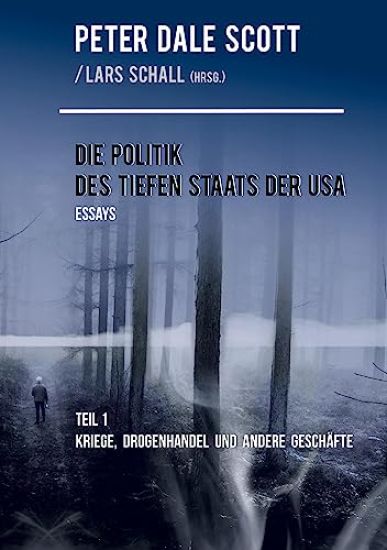
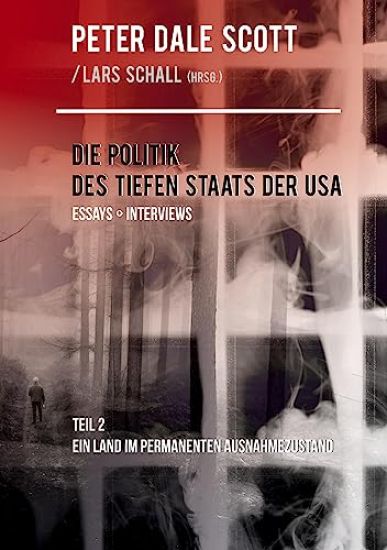
Erstmals erscheint n deutscher Sprache eine zweiteilige Ausgabe mit vielen umfangreichen Essays aus der Feder von Peter Dale Scott, einem Pionier im Bereich der Forschung zum Tiefen Staat in den USA. Das Resultat ist ein Nachschlagewerk zur Geschichte der Vereinigten Staaten von Amerika seit 1945 und ihren einschneidenden Episoden wie dem Vietnamkrieg, Iran-Contra und den 9/11-Terrorangriffen.
Die Politik des Tiefen Staats der USA

Die Politik des Tiefen Staats der USA

Peter Dale Scott

Books on Demand
2023
pokkari
Erstmals erscheint n deutscher Sprache eine zweiteilige Ausgabe mit vielen umfangreichen Essays aus der Feder von Peter Dale Scott, einem Pionier im Bereich der Forschung zum Tiefen Staat in den USA. Das Resultat ist ein Nachschlagewerk zur Geschichte der Vereinigten Staaten von Amerika seit 1945 und ihren einschneidenden Episoden wie dem Vietnamkrieg, Iran-Contra und den 9/11-Terrorangriffen.
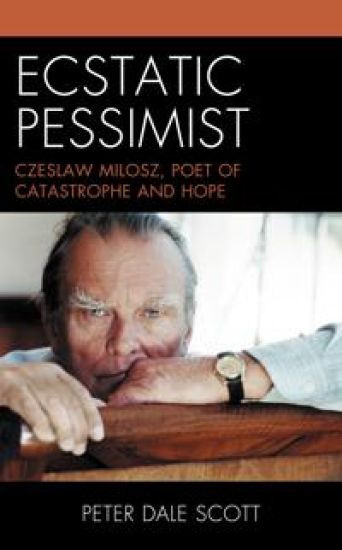
Ecstatic Pessimist

Ecstatic Pessimist

Peter Dale Scott

BLOOMSBURY PUBLISHING PLC
2023
nidottu
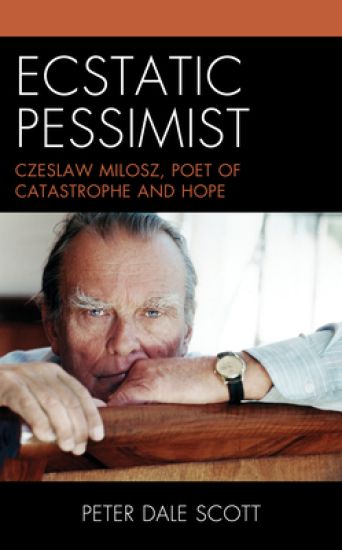
Ecstatic Pessimist is a timely book about the Central and Eastern European experience of the mid 20th century, as told through the poetry and experiences of Czeslaw Milosz, Nobel Laureate for literature, who wrote on the horrors of war and the human experience. Written by a colleague and friend of the poet, it is part literary criticism and part memoir. This biography/memoir of Czeslaw Milosz is a first hand account of the poet’s life and his relationship to the author, beginning in the 1960s. Milosz was a Polish-American poet, prose writer, translator, and diplomat. Regarded as one of the great poets of the 20th century, he won the 1980 Nobel Prize in Literature. In its citation, the Swedish Academy called Milosz a writer who "voices man's exposed condition in a world of severe conflicts".
Ecstatic Pessimist

Ecstatic Pessimist

Peter Dale Scott

BLOOMSBURY PUBLISHING PLC
2023
sidottu
Ecstatic Pessimist is a timely book about the Central and Eastern European experience of the mid 20th century, as told through the poetry and experiences of Czeslaw Milosz, Nobel Laureate for literature, who wrote on the horrors of war and the human experience. Written by a colleague and friend of the poet, it is part literary criticism and part memoir. This biography/memoir of Czeslaw Milosz is a first hand account of the poet’s life and his relationship to the author, beginning in the 1960s. Milosz was a Polish-American poet, prose writer, translator, and diplomat. Regarded as one of the great poets of the 20th century, he won the 1980 Nobel Prize in Literature. In its citation, the Swedish Academy called Milosz a writer who "voices man's exposed condition in a world of severe conflicts".
Poetry and Terror

Poetry and Terror

Peter Dale Scott; Robert Hass

Lexington Books
2019
nidottu
A study at many levels of Scott’s long poem Coming to Jakarta, a book-length response to a midlife crisis triggered in part by the author’s initial inability to share his knowledge and horror about American involvement in the great Indonesian massacre of 1965. Interviews with Ng supply fuller information about the poem’s discussions of: a) how this psychological trauma led to an explorations of violence in American society and then, after a key recognition, in the poet himself; b) the poem's look at east-west relations through the lens of the yin-yang, spiritual-secular doubleness of the human condition; c) how the process of writing the poem led to the recovery of memories too threatening at first to be retained by his normal presentational self, and d) the mystery of right action, guided by the Bhagavad Gita and the maxim in the Gospel of Thomas that "If you bring forth what is within you, what you bring forth will save you.” Led by the interviews to greater self-awareness, Scott then analyses his poem as also an elegy, not just for the dead in Indonesia, but “for the passing of the Sixties era, when so many of us imagined that a Movement might achieve major changes for a better America.” Subsequent chapters develop how human doubleness can lead to an inner tension between the needs of politics and the needs of poetry, and how some poetry can serve as a non-violent higher politics, contributing to the evolution of human culture and thus our “second nature.” The book also reproduces a Scott prose essay, inspired by the poem, on the U.S. involvement in and support for the 1965 massacre. It then discusses how this essay was translated into Indonesian and officially banned by the Indonesian dictatorship, and how ultimately it and the poem helped inspire the ground-breaking films of Josh Oppenheimer that have led to the first official discussions in Indonesia of what happened in 1965.
Poetry and Terror

Poetry and Terror

Peter Dale Scott; Robert Hass

Lexington Books
2018
sidottu
A study at many levels of Scott’s long poem Coming to Jakarta, a book-length response to a midlife crisis triggered in part by the author’s initial inability to share his knowledge and horror about American involvement in the great Indonesian massacre of 1965. Interviews with Ng supply fuller information about the poem’s discussions of: a) how this psychological trauma led to an explorations of violence in American society and then, after a key recognition, in the poet himself; b) the poem's look at east-west relations through the lens of the yin-yang, spiritual-secular doubleness of the human condition; c) how the process of writing the poem led to the recovery of memories too threatening at first to be retained by his normal presentational self, and d) the mystery of right action, guided by the Bhagavad Gita and the maxim in the Gospel of Thomas that "If you bring forth what is within you, what you bring forth will save you.” Led by the interviews to greater self-awareness, Scott then analyses his poem as also an elegy, not just for the dead in Indonesia, but “for the passing of the Sixties era, when so many of us imagined that a Movement might achieve major changes for a better America.” Subsequent chapters develop how human doubleness can lead to an inner tension between the needs of politics and the needs of poetry, and how some poetry can serve as a non-violent higher politics, contributing to the evolution of human culture and thus our “second nature.” The book also reproduces a Scott prose essay, inspired by the poem, on the U.S. involvement in and support for the 1965 massacre. It then discusses how this essay was translated into Indonesian and officially banned by the Indonesian dictatorship, and how ultimately it and the poem helped inspire the ground-breaking films of Josh Oppenheimer that have led to the first official discussions in Indonesia of what happened in 1965.
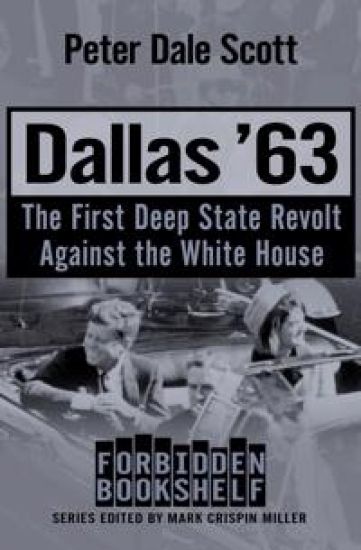
Dallas '63

Dallas '63

Peter Dale Scott

Open Road Media
2018
pokkari
“Our most provocative scholar of American power” reveals the forces behind the assassination of JFK—and their continuing influence over our world (David Talbot, Salon). On November 22, 1963, President John F. Kennedy was gunned down in Dallas by Lee Harvey Oswald. Shortly after, Oswald himself was killed. These events led many to believe there was a far greater plan at work, with a secret cabal of powerful men manipulating the public and shaping US policies both at home and abroad for their own interests. But no one could imagine how right they were. Beneath the orderly façade of the American government, there lies a complex network, only partly structural, linking Wall Street influence, corrupt bureaucracy, and the military-industrial complex. Here lies the true power of the American empire. This behind-the-scenes web is unelected, unaccountable, and immune to popular resistance. Peter Dale Scott calls this entity the deep state, and he has made it his life’s work to write the history of those who manipulate our government from the shadows. Since the aftermath of World War II, the deep state’s power has grown unchecked, and nowhere has it been more apparent than that day at Dealey Plaza. In this landmark volume, Scott traces how culpable elements in the CIA and FBI helped prepare for the assassination, and how the deep state continues to influence our politics today. As timely and important as ever in the current chaotic political climate, Dallas ’63 is a reality-shattering, frightening exposé not of those who govern us—but of those who govern those who govern us.
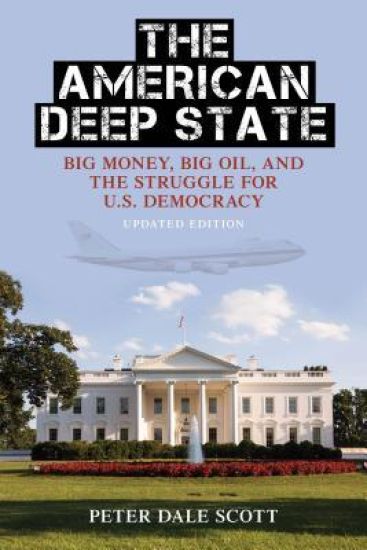
The American Deep State

The American Deep State

Peter Dale Scott

Rowman Littlefield
2017
nidottu
Now in a new edition updated through the unprecedented 2016 presidential election, this provocative book makes a compelling case for a hidden “deep state” that influences and often opposes official U.S. policies. Prominent political analyst Peter Dale Scott begins by tracing America’s increasing militarization, restrictions on constitutional rights, and income disparity since World War II. With the start of the Cold War, he argues, the U.S. government changed immensely in both function and scope, from protecting and nurturing a relatively isolated country to assuming ever-greater responsibility for controlling world politics in the name of freedom and democracy. This has resulted in both secretive new institutions and a slow but radical change in the American state itself. He argues that central to this historic reversal were seismic national events, ranging from the assassination of President Kennedy to 9/11. Scott marshals compelling evidence that the deep state is now partly institutionalized in non-accountable intelligence agencies like the CIA and NSA, but it also extends its reach to private corporations like Booz Allen Hamilton and SAIC, to which 70 percent of intelligence budgets are outsourced. Behind these public and private institutions is the influence of Wall Street bankers and lawyers, allied with international oil companies beyond the reach of domestic law. Undoubtedly the political consensus about America’s global role has evolved, but if we want to restore the country’s traditional constitutional framework, it is important to see the role of particular cabals—such as the Project for the New American Century—and how they have repeatedly used the secret powers and network of Continuity of Government (COG) planning to implement change. Yet the author sees the deep state polarized between an establishment and a counter-establishment in a chaotic situation that may actually prove more hopeful for U.S. democracy.
Walking on Darkness

Walking on Darkness

Peter Dale Scott

Sheep Meadow Press,U.S.
2016
nidottu
Praise for Peter Dale Scott Coming to Jakarta is the most important political poem to appear in the English language in a very long time. Robert Hass Peter Dale Scott s work] extends the scope of poetry, reclaiming some of the ground lost since Dryden, lost even since Pound. . . . A true invention, it should be of interest to all who read poetry. Thom Gunn Bold, idiosyncratic, and arresting Robert Pinsky"
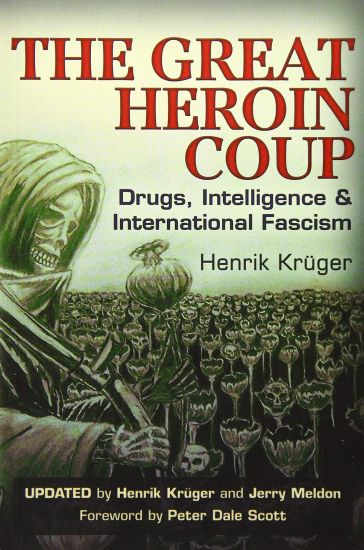
The Great Heroin Coup

The Great Heroin Coup

Henrik Krger; Jerry Meldon; Peter Dale Scott

Trine Day
2016
pokkari
In this new edition of a cult classic, Henrik KrÜger and Jerry Meldon have added new material and provided updates of the investigations Danish investigative author Henrik KrÜger set out to write a book about Christian David, a French criminal with a colorful past, and wound up writing a book—originally published in 1980—that spans all continents and names names all the way up to Richard Nixon. The Nixon administration and CIA wanted to eliminate the old French Connection and replace it with heroin from the Golden Triangle, partly in order to help finance operations in Southeast Asia. The book delves into the relationships between French and U.S. intelligence services and organized crime probing into the netherworld of narcotics, espionage, and international terrorism. It uncovers the alliances between the Mafia, right-wing extremists, neo-fascist OAS and SAC veterans in France, and Miami-based Cuban exiles. It lifts the veil on the global networks of parafascist terrorists who so frequently plot and murder with impunity, thanks to their relationships and services to the intelligence agencies of the so-called “free world.” In short, this updated edition tells a story which our own media have systematically failed to tell.
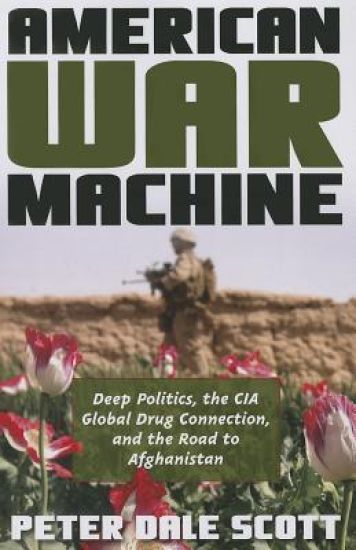
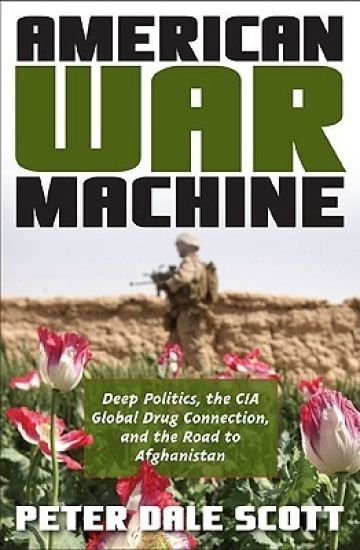
American War Machine

American War Machine

Peter Dale Scott

Rowman Littlefield Publishers
2014
nidottu
This provocative, thoroughly researched book explores the covert aspects of U.S. foreign policy. Prominent political analyst Peter Dale Scott marshals compelling evidence to expose the extensive growth of sanctioned but illicit violence in politics and state affairs, especially when related to America's long-standing involvement with the global drug traffic. Beginning with Thailand in the 1950s, Americans have become inured to the CIA's alliances with drug traffickers (and their bankers) to install and sustain right-wing governments. The pattern has repeated itself in Laos, Vietnam, Italy, Mexico, Thailand, Nigeria, Venezuela, Colombia, Peru, Chile, Panama, Honduras, Turkey, Pakistan, and now Afghanistan—to name only those countries dealt with in this book. Scott shows that the relationship of U.S. intelligence operators and agencies to the global drug traffic, and to other international criminal networks, deserves greater attention in the debate over the U.S. presence in Afghanistan. To date, America's government and policies have done more to foster than to curtail the drug trade. The so-called war on terror, and in particular the war in Afghanistan, constitutes only the latest chapter in this disturbing story.
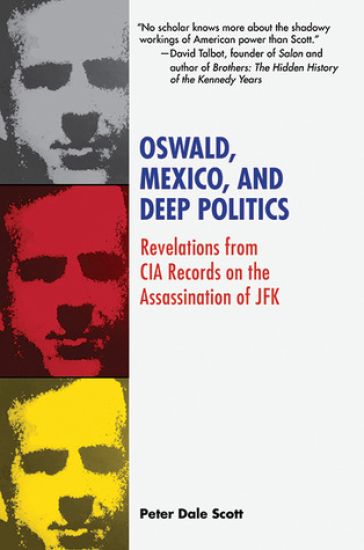
Oswald, Mexico, and Deep Politics

Oswald, Mexico, and Deep Politics

Peter Dale Scott

Skyhorse Publishing
2013
pokkari
Peter Dale Scott has written extensively on the Kennedy assassination and other dark corners of the American political scene. His encyclopedic knowledge enables him to connect the dots among the players, the organizations, and the unacknowledged collusions—the deep politics— of our often troubled political system. Deep Politics on Oswald, Mexico, and Cuba, originally published in 1995,narrows the focus of Scott’s earlier Deep Politics and the Death of JFK. Scott delivers the most detailed treatment yet of the mysterious sojourn of Lee Harvey Oswald (or someone using his name) to Mexico City in the fall of 1963. Was this trip a key aspect of the framing of Oswald, was it an approved intelligence operation, or was it perhaps both? It is now known that allegations of Communist conspiracy in the wake of the JFK assassination, emanating mostly from Mexico City, caused Lyndon Johnson to put together a “blue ribbon commission” to investigate what happened in Dallas. Scott explains through meticulous research and analysis exactly why LBJ would want the Warren Commission to rush to a conclusion, and the far-reaching political ramifications of the commission’s public findings. Scott’s analysis suggests the evidence from Mexico City was part of a frame-up, making Deep Politics on Oswald, Mexico, and Cuba an essential piece of research and analysis, shedding new light on the Communist conspiracy allegations behind the JFK assassination.
American War Machine

American War Machine

Peter Dale Scott

Rowman Littlefield Publishers
2010
sidottu
This provocative, thoroughly researched book explores the covert aspects of U.S. foreign policy. Prominent political analyst Peter Dale Scott marshals compelling evidence to expose the extensive growth of sanctioned but illicit violence in politics and state affairs, especially when related to America's long-standing involvement with the global drug traffic. Beginning with Thailand in the 1950s, Americans have become inured to the CIA's alliances with drug traffickers (and their bankers) to install and sustain right-wing governments. The pattern has repeated itself in Laos, Vietnam, Italy, Mexico, Thailand, Nigeria, Venezuela, Colombia, Peru, Chile, Panama, Honduras, Turkey, Pakistan, and now Afghanistan—to name only those countries dealt with in this book. Scott shows that the relationship of U.S. intelligence operators and agencies to the global drug traffic, and to other international criminal networks, deserves greater attention in the debate over the U.S. presence in Afghanistan. To date, America's government and policies have done more to foster than to curtail the drug trade. The so-called war on terror, and in particular the war in Afghanistan, constitutes only the latest chapter in this disturbing story.
The Road to 9/11

The Road to 9/11

Peter Dale Scott

University of California Press
2007
pokkari
This is an ambitious, meticulous examination of how U.S. foreign policy since the 1960s has led to partial or total cover-ups of past domestic criminal acts, including, perhaps, the catastrophe of 9/11. Peter Dale Scott, whose previous books have investigated CIA involvement in southeast Asia, the drug wars, and the Kennedy assassination, here probes how the policies of presidents since Nixon have augmented the tangled bases for the 2001 terrorist attack. Scott shows how America's expansion into the world since World War II has led to momentous secret decision making at high levels. He demonstrates how these decisions by small cliques are responsive to the agendas of private wealth at the expense of the public, of the democratic state, and of civil society. He shows how, in implementing these agendas, U.S. intelligence agencies have become involved with terrorist groups they once backed and helped create, including al Qaeda.
Drugs, Oil, and War

Drugs, Oil, and War

Peter Dale Scott

Rowman Littlefield Publishers
2003
nidottu
Peter Dale Scott's brilliantly researched tour de force illuminates the underlying forces that drive U.S. global policy from Vietnam to Colombia and now to Afghanistan and Iraq. He brings to light the intertwined patterns of drugs, oil politics, and intelligence networks that have been so central to the larger workings of U.S. intervention and escalation in Third World countries through alliances with drug-trafficking proxies. This strategy was originally developed in the late 1940s to contain communist China; it has since been used to secure control over foreign petroleum resources. The result has been a staggering increase in the global drug traffic and the mafias associated with it—a problem that will worsen until there is a change in policy. Scott argues that covert operations almost always outlast the specific purpose for which they were designed. Instead, they grow and become part of a hostile constellation of forces. The author terms this phenomenon parapolitics—the exercise of power by covert means—which tends to metastasize into deep politics—the interplay of unacknowledged forces that spin out of the control of the original policy initiators. We must recognize that U.S. influence is grounded not just in military and economic superiority, Scott contends, but also in so-called soft power. We need a "soft politics" of persuasion and nonviolence, especially as America is embroiled in yet another disastrous intervention, this time in Iraq.