Kirjojen hintavertailu. Mukana 12 303 935 kirjaa ja 12 kauppaa.

Kirjailija

Peter Dauvergne

Kirjat ja teokset yhdessä paikassa: 17 kirjaa, julkaisuja vuosilta 2001-2024, suosituimpien joukossa Will Big Business Destroy Our Planet?. Vertaile teosten hintoja ja tarkista saatavuus suomalaisista kirjakaupoista.

17 kirjaa

Kirjojen julkaisuhaarukka 2001-2024.

Historical Dictionary of Environmentalism

Historical Dictionary of Environmentalism

Peter Dauvergne

BLOOMSBURY PUBLISHING PLC
2024
sidottu
Historical Dictionary and Environmentalism, Third Edition provides a balanced and wide-ranging overview of the most important events, issues, organizations, ideas, and people shaping the direction of environmentalism worldwide. This book is global in scope, covering a large range of perspectives and countries with a focus on the period since 1960.This book contains a chronology, an introduction, and an extensive bibliography. The dictionary section has more than 400 cross-referenced entries on organizations, people, issues, events, and countries shaping environmentalism. This book is an excellent resource for students, researchers, and anyone wanting to know more about environmentalism.
Identified, Tracked, and Profiled

Identified, Tracked, and Profiled

Peter Dauvergne

EDWARD ELGAR PUBLISHING LTD
2023
nidottu
Revealing the politics underlying the rapid globalization of facial recognition technology (FRT), this topical book provides a cutting-edge, critical analysis of the expanding global market for FRT, and the rise of the transnational social movement that opposes it.With the use of FRT for policing, surveillance, and business steadily increasing, this book provides a timely examination of both the benefits of FRT, and the threats it poses to privacy rights, human rights, and civil liberties. Interviews with analysts and activists with expertise in FRT find that the anti-FRT movement is highly uneven, with disproportionate influence in Western democracies and relatively little influence in authoritarian states and low-income countries in the developing world. Through a global analysis of the uptake and regulation of FRT, chapters create a holistic understanding of the politics behind this technology. Concluding with a look towards the future prospects of FRT in the face of the growing size, reach, and power of its opposition, the book reflects more broadly on the power of transnational social movements and civil society activism to prevent the globalization and normalization of new technologies.A visionary exploration of FRT, this book will be invaluable to students and scholars of politics and policy, alongside activists, stakeholders, and policy makers interested in the growing power of social movements to resist new technology.
AI in the Wild

AI in the Wild

Peter Dauvergne

MIT Press
2020
nidottu
Examining the potential benefits and risks of using artificial intelligence to advance global sustainability.Drones with night vision are tracking elephant and rhino poachers in African wildlife parks and sanctuaries; smart submersibles are saving coral from carnivorous starfish on Australia's Great Barrier Reef; recycled cell phones alert Brazilian forest rangers to the sound of illegal logging. The tools of artificial intelligence are being increasingly deployed in the battle for global sustainability. And yet, warns Peter Dauvergne, we should be cautious in declaring AI the planet's savior. In AI in the Wild, Dauvergne avoids the AI industry-powered hype and offers a critical view, exploring both the potential benefits and risks of using artificial intelligence to advance global sustainability.Dauvergne finds that corporations and states often use AI in ways that are antithetical to sustainability. The competition to profit from AI is entrenching technocratic management, revving up resource extraction, and turbocharging consumption, as consumers buy new smart devices (and discard their old, less-smart ones). Smart technology is helping farmers grow crops more efficiently, but also empowering the agrifood industry. Moreover, states are weaponizing AI to control citizens, suppress dissent, and aim cyberattacks at rival states. Is there a way to harness the power of AI for environmental and social good? Dauvergne argues for precaution and humility as guiding principles in the deployment of AI.
Will Big Business Destroy Our Planet?

Will Big Business Destroy Our Planet?

Peter Dauvergne

Polity Press
2018
nidottu
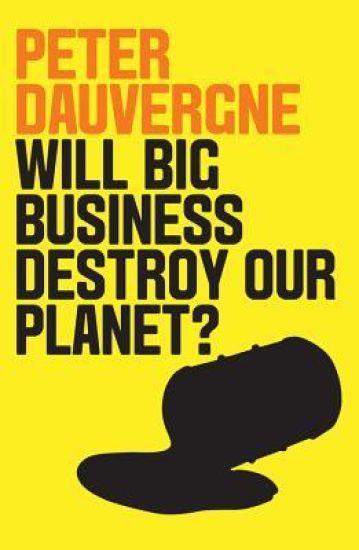
Walmart. Coca-Cola. BP. Toyota. The world economy runs on the profits of transnational corporations. Politicians need their backing. Non-profit organizations rely on their philanthropy. People look to their brands for meaning. And their power continues to rise. Can these companies, as so many are now hoping, provide the solutions to end the mounting global environmental crisis? Absolutely, the CEOs of big business are telling us: the commitment to corporate social responsibility will ensure it happens voluntarily. Peter Dauvergne challenges this claim, arguing instead that corporations are still doing far more to destroy than protect our planet. Trusting big business to lead sustainability is, he cautions, unwise — perhaps even catastrophic. Planetary sustainability will require reining in the power of big business, starting now.
Will Big Business Destroy Our Planet?

Will Big Business Destroy Our Planet?

Peter Dauvergne

Polity Press
2018
sidottu
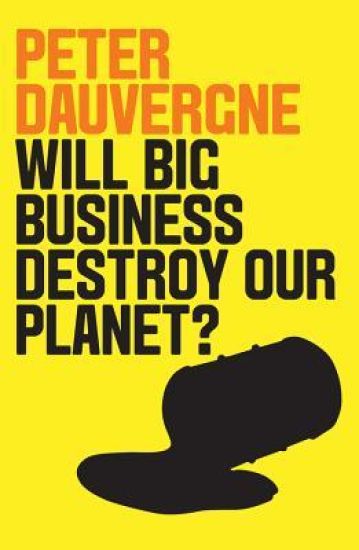
Walmart. Coca-Cola. BP. Toyota. The world economy runs on the profits of transnational corporations. Politicians need their backing. Non-profit organizations rely on their philanthropy. People look to their brands for meaning. And their power continues to rise. Can these companies, as so many are now hoping, provide the solutions to end the mounting global environmental crisis? Absolutely, the CEOs of big business are telling us: the commitment to corporate social responsibility will ensure it happens voluntarily. Peter Dauvergne challenges this claim, arguing instead that corporations are still doing far more to destroy than protect our planet. Trusting big business to lead sustainability is, he cautions, unwise — perhaps even catastrophic. Planetary sustainability will require reining in the power of big business, starting now.
Historical Dictionary of Environmentalism

Historical Dictionary of Environmentalism

Peter Dauvergne

Rowman Littlefield
2016
sidottu
To capture the diversity within environmentalism, this dictionary takes a global tack with a focus on ideas, events, institutions, initiatives, and green movements since the 1960s. It strives to avoid a common error in many histories of environmentalism: to exaggerate the input of the wealthy countries of Europe and North America and understate the influence of Africa, Asia, South and Central America, and the Polar Regions. It aims as well for a more comprehensive analysis than most histories of the modern environmental movement, understanding environmentalism as emerging not only from grassroots and formal nongovernmental associations, but also from corporate, governmental, and intergovernmental organizations and initiatives. This assumes the ideas and energy infusing environmentalism with political purpose arise from hundreds of thousands of sources: from corporate boardrooms to bureaucratic policies to international negotiations to activists. Thus, environmentalists are not only indigenous people blocking a logging road, Greenpeace activists protesting a seal hunt, or green candidates contesting an election; an equal or larger number of environmentalists are working within the Japanese bureaucracy to implement environmental policies, within the World Bank to assess the environmental impacts of loans, within Wal-Mart to green its purchasing practices, or within intergovernmental forums to negotiate international environmental agreements. This second edition of Historical Dictionary of Environmentalism contains a chronology, an introduction, and an extensive bibliography. The dictionary section has over 300 cross-referenced entries on important events, issues, organizations, ideas, and people shaping the direction of environmentalism worldwide. This book is an excellent access point for students, researchers, and anyone wanting to know more about environmentalism.
Eco-Business

Eco-Business

Peter Dauvergne; Jane Lister

MIT Press
2015
pokkari
Two experts explain the consequences for the planet when corporations use sustainability as a business tool.McDonald's promises to use only beef, coffee, fish, chicken, and cooking oil obtained from sustainable sources. Coca-Cola promises to achieve water neutrality. Unilever seeks to achieve 100 percent sustainable agricultural sourcing by 2020. Walmart has pledged to become carbon neutral. Big-brand companies seem to be making commitments that go beyond the usual "greenwashing" efforts undertaken largely for public-relations purposes. In Eco-Business, Peter Dauvergne and Jane Lister examine this new corporate embrace of sustainability, its actual accomplishments, and the consequences for the environment. For many leading-brand companies, these corporate sustainability efforts go deep, reorienting central operations and extending through global supply chains. Yet, as Dauvergne and Lister point out, these companies are doing this not for the good of the planet but for their own profits and market share in a volatile, globalized economy. They are using sustainability as a business tool. Dauvergne and Lister show that the eco-efficiencies achieved by big-brand companies limit the potential for finding deeper solutions to pressing environmental problems and reinforce runaway consumption. Eco-business promotes the sustainability of big business, not the sustainability of life on Earth.
Protest Inc.

Protest Inc.

Peter Dauvergne; Genevieve LeBaron

Polity Press
2014
nidottu
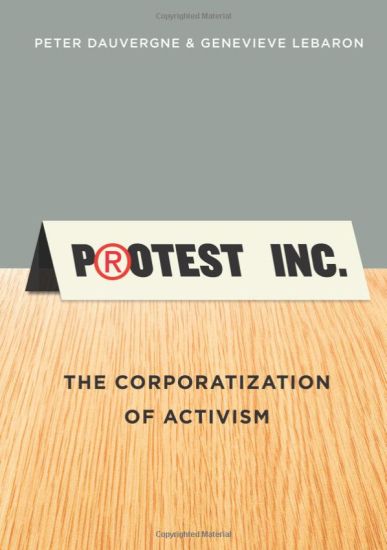
Mass protests have raged since the global financial crisis of 2008. Across the world students and workers and environmentalists are taking to the streets. Discontent is seething even in the wealthiest countries, as the world saw with Occupy Wall Street in 2011. Protest Inc. tells a disturbingly different story of global activism. As millions of grassroots activists rally against capitalism, activism more broadly is increasingly mirroring business management and echoing calls for market-based solutions. The past decade has seen nongovernmental organizations partner with oil companies like ExxonMobil, discount retailers like Walmart, fast-food chains like McDonald’s, and brand manufacturers like Nike and Coca-Cola. NGOs are courting billionaire philanthropists, branding causes, and turning to consumers as wellsprings of reform. Are “career” activists selling out to pay staff and fund programs? Partly. But far more is going on. Political and socioeconomic changes are enhancing the power of business to corporatize activism, including a worldwide crackdown on dissent, a strengthening of consumerism, a privatization of daily life, and a shifting of activism into business-style institutions. Grassroots activists are fighting back. Yet, even as protestors march and occupy cities, more and more activist organizations are collaborating with business and advocating for corporate-friendly “solutions.” This landmark book sounds the alarm about the dangers of this corporatizing trend for the future of transformative change in world politics.
Protest Inc.

Protest Inc.

Peter Dauvergne; Genevieve LeBaron

Polity Press
2014
sidottu
Mass protests have raged since the global financial crisis of 2008. Across the world students and workers and environmentalists are taking to the streets. Discontent is seething even in the wealthiest countries, as the world saw with Occupy Wall Street in 2011. Protest Inc. tells a disturbingly different story of global activism. As millions of grassroots activists rally against capitalism, activism more broadly is increasingly mirroring business management and echoing calls for market-based solutions. The past decade has seen nongovernmental organizations partner with oil companies like ExxonMobil, discount retailers like Walmart, fast-food chains like McDonald’s, and brand manufacturers like Nike and Coca-Cola. NGOs are courting billionaire philanthropists, branding causes, and turning to consumers as wellsprings of reform. Are “career” activists selling out to pay staff and fund programs? Partly. But far more is going on. Political and socioeconomic changes are enhancing the power of business to corporatize activism, including a worldwide crackdown on dissent, a strengthening of consumerism, a privatization of daily life, and a shifting of activism into business-style institutions. Grassroots activists are fighting back. Yet, even as protestors march and occupy cities, more and more activist organizations are collaborating with business and advocating for corporate-friendly “solutions.” This landmark book sounds the alarm about the dangers of this corporatizing trend for the future of transformative change in world politics.
Paths to a Green World

Paths to a Green World

Jennifer Clapp; Peter Dauvergne

MIT Press
2011
nidottu
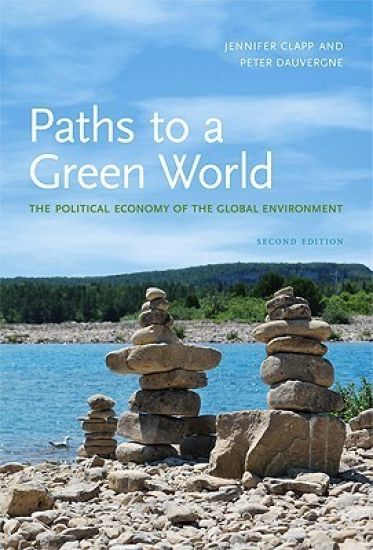
A new edition of a book that takes a comprehensive look at the ways economic processes affect global environmental outcomes. This comprehensive and accessible book fills the need for a political economy view of global environmental politics, focusing on the ways international economic processes affect environmental outcomes. It examines the main actors and forces shaping global environmental management, particularly in the developing world. Moving beyond the usual emphasis on international agreements and institutions, it strives to capture not only academic theoretical debates but also views on politics, economics, and the environment within the halls of global conferences, on the streets during antiglobalization protests, and in the boardrooms of international agencies, nongovernmental organizations, and industry associations. The book maps out an original typology of four contrasting worldviews of environmental change-those of market liberals, institutionalists, bioenvironmentalists, and social greens-and uses them as a framework to examine the links between the global political economy and ecological change. This typology provides a common language for students, instructors, and scholars to discuss the issues across the classical social science divisions.The second edition of this popular text has been thoroughly revised and updated to reflect recent events, including the food crisis of 2007-2008, the financial meltdown of 2008, and the Copenhagen Climate Conference of 2009. Topics covered include the environmental implications of globalization; wealth, poverty, and consumption; global trade; transnational corporations; and multilateral and private finance.
Timber

Timber

Peter Dauvergne; Jane Lister

Polity Press
2011
nidottu
Timber is a vital resource that is all around us. It is the house that shelters us, the furniture we relax in, the books we read, the paper we print, the disposable diapers for our babies, and the boxes that contain our cereal, detergent, and new appliances. The way we produce and consume timber, however, is changing. With international timber companies and big box discount retailers increasingly controlling through global commodity chains where and how much timber is traded, the world's remaining old-growth forests, particularly in the developing world, are under threat of disappearing - all for the price of a consumer bargain. This trailblazing book is the first to expose what's happening inside corporate commodity chains with conclusions that fundamentally challenge our understanding of how and why deforestation persists. Authors Peter Dauvergne and Jane Lister reveal how timber now moves through long and complex supply chains from the forests of the global South through the factories of emerging economies like China to the big box retail shelves of Europe and North America. Well-off consumers are getting unprecedented deals. But the social and environmental costs are extraordinarily high as corporations mine the world's poorest regions and most vulnerable ecosystems. The growing power of big retail within these commodity chains is further increasing South-North inequities and unsustainable global consumption. Yet, as this book's highly original analysis uncovers, it is also creating some intriguing opportunities to promote more responsible business practices and better global forest governance.
Timber

Timber

Peter Dauvergne; Jane Lister

Polity Press
2011
sidottu
Timber is a vital resource that is all around us. It is the house that shelters us, the furniture we relax in, the books we read, the paper we print, the disposable diapers for our babies, and the boxes that contain our cereal, detergent, and new appliances. The way we produce and consume timber, however, is changing. With international timber companies and big box discount retailers increasingly controlling through global commodity chains where and how much timber is traded, the world's remaining old-growth forests, particularly in the developing world, are under threat of disappearing - all for the price of a consumer bargain. This trailblazing book is the first to expose what's happening inside corporate commodity chains with conclusions that fundamentally challenge our understanding of how and why deforestation persists. Authors Peter Dauvergne and Jane Lister reveal how timber now moves through long and complex supply chains from the forests of the global South through the factories of emerging economies like China to the big box retail shelves of Europe and North America. Well-off consumers are getting unprecedented deals. But the social and environmental costs are extraordinarily high as corporations mine the world's poorest regions and most vulnerable ecosystems. The growing power of big retail within these commodity chains is further increasing South-North inequities and unsustainable global consumption. Yet, as this book's highly original analysis uncovers, it is also creating some intriguing opportunities to promote more responsible business practices and better global forest governance.
The Shadows of Consumption

The Shadows of Consumption

Peter Dauvergne

MIT Press
2010
pokkari
An environmentalist maps the hidden costs of overconsumption in a globalized world by tracing the environmental consequences of five commodities.The Shadows of Consumption gives a hard-hitting diagnosis: many of the earth's ecosystems and billions of its people are at risk from the consequences of rising consumption. Products ranging from cars to hamburgers offer conveniences and pleasures; but, as Peter Dauvergne makes clear, global political and economic processes displace the real costs of consumer goods into distant ecosystems, communities, and timelines, tipping into crisis people and places without the power to resist. In The Shadows of Consumption, Peter Dauvergne maps the costs of consumption that remain hidden in the shadows cast by globalized corporations, trade, and finance. Dauvergne traces the environmental consequences of five commodities: automobiles, gasoline, refrigerators, beef, and harp seals. In these fascinating histories we learn, for example, that American officials ignored warnings about the dangers of lead in gasoline in the 1920s; why China is now a leading producer of CFC-free refrigerators; and how activists were able to stop Canada's commercial seal hunt in the 1980s (but are unable to do so now). Dauvergne's innovative analysis allows us to see why so many efforts to manage the global environment are failing even as environmentalism is slowly strengthening. He proposes a guiding principle of "balanced consumption" for both consumers and corporations. We know that we can make things better by driving a high-mileage car, eating locally grown food, and buying energy-efficient appliances; but these improvements are incremental, local, and insufficient. More crucial than our individual efforts to reuse and recycle will be reforms in the global political economy to reduce the inequalities of consumption and correct the imbalance between growing economies and environmental sustainability.
The A to Z of Environmentalism

The A to Z of Environmentalism

Peter Dauvergne

Scarecrow Press
2009
nidottu
Environmentalism involves hundreds of international environmental groups, thousands of national groups, and tens of thousands of local ones. It also includes hundreds of international agreements, hundreds of national environmental agencies, and countless environmental sections in other organizations—from those in multinational corporations to ones in regional and international organizations. Such environmental concepts as sustainable development, the precautionary principle, corporate social responsibility, and eco-labeling percolate from all of these sources. Every year, new ideas, refinements, policies, institutions, markets, and problems continue to enter into environmental debates and discourses, making it nearly impossible to keep abreast of the changes constantly taking place. The A to Z of Environmentalism is a paperback edition of the Historical Dictionary of Environmentalism. It strategically skips across issues, concepts, time, organizations, and cultures, not with any pretense of producing a definitive dictionary but rather with the aim of producing an inclusive, wide-ranging, and global history of environmentalism. This goal is accomplished through a chronology, an introductory essay, and over 300 cross-referenced dictionary entries.
Loggers and Degradation in the Asia-Pacific

Loggers and Degradation in the Asia-Pacific

Peter Dauvergne

Cambridge University Press
2001
sidottu
Corporate loggers have damaged much of the tropical forest throughout the Asia-Pacific over the last four decades. Despite a steady rise in global and local concern, few firms have changed their practices. Loggers and Degradation in the Asia-Pacific examines why and how loggers have resisted and ignored calls for environmental reforms. Concentrating on the period after 1990, the book explains what is happening on the ground and highlights the structures within which firms and governments operate. Within this broader context the author considers a range of factors including: the science of tropical forest management, the capacity of states to regulate and enforce rules, the relative power of environmental reformers, and the 1997–9 Asian financial crisis. This is a constructive, insightful approach to a depressing, yet urgent, problem. It will be accessible to academic and student readers as well as those in corporations, government and NGOs.
Loggers and Degradation in the Asia-Pacific

Loggers and Degradation in the Asia-Pacific

Peter Dauvergne

Cambridge University Press
2001
pokkari
Corporate loggers have damaged much of the tropical forest throughout the Asia-Pacific over the last four decades. Despite a steady rise in global and local concern, few firms have changed their practices. Loggers and Degradation in the Asia-Pacific examines why and how loggers have resisted and ignored calls for environmental reforms. Concentrating on the period after 1990, the book explains what is happening on the ground and highlights the structures within which firms and governments operate. Within this broader context the author considers a range of factors including: the science of tropical forest management, the capacity of states to regulate and enforce rules, the relative power of environmental reformers, and the 1997–9 Asian financial crisis. This is a constructive, insightful approach to a depressing, yet urgent, problem. It will be accessible to academic and student readers as well as those in corporations, government and NGOs.