Kirjojen hintavertailu. Mukana 12 595 353 kirjaa ja 12 kauppaa.

Kirjailija

Peter Elbow

Kirjat ja teokset yhdessä paikassa: 11 kirjaa, julkaisuja vuosilta 1990-2012, suosituimpien joukossa What Is English?. Vertaile teosten hintoja ja tarkista saatavuus suomalaisista kirjakaupoista.

11 kirjaa

Kirjojen julkaisuhaarukka 1990-2012.

Vernacular Eloquence

Vernacular Eloquence

Peter Elbow

Oxford University Press Inc
2012
sidottu
Since the publication of his groundbreaking books Writing Without Teachers and Writing with Power, Peter Elbow has revolutionized the way we think about writing. As a theorist, teacher, and uncommonly engaging writer himself, he has long championed our innate ability to write effectively. Now, in Vernacular Eloquence, Elbow turns his attention to the role of the spoken word in writing. He begins by questioning the basic cultural assumption that speaking and writing are two very different, incompatible modes of expression, and that we should keep them separate. The book explores the many linguistic and rhetorical virtues of speech--spontaneity, naturalness of expression, fluidity of thought--to show that many of these virtues can usefully be brought to writing. Elbow suggests that we begin the writing process by "speaking " our words onto the page, letting the words and ideas flow without struggling to be "correct. " Speaking can help us at the later stages of writing, too, as we read drafts aloud and then revise until the language feels right in the mouth and sounds right in the ear. The result is stronger, clearer, more natural writing that avoids the stilted, worried-over quality that so often alienates (and bores) the reader. Elbow connects these practices to a larger theoretical discussion of literacy in our culture, arguing that our rules for correct writing make it harder than necessary to write well. In particular, our culture's conception of proper writing devalues the human voice, the body, and the linguistic power of people without privilege. Written with Elbow's customary verve and insight, Vernacular Eloquence shows how to bring the pleasures we all enjoy in speaking to the all-too-often needlessly arduous task of writing.
Vernacular Eloquence

Vernacular Eloquence

Peter Elbow

Oxford University Press Inc
2012
nidottu
Since the publication of his groundbreaking books Writing Without Teachers and Writing with Power, Peter Elbow has revolutionized the way we think about writing. As a theorist, teacher, and uncommonly engaging writer himself, he has long championed our innate ability to write effectively. Now, in Vernacular Eloquence, Elbow turns his attention to the role of the spoken word in writing. He begins by questioning the basic cultural assumption that speaking and writing are two very different, incompatible modes of expression, and that we should keep them separate. The book explores the many linguistic and rhetorical virtues of speech--spontaneity, naturalness of expression, fluidity of thought--to show that many of these virtues can usefully be brought to writing. Elbow suggests that we begin the writing process by "speaking " our words onto the page, letting the words and ideas flow without struggling to be "correct. " Speaking can help us at the later stages of writing, too, as we read drafts aloud and then revise until the language feels right in the mouth and sounds right in the ear. The result is stronger, clearer, more natural writing that avoids the stilted, worried-over quality that so often alienates (and bores) the reader. Elbow connects these practices to a larger theoretical discussion of literacy in our culture, arguing that our rules for correct writing make it harder than necessary to write well. In particular, our culture's conception of proper writing devalues the human voice, the body, and the linguistic power of people without privilege. Written with Elbow's customary verve and insight, Vernacular Eloquence shows how to bring the pleasures we all enjoy in speaking to the all-too-often needlessly arduous task of writing.
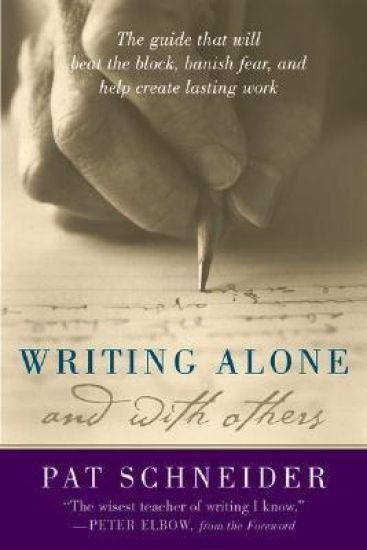
Writing Alone and with Others

Writing Alone and with Others

Pat Schneider; Peter Elbow

Oxford University Press Inc
2005
nidottu
For more than a quarter of a century, Pat Schneider has helped writers find and liberate their true voices. She has taught all kinds--the award winning, the struggling, and those who have been silenced by poverty and hardship. Her innovative methods have worked in classrooms from elementary to graduate level, in jail cells and public housing projects, in convents and seminaries, in youth at-risk programs, and with groups of the terminally ill. Now, in Writing Alone and with Others, Schneider's acclaimed methods are available in a single, well-organized, and highly readable volume. The first part of the book guides the reader through the perils of the solitary writing life: fear, writer's block, and the bad habits of the internal critic. In the second section, Schneider describes the Amherst Writers and Artists workshop method, widely used across the U.S. and abroad. Chapters on fiction and poetry address matters of technique and point to further resources, while more than a hundred writing exercises offer specific ways to jumpstart the blocked and stretch the rut-stuck. Schneider's innovative teaching method will refresh the experienced writer and encourage the beginner. Her book is the essential owner's manual for the writer's voice.
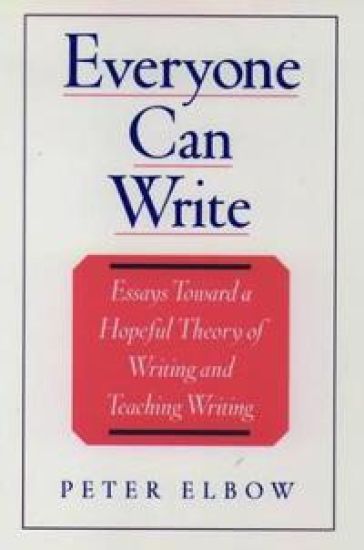
Everyone Can Write

Everyone Can Write

Peter Elbow

Oxford University Press Inc
2000
sidottu
With Writing without Teachers (OUP 1975) and Writing with Power (OUP 1995) Peter Elbow revolutionized the teaching of writing. His process method--and its now commonplace "free writing" techniques--liberated generations of students and teachers from the emphasis on formal principles of grammar that had dominated composition pedagogy. This new collection of essays brings together the best of Elbow's writing since the publication of Embracing Contraries in 1987. The volume includes sections on voice, the experience of writing, teaching, and evaluation. Implicit throughout is Elbow's commitment to humanizing the profession, and his continued emphasis on the importance of binary thinking and nonadversarial argument. The result is a compendium of a master teacher's thought on the relation between good pedagogy and good writing; it is sure to be of interest to all professional teachers of writing, and will be a valuable book for use in composition courses at all levels.
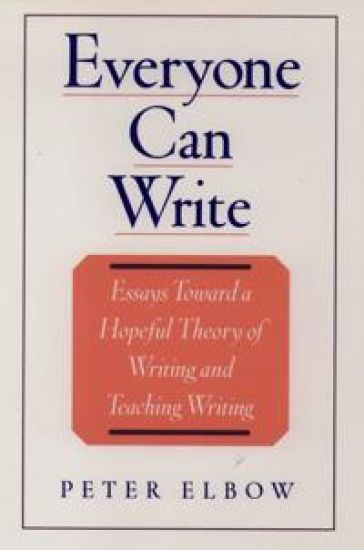
Everyone Can Write

Everyone Can Write

Peter Elbow

Oxford University Press Inc
2000
nidottu
With Writing without Teachers (OUP 1975) and Writing with Power (OUP 1995) Peter Elbow revolutionized the teaching of writing. His process method--and its now commonplace "free writing" techniques--liberated generations of students and teachers from the emphasis on formal principles of grammar that had dominated composition pedagogy. This new collection of essays brings together the best of Elbow's writing since the publication of Embracing Contraries in 1987. The volume includes sections on voice, the experience of writing, teaching, and evaluation. Implicit throughout is Elbow's commitment to humanizing the profession, and his continued emphasis on the importance of binary thinking and nonadversarial argument. The result is a compendium of a master teacher's thought on the relation between good pedagogy and good writing; it is sure to be of interest to all professional teachers of writing, and will be a valuable book for use in composition courses at all levels.
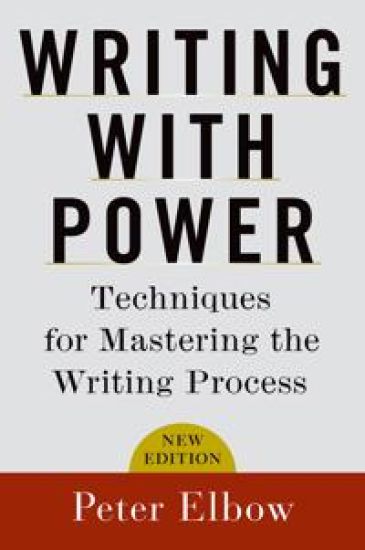
Writing With Power

Writing With Power

Peter Elbow

Oxford University Press Inc
1998
sidottu
Outlines several approaches to writing, editing, and rewriting, discusses the relationship between the writer and his or her audience, and attempts to define the nature of voice in writing
Writing With Power

Writing With Power

Peter Elbow

Oxford University Press Inc
1998
nidottu
Writing with Power is a guide for the student writing an essay, the professional writer working on a story, or the manager writing a memo for a tight deadline. As Elbow explains, "Writing with power doesn't just mean getting power over readers. It means getting power over yourself and over the writing process: knowing what you are doing as you write; figuring out what you really mean; being in charge, having control; not feeling stuck or helpless or intimidated. I am particularly interested in this second kind of power in writing, and I have found that without it you seldom achieve the first kind". For the second edition, Elbow has written a new introduction in which he discusses in detail the "mysterious" dimensions of "Writing with Power" - voice, quality and bad writing, wrongness and felt sense, and sharing written work with others.
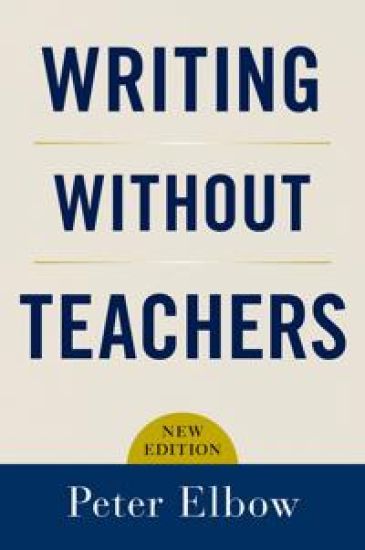
Writing Without Teachers

Writing Without Teachers

Peter Elbow

Oxford University Press Inc
1998
nidottu
In Writing Without Teachers, well-known advocate of innovative teaching methods Peter Elbow outlines a practical program for learning how to write. His approach is especially helpful to people who get "stuck" or blocked in their writing, and is equally useful for writing fiction, poetry, and essays, as well as reports, lectures, and memos. The core of Elbow's thinking is a challenge against traditional writing methods. Instead of editing and outlining material in the initial steps of the writing process, Elbow celebrates non-stop or free uncensored writing, without editorial checkpoints first, followed much later by the editorial process. This approach turns the focus towards encouraging ways of developing confidence and inspiration through free writing, multiple drafts, diaries, and notes. Elbow guides the reader through his metaphor of writing as "cooking:" his term for heating up the creative process where the subconscious bubbles up to the surface and the writing gets good. 1998 marks the twenty-fifth anniversary of Writing Without Teachers. In this edition, Elbow reexamines his program and the subsequent influence his techniques have had on writers, students, and teachers. This invaluable guide will benefit anyone, whether in the classroom, boardroom, or living room, who has ever had trouble writing.
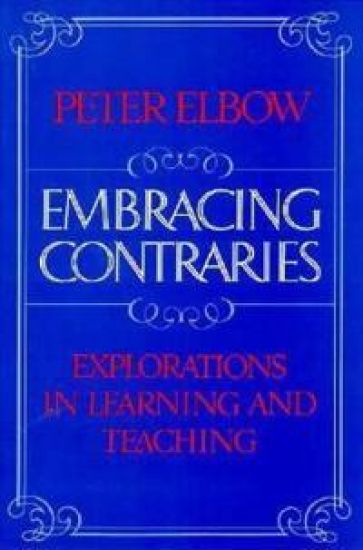
Embracing Contraries

Embracing Contraries

Peter Elbow

Oxford University Press Inc
1993
nidottu
Peter Elbow's widely acclaimed and original theories on the writing process, set forth in Writing without Teachers and Writing with Power, have earned him a reputation as a leading educational innovator. For this book Elbow has drawn together twelve of his essays on the nature of learning and teaching to suggest a comprehensive philosophy of education.
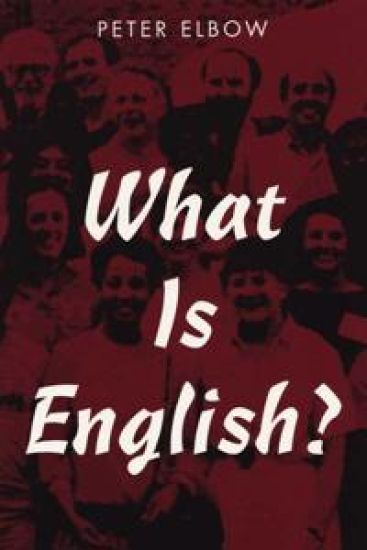
What Is English?

What Is English?

Peter Elbow

Modern Language Association of America
1990
nidottu
What Is English? is Peter Elbow’s challenging and very personal “picture of a profession that cannot define what it is.” Written in a lively and accessible style, What Is English? contains Elbow’s reflections on the 1987 English Coalition Conference and on its implications for the profession as a whole. Elbow identifies and tackles the major areas addressed by the conference: the question of what “English” means the place of theory in reading and writing the conflict between those who teach literature and those who teach writing the controversies surrounding the canon the nation’s increasing preoccupation with assessment To include the voices of others who attended the conference, the book contains “interludes”—short pieces between chapters—in which teachers from all levels of instruction express their feelings and describe their experiences.
What Is English?

What Is English?

Peter Elbow

Modern Language Association of America
1990
sidottu
What Is English? is Peter Elbow’s challenging and very personal “picture of a profession that cannot define what it is.” Written in a lively and accessible style, What Is English? contains Elbow’s reflections on the 1987 English Coalition Conference and on its implications for the profession as a whole. Elbow identifies and tackles the major areas addressed by the conference: the question of what “English” means the place of theory in reading and writing the conflict between those who teach literature and those who teach writing the controversies surrounding the canon the nation’s increasing preoccupation with assessment To include the voices of others who attended the conference, the book contains “interludes”—short pieces between chapters—in which teachers from all levels of instruction express their feelings and describe their experiences.