Kirjojen hintavertailu. Mukana 12 390 323 kirjaa ja 12 kauppaa.

Kirjailija

Peter Fenwick

Kirjat ja teokset yhdessä paikassa: 10 kirjaa, julkaisuja vuosilta 2008-2024, suosituimpien joukossa Shining Light on Transcendence. Vertaile teosten hintoja ja tarkista saatavuus suomalaisista kirjakaupoista.

10 kirjaa

Kirjojen julkaisuhaarukka 2008-2024.

The Fortunate

The Fortunate

Peter Fenwick

Connor Court Publishing Pty Ltd
2022
pokkari
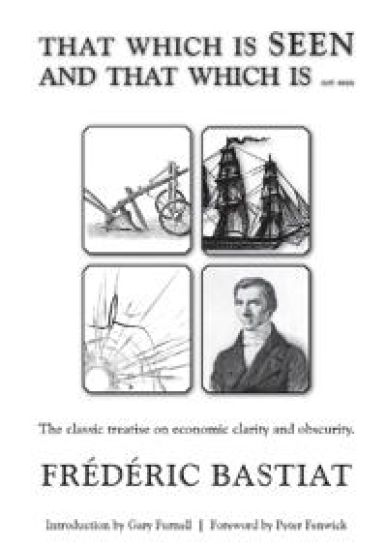
In The Fortunate, Peter Fenwick discusses the history, economics, and philosophies that underpin our modern world - the Lockean Revolution - highlighted by essays from some of his favourite writers.Here, you will find Fr d ric Bastiat wittily demolishing protectionism; Leonard E. Read describing the miracle of the price mechanism; F.A. Hayek analysing sound economic decision-making; Ludwig von Mises explaining how life changes when 'the customer becomes king'; Martin Luther King Jr dreaming of a United States in which its founding principles will apply equally regardless of race; Jonathan Haidt, Meg Wheatley and Peter Murphy warning us about disturbing trends in our society; Matt Ridley reviewing 100 years of communism; and Deirdre McCloskey explaining how the Great Enrichment came about due to a change in rhetoric about liberty and human dignity.The philosophers of the Enlightenment told us that liberty works and that prosperity flows from it. Two hundred years of history has shown us that this is true - that it works in practice. Moreover, it applies, not just in the Anglosphere or in the developed world. The concepts are valid universally.Societies which have embraced liberal democratic principles - individual rights, private property, the rule of law, and representative government - have thrived. Now everyone can live happy, prosperous and meaningful lives if they and their leaders choose to build their societies on these principles.We should be proud of our heritage, confident in our achievements, and prepared to fight against forces that might unwittingly seek to destroy them. We are the fortunate. Let's keep it that way.
The Hidden Door

The Hidden Door

Peter Fenwick; Elizabeth Fenwick

White Crow Books
2020
pokkari
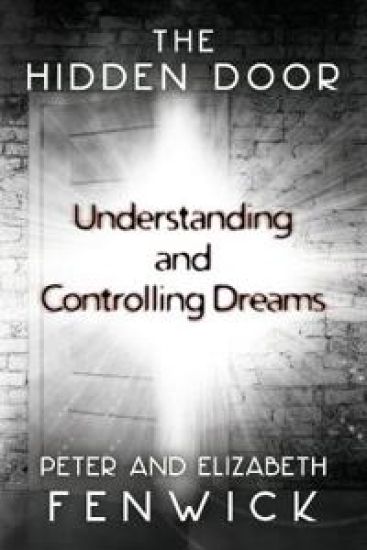
For as long as human history has been recorded, people have been fascinated by their dreams. From the mystical visions in the Bible to Freud, Jung and beyond, we have looked for the meaning and significance of dreams and tried to find the connection between our waking and sleeping thoughts. But how much do we really know about them, and what can they teach us?In this remarkable exploration of the mysterious world of dreams, Peter and Elizabeth Fenwick gather the latest research to show that by learning how to read the messages our dreams give, we can understand ourselves more fully. They examine the purpose of dreams, demonstrating how they can be experienced on different levels -- sometimes simply mirroring fragments of our lives and at other times revealing aspects of personality, giving us emotional insights and helping us to solve problems.The Fenwicks also explore the fascinating territory of psi phenomena, such as telepathy and precognition, and its relationship to dreaming. Dreams may be the setting, too, for even more extraordinary occurrences, such as out-of-body experiences or the terror of night abductions by alien visitors. The authors show us how to gain access to the state of lucid dreaming, so that we can learn to direct our own dreams, going through the hidden door to enter a world of virtual reality where anything is possible. But dreams have a darker side, too; nightmares and terrors can make our sleep uneasy, and in their aftermath even murder has been committed.From the principle behind 'dream machines' to bizarre occurrences of shared dreams, The Hidden Door is an intriguing and revealing exploration of the strange world of our subconscious. Including many never-before-published accounts of bizarre dream experiences from the authors' own research, it provides compelling answers to the questions we all ask ourselves about our sleeping mind.
Shining Light on Transcendence

Shining Light on Transcendence

Peter Fenwick

White Crow Books
2019
pokkari
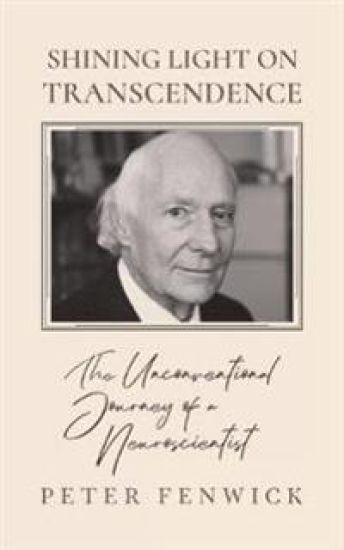
What is consciousness? How does it relate to the brain, to the mind? Does it even extend beyond them? And if so, might those experiences - telepathy, extrasensory perception, near death experiences - be called 'paranormal' because we can't explain them by any normal means?
Att möta döden med tillit och hopp : forskning i medvetandets gränsland

Att möta döden med tillit och hopp : forskning i medvetandets gränsland

Peter Fenwick; Elizabeth Fenwick

NCP - New Cosmic Paradigm
2013
nidottu
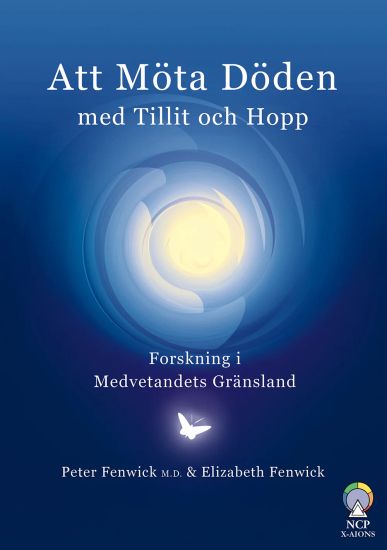
Döden är i högsta grad en naturlig del av livet och angår oss alla, ändå är döden och döendet ett känsligt och svårt ämne, något oundvikligt som man gärna undviker ... Att Möta Döden med Tillit och Hopp – Forskning i Medvetandets Gränsland – den svenska utgåvan av Peter och Elizabeth Fenwicks mycket uppmärksammade bok The Art of Dying förmedlar en mer positiv och naturlig syn på döden som i förlängningen leder till att vi faktiskt ska kunna ”möta döden med tillit och hopp”. Mycket inom nyare forskning tyder nämligen på att livet inte slutar med ”döden”. Boken belyser studier i dödens och medvetandets gränsland och presenterar fakta som tydligt indikerar att vårt medvetande kan fungera oberoende av den fysiska kroppen och hjärnan. Om detta kan bevisas vetenskapligt leder det förvisso till en helt ny syn på både livet och döden. Döden är en process och boken ger en värdefull vägledning till oss alla, inte minst till närstående och vårdpersonal. Peter Fenwick M.D., Ph.D., neuropsykiater och internationellt välkänd forskare inom neurovetenskap med fokus på nära-döden-relaterade tillstånd och upplevelser, exempelvis nära-döden-upplevelser, upplevelser i livets slutskede och närliggande områden. Boken som han skrivit tillsammans med Elizabeth Fenwick, bygger främst på Fenwicks omfattande kliniska studier. Förord av Pim van Lommel M.D., kardiolog, också han en stor auktoritet inom medvetande- och nära-döden-forskning samt bl.a. författare till Consciousness Beyond Life -The Science of the Near-Death Experience. Nämnda forskningsområde är högintressant att koppla till den Kosmiska Världsbild som den danske intuitionsfilosofen och mystikern Martinus Thomsen framlägger, Martinus Kosmologi. I Martinus och hans elev och samarbetspartner Per Bruus-Jensens arbete, presenteras bland annat en förklaringsmodell till vår evighetsnatur som också beskriver hur vi faktiskt överlever döden. För information se New Cosmic Paradigm NCP X-AIONS: www.newcosmicparadigm.org, här finns också kompletterande material till Fenwicks bok i form av specialbroschyrer som Peter Fenwick utarbetat tillsammans med Sue Brayne i samarbete med The Clinical Neuroscience Division, University of Southampton. Broschyrerna utgör ett värdefullt handledningsmaterial i kontakten med döende både för vårdpersonal och närstående. Nearing the End of Life - A Guide for Relatives and Friends of the Dying(I Livets Slutskede – En handledning för släktingar och vänner till döende) http://www.newcosmicparadigm.org/images/pdf/ENDOFLIFEREL.pdfEnd-of-Life Experiences - A Guide for Carers of the Dying (Upplevelser i Livets Slutskede – En handledning för vårdpersonal som arbetar med döende) http://www.newcosmicparadigm.org/images/pdf/ENDOFLIFEPROF.pdfLäs mera: NCP X-AIONS www.newcosmicparadigm.org
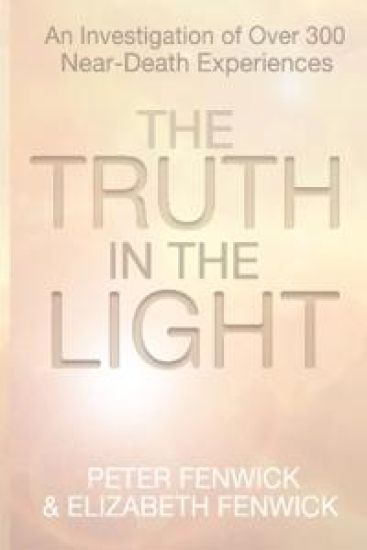
The Truth in the Light

The Truth in the Light

Peter Fenwick; Elizabeth Fenwick

White Crow Books Ltd
2012
pokkari
Most of us at the very least wonder about our own immortality and many people are convinced that there is something beyond death, beyond the blackness of the grave. In Western Judaeo-Christian culture we absorb from an early age the idea that virtue now has its own reward - later. We are taught that the universe is essentially moral and that there are absolute human values. But increasingly, science presents us with a picture of a much more mechanical universe in which there is no absolute morality and man has no purpose and no personal responsibility except to his culture and his biology. We no longer live in an age when faith is sufficient; we demand data, and we are driven by data. And it is data - data that apparently throws some light on our current concepts of Heaven and Hell - that the near-death experience seems to offer. The near-death experience (NDE) is intriguing for two major reasons. First, it is very common and secondly, it is cross-cultural. The results of one NOP survey in America suggest that over 1 million Americans have 'seen the light'. Any experience that is so common must have had some influence on the way we think about life and death.Indeed, it could be the very engine that drives our ideas of an afterlife. Many people believe that in the NDE we are given glimpses of Heaven (or Hell). But it is just as reasonable to assume that it is the NDE itself which may have shaped our very ideas about Heaven and Hell. The experiences described in this book are all first-hand accounts from people who wrote to me or to David Lorimer, chairman of the International Association of Near Death Studies (UK), after a television programme, radio broadcast or magazine or newspaper article made them aware of our interest in near-death experiences. We asked 500 of those who wrote to answer a detailed questionnaire about their experiences. Our aim was to gather in a standardised format as much detail as we could about the NDE, the people who have experienced it and the effect that the experience has had on their lives. It is from this database that the statistics quoted in this book have been drawn, and the accounts given to me by these people and by others who have written to me since then form the basis of the book. But their accounts provided much more than mere statistics.Each one was special in its own way, and provided a personal testimony which I found both moving and utterly sincere. It is very seldom that an author can so truthfully say that without others a book could not have been written - in this case, without these people there would, indeed, have been no book. I feel privileged to have been allowed to read their accounts, and I am grateful to everyone who, by being willing to share their experience with me, has helped in this search to find the truth in the light. Peter Fenwick London December 1994
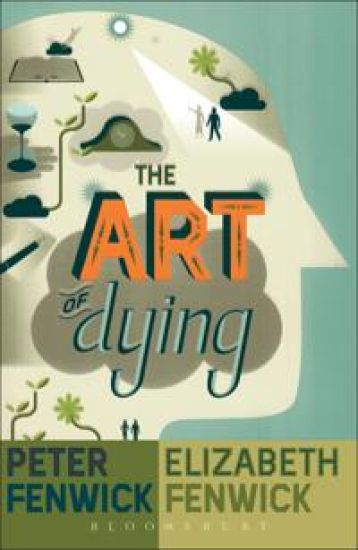
The Art of Dying

The Art of Dying

Peter Fenwick; Elizabeth Fenwick

Continuum International Publishing Group Ltd.
2008
nidottu
Is there an art to dying? And if there is, what can we do to achieve a good death? We have few special rituals to prepare for death, or to mark it, and we often fail to help the dying prepare for death. "The Art of Dying" contains accounts by the dying, and those who have been with the dying in their final hours, which help us to understand that death is a process. The experiences suggest that we are looked after throughout the transition from life to death, and taken on a journey into love and light by loved ones who come back to take us. Other accounts are from people who have been emotionally close to someone and who, unaware that the person they love is dying, experience a sudden strong sense of their presence or an intimation of their death. Rational, scientific explanations for these experiences are hard to find, and it is almost impossible, in the face of them, to sustain the current scientific view that our consciousness is entirely brain-based, and that it is extinguished at the moment our brain ceases to function. The world is more highly interconnected and more complex than the simple mechanical model we have followed for so long. The evidence suggests we are more than brain function, and that something - soul or spirit or consciousness - will continue in some form or another for a while at least. We can ensure a "good death" for ourselves and help those we love achieve it too. "The Art of Dying" demonstrates that we can face death with a peaceful and untroubled mind; that death is not a lonely or a fearful journey, but an intensely hopeful one.