Kirjojen hintavertailu. Mukana 12 595 353 kirjaa ja 12 kauppaa.

Kirjailija

Peter Fleming

Kirjat ja teokset yhdessä paikassa: 50 kirjaa, julkaisuja vuosilta 1988-2026, suosituimpien joukossa News From Tartary. Vertaile teosten hintoja ja tarkista saatavuus suomalaisista kirjakaupoista.

50 kirjaa

Kirjojen julkaisuhaarukka 1988-2026.

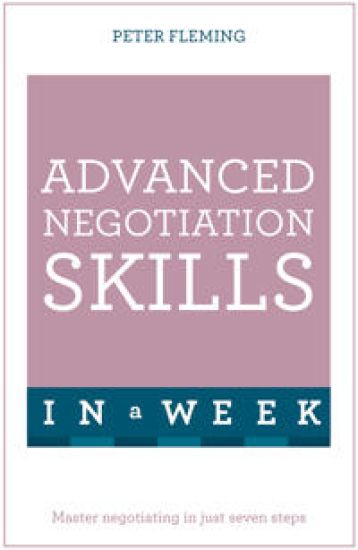
Advanced Negotiation Skills In A Week

Advanced Negotiation Skills In A Week

Peter Fleming

Teach Yourself
2016
pokkari
Perfecting your negotiation skills just got easierAs a more experienced negotiator, how do you improve the results you achieve from the negotiating process? When you think about your most recent negotiating experiences, do you think you could have achieved more? The aim of this book is to help you take your negotiating skills to the next level. 'Win/win' is still your principal aim, even if it seems a hard standard to achieve!In Advanced Negotiation Skills In A Week you will learn to:- Strengthen your inner determination and confidence- Choose a preferred negotiating style- Bild and fulfil a partnering relationship for the longer term- Analyse opportunities for influencing opponents' organizations- Build and lead a focused negotiating team- Agree the rules of engagement- Use consulting behaviour to uncover problems and ways of achieving movement in a case- Analyse and manage conflict- Avoid embarrassment through failure to close a deal by learning about common mistakes- Celebrate success and plan your futureThe book takes you through a seven day process:- Sunday: Preparation: a hard taskmaster- Monday: Negotiating growth through partnering - Tuesday: Effective influence in negotiation - Wednesday: Making proposals and trading concessions - Thursday: Problem-solving through consulting and listening skills - Friday: What if? - closing skills- Saturday: Celebrating the successful outcome
The Mythology of Work

The Mythology of Work

Peter Fleming

Pluto Press
2015
pokkari
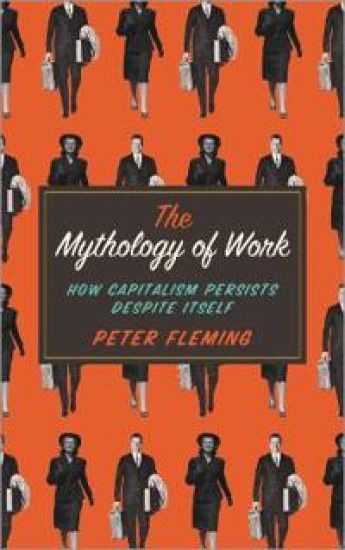
There was once a time when 'work' was inextricably linked to survival and self-preservation; where the farmer ploughed the land so their family could eat. But the sun has long since set on this idyllic tableau, and what was once an integral part of life has slowly morphed into a painful and meaningless ritual, colonising almost every part of our lives - endless and inescapable. In The Mythology of Work, Peter Fleming examines how neoliberal society uses the ritual of work (and the threat of its denial) to maintain the late capitalist class order. As our society is transformed into a factory that never sleeps, work becomes a universal reference point for everything else, devoid of any moral or political worth. Blending critical theory with recent accounts of job related suicides, office-induced paranoia, fear of relaxation, managerial sadism and cynical corporate social responsibility campaigns, Fleming paints a bleak picture of neoliberal capitalism in which the economic and emotional dysfunctions of a society of wage slaves greatly outweigh its professed benefits.
Resisting Work

Resisting Work

Peter Fleming

Temple University Press,U.S.
2015
pokkari
A job is no longer something we "do," but instead something we "are." As the boundaries between work and non-work have dissolved, we restructure ourselves and our lives using social ingenuity to get things done and be resourceful outside the official workday. In his provocative book, Resisting Work Peter Fleming insists that many jobs in the West are now regulated by a new matrix of power-biopower-where "life itself" is put to work through our ability to self-organize around formal rules. This neoliberal system of employment tries to absorb our life attributes--from our consumer tastes, "downtime," and sexuality--into employment so that questions of human capital and resources replace questions of employee, worker, and labor. Fleming then suggests that the corporation turns to communal life-what he calls "the common"-in order to reproduce itself and reinforce corporate culture. Yet a resistance against this new definition of work is in effect, and Fleming shows how it may already be taking shape.
Resisting Work

Resisting Work

Peter Fleming

Temple University Press,U.S.
2014
sidottu
A job is no longer something we "do," but instead something we "are." As the boundaries between work and non-work have dissolved, we restructure ourselves and our lives using social ingenuity to get things done and be resourceful outside the official workday. In his provocative book, Resisting Work Peter Fleming insists that many jobs in the West are now regulated by a new matrix of power-biopower-where "life itself" is put to work through our ability to self-organize around formal rules. This neoliberal system of employment tries to absorb our life attributes--from our consumer tastes, "downtime," and sexuality--into employment so that questions of human capital and resources replace questions of employee, worker, and labor. Fleming then suggests that the corporation turns to communal life-what he calls "the common"-in order to reproduce itself and reinforce corporate culture. Yet a resistance against this new definition of work is in effect, and Fleming shows how it may already be taking shape.
The End of Corporate Social Responsibility

The End of Corporate Social Responsibility

Peter Fleming; Marc V. Jones

SAGE Publications Ltd
2012
sidottu
Providing a much-needed critique of Corporate Social Responsibility (CSR) practice and scholarship, this book seeks to redress CSR advocacy, from a political and critical perspective. A strident approach backed up by extensive use of case studies presents the argument that most CSR-related activity aims to gain legitimacy from consumers and employees, and therefore furthers the exploitative and colonizing agenda of the corporation. By examining CSR in the context of the political economy of late capitalism, the book puts the emphasis back on the fact that most large corporations are fundamentally driven by profit maximization, making CSR initiatives merely another means to this end. Rather than undermining or challenging unsustainable corporate practices CSR is exposed as an ideological practice that actually upholds the prominence of such practices. As CSR gathers momentum in management practice and scholarship, students in the fields of CSR, business ethics, and strategy, will find this text a useful companion to counter received wisdom in this area.
The End of Corporate Social Responsibility

The End of Corporate Social Responsibility

Peter Fleming; Marc V. Jones

SAGE Publications Ltd
2012
nidottu
Providing a much-needed critique of Corporate Social Responsibility (CSR) practice and scholarship, this book seeks to redress CSR advocacy, from a political and critical perspective. A strident approach backed up by extensive use of case studies presents the argument that most CSR-related activity aims to gain legitimacy from consumers and employees, and therefore furthers the exploitative and colonizing agenda of the corporation. By examining CSR in the context of the political economy of late capitalism, the book puts the emphasis back on the fact that most large corporations are fundamentally driven by profit maximization, making CSR initiatives merely another means to this end. Rather than undermining or challenging unsustainable corporate practices CSR is exposed as an ideological practice that actually upholds the prominence of such practices. As CSR gathers momentum in management practice and scholarship, students in the fields of CSR, business ethics, and strategy, will find this text a useful companion to counter received wisdom in this area.
Becoming a Secondary School Teacher
Aimed at supporting those undertaking initial teacher training and the statutory Induction period that follows, Becoming a Secondary School Teacher explores the skills, roles and knowledge needed to become a successful teacher in today’s secondary schools. Providing detailed guidance on key areas of professional practice, the book helps the reader to link key theories and principles to the reality they will find in the classroom.This edition has been fully updated to reflect the latest legislation and Teachers’ Standards as well as changes in practice and expectations regarding learning, assessment and inclusion. Highly accessible and full of practical advice it includes:• guidance on key skills for classroom success including lesson planning, classroom management and assessment;• practical tips on handling areas of real concern such as discipline, workload, job interviews and relationships with colleagues;• advice on teaching beyond your specialist subject and teaching in challenging circumstances;• reference throughout to the Core Standards that have to be met during training, what these mean in practice and how they might be evidenced.With a strong reflective focus through case studies, action points and reflection points, this book is core reading for all students wanting to get the most out of their initial teacher training programme.
Becoming a Secondary School Teacher
Aimed at supporting those undertaking initial teacher training and the statutory Induction period that follows, Becoming a Secondary School Teacher explores the skills, roles and knowledge needed to become a successful teacher in today’s secondary schools. Providing detailed guidance on key areas of professional practice, the book helps the reader to link key theories and principles to the reality they will find in the classroom.This edition has been fully updated to reflect the latest legislation and Teachers’ Standards as well as changes in practice and expectations regarding learning, assessment and inclusion. Highly accessible and full of practical advice it includes:• guidance on key skills for classroom success including lesson planning, classroom management and assessment;• practical tips on handling areas of real concern such as discipline, workload, job interviews and relationships with colleagues;• advice on teaching beyond your specialist subject and teaching in challenging circumstances;• reference throughout to the Core Standards that have to be met during training, what these mean in practice and how they might be evidenced.With a strong reflective focus through case studies, action points and reflection points, this book is core reading for all students wanting to get the most out of their initial teacher training programme.
Dead Man Working

Dead Man Working

Carl Cederstrom; Peter Fleming

John Hunt Publishing
2012
nidottu
Capitalism has become strange. Ironically, while the 'age of work' seems to have come to an end, working has assumed a total presence - a 'worker's society' in the worst sense of the term - where everyone finds themselves obsessed with it. So what does the worker tell us today? "I feel drained, empty - dead." This book tells the story of the dead man working. It follows this figure through the daily tedium of the office, to the humiliating mandatory team building exercise, to awkward encounters with the funky boss who pretends to hate capitalism and tells you to be authentic. In this society, the experience of work is not of dying...but neither of living. It is one of a living death. And yet, the dead man working is nevertheless compelled to wear the exterior signs of life, to throw a pretty smile, feign enthusiasm and make a half-baked joke. When the corporation has colonized life itself, even our dreams, the question of escape becomes ever more pressing, ever more desperate.
Contesting the Corporation

Contesting the Corporation

Peter Fleming; André Spicer

Cambridge University Press
2010
pokkari
In an age when large corporations dominate the economic and political landscape, it is tempting to think that their power goes largely unchecked. Originally published in 2007, Contesting the Corporation counters this view by showing that today's corporations are driven by political struggle, power plays and attempts to resist control. Building on a wide range of theoretical sources, Fleming and Spicer present an analysis of the different ways in which power operates within the modern workplace. They begin by building a theoretical perspective that synthesizes previous investigations of power and resistance, identifying struggle as a key concept. Each chapter illustrates a different dimension of workplace struggle through an array of original empirical studies relating to sexuality, cynicism, new social movements and new-wave trade unionism. The book concludes by demonstrating that social justice claims underlie even the most innocuous forms of resistance, helping to transform some of the largest modern corporations.
Authenticity and the Cultural Politics of Work

Authenticity and the Cultural Politics of Work

Peter Fleming

Oxford University Press
2009
sidottu
The 'personal' was once something to be put to one side in the work place: a 'professional manner' entailed the suppression of private life and feelings. Now many large corporations can be found exhorting their employees to simply be themselves. This book critically investigates the increasing popularity of personal authenticity in corporate ideology and practice. Rather than have workers adhere to depersonalising bureaucratic rules or homogenous cultural norms, many large corporations now invite employees to simply be themselves. Alternative lifestyles, consumption, ethics, identity, sexuality, fun, and even dissent are now celebrated since employees are presumed to be more motivated if they can just be themselves. Does this freedom to express one's authenticity in the workplace finally herald the end of corporate control? To answer this question, the author places this concern with authenticity within a political framework and demonstrates how it might represent an even more insidious form of cultural domination. The book especially focuses on the way in which private and non-work selves are prospected and put to work in the firm. The ideas of Hardt and Negri and the Italian autonomist movement are used to show how common forms of association and co-operation outside of commodified work are the inspiration for personal authenticity. It is the vibrancy, energy and creativity of this non-commodified stratum of social life that managerialism now aims to exploit. Each chapter explores how this is achieved and highlights the worker resistance that is provoked as a result. The book concludes by demonstrating how the discourse of freedom underlying the managerial version of authenticity harbours potential for a radical transformation of the contemporary corporate form.
Charting Corporate Corruption

Charting Corporate Corruption

Peter Fleming; Stelios C. Zyglidopoulos

Edward Elgar Publishing Ltd
2009
sidottu
In the post-Enron era, corporate corruption has increasingly featured on the research agenda. This informative book provides a novel approach by charting the actual causes of corruption. This highly topical volume demonstrates how agency (the decisions and choices of individuals) and structure (the contextual pressures in the business environment) can interact to result in the rapid escalation of corporate crime and corruption. By analysing and describing the social-psychological dimensions of this escalation, the book prescribes preventive measures that can be adapted and implemented by business organizations. Loaded with case studies and prospective solutions, Charting Corporate Corruption will be valuable to post-graduates studying business ethics, sociology and psychology, and to researchers seeking new theories and concepts in this field.
Bristol: Ethnic Minorities and the City 1000-2001

Bristol: Ethnic Minorities and the City 1000-2001

Madge Dresser; Peter Fleming

Phillimore Co Ltd
2008
nidottu
Throughout much of its history, Bristol has been one of England's most important ports; on the very edge of England it looks out towards Wales, Ireland, to the Atlantic and beyond. Those who have made Bristol their home range from medieval Jews to modern asylum seekers. Well before the post-war arrival of people of Caribbean and South Asian origin, the city played host to Welsh, Irish and Scottish incomers as well as to Germans, Italians, Africans, Indians and others.Beginning at the start of the 11th century, and ending in the 21st, Bristol: Ethnic Minorities and the City, 1000-2001 offers new insights into the experiences of foreigners who came to cosmopolitan Bristol. This pioneering study seeks to bear witness to their many stories and begins to piece together how these migrants have affected the city's own sense of itself. Full of archival and visual material, and interviews with Bristolians themselves, the book marks a new departure in local history. It is the first time that immigration and ethnic minorities have been explored in such depth over the entire recorded history of a single city. This story may span 1001 years rather than 1001 nights, but like Scheherazade, the authors intrigue their audience into wanting to know more.
Contesting the Corporation

Contesting the Corporation

Peter Fleming; André Spicer

Cambridge University Press
2007
sidottu
In an age when large corporations dominate the economic and political landscape, it is tempting to think that their power goes largely unchecked. Originally published in 2007, Contesting the Corporation counters this view by showing that today's corporations are driven by political struggle, power plays and attempts to resist control. Building on a wide range of theoretical sources, Fleming and Spicer present an analysis of the different ways in which power operates within the modern workplace. They begin by building a theoretical perspective that synthesizes previous investigations of power and resistance, identifying struggle as a key concept. Each chapter illustrates a different dimension of workplace struggle through an array of original empirical studies relating to sexuality, cynicism, new social movements and new-wave trade unionism. The book concludes by demonstrating that social justice claims underlie even the most innocuous forms of resistance, helping to transform some of the largest modern corporations.