Kirjojen hintavertailu. Mukana 12 533 526 kirjaa ja 12 kauppaa.

Kirjailija

Peter Forsyth

Kirjat ja teokset yhdessä paikassa: 7 kirjaa, julkaisuja vuosilta 2004-2024, suosituimpien joukossa Airport Economics. Vertaile teosten hintoja ja tarkista saatavuus suomalaisista kirjakaupoista.

7 kirjaa

Kirjojen julkaisuhaarukka 2004-2024.

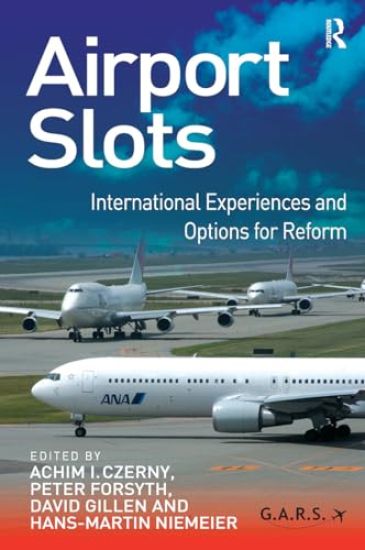
Airport Slots

Airport Slots

Achim I. Czerny; Peter Forsyth

TAYLOR FRANCIS LTD
2024
nidottu
Over the past several decades, commercial air traffic has been growing at a far greater rate than airport capacity, causing airports to become increasingly congested. How can we accommodate this increased traffic and at the same time alleviate traffic delays resulting from congestion? The response outside the US has been to set a maximum number of slots and use administrative procedures to allocate these among competing airlines, with the most important consideration being 'grandfather rights' to existing carriers. The United States, on the other hand, has used administrative procedures to allocate slots at only four airports. In all other cases, flights have been handled on a first-come, first-served basis, with aircraft queuing for the privilege of landing or taking off from a congested airport. While recognizing the advantages of slot systems in lessening delays, economists have criticized both approaches as being sub-optimal, and have advocated procedures such as slot auctions, peak-load pricing and slot trading to better utilize congested airports. Edited by an international team of air transport economists and drawing on an impressive list of contributors, Airport Slots provides an extremely comprehensive treatment of the subject. It considers the methods currently used to allocate slots and applies economic analysis to each. The book then explains various schemes to increase public welfare by taxing or pricing congestion, and describes alternate slot-allocation schemes, most notably slot auctions. In addition, Airport Slots outlines the complexities involved in slot-allocation methods, including the requirement for multiple slots - a take-off slot at London Heathrow is useless unless there is a landing slot available at Frankfurt for a London Frankfurt flight. Finally, the book explores the economic pitfalls of slot-allocation schemes; for example, controls may not be required if external delay costs are internalized by a dominant carrier at its hub. Airport Slots provides a valuable contribution to the debate on how best to limit airport congestion. The book's comprehensive treatment of the subject matter provides the reader with a 'one-stop' volume to explore airport congestion and slot-allocation schemes, offering valuable insights to academics and practitioners alike.
Airport Economics

Airport Economics

Peter Forsyth; Cathal Guiomard; Hans-Martin Niemeier

TAYLOR FRANCIS LTD
2023
sidottu
This book provides a comprehensive guide to the economics of airports for all managers, regulators and educators within the aviation industry. Written by three renowned experts but made accessible and relevant for all those working within the industry, or aspiring to do so, it is the perfect entry point for learning about the underlying economics of airports as a crucial component of the air transport system. It explains the cost structures of airports and then relates these to how airports determine their charges.It explains how charges at different airports vary, whether this is due to different types of traffic, different input prices, ways of producing outputs or different levels of efficiency. Most airports are publicly owned or regulated, and there has been a trend towards privatisation. The book explains how airports have been regulated and assesses how well the regulatory structures have performed; it discusses the trend towards light-handed regulation and the reliance on competition where this exists. The book examines the problems of limited capacity at airports and how these are resolved through slots and charging systems, and the long-term solution of investment in airports—why it is controversial, and how it can be achieved effectively. It also considers the environmental impacts of airports and the issues these pose for managers, from the well-known problems of airport noise to the growing recognition of the impacts of air transport on climate change, and the roles airports play in mitigating these consequences.Written for airport and airline managers, regulators and students, this book will suit Bachelor’s and Master’s programmes on air transport management.
Airport Economics

Airport Economics

Peter Forsyth; Cathal Guiomard; Hans-Martin Niemeier

TAYLOR FRANCIS LTD
2023
nidottu
This book provides a comprehensive guide to the economics of airports for all managers, regulators and educators within the aviation industry. Written by three renowned experts but made accessible and relevant for all those working within the industry, or aspiring to do so, it is the perfect entry point for learning about the underlying economics of airports as a crucial component of the air transport system. It explains the cost structures of airports and then relates these to how airports determine their charges.It explains how charges at different airports vary, whether this is due to different types of traffic, different input prices, ways of producing outputs or different levels of efficiency. Most airports are publicly owned or regulated, and there has been a trend towards privatisation. The book explains how airports have been regulated and assesses how well the regulatory structures have performed; it discusses the trend towards light-handed regulation and the reliance on competition where this exists. The book examines the problems of limited capacity at airports and how these are resolved through slots and charging systems, and the long-term solution of investment in airports—why it is controversial, and how it can be achieved effectively. It also considers the environmental impacts of airports and the issues these pose for managers, from the well-known problems of airport noise to the growing recognition of the impacts of air transport on climate change, and the roles airports play in mitigating these consequences.Written for airport and airline managers, regulators and students, this book will suit Bachelor’s and Master’s programmes on air transport management.
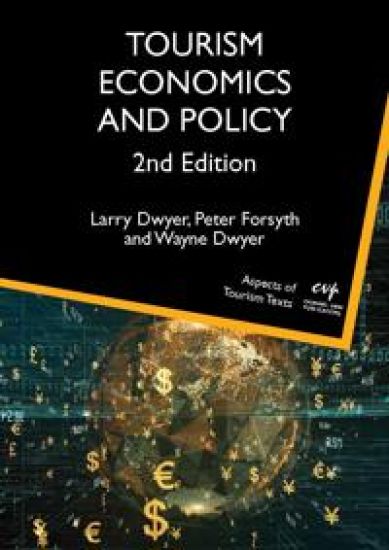
Tourism Economics and Policy

Tourism Economics and Policy

Larry Dwyer; Peter Forsyth; Wayne Dwyer

Channel View Publications
2020
sidottu
Since the publication of the first edition of this seminal textbook, the tourism economics landscape has undergone many changes. In this concise revised edition, the authors have incorporated new approaches and ideas influencing tourism economics and policy. This includes discussions of the implications of the sharing economy and its effect on industry structure in accommodation and transport, and Artificial Intelligence (AI) techniques that are being increasingly employed in tourism forecasting. It also includes new material on surface and marine transport, resident quality of life issues, the price mechanism, the economic contribution of tourism, tourism and economic growth, and tourism and sustainable development. It remains an important and accessible text for students, researchers and practitioners in tourism economics and tourism policy.
Tourism Economics and Policy

Tourism Economics and Policy

Larry Dwyer; Peter Forsyth; Wayne Dwyer

Channel View Publications
2020
nidottu
Since the publication of the first edition of this seminal textbook, the tourism economics landscape has undergone many changes. In this concise revised edition, the authors have incorporated new approaches and ideas influencing tourism economics and policy. This includes discussions of the implications of the sharing economy and its effect on industry structure in accommodation and transport, and Artificial Intelligence (AI) techniques that are being increasingly employed in tourism forecasting. It also includes new material on surface and marine transport, resident quality of life issues, the price mechanism, the economic contribution of tourism, tourism and economic growth, and tourism and sustainable development. It remains an important and accessible text for students, researchers and practitioners in tourism economics and tourism policy.
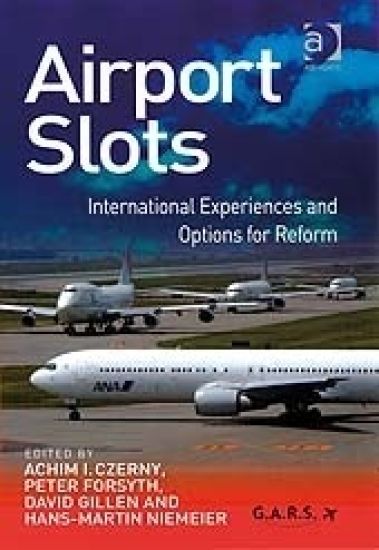
Airport Slots

Airport Slots

Achim I. Czerny; Peter Forsyth

Ashgate Publishing Limited
2008
sidottu
Over the past several decades, commercial air traffic has been growing at a far greater rate than airport capacity, causing airports to become increasingly congested. How can we accommodate this increased traffic and at the same time alleviate traffic delays resulting from congestion? The response outside the US has been to set a maximum number of slots and use administrative procedures to allocate these among competing airlines, with the most important consideration being 'grandfather rights' to existing carriers. The United States, on the other hand, has used administrative procedures to allocate slots at only four airports. In all other cases, flights have been handled on a first-come, first-served basis, with aircraft queuing for the privilege of landing or taking off from a congested airport. While recognizing the advantages of slot systems in lessening delays, economists have criticized both approaches as being sub-optimal, and have advocated procedures such as slot auctions, peak-load pricing and slot trading to better utilize congested airports. Edited by an international team of air transport economists and drawing on an impressive list of contributors, Airport Slots provides an extremely comprehensive treatment of the subject. It considers the methods currently used to allocate slots and applies economic analysis to each. The book then explains various schemes to increase public welfare by taxing or pricing congestion, and describes alternate slot-allocation schemes, most notably slot auctions. In addition, Airport Slots outlines the complexities involved in slot-allocation methods, including the requirement for multiple slots - a take-off slot at London Heathrow is useless unless there is a landing slot available at Frankfurt for a London Frankfurt flight. Finally, the book explores the economic pitfalls of slot-allocation schemes; for example, controls may not be required if external delay costs are internalized by a dominant carrier at its hub. Airport Slots provides a valuable contribution to the debate on how best to limit airport congestion. The book's comprehensive treatment of the subject matter provides the reader with a 'one-stop' volume to explore airport congestion and slot-allocation schemes, offering valuable insights to academics and practitioners alike.
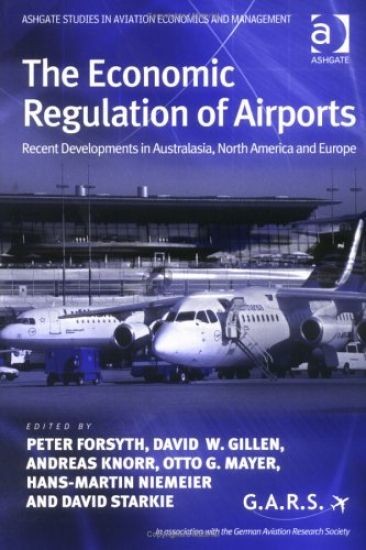
The Economic Regulation of Airports

The Economic Regulation of Airports

Peter Forsyth; David W. Gillen; Andreas Knorr; Otto G. Mayer; David Starkie

Ashgate Publishing Limited
2004
sidottu
This tour d'horizon book reviews airport regulation and competition in different regions of the world and contrasts different policy perspectives. Organized in four parts, the first three examine, in turn, Australasia, North America, and Europe, while the last section looks at the institutional reforms that have taken place in these regions. The book covers the regulation of airports, and competition in different regions, as well as privatization policy, the interaction between airports and airlines, and regional economic impacts. It also examines the linkages between governance structures and forms of regulation. The book's global sweep embraces all the large aviation markets, bringing together the ideas and challenges of academic economists, airlines, airport managers, consultants and government regulators. As well as looking at different methods, degrees and paradigms of regulation it also spells out the stress-points, in a way that makes essential reading for airport operators, airline operations staff, as well as academic economists concerned with transport studies. It also offers interesting reading and important lessons for those concerned with regulation of the utility industries such as, telecommunications, water and power generation and distribution - where infrastructure can be subject to natural monopoly characteristics and where firms competing in downstream markets are dependent on the investment and operational strategies of the upstream infrastructure operator.