Kirjojen hintavertailu. Mukana 12 325 861 kirjaa ja 12 kauppaa.

Kirjailija

Peter Gall Krogh

Kirjat ja teokset yhdessä paikassa: 4 kirjaa, julkaisuja vuosilta 2020-2024, suosituimpien joukossa Tænkepauser 109-120. Vertaile teosten hintoja ja tarkista saatavuus suomalaisista kirjakaupoista.

4 kirjaa

Kirjojen julkaisuhaarukka 2020-2024.

Tænkepauser 109-120

Tænkepauser 109-120

Mads Rosendahl Thomsen; Carsten Andersen; Pernille Hermann; Asser Hedegård Thomsen; Kjeld Hermansen; Bo Holm Jacobsen; Peter Gall Krogh; Poul Duedahl; Peter Løchte Jørgensen; Ditte Alexandra Winther-Lindqvist; Rikke Sand Andersen og Henrik Marstal

Aarhus Universitetsforlag
2024
nidottu
Tænkepauser er bogserien, hvor topforskere fra Aarhus Universitet formidler deres viden om centrale emner som frihed, netværk og tillid. Idéen er at kanalisere forskningen ud til nye målgrupper og ind i hverdagens pauser - fra sofahjørnet til løbeturen. Hver bog er lækkert designet og udstråler den kæmpemæssige begejstring, som forskerne har for deres emne. Kombineret med lettilgængeligt sprog, en overskuelig længde og en ofte humoristisk tone gør det serien til en intet mindre end fremragende formidling af vigtig viden, som ellers ofte kun skrives af fagfolk for fagfolk.
Design

Design

Peter Gall Krogh

Aarhus Universitetsforlag
2024
nidottu
Design er mere end det, der møder øjet. En lænestol og en betalingsapp fortæller ikke kun, hvordan vi skal bruge dem rigtigt. De rummer også holdninger til, hvad der er vigtigt. Uanset om de er bøjet i stål i storindustrien, eller en snedker har slebet kanterne, er ting også altid sager, fortæller Peter Gall Krogh, stoflig arkitekt ved Aarhus Universitet. Før lampen træder i karakter, har designeren nemlig givet den form og afprøvet og forkastet eller forfinet ideer. Sådan har vi gennem tiden opfundet både den mobile telefon og den bæredygtige deleøkonomi. Og den dybe tallerken.
Drifting by Intention

Drifting by Intention

Peter Gall Krogh; Ilpo Koskinen

Springer Nature Switzerland AG
2021
nidottu
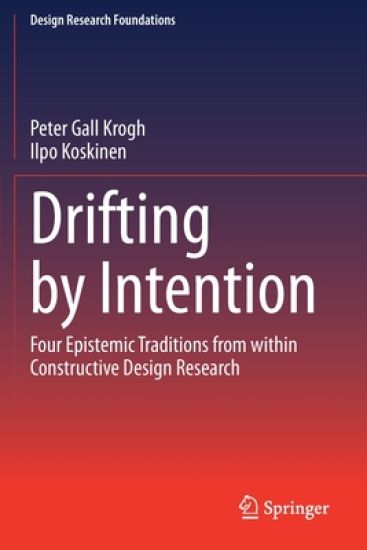
Constructive design research, is an exploratory endeavor building exemplars, arguments, and evidence. In this monograph, it is shown how acts of designing builds relevance and articulates knowledge in combination. Using design acts to build new knowledge, invite reframing of questions and new perceptions to build up. Respecting the emergence of new knowledge in the process invite change of cause and action. The authors' term for this change is drifting; designers drift; and they drift intentionally, knowing what they do. The book details how drifting is a methodic practice of its own and provides examples of how and where it happens. This volume explores how to do it effectively, and how it depends on the concept of knowledge. The authors identify four epistemic traditions in constructive design research. By introducing a Knowledge/Relevance model they clarify how design experiments create knowledge and what kinds of challenges and contributions designers face when drifting. Along the lines of experimental design work the authors identify five main ways in which constructive experiments drift. Only one of them borrows its practices from experimental science, others build on precedents including arts and craft practices. As the book reveals, constructive design research builds on a rich body of research that finds its origins in some of the most important intellectual movements of 20th century. This background further expands constructive design research from a scientific model towards a more welcoming understanding of research and knowledge. This monograph provides novel actionable models for steering and navigating processes of constructive design research. It helps skill the design researcher in participating in the general language games of research and helps the design researcher build research relations beyond the discipline.
Drifting by Intention

Drifting by Intention

Peter Gall Krogh; Ilpo Koskinen

Springer Nature Switzerland AG
2020
sidottu
Constructive design research, is an exploratory endeavor building exemplars, arguments, and evidence. In this monograph, it is shown how acts of designing builds relevance and articulates knowledge in combination. Using design acts to build new knowledge, invite reframing of questions and new perceptions to build up. Respecting the emergence of new knowledge in the process invite change of cause and action. The authors' term for this change is drifting; designers drift; and they drift intentionally, knowing what they do. The book details how drifting is a methodic practice of its own and provides examples of how and where it happens. This volume explores how to do it effectively, and how it depends on the concept of knowledge. The authors identify four epistemic traditions in constructive design research. By introducing a Knowledge/Relevance model they clarify how design experiments create knowledge and what kinds of challenges and contributions designers face when drifting. Along the lines of experimental design work the authors identify five main ways in which constructive experiments drift. Only one of them borrows its practices from experimental science, others build on precedents including arts and craft practices. As the book reveals, constructive design research builds on a rich body of research that finds its origins in some of the most important intellectual movements of 20th century. This background further expands constructive design research from a scientific model towards a more welcoming understanding of research and knowledge. This monograph provides novel actionable models for steering and navigating processes of constructive design research. It helps skill the design researcher in participating in the general language games of research and helps the design researcher build research relations beyond the discipline.